Hotel and Housing: A Companion Books for You During Cancer Treatment in Shanghai
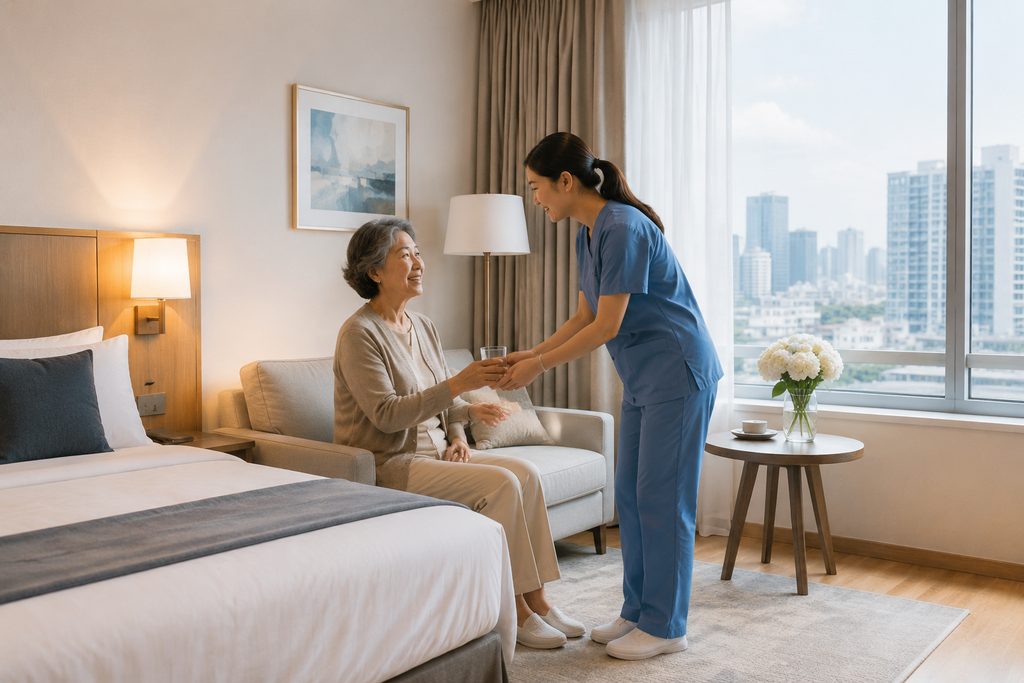
Hotel and Housing: A Companion Books for You During Cancer Treatment in Shanghai
You have probably heard that getting medical care in China means giving up comfort. That the hospitals are chaotic, the language barrier is impossible, and you will be left alone in a strange city. The reality is different. For international patients weighing cancer treatment cost Shanghai against Western bills, the clinical savings are real — but the logistics of where you sleep, eat, and recover matter just as much as the surgery itself. Our team has coordinated stays for patients from over 40 countries. The pattern is consistent: those who plan housing poorly suffer more than those who plan treatment poorly.
This guide maps what actually happens when you arrive in Shanghai for oncology care. Not the glossy brochure version. The version with real addresses, real price ranges, real visa rules, and the companion support system that keeps the whole thing from collapsing under stress.
Key Takeaways
- Cancer treatment in Shanghai typically costs 20–35% of equivalent US care, with top-tier oncology departments handling case volumes Western hospitals rarely see.
- Housing choice is a medical decision — distance to your hospital, elevator access, and kitchen facilities directly affect recovery outcomes.
- Language is the single biggest operational risk; bilingual companion services cost from $300/day and prevent costly miscommunications.
- You will need an S2 visa for medical treatment — not an M visa, which is for commercial and trade activities only.
The Problem: Cancer Care Costs Are Crushing Patients Worldwide
In 2023, the American Cancer Society reported that 42% of cancer patients in the United States deplete their entire life savings within two years of diagnosis. That is not a statistic. That is a bankruptcy filing waiting to happen. A single cycle of immunotherapy in the US runs $12,000–$18,000. Radiation therapy for head and neck cancers averages $69,000. And those numbers exclude housing, travel, and lost income during treatment.
Patients in the UK face a different pressure: the National Health Service reported median wait times of 62 days from urgent GP referral to first cancer treatment in 2023, with some regions exceeding 100 days. For aggressive cancers, that delay changes staging. It changes survival curves. Patients in Canada, Australia, and parts of Europe face similar queues. So patients start looking elsewhere. They search for alternatives. They land on Shanghai.
But here is what nobody tells you: the hospital is only half the battle. The other half is the 12–16 hours a day you spend outside it. In a hotel room. In a serviced apartment. Eating delivery food. Trying to sleep. That is where this companion guide earns its place.
Why Shanghai Delivers Results for International Oncology Patients
Clinical Volume Creates Expertise No Textbook Can Match
Shanghai’s top oncology centers — including Fudan University Shanghai Cancer Center and Zhongshan Hospital — treat volumes that reshape a surgeon’s instincts. Fudan University Shanghai Cancer Center reports over 600,000 outpatient visits annually. A single thoracic oncology department there may see more esophageal cancer cases in one month than a regional US hospital sees in a year. Volume matters. Studies published in The Lancet Oncology have repeatedly linked higher surgical volume to lower 30-day mortality for complex cancer resections.
That volume also drives protocol refinement. Chinese oncology teams treating gastric, liver, and nasopharyngeal cancers — diseases more common in East Asia — have developed treatment pathways that Western guidelines often lag on. For patients with these diagnoses, Shanghai is not a compromise. It is arguably the most experienced city on the planet.
Cost Structure: Why the Same Drug Costs a Fraction Here
The cancer treatment cost Shanghai patients actually pay breaks down into three layers. First, hospital fees — surgery, radiation, chemotherapy administration — run 70–85% lower than US list prices due to different labor economics and hospital funding models. Second, drug costs: China’s national volume-based procurement program has slashed prices on common chemotherapies and targeted agents by 50–90% since 2018. Third, diagnostics: a full-body PET-CT scan that costs $4,000–$6,000 in the US runs $800–$1,500 in Shanghai.
But lower cost does not mean lower quality. The structural reasons are boring and real: physician salaries are lower, hospital construction is state-subsidized, and the system operates at massive scale. The clinical protocols — the drugs, the radiation dosing, the surgical margins — are the same ones used in Boston and Berlin. Many Shanghai oncology departments are JCI-accredited or follow NCCN guidelines adapted locally.
Hotel and Housing: A Companion Books for You — The Real Shanghai Housing Landscape
You will spend 2–8 weeks in Shanghai for most cancer treatment protocols. Where you stay determines whether you can walk to follow-up appointments, whether you can cook food that meets your nutritional needs, whether your caregiver can sleep properly. This section is the practical map.
Option 1: On-Campus or Hospital-Adjacent Housing
Some Shanghai hospitals offer international patient wards with family accommodation attached. These are limited and book out fast. Expect to pay $80–$200 per night. The advantage is proximity — you roll out of bed and into the oncology department. The disadvantage is noise, limited kitchen access, and hospital food that may not suit your palate.
Option 2: Serviced Apartments Near Major Oncology Hubs
The sweet spot for most of our patients. Areas like Xuhui (near Fudan University Shanghai Cancer Center) and Huangpu (near Ruijin Hospital) have dense clusters of serviced apartments. A one-bedroom unit runs $60–$120 per night depending on season and building quality. Look for: elevator access (non-negotiable after surgery), a kitchenette (for post-operative nutrition), and a front desk that can handle package deliveries.
Option 3: International Hotels with Long-Stay Rates
Hotels like the Jing An Shangri-La or the Middle House offer 30-night rates that drop the nightly price by 30–40%. Expect $100–$250 per night. The benefit is consistency: housekeeping, concierge, English-speaking staff. The cost is higher, and you will eat out more, which adds $20–$40 per day in food costs.
| Housing Type | Nightly Cost (USD) | Pros | Cons |
|---|---|---|---|
| Hospital-attached family room | $80–$200 | Closest proximity, medical staff nearby | Limited availability, noisy, basic amenities |
| Serviced apartment (Xuhui/Huangpu) | $60–$120 | Kitchen, space, value for long stays | Language barrier at front desk, variable quality |
| International hotel long-stay | $100–$250 | Consistent service, English support | Higher cost, eating out adds up |
| Private rental via agent | $40–$80 | Lowest cost, most flexibility | Contract risk, no daily housekeeping, deposit issues |
One hard truth: Shanghai’s rental market is not built for 4-week stays. Landlords want 6–12 month leases. The serviced apartment and hotel routes are the only realistic options for most medical travelers. Do not waste time on short-term rental apps — the listings are often misleading for foreigners without local bank accounts.
What a Companion Actually Does During Your Stay
You may be wondering whether you need a bilingual companion at all. Some patients manage without one. Most do not. Here is what the service actually covers, based on hundreds of patient days our team has coordinated.
A companion meets you at the airport, handles the check-in at your housing, and walks you to your first hospital appointment. They translate during consultations — not just the words, but the nuance: what the doctor is worried about, what the doctor is not worried about, what the doctor expects you to do next. They handle pharmacy pickup, coordinate follow-up imaging appointments, and negotiate with the front desk when the air conditioning breaks.
The cost starts at $300 per day for a half-day or full-day shift. It is not cheap. But compare it to the cost of a missed diagnosis due to a translation error, or a wrong medication dosage, or a lost lab result. The math changes quickly.
For patients asking about medical tourism package Beijing price comparisons, Shanghai packages typically run 10–15% higher than Beijing for equivalent services, driven by housing costs. But Shanghai’s oncology ecosystem is denser, and the international patient infrastructure is more mature. The premium is usually worth it for cancer care specifically.
Practical Considerations: Visas, Payments, and Follow-Up Logistics
You need an S2 visa for medical treatment in China. This is the short-stay visa category used for private affairs, including medical treatment, when the stay is under 180 days. Your accompanying family members apply for the same S2 category. The hospital will issue an invitation letter and treatment confirmation — these are required supporting documents. Do not apply for an M visa. That is for commercial and trade activities, and using it for medical treatment can cause serious problems at the border.
Payment is another friction point. Public hospitals in Shanghai require prepayment — typically 50–100% of estimated treatment costs deposited upfront. International credit cards are accepted at international patient departments but not always at regular cashiers. WeChat Pay and Alipay dominate daily life, and both now support foreign credit card linkage, but setup takes time. Bring a backup card and notify your bank before travel.
Insurance is the third pillar. Most international health insurers reimburse after treatment — you pay the hospital, then file claims. Some private international hospitals in Shanghai, like United Family and Jiahui, offer direct billing with major insurers. But their oncology departments are smaller. For complex cancer care, you will likely use a public hospital’s international wing, pay upfront, and seek reimbursement. Budget for that cash flow gap.
After you return home, follow-up matters. Your Shanghai oncology team will provide a written treatment summary and imaging files. Coordinate with your home oncologist before you leave to ensure a smooth handoff. Some Shanghai departments offer remote follow-up consultations for $100–$300 per session, which can bridge the gap between trips.
For patients weighing whether is organ transplant legal for foreigners in China — the answer is complex and depends on the specific organ, the hospital, and current regulatory policy. We do not facilitate organ transplantation services. If this is part of your medical question, you need direct consultation with a transplant center and legal counsel in your home country. The same caution applies to any procedure where donor availability is a factor.
If you are researching the best neurology hospital in China for a secondary condition during your cancer stay, Shanghai’s Huashan Hospital consistently ranks among China’s top neurology departments, and it sits within 30 minutes of most major oncology centers. Coordinating care across two hospitals adds complexity — a companion can handle the cross-hospital logistics.
And for patients asking how long does a hip replacement last abroad in the context of cancer-related bone metastasis or unrelated orthopedic needs, the answer is 15–25 years for modern implants, with Chinese top-tier orthopedic departments reporting outcomes comparable to international registries. But orthopedic surgery during active cancer treatment requires careful sequencing with your oncology team.
If your cancer treatment plan includes cardiac evaluation — some chemotherapies are cardiotoxic — you may need to book cardiac bypass surgery China through the same hospital network. Fuwai Hospital in Beijing and Zhongshan Hospital in Shanghai both perform over 10,000 cardiac surgeries annually. But this is a separate coordination track from oncology, with its own wait times and prep requirements.
Frequently Asked Questions
For a standard 6-week radiation therapy course, expect $8,000–$15,000. For a complex surgical resection with 7-day hospitalization, expect $15,000–$35,000. Chemotherapy cycles run $1,500–$5,000 per cycle depending on the drugs. These figures vary by hospital tier and case complexity. Always request a written estimate before committing.
You can stay in a hotel or serviced apartment during chemotherapy, provided you are within 30–45 minutes of the hospital. The critical window is after surgery — for the first 7–10 days post-op, staying within 15 minutes of the hospital is strongly recommended. Your oncology team will give you specific guidance based on your procedure.
Shanghai has a robust emergency response system — dial 120 for ambulance. Major public hospitals run 24-hour emergency departments. Your companion should provide you with a card listing your hospital’s emergency entrance, your diagnosis in Chinese, and emergency contact numbers. Keep this card with you at all times.
Shanghai is one of the safest major cities in the world for international visitors. Violent crime is rare. The medical infrastructure is modern and well-regulated. The primary risks are operational — language barriers, payment friction, and housing logistics. Those are manageable with proper planning.
No, but you need someone who does. International patient departments at top hospitals have English-speaking coordinators, but once you leave that department — to radiology, to the pharmacy, to the billing office — English coverage drops sharply. A bilingual companion fills that gap consistently across your entire stay.
Your Next Step
You now have a clearer picture of what cancer treatment in Shanghai actually involves — the costs, the housing, the visa rules, the daily logistics. The decision to travel for care is deeply personal, and it should be made with full information, not marketing pressure. Our team at China Medical Services coordinates hospital matching, appointment scheduling, bilingual companionship, and housing guidance for international patients. We are not a hospital and we do not provide diagnoses or treatment recommendations. If you want to explore whether Shanghai oncology care fits your situation, reach out for a free consultation — we will ask about your diagnosis, your records, and your goals, and give you an honest assessment of what is possible. The rest is up to you.
For more medical information and treatment options in China, visit chinamedservices.com (China Medical Services).
