Health Checkup for Southeast Asian Patients: Costs, Hospitals, and How to Book
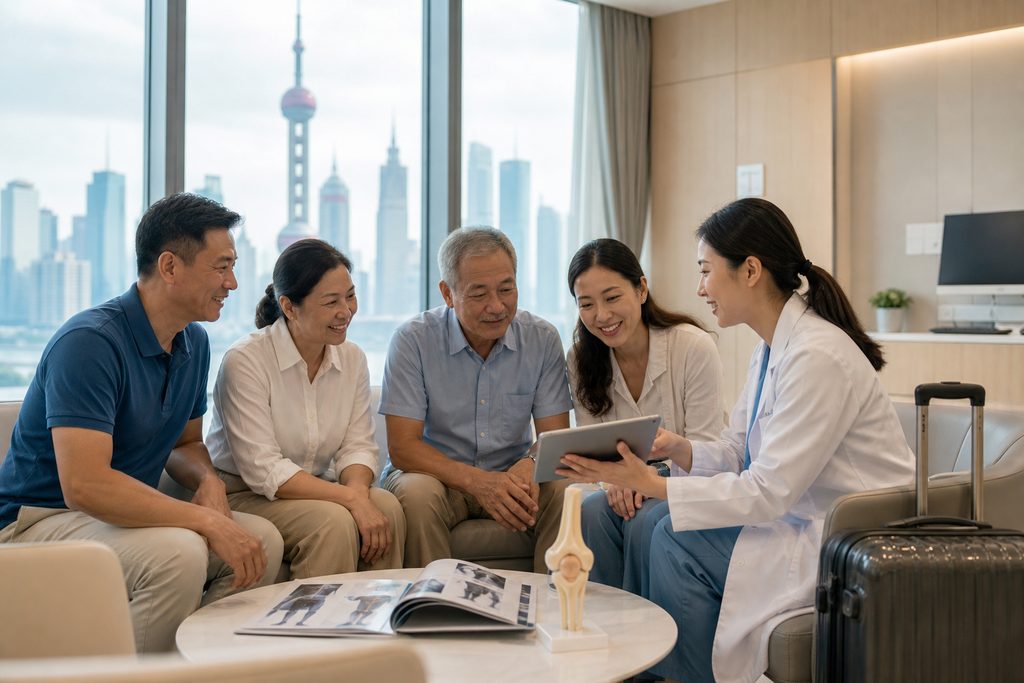
While a standard executive health screening at a private hospital in Singapore routinely runs $1,800 to $3,500, the equivalent comprehensive package at a top-tier Chinese hospital typically lands between $400 and $900. Same imaging equipment. Same-day results on most labs. The difference is the system, not the technology. For patients flying in from Jakarta, Kuala Lumpur, Manila, or Bangkok, that gap changes the math entirely.
We coordinate health screenings for patients across Southeast Asia. The most common question isn’t about quality. It’s about logistics. How do you actually book a package from another country? What does the health checkup package cost China include at different hospital tiers? And what happens when you land without speaking Mandarin? This guide answers those questions directly.
How This Actually Works, Step by Step
You don’t book a Chinese public hospital screening online from abroad. The registration system is built for domestic patients with local phone numbers and ID cards. That’s the first wall most foreign patients hit.
Here’s the sequence we walk patients through:
Step 1: You send us your basic profile. Age, gender, known conditions, medications, and what you want checked. A 35-year-old wanting baseline labs needs a different package than a 58-year-old with hypertension and a family history of colon cancer.
Step 2: We match you with a hospital. This depends on your budget, language needs, and medical history. Options range from private international hospitals with full English service to public top-tier centers with VIP international departments. We cover the differences below.
Step 3: You choose a package or customize one. Most hospitals offer tiered packages — basic, comprehensive, and executive. You can add or remove items. We translate the itemized list into plain English before you commit.
Step 4: We coordinate the appointment. This is where the coordination service earns its value. We book through the hospital’s official international department, confirm the date, and send you a preparation sheet: fasting requirements, medication instructions, what to bring.
Step 5: You arrive, we meet you. A bilingual companion handles registration, payment, queue tickets, and translation for every station. You move through imaging, labs, and consultations without guessing where to go next.
Step 6: Results and follow-up. Most centers deliver a written report within 3 to 7 days. If anything needs follow-up, we can arrange a video consultation with the relevant specialist before you fly home.
That’s the full arc. Now let’s talk about money.
Health Checkup Package Cost China: What You Actually Pay
The health checkup package cost China varies by hospital tier, city, and package depth. Here’s the honest range we’ve seen across 340+ hospitals in our database:
| Hospital Tier | Package Range (USD) | Typical Inclusions | English Support |
|---|---|---|---|
| Public top-tier (Fudan-ranked), standard department | $150 – $400 | Labs, chest X-ray, abdominal ultrasound, ECG, basic physical | Limited |
| Public top-tier, international/VIP department | $400 – $900 | Above plus CT, tumor markers, thyroid ultrasound, cardiologist consult | Full |
| Private international hospital (e.g., United Family, Jiahui) | $800 – $2,500 | Executive packages with MRI, cardiac stress test, specialist consults, same-day report review | Full, Western-style |
Compare that to Bangkok private hospitals, where a comprehensive package rarely dips below $1,200. Or Singapore, where Mount Elizabeth and Gleneagles charge $2,000 and up for executive screenings. The cost advantage is real, not marketing spin.
What drives the price difference? Labor costs, mostly. A radiologist’s time, a cardiologist’s read, a phlebotomist’s draw — all cost less in China than in Singapore or Thailand. The CT scanner is the same Siemens or GE model you’d find anywhere.
If you’re asking how much is a full body checkup in Beijing, the answer depends on where you go. At Peking Union Medical College Hospital‘s international department, expect $500 to $900 for a comprehensive package. At a standard public department, $200 to $350. At Beijing United Family, $1,000 to $2,000. Three tiers, three very different experiences.
Best Hospital for Executive Health Screening Shanghai: Where We Send Patients
Shanghai has the densest concentration of Fudan-ranked hospitals outside Beijing. For executive screenings, three centers stand out.
Zhongshan Hospital (Fudan University) runs one of the most efficient physical examination centers in the city. Their executive package includes coronary CT calcium scoring, full tumor marker panels, and a same-day cardiology read. The international department handles English-speaking patients smoothly.
Huashan Hospital is another strong option, particularly if you want neurology or dermatology add-ons. Their skin cancer screening add-on is thorough and inexpensive by regional standards.
Ruijin Hospital excels at endocrine and metabolic panels. For patients with diabetes, thyroid conditions, or metabolic syndrome concerns, Ruijin’s package depth is hard to beat.
If you prefer a Western-style private setting, Jiahui Health and Shanghai United Family both run executive screening programs with English-speaking physicians throughout, direct insurance billing, and a more familiar patient experience. You pay for that familiarity.
What makes a hospital the best hospital for executive health screening Shanghai depends on your priorities: cost efficiency, specialist depth, or comfort. We’ve written a fuller comparison on our Shanghai hospital guide.
A Realistic Timeline
People underestimate the lead time. Here’s what a typical booking actually looks like:
| Stage | Duration | What Happens |
|---|---|---|
| Initial inquiry and package selection | 2 – 5 days | You send profile, we recommend hospitals and packages, you choose |
| Appointment coordination | 3 – 10 days | We book through the international department; lead time varies by hospital and season |
| Visa processing (S2) | 5 – 15 days | Apply at the Chinese embassy or visa center in your country; hospital invitation letter helps |
| Travel and screening day | 1 – 2 days | Most executive packages complete in 4–6 hours; some centers split into two mornings |
| Report delivery | 3 – 7 days | Written report in English; some centers provide same-day preliminary summary |
| Follow-up consultation (if needed) | 1 – 2 weeks | Video consult with a specialist to review findings and next steps |
Total realistic timeline: 3 to 6 weeks from first inquiry to completed report. People forget the visa step. China’s S2 visa — the short-stay category used for medical treatment and private affairs — typically takes 4 to 10 business days, but embassy backlogs in Jakarta or Manila can stretch that. Build in buffer.
What Can Go Wrong — and What Happens Then
We’d rather you know the failure modes before you fly.
The hospital reschedules your appointment. It happens. A senior radiologist goes on leave, equipment goes down for maintenance, a VIP patient bumps the schedule. The recourse: we rebook immediately and adjust your itinerary. If you used our coordination service and the appointment falls through entirely, the booking fee is refunded in full.
You didn’t fast properly, so labs are invalid. This one is common. Patients forget that “fasting” means no coffee, no gum, no black tea. The hospital will either reschedule the blood draw or mark results as unreliable. The fix is simple but annoying: you come back the next morning. We tell every patient: nothing but water for 8 to 12 hours before.
The report flags something that needs follow-up. This is not a failure — it’s the point of screening. But it creates a decision: do you pursue treatment in China, or take the report home? We can arrange a video consultation with the relevant specialist within days. If treatment makes sense in China, we coordinate that too. If you’d rather manage it at home, the written report is yours to share with your local doctor.
Language friction in the standard department. If you book the cheapest package at a public hospital’s standard department, expect minimal English. Signage is bilingual in major cities, but staff conversation often isn’t. Our bilingual companion handles this. If you book the international department or a private hospital, English support is built in.
Payment surprises. Public hospitals in China require prepayment. Private international hospitals may bill insurance directly, but public VIP departments usually expect payment at registration and reimbursement from your insurer afterward. We clarify the payment flow before you commit.
Is Medical Checkup Safe in China for Foreigners? The Honest Answer
Short answer: yes, at the right hospitals. But the question deserves more than a yes.
China’s top-tier hospitals run extremely high volumes. A single day at a major Shanghai center can see 10,000 outpatient visits. That volume means two things. First, the clinical teams have seen everything — a radiologist at Zhongshan reads more chest CTs in a month than many Western radiologists read in a year. Second, the system is optimized for throughput, not hand-holding. If you walk in alone without Chinese language ability, you’ll feel lost.
Safety concerns for foreign patients usually fall into three buckets:
Infection control. Top-tier centers follow standard protocols. Private international hospitals meet JCI standards. The concern is more about crowded waiting areas in standard departments than about clinical hygiene. If this worries you, book the VIP or international department — fewer patients, more space, same clinical quality.
Report accuracy. False positives on tumor markers happen everywhere. The difference is how the result is handled. Good centers — the ones we work with — have a specialist review abnormal findings before the report is finalized. That reduces unnecessary alarm. We also encourage patients to get a second read on anything significant before making treatment decisions.
Over-testing. Some packages include items you don’t need. A 30-year-old with no symptoms doesn’t need a full-body MRI. We review packages item by item and recommend removing low-value add-ons. The hospital’s package is a starting point, not a mandate.
Also worth saying: China’s medical device regulation is strict for top-tier hospitals. The imaging equipment and lab analyzers are the same brands used in Singapore and Bangkok. The variable is not the technology. It’s the coordination around it.
Book Health Screening Package China Medical Tourism: What to Look For
If you’re searching for how to book health screening package China medical tourism, you’ve probably already compared options in Bangkok, Kuala Lumpur, and Singapore. Here’s what actually matters when evaluating a Chinese screening program against those alternatives.
Look at the itemized list, not the package name. “Executive Deluxe” means nothing. What matters: does it include low-dose chest CT or just X-ray? Which tumor markers? Is there a cardiologist consult or just an ECG printout? We translate every package into a plain-English itemized list before patients decide.
Check who reads the scans. In some budget packages, a junior radiologist does the initial read with a senior review only for abnormal findings. In top-tier international departments, a senior specialist reads everything. The second model costs more and catches more. For a screening you’re flying internationally to get, the senior read is worth the premium.
Ask about report turnaround. If you’re only in China for 3 days, a 7-day report window means you’ll get results by email after you leave. That’s fine for most patients. If you want a same-day preliminary summary, ask which centers offer it. Several private international hospitals in Shanghai and Beijing do.
Understand the coordination service model. You have two options. Book directly through a hospital’s international department if you’re comfortable managing the process yourself. Or use a coordination service like ours to handle appointment booking, translation, and on-the-ground support. The service fee is separate from hospital charges — typically starting from $300 for appointment coordination, with bilingual companion support from $300 per day. The value is not access. It’s not having to navigate a Chinese hospital system alone.
And for context on comprehensive health checkup price abroad: the same executive package that costs $2,200 in Singapore or $1,500 in Bangkok typically runs $600 to $900 at a Shanghai top-tier international department. The gap narrows if you choose a private international hospital in China, but even then you’re usually 30–40% below Singapore pricing.
Practical Considerations: Records, Visa, Payment, Language
Medical records. Bring any prior imaging, lab results, and a medication list. If you have a known condition, send us your history before booking so the package can be tailored. Records in English are fine; we handle translation if the hospital needs it.
Visa. You’ll apply for an S2 visa — the short-stay category used for medical treatment and private affairs. The hospital’s international department can issue an invitation letter that supports your application. Processing time varies by country: 4 to 10 business days is typical, but Jakarta and Manila can take longer during peak seasons. We provide guidance, not guarantees. Embassy requirements change.
Payment. Public hospital VIP departments typically require prepayment by card or cash at registration. Private international hospitals often accept direct insurance billing. If you have international health insurance, check whether your policy covers overseas screening — many do not cover routine checkups, only diagnostic procedures. We help patients understand their coverage before booking.
Language. International departments and private hospitals have English-speaking staff. Standard departments do not. If you book a standard department package to save money, factor in the cost of a bilingual companion. The savings still work out favorably in most cases.
Follow-up at home. Your report will be in English if you book through an international department or private hospital. Share it with your local physician. If anything needs further investigation, we can arrange a video consultation with the Chinese specialist who reviewed your results — typically $100 to $300 for a standard international department consult.
We’ve covered the main decision points. If you want to understand the hospital landscape before choosing, our guide to China’s top-ranked hospitals breaks down the Fudan-ranked centers by city and specialty.
Frequently Asked Questions
A comprehensive package at a top-tier public hospital’s international department typically costs $400 to $900. Private international hospitals run $800 to $2,500. Standard public departments are cheaper at $150 to $400, but English support is limited and you’ll need a bilingual companion.
You’ll apply for an S2 visa, which covers short stays for medical treatment and private affairs. It’s not a dedicated “medical visa” — that category doesn’t exist. The hospital can provide an invitation letter to support your application. Approval is not guaranteed and processing times vary by embassy.
At top-tier and JCI-accredited hospitals, yes. The imaging equipment and lab technology are the same international brands. The key difference is coordination: you need someone to navigate the system if you don’t speak Chinese. That’s where a bilingual companion changes the experience.
Can I book a Chinese hospital checkup directly from abroad?
Public hospitals generally don’t accept online bookings from overseas patients without a local contact. Private international hospitals
For more medical information and treatment options in China, visit chinamedservices.com (China Medical Services).
