Multiple Myeloma Treatment Worth It: Ruijin Hospital Facts
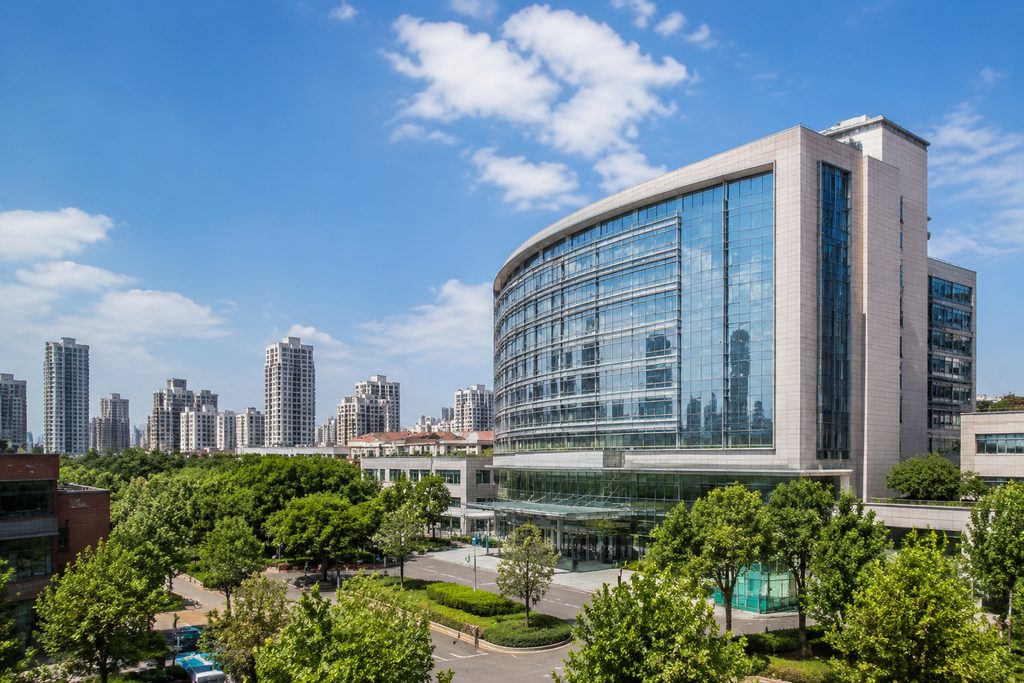
When 54-year-old Daniel from Manchester heard “multiple myeloma,” his first question wasn’t about survival curves. It was about where to go. His NHS oncologist laid out the standard induction regimen — bortezomib, lenalidomide, dexamethasone. Daniel started researching. He found Ruijin Hospital in Shanghai. And then he asked the question you’re probably asking right now: is multiple myeloma treatment at Ruijin Hospital actually worth it? The short answer, based on published outcomes and cost data, is that for many international patients the multiple myeloma treatment cost China runs 60–80% below US private-pay rates while offering access to a hematology department that handles over 1,200 new myeloma cases annually. But “worth it” depends on your staging, your cytogenetics, and what you’re actually comparing against.
Multiple Myeloma Treatment Worth It: Ruijin Hospital — The Short Answer
Ruijin Hospital’s Department of Hematology is consistently ranked among China’s top hematology centers in the Fudan University hospital rankings. The department runs one of the largest myeloma registries in Asia. For a newly diagnosed patient with standard-risk disease, induction therapy at Ruijin costs roughly $18,000–$35,000 for a four-to-six-cycle protocol using generic bortezomib and lenalidomide. The same protocol at a US academic center without insurance runs $120,000–$180,000. That’s the headline. But the caveat is that cost isn’t the only variable. Chinese public hospitals operate differently from Western ones. You cannot simply email the hospital and book a bed. The pathway involves remote evaluation first, then travel, then in-person assessment before any treatment plan is finalized.
Ruijin is not a medical tourism resort. It’s a 2,000+ bed public hospital in central Shanghai serving thousands of patients daily. The hematology wards are busy. The outpatient floors are crowded. If you arrive without Chinese language support and without a clear medical file, you will struggle. That’s not a deterrent — it’s the reality of accessing a top-tier Chinese public hospital.
Who This Is Right For — and Who It Isn’t
Multiple myeloma treatment abroad isn’t for everyone. The patients who benefit most from traveling to Shanghai for care at Ruijin fall into a few clear categories.
Typically good candidates:
- Newly diagnosed patients with standard-risk or intermediate-risk cytogenetics who want an evidence-based induction regimen at a fraction of Western private-pay cost
- Patients in remission who need maintenance therapy and can travel periodically
- Patients whose home country has long wait times for hematology consultation or limited access to triplet regimens
- Patients with relapsed disease who have exhausted locally available options and want a second opinion on novel combinations available in China
Who should not pursue this:
- Patients with high-risk cytogenetics (del17p, t(4;14), t(14;16)) who need immediate CAR-T or bispecific antibody access — these therapies exist in China but availability through public hospital channels for foreign patients is not straightforward
- Patients with acute renal failure, severe bone lesions requiring urgent radiation, or spinal cord compression — you should not fly long-haul in these states
- Patients whose disease is well-controlled at home and who have insurance covering their current regimen
- Patients expecting a Western-style private hospital experience — Ruijin is a public hospital, and the international VIP department, while more comfortable, is still not a private clinic
Being honest about who shouldn’t come is what makes the recommendation meaningful for those who should.
The Options, Compared
When you’re weighing whether multiple myeloma treatment in China is worth it, you need a real comparison. Here’s how Ruijin Hospital stacks up against other pathways for an international patient with newly diagnosed myeloma.
| Factor | Ruijin Hospital (Shanghai) | US Academic Center (Private Pay) | Private International Hospital in China |
|---|---|---|---|
| Induction therapy cost (4–6 cycles) | $18,000–$35,000 | $120,000–$180,000 | $60,000–$90,000 |
| Hematology department ranking | Fudan Top 10 nationally | US News top-ranked | Not ranked in Fudan system |
| Annual new myeloma cases | 1,200+ | Varies by center (300–800) | Low volume |
| English-speaking staff | Limited (international dept. only) | Yes | Yes |
| Access to clinical trials | Yes, but foreign patient enrollment is restricted | Yes | Rarely |
| Wait time for initial consultation | 1–3 weeks with coordination | 2–6 weeks | 1–2 weeks |
| Insurance direct billing | No (pre-pay, then claim) | Yes (in-network) | Often yes |
Ruijin wins on cost and clinical volume. It loses on language accessibility and insurance convenience. The private international hospitals in Shanghai — United Family, Jiahui — offer English-speaking care and direct billing, but their hematology departments simply don’t see the myeloma volume that Ruijin does. For a disease where experience matters, volume is a clinical argument, not just a logistical one.
Ruijin Hospital Multiple Myeloma Price: What Drives the Variance
The Ruijin hospital multiple myeloma price you’ll actually pay depends on four things: your disease stage, the regimen selected, whether you go through the standard public channel or the international VIP department, and whether you need autologous stem cell transplant.
Induction with generic bortezomib, lenalidomide, and dexamethasone (VRd) is the cheapest evidence-based triplet. If your physician recommends daratumumab-based quadruplet therapy — increasingly used for transplant-ineligible patients — the cost jumps significantly. Daratumumab in China is cheaper than in the US but still adds $25,000–$40,000 to a treatment course. Autologous stem cell transplant at Ruijin runs $15,000–$25,000 including hospitalization, compared to $80,000–$150,000 in the US.
Maintenance therapy — typically lenalidomide monotherapy — runs $800–$1,500 per month in China. In the US, the cash price for brand-name Revlimid can exceed $15,000 monthly. Even with generic lenalidomide now available in the US, the Chinese price remains lower.
Multiple Myeloma Survival Rate Ruijin Hospital: The Published Data
Patients asking about multiple myeloma survival rate Ruijin hospital usually want one number. The honest answer is that Ruijin’s published retrospective data shows a 5-year overall survival rate of approximately 55–65% for patients receiving modern triplet induction followed by autologous transplant. That aligns with outcomes reported from major Western centers for similar patient populations. Ruijin’s Shanghai Myeloma Registry, which tracks thousands of patients, has shown steady improvement in median overall survival over the past decade — from around 40 months in the early 2010s to over 60 months in recent cohorts.
But survival statistics are population-level. Your individual prognosis depends on ISS stage, cytogenetic risk, age, and response to induction. A single number from a registry won’t tell you what will happen to you. What the data does tell you is that Ruijin delivers outcomes comparable to Western academic centers — at a fraction of the price. That’s the core of the “worth it” question.
One more thing about survival data. Chinese registries historically under-reported high-risk cytogenetics because FISH testing wasn’t universally available in earlier years. That means older survival figures may be slightly optimistic compared to Western cohorts with more complete cytogenetic profiling. Recent cohorts at Ruijin include routine FISH testing, so the newer numbers are more reliable.
What It Costs: A Realistic Budget for International Patients
Let’s build a realistic budget for a newly diagnosed patient traveling from the UK, US, or Australia to Shanghai for induction therapy at Ruijin. These figures are ranges — final quotes always vary by hospital and case complexity.
- Remote evaluation and record review: $300–$500 for a written second opinion from a Ruijin hematologist
- Travel to Shanghai: $800–$2,500 round-trip depending on origin and class
- S2 visa application and documentation: $100–$300 including document translation and notarization
- Bilingual medical companion: from $300 per day — covers registration, queueing, payment, interpretation during consultations
- Induction therapy (4–6 cycles): $18,000–$35,000 through the standard channel, $30,000–$60,000 through the international VIP department
- Accommodation in Shanghai: $50–$150 per night for a serviced apartment near the hospital
- Autologous stem cell transplant (if indicated): $15,000–$25,000
Total for a complete induction course with transplant: roughly $35,000–$75,000 all-in. Compare that to $200,000–$400,000 in the US without insurance. That’s the math that makes patients book flights.
What’s not included: complications requiring ICU care, novel agents like CAR-T or bispecifics, and extended rehabilitation. Those costs can escalate. Always budget a 20–30% contingency.
Practical Considerations: Records, Visa, Payment, Language
Getting treatment at Ruijin as a foreign patient requires preparation. The hospital will not review your case remotely without complete records. You need: bone marrow biopsy reports, cytogenetics and FISH results, serum protein electrophoresis and immunofixation, imaging (PET-CT or whole-body MRI if done), and a detailed treatment summary from your current oncologist. All documents must be translated into Chinese for the hospital file — this is a non-negotiable administrative requirement.
Visa is the next hurdle. For medical treatment in China, the applicable short-stay category is the S2 visa, which covers private affairs including medical treatment. You’ll need an invitation letter from the hospital or a medical coordination service, your passport, and supporting medical documents. The S2 visa typically allows a 30–90 day stay, extendable within China. Family members accompanying you apply for the same S2 category. Do not apply for an M visa — that’s for commercial and trade activities and is not appropriate for medical travel.
Payment: Chinese public hospitals require pre-payment. You’ll deposit funds at admission and top up as treatment progresses. Credit cards are accepted at the international department but not always at standard public counters. Wire transfers are common. Insurance is reimbursement-based — you pay first, then claim from your insurer. Some international insurers have direct billing arrangements with Shanghai private hospitals, but Ruijin’s public channel does not do direct billing.
Language: the standard outpatient hematology clinic at Ruijin operates in Mandarin. Even the international department has limited English capacity. A bilingual medical companion who understands both the language and the hospital’s workflow — where to queue, which window to pay at, how to read the lab slip — is not a luxury. It’s the difference between a 4-hour visit and an 8-hour ordeal.
After you return home, continuity matters. Your local oncologist needs the full treatment summary, lab trends, and medication list from Ruijin. Maintenance therapy can often be continued at home if your local doctor agrees. Plan for a written handoff document before you leave Shanghai.
Frequently Asked Questions
You cannot book a hospital bed remotely. Chinese public hospital rules require an in-person outpatient consultation before any admission or treatment plan is finalized. What you can do is submit your records for remote evaluation first — a written second opinion or video consultation with the hematology team. That tells you whether traveling is worthwhile before you spend money on flights. Then, once in Shanghai, the in-person assessment happens and treatment proceeds from there.
The drug costs and hospital fees are genuinely lower — often 60–80% below US private-pay rates. Hidden costs exist but they’re not hidden if you plan for them: document translation, visa fees, accommodation, a medical companion, and the contingency for complications. The total all-in cost is still dramatically lower than Western private-pay treatment. What you sacrifice is insurance convenience and the comfort of being treated in your own language and system.
Ruijin is a comprehensive tertiary hospital with ICU, nephrology, orthopedics, and interventional radiology on-site. Myeloma complications — renal impairment, pathological fractures, infections — are managed within the same hospital. That’s an advantage over a standalone cancer clinic. If a complication requires prolonged hospitalization, your costs rise and your visa may need extension. Plan for that possibility rather than assuming a smooth course.
China has approved several CAR-T products for relapsed/refractory myeloma, and Ruijin is involved in clinical trials and commercial CAR-T administration. However, access for foreign patients is more restricted than for Chinese citizens. Clinical trial enrollment typically excludes non-residents. Commercial CAR-T may be available but at prices comparable to Western markets ($100,000–$150,000) and with additional regulatory complexity. If CAR-T is your primary reason for traveling, confirm eligibility in writing before booking anything.
The medical team is the same. The difference is logistics: the VIP department offers shorter wait times for consultations and imaging, English-speaking coordinators, and a more comfortable ward. It costs 1.5–2 times more. If your budget allows and you value smoother logistics, the VIP department is worth it. If you’re cost-sensitive and have strong bilingual support, the standard channel delivers the same medicine at a lower price.
Your Next Step
The decision to travel to Shanghai for myeloma treatment comes down to this: Ruijin Hospital offers world-class hematology outcomes at 60–80% below Western private-pay costs, but the pathway requires preparation, documentation, and on-the-ground support. We help international patients navigate that pathway — from remote evaluation with Ruijin’s hematology team to visa documentation, appointment coordination, and bilingual companionship during hospital visits. We are not a hospital and we do not provide diagnoses or treatment recommendations; we connect you with the medical teams who do. If you’re weighing whether this route makes sense for your situation, start with a free consultation to discuss your case — we’ll tell you honestly whether Ruijin is a realistic option for you, or whether staying home is the better call.
The core message is simple: multiple myeloma treatment at Ruijin Hospital is a genuinely viable option for international patients who prepare properly and understand the system they’re entering. The outcomes are real, the savings are substantial, and the path is navigable with the right support. If you’re ready to explore it, learn more about medical treatment in Shanghai or reach out to our team for a straightforward conversation about your case.
For more medical information and treatment options in China, visit chinamedservices.com (China Medical Services).
