Medical Translation vs Machine Translation: What Actually Works in Chinese Hospitals
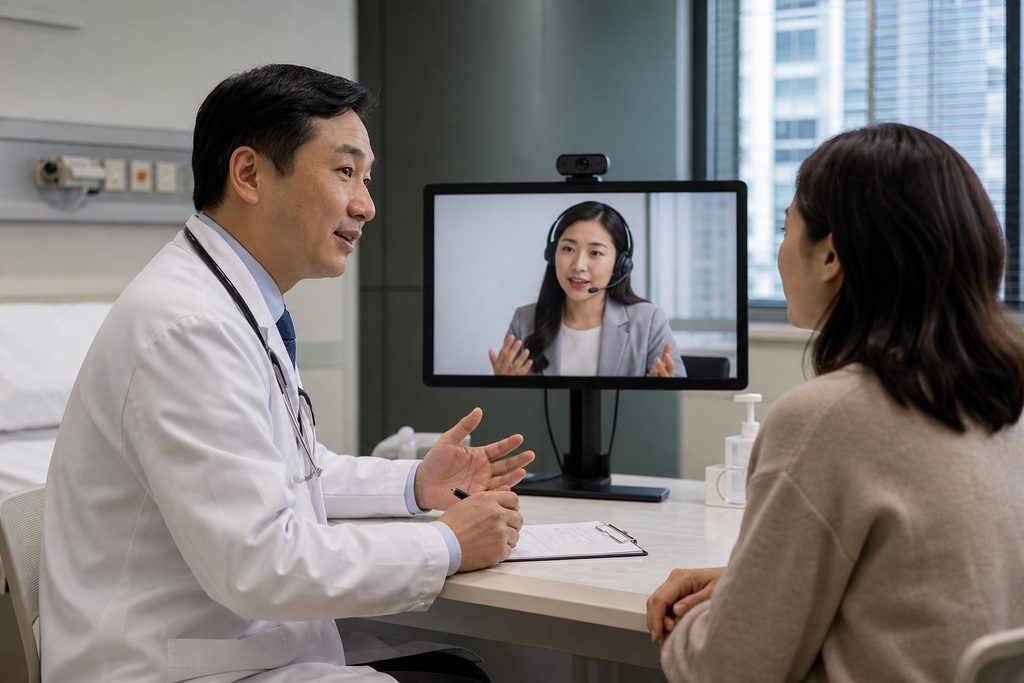
You’ve probably assumed that Google Translate can handle your medical documents well enough for a hospital visit in China. The reality is more dangerous than inconvenient. A 2023 study in BMJ Health & Care Informatics found that machine translation of clinical texts produced clinically significant errors in 31% of sentences when translating between English and Chinese. For discharge summaries, medication lists, and surgical histories, that error rate is not acceptable. Medical translation services for hospitals in China exist precisely because a mistranslated dosage or allergy note can change treatment decisions.
Professional medical translators working with Chinese hospital systems do more than convert words. They understand how Chinese physicians structure diagnoses, how lab reference ranges differ from Western standards, and how to format documents so a Chinese specialist can actually use them. This article breaks down what machine translation gets wrong, when it might be safe, what professional services cost, and how to decide what your case requires.
Medical Translation vs Machine Translation: The Short Answer
Machine translation is not safe for medical records that will guide clinical decisions. Use it only for personal understanding of non-urgent text like appointment confirmations or cafeteria menus. For anything a Chinese physician will read to make a diagnosis or plan a procedure, use a human medical translator with hospital-specific experience.
The caveat: not every document needs the same level of rigor. A dermatology consult note for a rash is lower-stakes than a cardiac catheterization report. Your translation strategy should scale with the clinical risk and the permanence of the decision being made.
Who Needs Professional Medical Translation — and Who Can Get By Without It
Good candidates for professional translation include patients sending records ahead of a video consultation, anyone seeking a written second opinion from a Chinese specialist, and patients preparing for surgery or hospitalization where medication reconciliation matters. If your records include imaging findings, pathology reports, or prior surgical notes, human translation is the standard.
Do not rely on machine translation for: allergy lists, medication dosages, prior adverse reactions, implant specifications, or anything involving oncology staging. These are precisely where automated tools fail most often.
Who can reasonably skip professional translation? If you are traveling for a basic health screening and your records are minimal, or if you are working with a private international hospital that has English-speaking physicians who can read your original documents directly. Some JCI-accredited private hospitals in China operate entirely in English and may not require translated records at all. Confirm before spending money.
The Options, Compared
Three realistic paths exist for handling medical documents when seeking care in China. Each has a different risk profile and cost structure.
| Method | Accuracy for Clinical Use | Typical Cost | Turnaround | Best For |
|---|---|---|---|---|
| Free machine translation (Google, DeepL) | Unreliable — 30%+ clinically significant error rate in some studies | $0 | Instant | Personal understanding only |
| General human translator (non-medical) | Variable — may miss terminology and formatting conventions | $0.08–$0.15 per word | 2–4 days | Low-stakes documents, administrative forms |
| Specialist medical translator with Chinese hospital experience | High — understands clinical context and Chinese hospital documentation standards | $0.12–$0.25 per word or $300–$500 per full record set | 3–7 days | Diagnoses, surgical planning, second opinions, medication lists |
If you are sending records for a written second opinion from a top-tier Chinese hospital, the specialist translator is the only sensible column. A $400 translation protecting a $15,000 surgical decision is not an expense; it’s cheap insurance. But if you are just trying to understand what your own discharge summary says before deciding whether to pursue care in China, start with machine translation and escalate only if confusion arises.
How Accurate Is Machine Translation for Medical Records?
The honest answer: not accurate enough for clinical decisions, and the failure mode is worse than you think. Machine translation does not just make random errors. It makes confident errors. It will translate “rule out myocardial infarction” as “confirm myocardial infarction” with equal fluency. It will render “decreased” and “increased” interchangeably in complex sentences. And it will not tell you when it is guessing.
A 2022 evaluation published in JAMA Network Open tested machine translation of discharge instructions across 12 languages and found that 8% of translated sentences contained errors that could cause clinically significant harm. For Chinese specifically, the structural differences compound the problem. Chinese medical terminology often uses character compounds that have no direct English equivalent. A machine will translate 心衰 as “heart failure” reliably, but it will also translate 心功能不全 as “heart failure” when the clinical nuance is “cardiac insufficiency” — a different severity grade that changes treatment urgency.
And the question “can I use Google Translate for hospital documents in China” deserves a blunt answer: not for anything that matters. Google Translate does not understand that a Chinese lab report listing “血红蛋白 85 g/L” uses the same reference range as a Western lab, but a Chinese physician reading an English report will interpret “hemoglobin 8.5” differently depending on whether the unit is g/dL or g/L. These are not translation errors. They are clinical interpretation errors caused by translation that looks correct.
The Cost of Professional Medical Interpreter Shanghai and Beyond
Interpreting and translation are different services with different price structures. The cost of professional medical interpreter Shanghai typically runs $50–$100 per hour for in-person interpretation at public hospitals, with half-day minimums around $200–$300. Video interpretation costs less, often $40–$80 per hour. Document translation, as noted above, usually runs $0.12–$0.25 per word for specialist medical work.
What drives the variance? Language pair matters. English-Chinese is well-served and competitively priced. Arabic-Chinese or Russian-Chinese costs more because fewer qualified medical translators exist. Urgency matters too. A 48-hour rush translation can cost 50–100% more. And hospital context matters: translating records for oncology or cardiac surgery departments requires more specialized terminology than translating a general physical exam note.
If you are working with a medical concierge service that includes translation in a coordination package, ask whether the translator is a certified medical translator or a bilingual coordinator. These are different skill sets. A bilingual coordinator can help you navigate registration and communicate basic needs. A certified medical translator should handle anything a physician will read.
Is Machine Translation Safe for Discharge Summary Abroad?
The short answer is no. A discharge summary is one of the highest-risk documents to translate by machine because it contains medication lists, follow-up instructions, and diagnostic conclusions that will guide your next physician’s decisions. If you are sending a discharge summary from a Western hospital to a Chinese specialist for review, a translation error in the medication section could lead to a dangerous prescribing decision.
But the reverse direction matters just as much. If you receive treatment in China and need to share your Chinese discharge summary with a physician back home, machine translation will not capture the nuances of Chinese clinical documentation. Chinese discharge summaries often use condensed phrasing and hospital-specific abbreviations. A human translator who has seen hundreds of Chinese discharge summaries knows that “对症治疗” means “symptomatic treatment” and not “targeted therapy” — a distinction that matters enormously in oncology contexts.
If you genuinely cannot afford professional translation for a discharge summary, at minimum have a bilingual clinician review the machine output before you rely on it. Do not hand a raw Google Translate document to a physician and assume they will catch every error. They will not. They will assume the document is accurate because it is typed and formatted like a medical document should be.
Choosing the Best Medical Translation Company for Foreign Patients China
Not all translation providers are equal, and “best medical translation company for foreign patients China” is not a category with a single winner. The right choice depends on what you need translated, for which hospital, and for what purpose.
Look for three things. First, does the provider have experience with Chinese hospital documentation specifically? A translator who works on pharmaceutical regulatory filings may be excellent but unfamiliar with how Chinese public hospitals format admission notes. Second, does the provider offer a review step by a second translator? Single-pass translation is cheaper but misses errors that a reviewer catches. Third, does the provider understand the difference between translating for a Chinese physician versus translating for an English-speaking physician? The target audience changes terminology choices and formatting.
Some international patients find that working with a service like China Medical Services simplifies this because translation is bundled with hospital coordination. The translator already knows which hospital you are targeting and what that hospital’s international department expects. That context produces better translations than a generic translation agency can offer.
Practical Considerations: Formats, Turnaround, and Verification
Chinese hospitals typically want translated documents in a specific format. Most will accept printed translations with the translator’s stamp or certification page. Some top-tier hospitals require the translation to be notarized if it will be used for legal or insurance purposes. Ask the hospital’s international department what they require before paying for translation. Do not assume a certified translation meets every hospital’s standards.
Turnaround matters more than most patients expect. A full medical record set — imaging reports, lab results, pathology, prior operative notes — can run 30 to 60 pages. Specialist translation of that volume takes 5 to 10 business days. If you are trying to schedule a video consultation with a Chinese specialist, start translation immediately after you decide to pursue care. Waiting until the week before your consultation creates rush fees and increases error risk.
Verification is the step most patients skip. After receiving a translation, have a bilingual person spot-check the sections that matter most: allergies, medications, prior surgeries, and the primary diagnosis. A five-minute check catches gross errors. If you do not have a bilingual contact, ask the translation provider to flag any sections where the source document was ambiguous or illegible. A translator who reports ambiguity is a good sign. A translator who silently guesses is dangerous.
Frequently Asked Questions
You can use it to understand the general content of non-critical documents. Do not use it for anything a physician will rely on to make treatment decisions. The error rate is too high, and the errors are often invisible because the output reads fluently. If you must use machine translation, treat the output as a rough draft that requires human verification.
Expect $300–$500 for a complete medical record translation from English to Chinese, assuming 30–60 pages of standard clinical documents. Prices vary by language pair, urgency, and the translator’s specialization. Rush service typically adds 50–100%. Some medical concierge services include translation in a broader coordination package, which can be more cost-effective than buying translation separately.
No. Discharge summaries contain medication lists and follow-up instructions where translation errors can cause direct harm. If you cannot afford professional translation, have a bilingual clinician review the machine output before sharing it with any physician. Never present raw machine translation as if it were a professionally translated document.
An interpreter works with spoken language in real time, such as during a doctor’s appointment. A translator works with written documents. The skills overlap but are not identical. For hospital visits in China, you may need both: a translator for your records before the visit, and an interpreter during the consultation itself.
Ask whether they have experience with Chinese hospital documentation specifically, not just medical translation generally. Ask whether a second translator reviews each document. And ask whether they will flag ambiguous sections rather than guessing. A provider who answers these questions directly is more likely to deliver usable translations than one who promises perfect accuracy without qualification.
Your Next Step
Translation is not a bureaucratic formality. It is a clinical safety measure. The documents you send ahead of a consultation in China determine whether the specialist sees the full picture or a distorted version of it. Our team at China Medical Services helps international patients coordinate translation, hospital selection, and appointment logistics. We are not a hospital, and we do not provide diagnoses or medical advice. If you are preparing records for a Chinese hospital and want to know what actually needs translating, start with a free consultation and we will help you figure out the right scope.
Get the translation right. Everything downstream depends on it.
For more medical information and treatment options in China, visit chinamedservices.com (China Medical Services).
