Inpatient Companion: Overnight Support Costs in China Explained
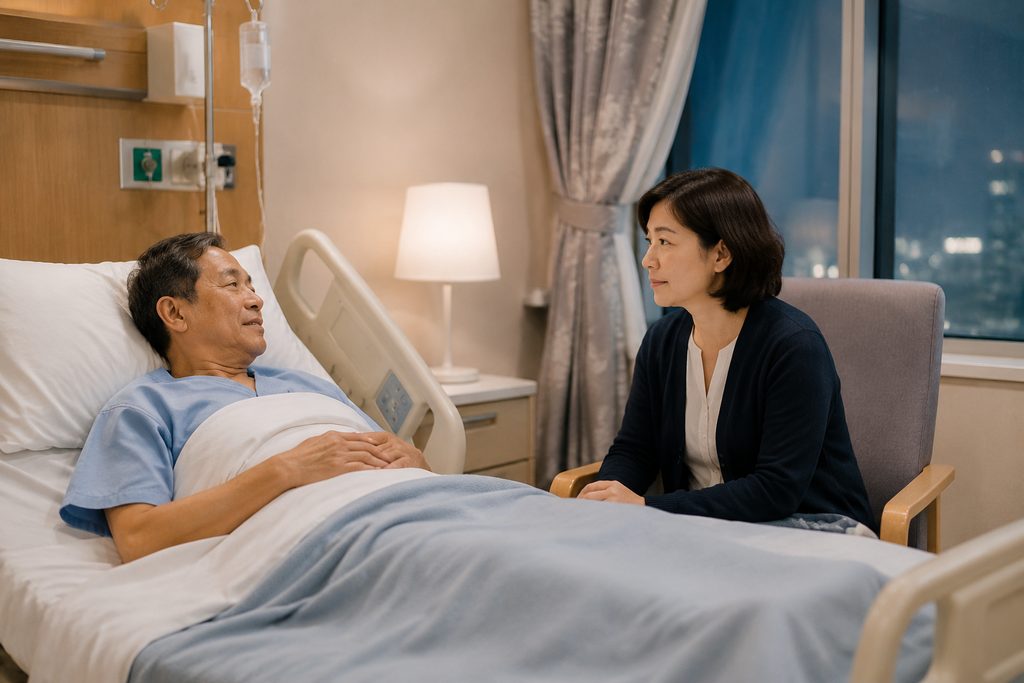
Inpatient Companion: Overnight Support — The Short Answer
An overnight hospital companion cost in China typically starts at $300 per day for a bilingual medical companion who handles translation, coordination, and non-clinical support. Private nursing care — where a registered nurse monitors vitals and manages clinical needs through the night — runs higher, often $80 to $150 per 12-hour night shift in a public hospital’s international ward. These are 2026 reference figures, and the final number swings based on hospital tier, city, and whether you need a general companion or a licensed nurse.
But that’s the simple version. The real question most families face isn’t just cost — it’s whether the hospital will even allow an outside companion to stay overnight, and what that person is legally permitted to do inside a Chinese inpatient ward. Those rules vary more than the prices do.
Who This Is Right For — and Who It Isn’t
Hiring an inpatient companion for overnight support makes sense in specific situations. You’re a good candidate if you’re traveling to China alone for surgery and won’t have family at your bedside. If your procedure requires several days of inpatient recovery and you don’t speak Mandarin, the communication gap alone justifies the expense. Patients with mobility restrictions after orthopedic or spinal surgery also benefit from having someone physically present to assist with repositioning, calling nurses, or fetching water at 2 a.m.
You should not pursue this if your hospital already provides 24/7 nursing coverage and you’re comfortable with basic English-speaking staff. Many private international hospitals in Beijing and Shanghai — including United Family and Jiahui — assign dedicated night nurses as part of their standard inpatient package. Paying for an additional companion on top of that is redundant. Similarly, if a family member can stay with you and the hospital permits it, a hired companion may add cost without adding much value.
The Options, Compared
Not all overnight support is the same. The table below compares what’s actually available to international patients in Chinese hospitals, based on 2026 service models.
| Option | Who Provides It | Typical Cost | What’s Included | Best For |
|---|---|---|---|---|
| Hospital night nurse | Hospital staff (RN) | Included in ward fees | Vitals monitoring, medication, clinical response | Patients with active medical needs |
| Private night nurse | Licensed RN via agency | $80–150 per night | Clinical monitoring, wound care, documentation | Post-surgical patients needing close observation |
| Bilingual medical companion | Service coordinator (non-clinical) | from $300 per day | Translation, family liaison, logistics, comfort support | Non-Mandarin speakers, solo travelers |
| Family member | Patient’s relative | Free (plus lodging) | Emotional support, basic assistance | When hospital allows and family is available |
If your primary concern is medical safety, the hospital’s own night nursing team is usually sufficient and already covered by your ward fees. The bilingual companion fills a different gap: language and coordination. Many patients combine both — the nurse handles clinical care while the companion translates doctor updates to family back home and manages non-medical logistics.
What Is an Inpatient Companion Service, Actually?
This is the section where definitions matter. What is an inpatient companion service? It’s a professional support arrangement where a trained individual stays with a hospitalized patient during overnight hours. The companion is not a substitute for hospital nursing staff. Their role typically includes translating between patient and medical team, helping with meals and hydration, assisting with bathroom trips when nursing staff are busy, updating family members via messaging apps, and documenting what doctors say during late-night rounds.
In Chinese public hospitals, the companion often also acts as a runner. Need to pay a deposit at the billing window on the first floor? The companion does that. Need discharge paperwork stamped at three different counters? The companion handles it. These are the tasks that exhaust family members and confuse foreign patients. A good companion absorbs that friction so you can focus on recovery.
Can a Family Member Stay Overnight in a Chinese Hospital?
This question comes up constantly. The honest answer: it depends on the ward. In private international hospitals, family overnight stays are typically allowed and often encouraged. Many rooms include a fold-out sofa or an extra bed for exactly this purpose. In public hospitals — even top-tier ones — the rules are stricter. Standard multi-bed wards usually prohibit family from staying overnight. Some international departments within public hospitals permit one family member in a private room, but this must be confirmed in advance.
When family can’t stay, that’s where hired support becomes essential. Our team has coordinated companions for patients at Fuwai Hospital and Peking Union Medical College Hospital, where international ward policies vary by department. Always confirm the specific hospital’s overnight policy before booking flights.
What Drives the Overnight Hospital Companion Cost in China?
Three factors move the price. City is the first. An inpatient caregiver for hire in Shanghai or Beijing commands a premium over Chengdu or Wuhan — expect 20–30% more in first-tier cities. The second factor is the companion’s qualifications. A general bilingual companion with medical terminology training costs less than a registered nurse with international certification. The private night nurse price in Beijing hospitals reflects that clinical premium. Third is duration. Booking a single night costs more per night than booking a full week, because the companion must still cover their own transportation and schedule around your dates.
What’s included in the $300 daily rate for bilingual support? Translation, hospital navigation, family communication, and basic comfort assistance. What’s not included? Clinical tasks. Companions do not administer medication, change dressings, or interpret lab results. If you need those services, you need a private nurse — and that’s a separate arrangement with different pricing.
Practical Considerations: Booking 24-Hour Hospital Sitter for Surgery in China
You’re planning surgery and want to book a 24-hour hospital sitter for surgery in China. Start early. Popular companions in major hospital districts book out weeks in advance, especially around Chinese public holidays when hospital staffing thins. Confirm the companion’s language abilities — “bilingual” means different things to different agencies. Ask whether they’ve worked in your specific hospital before. Familiarity with the building layout, the billing system, and the nursing station protocols saves hours of confusion.
Payment is typically arranged in advance through the coordinating service. Public hospitals require prepayment for treatment, and companion services generally follow the same model. Insurance rarely covers companion fees, though some international policies reimburse “medical travel assistance” — check your policy language. If you’re using an S2 visa for medical treatment, your companion or family member also needs an S2 visa, which we covered in our guide to choosing the right hospital in China.
After discharge, the companion’s role typically ends. Some continue as outpatient escorts for follow-up appointments, but that’s a separate arrangement. Plan for the transition so you’re not stranded on discharge day without language support.
Frequently Asked Questions
No. Private international hospitals almost always allow it. Public hospital standard wards often don’t. International departments within public hospitals fall somewhere in between — some permit companions in private rooms, others don’t. Always confirm with the specific hospital’s international patient office before committing to a companion.
Reputable coordination services include replacement guarantees. If the assigned companion can’t make it, a backup is dispatched. If the companion’s language skills or professionalism fall short, you should have a direct line to the coordination team to request a replacement. Ask about these policies before paying. Avoid independent freelancers without agency backup for exactly this reason.
Yes, and this is often where companions prove most valuable. Surgical consent forms, anesthesia consultations, and post-operative instructions are dense with medical terminology. A companion with medical vocabulary training can translate these conversations in real time, reducing the risk of misunderstanding. But for legal consent, some hospitals require a hospital-approved interpreter — verify this in advance.
No. A companion provides non-clinical support: translation, logistics, comfort, family updates. A private nurse provides clinical care: medication administration, wound care, vital sign monitoring. Some patients need both. Some need only one. Your surgeon or the hospital’s international department can advise which is appropriate for your case.
Two to four weeks is ideal for major cities like Beijing, Shanghai, and Guangzhou. For less common destinations, one week is usually sufficient. During Chinese New Year and the October Golden Week holiday, book a month ahead — hospital staffing drops and companion availability tightens dramatically.
Your Next Step
An overnight hospital companion in China is a practical solution for international patients who need language support and logistical help during inpatient recovery. The cost — from $300 per day for bilingual non-clinical support — buys peace of mind when family can’t be there and hospital policies restrict overnight stays. At China Medical Services, we coordinate companions, verify hospital policies, and help you plan the entire treatment journey. We’re not a hospital, and we don’t diagnose or treat — we handle the coordination so you can focus on healing. If you’re considering surgery in China and want to understand your overnight support options, tell us about your situation and we’ll help you map out a realistic plan.
For more medical information and treatment options in China, visit chinamedservices.com (China Medical Services).
