Airport Pickup in Shanghai: What Medical Travelers Actually Need to Know
Airport Pickup in Shanghai: The Short Answer
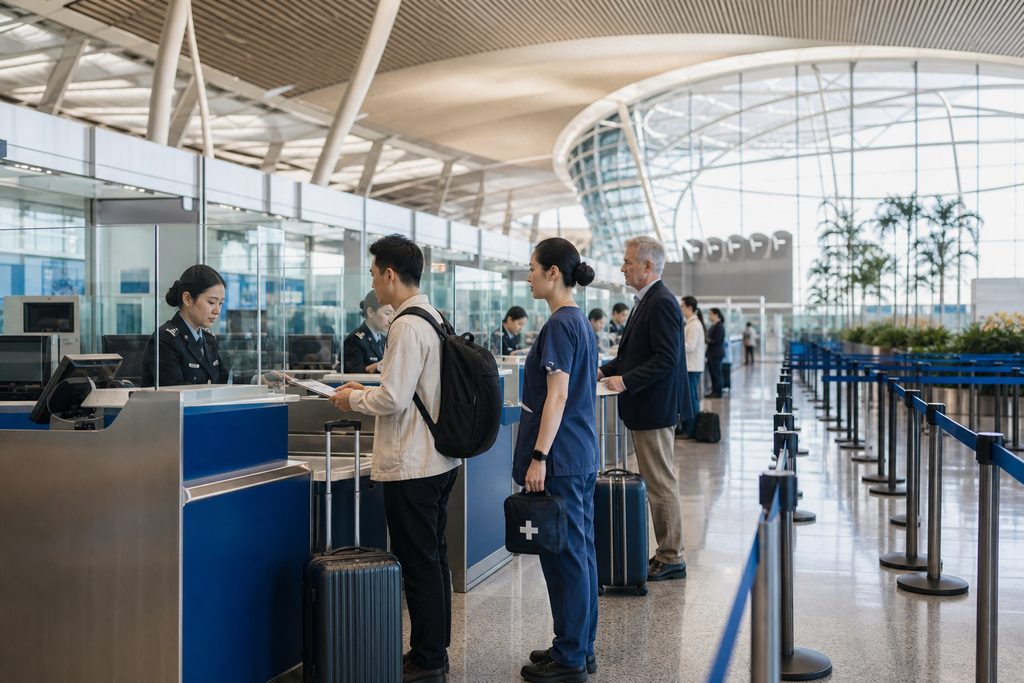
You’ve probably heard that landing in Shanghai for medical treatment means navigating chaos alone — crowds, language barriers, taxi queues that stretch forever. The reality is different. A dedicated airport pickup service Shanghai hospital patients rely on costs from $200 round-trip, takes about 60–90 minutes from Pudong International Airport to most major medical centers, and can be arranged before you ever board your flight.
But here’s the catch. Not all pickup services understand medical travel. A standard hotel shuttle driver doesn’t know which entrance at Zhongshan Hospital faces the international clinic. A random Didi driver won’t wait while you manage post-flight nausea or mobility issues. The service you choose matters as much as the price.
Who This Is Right For — and Who It Isn’t
An airport pickup service makes sense for a specific kind of traveler. You’re arriving for surgery or a complex procedure. You’re traveling alone. You don’t speak Mandarin. You’re carrying medical records, imaging discs, or medication that needs careful handling. You’re landing after a 12-hour flight and need to go directly to a hospital consultation.
Who should skip it? If you’re traveling light, speak some Chinese, have a local contact meeting you, or are staying at a hotel with a reliable concierge, the metro or a standard taxi works fine. The Maglev train from Pudong reaches Longyang Road in 8 minutes. A taxi from there costs a few dollars. But if you’re post-operative, jet-lagged, or managing a serious condition, the convenience isn’t a luxury — it’s logistics.
The Options, Compared
Three realistic ways to get from Pudong airport to a Shanghai hospital exist. Each has trade-offs in cost, reliability, and medical awareness. Here’s how they stack up.
| Option | Cost (USD) | Time to Hospital | Medical Awareness | Booking |
|---|---|---|---|---|
| Private medical transfer | $100–150 one-way | 60–90 min | High — driver knows hospital entrances, waits as needed | Pre-booked, confirmed before departure |
| Standard taxi / Didi | $30–50 | 60–100 min | None — may not know international clinic locations | On arrival, possible language barrier |
| Maglev + taxi combo | $15–25 | 45–70 min | None — transfers add complexity with luggage | Self-managed, multiple steps |
The private medical transfer suits most international patients arriving for treatment. You land, clear customs, and someone is holding a sign with your name. No negotiation. No explaining which hospital. No standing in the rain with a suitcase full of medical documents.
The taxi works if you’re confident, mobile, and arriving for a routine consultation. The Maglev is fastest but only gets you to Longyang Road — you still need a second transfer. For anyone post-surgery or pre-surgery with anxiety, the extra $70–100 for a private transfer is the cheapest insurance you’ll buy all trip.
How to Get from Pudong Airport to Hospital: Step by Step
Pudong International Airport (PVG) sits about 30 kilometers east of central Shanghai. Most major hospitals cluster in Xuhui, Huangpu, and Jing’an districts. That’s a 45–90 minute drive depending on traffic. Morning rush hour (7:30–9:30 AM) and evening rush (5:00–7:00 PM) add 20–30 minutes.
If you’ve booked a medical tourism airport transfer Shanghai price ranges from $200 round-trip for a standard sedan. The driver meets you at the arrivals gate — usually Exit 2 or 3 at Terminal 2 — with a name sign. They handle luggage. They know which hospital entrance serves international patients. Some services include a bilingual coordinator on the phone during the ride to confirm your appointment details.
If you’re taking a taxi, download Didi (the Chinese ride-hailing app) before you land. Set your destination in English. Show the driver the hospital’s Chinese address on your phone. Most taxi drivers in Shanghai don’t speak English. Have the hospital’s phone number ready in case the driver needs directions.
One thing many patients overlook: your flight lands at Terminal 1 or Terminal 2. They’re far apart. Confirm your pickup terminal before you fly. A driver waiting at T1 while you exit T2 wastes 20 minutes and causes unnecessary stress.
Is Airport Pickup Included in Medical Package China? The Reality
No — not by default. Most Chinese public hospitals do not include airport pickup in their standard international patient packages. Some private international hospitals like United Family or Jiahui may offer it as an add-on. But the top public hospitals — Zhongshan, Ruijin, Huashan — focus on clinical care, not logistics.
That’s where a coordination service fills the gap. When you book a private airport transfer in Shanghai for surgery, you’re paying for the logistics layer that hospitals don’t provide. The hospital handles your CT scan. Someone else handles getting you from the baggage carousel to the registration desk.
Some medical tourism packages do bundle transfers. If you’re working with an international patient coordinator, ask explicitly: “Does this include airport pickup, and which terminal?” Get it in writing. Verbal promises don’t survive a 14-hour flight and a missed connection.
What Airport Pickup Costs — and What You’re Actually Paying For
At China Medical Services, airport transfer runs $200 round-trip. That covers both arrival and departure. A one-way private transfer booked independently costs $100–150. A standard taxi runs $30–50. The Maglev plus taxi combination is cheapest at $15–25, but you’re managing luggage and transfers yourself.
What drives the price difference? The private medical transfer includes a driver who knows hospital locations, waits through customs delays, and communicates with your coordinator. Some services include a wheelchair if needed. Some include a bilingual escort who rides with you to the hospital and helps with check-in. That’s not a taxi ride — it’s a handoff.
And here’s the detail most people miss: the $200 round-trip figure assumes a standard sedan from Pudong to central Shanghai. If you’re going to a hospital in Qingpu or Songjiang districts, expect $150–200 one-way. If you need a van for medical equipment or multiple family members, the price rises. Always confirm the vehicle type and the exact hospital address before booking.
Practical Considerations: Booking, Timing, and What to Have Ready
Book your pickup at least 72 hours before departure. That gives the coordinator time to confirm your flight number, terminal, and hospital destination. If your flight changes, update immediately. A good service monitors flight status and adjusts pickup time automatically. A bad service charges you for the wait.
What to have ready when you land:
- Passport and visa (S2 for medical treatment — not M, which is for business)
- Hospital appointment confirmation letter
- Medical records and imaging discs
- Medication list and any prescriptions
- Cash in RMB (small bills for incidentals) and a credit card
- Your coordinator’s phone number saved offline
Customs at Pudong usually takes 30–60 minutes for international arrivals. A private driver waits. A taxi doesn’t. That’s the difference you’re paying for.
One more thing: if you’re arriving for surgery, schedule your flight a day or two before the procedure. Don’t land the morning of your operation. Jet lag, customs delays, and traffic happen. Give yourself buffer time. Your surgeon will appreciate it, and so will your blood pressure.
Best Hospital with Airport Pickup Shanghai: What Actually Matters
The question “which hospital offers airport pickup” misses the point. The right question is: which hospital meets your medical needs, and how do you get there efficiently?
Shanghai’s top hospitals for international patients include Zhongshan Hospital (cardiac, liver), Ruijin Hospital (endocrinology, hematology), and Huashan Hospital (neurology, dermatology). None of them run their own airport shuttle for international patients. But all of them are reachable within 90 minutes from Pudong with a pre-arranged transfer.
If you’re choosing between two hospitals with similar clinical quality, the one closer to your hotel or accommodation wins. Traffic in Shanghai is unpredictable. A hospital 20 minutes from your hotel beats a slightly “better” hospital 90 minutes away — especially if you need daily follow-up visits.
And if you’re comparing hospital options, start with the Fudan-ranked top 100 list to understand where Shanghai’s best institutions actually sit. Then work backward: which of those is most accessible from your arrival point?
Frequently Asked Questions
No. Public hospitals in China — including top-ranked ones like Zhongshan and Ruijin — do not operate airport shuttle services. Their international departments focus on clinical coordination, not ground transportation. You’ll need to arrange your own transfer through a taxi, ride-hailing app, or a medical coordination service.
A standard private sedan from Pudong airport to central Shanghai costs $100–150 one-way. Round-trip service through a medical coordinator runs about $200. Prices rise for vans, wheelchair-accessible vehicles, or destinations outside central districts. Always confirm whether the price includes waiting time, tolls, and parking.
A reputable transfer service monitors your flight status and adjusts pickup time automatically. You should still notify your coordinator as soon as you know about a delay. If you booked a taxi independently, you’ll likely lose the booking and need to rebook on arrival. This is one of the strongest arguments for a coordinated private transfer — someone is watching your flight even when you’re stuck on the tarmac.
Yes, but it’s not practical for most medical travelers. The Metro Line 2 runs from Pudong airport to central Shanghai, but it takes 70–90 minutes with transfers, involves navigating crowded stations with luggage, and requires walking significant distances. After a long flight, before a medical appointment, it’s rarely the right choice. The Maglev is faster but only gets you to Longyang Road — you still need a taxi or metro connection.
Sometimes, but never assume. Some international patient packages bundle airport transfers, hotel arrangements, and hospital coordination. Many do not. Ask your coordinator directly: “Is airport pickup included, from which terminal, and what happens if my flight changes?” Get the answer in writing before you pay anything.
Your Next Step
Getting from Pudong airport to your hospital bed involves more than a car ride. It’s about landing with a plan, knowing someone is waiting, and not spending your first hours in China negotiating with a taxi driver who doesn’t speak English. We help international patients coordinate airport transfers, hospital appointments, and bilingual support throughout their medical stay. We’re not a hospital, and we don’t provide medical advice or diagnoses. If you’re planning treatment in Shanghai, tell us your arrival details and hospital destination — we’ll help you sort out the logistics before you board.
For more medical information and treatment options in China, visit chinamedservices.com (China Medical Services).
