Lab and Imaging in China: A Ride There, Scans Done, Results in Hand
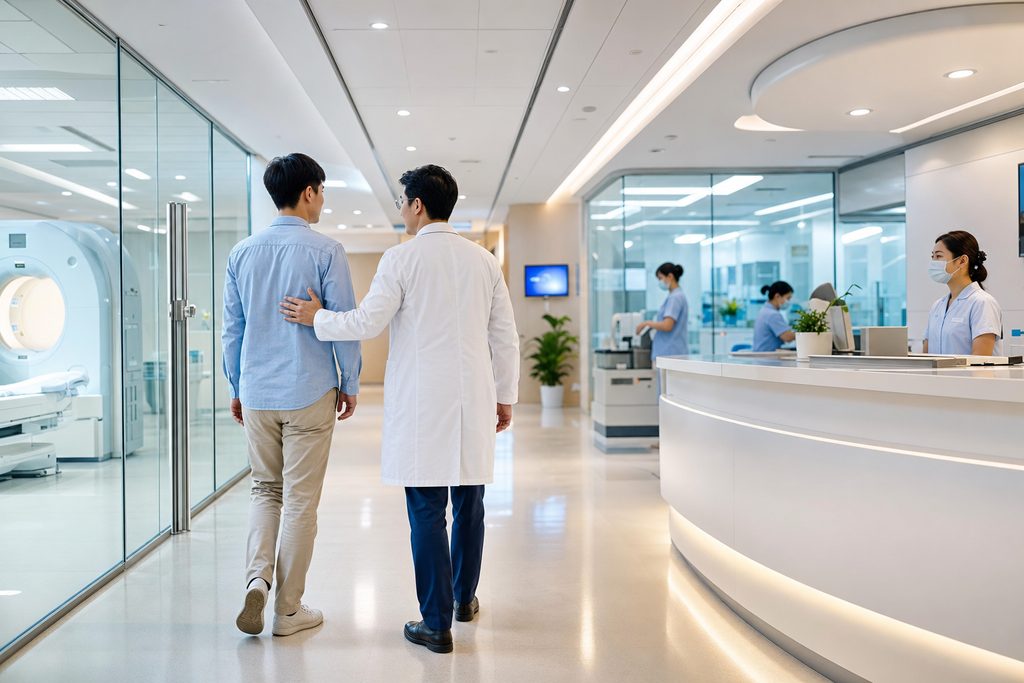
You have probably heard that getting an MRI or CT scan in a Western country means waiting weeks for an appointment and then waiting again for results. The reality in China’s top-tier hospitals is often the opposite. At many international hospital departments in Shanghai, an MRI can be scheduled within 24 to 72 hours, and preliminary results are sometimes available the same day. The MRI scan cost Shanghai international hospital patients typically ask about ranges from $150 to $450, depending on the body region and whether contrast is used. That is roughly one-fifth to one-tenth of the $1,000 to $3,000 price tag common in the United States.
But there is a catch. You cannot just walk in off the street and expect a technician to scan you. Chinese public hospitals operate on a same-day registration system. The international departments, which are designed for foreign patients, work differently. They allow pre-booking through coordinators or hospital liaison teams. Without that coordination, you will spend your first day navigating registration counters with no English signage.
Lab and Imaging: The Short Answer
Yes, foreigners can get lab tests and imaging in Chinese hospitals. The process is straightforward once you understand the two-track system. Public hospital standard departments serve thousands of local patients daily. International departments and private international hospitals serve foreign patients with English-speaking staff, faster scheduling, and direct billing options. A basic health screening package for tourists can be completed in half a day. A full-body MRI or PET-CT might take a full day including preparation and scan time.
The complication is this: you need a doctor’s order for most imaging. Chinese hospitals do not sell scans like a walk-in retail service. A physician must evaluate your symptoms or screening goals first, then write the imaging request. This is actually a safeguard, not a barrier. It prevents unnecessary radiation exposure and ensures the right test is ordered.
Who This Is Right For — and Who It Isn’t
Medical tourism for diagnostics works well for a specific profile of patient. You are a good candidate for lab and imaging services in China if you fall into one of these groups:
- You have a known condition and need follow-up imaging without waiting three months in your home country.
- You want a comprehensive health screening package while traveling in China for business or leisure.
- You have already received a diagnosis and want a second opinion based on fresh imaging.
- You are uninsured or underinsured in your home country and the out-of-pocket cost matters.
- You need advanced imaging like PET-CT or cardiac MRI that is expensive or hard to access at home.
But this path is not for everyone. You should not fly to China for imaging if you are medically unstable, if you cannot sit or lie still for extended scans, or if you need immediate emergency care. Also, if your home physician will not accept foreign imaging reports, you may end up paying twice. Some Western doctors insist on repeating scans at their own affiliated facilities. Ask your doctor before you book a flight.
The Options, Compared
China offers three distinct tiers for diagnostic imaging. Each has different pricing, speed, and service levels. Here is how they compare for a typical MRI scan and a basic metabolic panel.
| Option | MRI Cost (Single Region) | Lab Panel Cost | Scheduling Time | English Support |
|---|---|---|---|---|
| Public Hospital Standard Department | $80–$150 | $20–$60 | Same-day registration, scan within 1–3 days | Limited |
| Public Hospital International Department | $150–$450 | $50–$150 | Pre-booked, scan within 24–72 hours | Full |
| Private International Hospital (e.g., United Family, Jiahui) | $400–$800 | $100–$250 | Pre-booked, often same-day | Full, Western-style |
The public hospital standard department is cheapest but realistically requires a bilingual companion. The international department of a public hospital gives you access to the same machines and radiologists as the standard side, with added coordination and translation. The private international hospitals offer the smoothest experience with JCI accreditation and direct insurance billing, but at a premium. Most of our clients choose the middle option: the international department of a top-ranked public hospital, which balances cost and reliability. You can see the range of facilities on our top-ranked hospital directory.
What “A Ride There” Actually Means for Your Imaging Day
Here is the piece most articles skip: the logistics of getting to the hospital, moving between departments, and getting your results. A hospital campus in Shanghai or Beijing can be the size of a small university. The radiology building might be a 15-minute walk from the outpatient clinic. The lab might be on a different floor of a different building. Signage is in Chinese. You will need to pay at a separate cashier window before the scan, then bring the receipt back to the radiology desk.
This is where the “ride there” part becomes real. A bilingual medical companion does not just translate. They walk you from registration to the lab to the imaging suite. They hold your place in queue, handle the payment slip, and make sure the radiologist knows about any implants or allergies. Without this, a simple MRI can become a four-hour maze. With it, the same scan takes 90 minutes door to door. The service starts from $300 per day, which includes the companion’s time, not the hospital charges.
What It Costs: Lab and Imaging Price Breakdown
Let’s get concrete. The MRI scan cost Shanghai international hospital departments charge varies by body region. A brain MRI without contrast runs $200–$350. A lumbar spine MRI with contrast runs $300–$450. A cardiac MRI, which requires specialized sequences and longer scan time, runs $400–$600. These are international department rates. Standard department rates are roughly 40–50% lower.
CT scans are cheaper and faster. How long does a CT scan take in China? The actual scan is 5 to 10 minutes. Including check-in, IV line placement if contrast is used, and the scan itself, plan for 45 to 60 minutes total. A chest CT costs $80–$200. A coronary CT angiography costs $250–$500.
PET scans are where the savings get dramatic. A PET scan price Beijing vs USA comparison shows the gap clearly. In the United States, a full-body PET-CT costs $3,000 to $7,000. In Beijing’s international departments, the same scan costs $800 to $1,500. That includes the radiotracer, the scan, and the radiologist’s report. The price difference alone can justify the flight for some patients.
Lab work is inexpensive by Western standards. A comprehensive metabolic panel costs $30–$80. A complete blood count costs $15–$40. Tumor marker panels cost $100–$300 depending on the number of markers. Thyroid panels, lipid profiles, and HbA1c are all under $50 each. A full health screening package China for tourists typically runs $300–$800 at international departments and includes labs, chest X-ray, abdominal ultrasound, and a physician consultation.
These prices are ranges. Final costs depend on the hospital tier, the specific machine used, and whether contrast is required. Always confirm the total before the scan.
Practical Considerations: Records, Visas, Payment, and Follow-Up
Bring every prior imaging report and CD you have. Chinese radiologists will compare new scans against old ones. If you arrive with no history, the report will describe findings without that comparative context. Bring a list of current medications, any implant cards (pacemaker, cochlear implant, aneurysm clips), and your passport.
Visa matters. Foreigners traveling to China for medical treatment use the S2 visa, which is a short-stay visa for private affairs including medical treatment. Family members accompanying you also apply for S2. The hospital will provide a treatment invitation letter and supporting documents. The M visa is for commercial and trade activities and is not the correct category for medical travel. Confirm current requirements with the Chinese embassy or consulate in your country before booking anything.
Payment is straightforward but specific. Public hospital international departments require prepayment at the cashier before each test. They accept cash, UnionPay, and major credit cards. Private international hospitals often bill insurance directly. If you have international health insurance, check whether the facility is in-network. If not, you pay upfront and file for reimbursement. Keep every receipt. Ask for an English translation of the final report — some hospitals provide this automatically, others charge a small fee.
After you return home, share the imaging CD and report with your local physician. Most hospitals provide a DICOM-format CD at no extra charge. If your home doctor needs to view the images, that CD works on any standard radiology viewer. You can also request a written second opinion from the Chinese specialist before you leave, which costs $300–$500 and gives your home doctor a clear clinical summary to work from.
Frequently Asked Questions
Yes, but not entirely on your own. You need a physician at the hospital to order the tests. The international department will arrange a brief consultation first. The doctor reviews your history, orders the appropriate labs or imaging, and then you proceed to the lab or radiology department. This consultation is usually same-day and adds $50–$150 to the total.
For X-rays and CT scans, preliminary results are often available within 1 to 2 hours. MRI reports typically take 4 to 24 hours. PET-CT reports take 24 to 48 hours because the nuclear medicine physician reviews hundreds of images. If you are traveling from abroad, plan to stay at least 2 to 3 days after your scans to receive the full written report and speak with the radiologist.
At top-ranked hospitals, yes. The best public hospitals in Beijing and Shanghai run the same Siemens, GE, and Philips machines you would find at major American academic centers. Many have 3T MRI and 256-slice CT scanners. The difference is not the hardware. It is the volume. Chinese radiologists at high-volume centers read more scans per day than most Western radiologists, which builds pattern recognition. The limitation is that reports may be shorter and less narrative than what you are used to. Ask for a detailed English report if you need one for your home physician.
You can pre-arrange a book full body scan Shanghai medical tourism package through the hospital’s international department or a coordinator. The hospital will schedule your consultation, labs, and imaging in advance. You still need to register in person with your passport on the day of your appointment. Pre-arrangement saves you from the same-day registration queue and ensures an English-speaking staff member is assigned to your case.
This happens more often than you might think. A screening CT or MRI can reveal an incidental finding — a lung nodule, a liver cyst, a thyroid nodule. The radiologist will note it in the report. The next step depends on the finding. Some findings are clearly benign and require no follow-up. Others need further imaging or a specialist consultation. The international department can arrange a same-day or next-day consultation with the relevant specialist. You will not be left alone to interpret the report. But understand that an incidental finding can extend your stay and change your plans. This is a real possibility, not a remote one.
Your Next Step
Lab work and imaging in China are faster and cheaper than most Western patients expect. The machines are modern, the radiologists are experienced, and the international departments are built for foreign patients. What is not built for foreign patients is the public hospital standard system, where language barriers and same-day registration can turn a simple blood draw into a full-day ordeal.
We are China Medical Services, a coordination team that connects international patients with top-ranked Chinese hospitals. We are not a hospital and we do not diagnose or interpret results. What we do is handle the logistics: hospital selection, appointment scheduling, bilingual accompaniment, and follow-up coordination. If you are considering lab work or imaging in China, start with a conversation. Tell us what scans or tests you need, and we will tell you honestly whether this makes sense for your situation. No pressure, no obligation. Just a clear picture of what is possible.
For more medical information and treatment options in China, visit chinamedservices.com (China Medical Services).
