Airport Pickup for Late-Night Arrivals: Your 24-Hour Hospital Transfer Guide
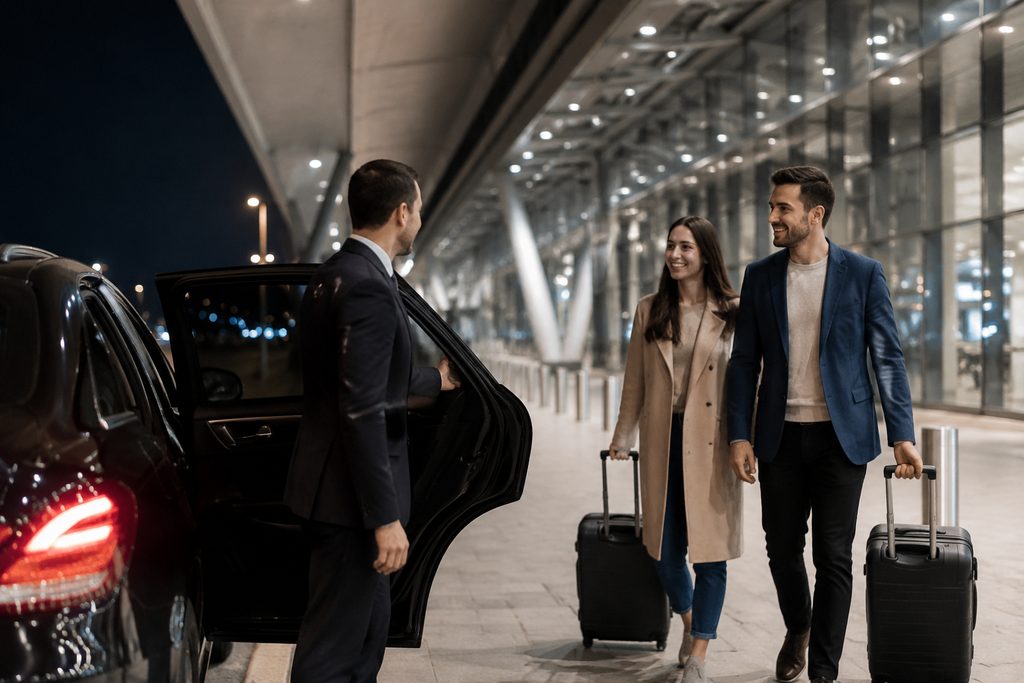
Airport Pickup for Late-Night Arrivals: The Short Answer
When 54-year-old Omar landed at Shanghai Pudong International Airport at 2:15 a.m., his flight from Jeddah had been delayed twice. His cardiac consultation was scheduled for 9:00 a.m. the same morning at Zhongshan Hospital. He had no Chinese phone number, no local currency, and no idea how to reach his hotel. His hospital’s international department had closed at 5:00 p.m. the previous day. What he needed was a 24 hour airport pickup hospital China transfer — and he didn’t have one arranged.
Here’s the direct answer: yes, you can arrange airport pickup for late-night arrivals when traveling to China for medical care. Public hospitals generally do not provide this service themselves. Private medical concierge teams and some international hospitals do. The cost typically runs from $100 to $200 one-way for a dedicated driver with English-speaking coordination, depending on the city and distance. But the real question isn’t whether the service exists. It’s who actually shows up at 3:00 a.m., and what happens if they don’t.
That’s where most late-night medical travelers get into trouble. They assume the hospital will handle it. Public hospitals in China — even top-ranked ones like those on the Fudan ranking — do not operate airport shuttles for international patients. Their international departments work standard business hours. A few private facilities like United Family or Jiahui may offer transfer coordination, but typically only for inpatients with pre-confirmed admission. Everyone else needs a third-party arrangement.
Who This Is Right For — and Who It Isn’t
Late-night airport pickup support makes sense for a specific profile of medical traveler. It is not a universal necessity. Here’s a honest breakdown.
Good candidates for 24-hour airport pickup:
- Patients arriving on flights landing between 10:00 p.m. and 6:00 a.m., when public transit options thin out and taxi queues can stretch for an hour
- First-time visitors to China with no Mandarin skills and no local contacts
- Elderly patients or those with mobility limitations who cannot manage luggage, stairs, or long walks through massive terminals like Beijing Capital T3 or Shanghai Pudong
- Patients with early-morning hospital appointments — a 9:00 a.m. consultation after a 2:00 a.m. landing leaves almost no margin for navigation errors
- Accompanied minors or patients traveling alone with significant medical anxiety
Who should not bother with a pre-arranged pickup:
- Travelers landing during daylight hours with a functioning smartphone and basic navigation apps — Didi, the Chinese ride-hailing app, has an English interface and works reliably from airports
- Patients staying at international chain hotels that offer their own airport shuttle service
- Anyone with a local friend or family member willing to meet them
- Budget travelers comfortable using the airport express trains, which run until around 11:00 p.m. in most major cities
Being clear about who doesn’t need this service matters. Paying $200 for a pickup you could have handled yourself with a $15 Didi ride is not a smart use of a medical travel budget.
How to Get from Airport to Hospital at Night China: The Options, Compared
If you do land late, you have four realistic options. Each has trade-offs. The table below breaks them down for a typical arrival at Shanghai Pudong or Beijing Capital airport, traveling 30–50 km to a central hospital district.
| Option | Cost (USD) | Wait Time After Landing | English Support | Best For |
|---|---|---|---|---|
| Taxi from official queue | $15–30 | 10–60 min | Minimal — driver rarely speaks English | Budget travelers with a printed Chinese address |
| Didi (ride-hailing app) | $12–25 | 5–15 min | App is in English; driver communication is not | Tech-comfortable travelers with roaming data |
| Hotel-arranged transfer | $50–100 | Pre-scheduled, usually punctual | Varies; international hotels often provide an English note for the driver | Those staying at 4–5 star international hotels |
| Medical concierge pickup | $100–200 one-way | Driver waits with name sign, tracks flight delays | Coordinator available by phone/WeChat in English throughout | Patients with early hospital appointments, mobility issues, or high anxiety |
The medical concierge option costs more because you’re paying for reliability, not just transportation. A driver who tracks your flight, waits through customs delays, and communicates with you in English when your gate changes at midnight has a different job description than a taxi queue. For a patient landing at 1:00 a.m. with an 8:00 a.m. oncology consultation at Fudan University Shanghai Cancer Center, that difference can be the entire margin of error.
If you’re traveling to Beijing for cardiac care at Fuwai Hospital, the same logic applies. The airport is 30 km from the hospital district. A missed connection or a wrong address at 3:00 a.m. is not a small inconvenience. It’s a lost consultation slot that took weeks to secure.
Can Hospital Arrange Late Night Pickup Beijing? What Most Travelers Don’t Know
This is the question we hear most often from patients planning care at Peking Union Medical College Hospital or Beijing’s other top institutions. The answer is almost always no — with limited exceptions.
Public hospitals in Beijing, including the internationally renowned ones, do not operate patient transport services. Their international departments can sometimes recommend a third-party provider, but they do not dispatch vehicles themselves. The same is true in Shanghai, Guangzhou, and Chengdu.
The exceptions are private international hospitals. Facilities like Beijing United Family Hospital or Shanghai’s Jiahui International Hospital may arrange transfers for patients who have already confirmed admission or surgery dates. Even then, the service is typically outsourced to a local transport company. The hospital coordinates; it does not own the car or employ the driver.
So when a patient asks “can hospital arrange late night pickup Beijing,” the honest answer is: not directly, and not reliably. What you need is a dedicated coordination layer between you and the transport provider. That layer is what you’re actually paying for.
Medical Tourism Airport Pickup Package Cost China: What the Numbers Include
Let’s talk about what a medical tourism airport pickup package cost China actually covers. Prices vary by city, distance, and time of night. A 2:00 a.m. pickup from Beijing Capital to the Dongcheng hospital district might run $150. The same service in Chengdu, where the airport is closer to the city center, might cost $110. Shanghai Pudong, the farthest airport from its city center among major Chinese cities, tends to sit at the higher end — $180 to $200 for a late-night transfer to Xuhui or Huangpu districts.
What’s typically included in a concierge-arranged pickup:
- Flight tracking — the driver knows if you’re delayed before you do
- Name sign at the arrivals gate (not just at the exit — actually at the gate where passengers emerge)
- English-speaking coordinator reachable by phone or WeChat during the entire transfer
- Assistance with luggage
- Direct drop-off at your hotel or hospital entrance, not a generic airport drop zone
- Receipt or invoice documentation for insurance reimbursement purposes
What’s not included:
- Tips (not expected in China, though appreciated for exceptional service)
- Parking fees if you ask the driver to wait at the hospital
- Any medical care or navigation inside the hospital itself
- Translation during your actual consultation — that’s a separate bilingual medical companion service
Some providers bundle the airport transfer with a broader arrival package. At China Medical Services, our airport transfer runs $200 round-trip, but we often fold it into a larger coordination plan that includes hospital appointment scheduling and an English-speaking companion for the first day. That bundling changes the value calculation. A standalone $200 transfer feels expensive. A $200 transfer that gets you from the plane to the right hospital building, with someone who knows which floor the international department is on, is a different product.
Late Night Arrival Medical Tourism China: The Practical Sequence
Here’s what a well-executed late night arrival medical tourism China transfer actually looks like, step by step. This is the sequence we walk patients through before they board their flight.
Before departure: You send your flight number, arrival terminal, and hotel or hospital name. We confirm the pickup with a local driver who has done this route before. You receive the driver’s name, plate number, and a WeChat contact for the English-speaking coordinator. This happens 48 hours before landing, not while you’re in the air.
While in flight: Nothing needed from you. The coordinator tracks your flight. If you’re delayed three hours, the driver adjusts. You don’t need to do anything.
After landing: You clear immigration and customs. This can take 20 minutes or two hours, depending on the queue. The driver waits. When you emerge, you look for your name on a sign. You confirm identity with the coordinator by phone or message. You’re in the car within ten minutes.
During the drive: The coordinator checks in once — confirming your destination and ETA. You can ask questions. Where’s the nearest pharmacy? What time does the hospital international department open? Does my hotel have breakfast at 6:00 a.m.? The coordinator answers or finds out.
At arrival: The driver helps with luggage and walks you to the correct entrance. Not the curb. The entrance. For a patient arriving at 3:00 a.m. for a 9:00 a.m. appointment, that distinction is worth the entire fee.
And here’s the part most articles skip: what if the driver doesn’t show? It happens. Flights change, drivers get sick, miscommunications occur. The reason you hire a coordination layer rather than booking a random car service is that there’s someone to call. A coordinator who can dispatch a backup driver in 20 minutes is the actual product. The car is just the vehicle.
One more consideration: payment. Most drivers in China accept cash or WeChat Pay. International credit cards are often useless for transportation. Pre-paying through a coordination service solves this. You land with no local currency, no working payment app, and no problem — because the transfer is already settled.
Airport Transfer Service for Patients Shanghai: What Makes This City Different
A properly arranged transfer includes flight tracking. The driver knows you’re delayed and adjusts. If you booked a simple car service without tracking, you’ll likely lose the booking and the fee. This is the single most common failure point for late-night medical arrivals. Always confirm that flight tracking is included before paying.
Licensed drivers in China are generally safe and professional. The risk is not crime — it’s miscommunication and getting lost. A solo patient who doesn’t speak Mandarin, landing at 2:00 a.m., exhausted from a long flight, is vulnerable to confusion, not danger. Having an English-speaking coordinator reachable during the transfer removes most of that confusion.
No. Tipping is not part of Chinese transportation culture. Drivers do not expect it. If you want to show appreciation for exceptional help with luggage or waiting through a long customs delay, 20–50 RMB is generous but entirely optional.
Yes, if the hospital has a 24-hour entrance. Most public hospitals in China do have emergency entrances open all night, but the international department or outpatient building will be closed. The driver can drop you at the correct entrance, but you’ll need to confirm with your coordination team which entrance that is. Arriving at the wrong gate of a massive hospital complex at 3:00 a.m. is a frustrating start to a medical trip.
Your Next Step
A late-night airport pickup is a small piece of a larger medical journey, but it’s often the piece that sets the tone. If you land at 2:00 a.m. and everything works, you start your consultation rested and focused. If it doesn’t, you start exhausted and rattled. The difference costs about $100.
Our team at China Medical Services coordinates airport transfers, hospital appointments, and bilingual companions for international patients across 37 cities and 340+ top-ranked hospitals. We are not a hospital. We do not provide diagnoses or medical advice. We handle the logistics that make your medical care accessible.
If you’re planning a late-night arrival for medical treatment in China, send us your flight details and hospital destination. We’ll tell you exactly what a transfer would cost and whether it’s worth arranging for your specific situation. Sometimes the honest answer is “take a taxi.” Other times, it’s “you need a coordinator.” Either way, you’ll know before you board. Get a free consultation at our patient services page.
Landing at 3:00 a.m. in a country where you don’t speak the language is hard enough. Getting from the airport to the hospital shouldn’t be the part that keeps you up at night.
Frequently Asked Questions
Yes. The hospitals used for international patients are JCI-accredited and follow the same international safety standards as top hospitals in the US and Europe. Surgical teams perform high volumes of procedures — often more than their Western counterparts — which studies show leads to better outcomes.
Costs vary by procedure and hospital, but international patients typically save 40-80% compared to US prices — even when factoring in travel and accommodation. A consultation with our team will give you an exact, all-inclusive quote with no hidden fees.
Send us your existing medical reports to get started. We handle everything from hospital selection and appointment scheduling to visa assistance and post-operative recovery planning. Your medical records are reviewed by the specialist before you even book a flight.
For more medical information and treatment options in China, visit chinamedservices.com (China Medical Services).
