Medical Visa: Your Gateway to China Care
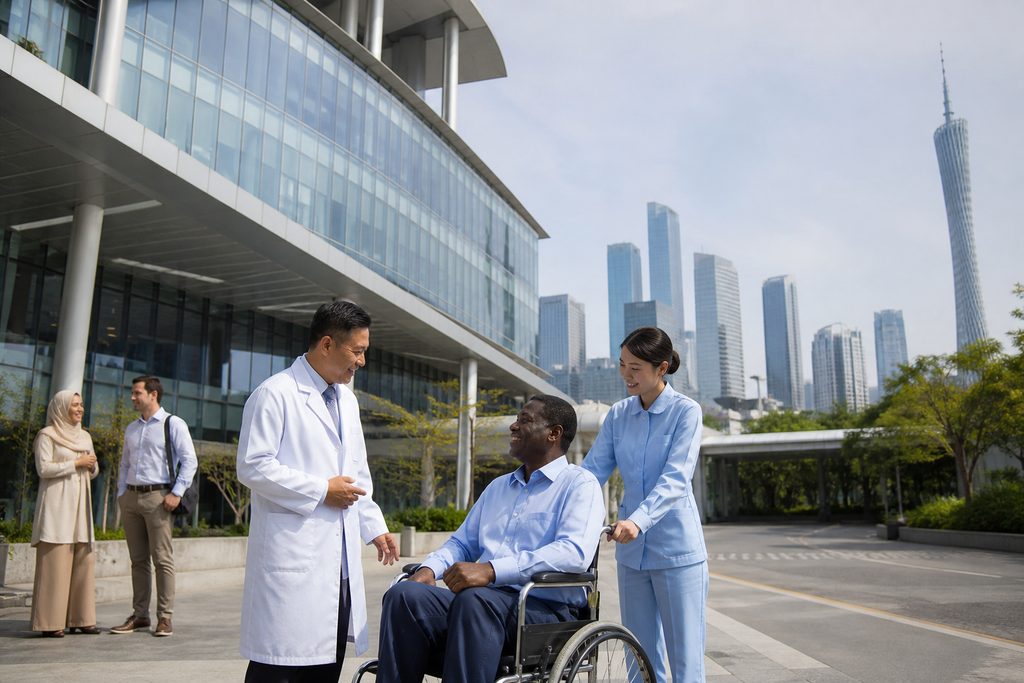
Medical Visa: Your Gateway to China Care — The Short Answer
China’s medical visa for treatment is officially the S2 visa, and it opens the door to 340+ top-ranked hospitals across 37 cities. A liver transplant cost China runs roughly $35,000–$80,000 at a top-tier public hospital, compared to $500,000+ in the United States. That gap explains why thousands of foreign patients now look east. But the visa itself is only one piece of a much larger logistical puzzle.
The S2 visa is issued for short-term private affairs, including medical treatment. You apply with an invitation letter from the hospital, your medical records, and proof of funds. Approval typically takes 4–10 business days. The catch: you cannot simply book surgery from abroad and show up. Chinese public hospitals require an in-person outpatient consultation before any procedure is scheduled. That means your first visit may be diagnostic, not therapeutic.
Who This Is Right For — and Who It Isn’t
China care works best for patients who need high-volume, technically demanding procedures at a fraction of Western prices. Cardiac surgery, orthopedics, oncology, and certain transplant evaluations top the list. Fuwai Hospital in Beijing performs over 14,000 cardiac surgeries annually — the highest volume in the world. That repetition breeds precision.
Good candidates typically share these traits:
- You have a confirmed diagnosis and existing imaging or biopsy reports
- Your condition is stable enough for international travel
- You can pay out-of-pocket or your insurer reimburses foreign care
- You have a family member or companion who can travel with you
Who should think twice? Patients in acute decompensation who cannot safely fly. Patients seeking experimental therapies not yet approved in China. And anyone expecting the same administrative experience as a Western private hospital — Chinese public hospitals are efficient but crowded, and English fluency among staff varies widely.
The Options, Compared
You have three genuine pathways for medical care in China: public top-tier hospitals, private international hospitals, and hybrid models using the international departments of public hospitals. The table below breaks down what each offers.
| Pathway | Best For | Cost Level | English Support | Wait Time |
|---|---|---|---|---|
| Public Top-Tier (e.g., Fuwai, PUMCH) | Complex surgery, rare disease | $ — lowest | Limited; companion needed | Days to weeks after arrival |
| International Dept of Public Hospital | Same doctors, better logistics | $$ — 1.5–2x public | Good | Days to 2 weeks |
| Private International (United Family, Jiahui) | Routine care, diagnostics, comfort | $$$ — highest | Excellent | Same day to days |
Most surgical patients choose the international department of a public hospital. You get the same senior surgeons who handle thousands of cases yearly, plus English-speaking coordinators and shorter queues. The premium is real — typically 50–100% above standard public pricing — but still far below US rates. Private international hospitals make sense for diagnostics, second opinions, and non-surgical care where comfort matters more than surgical volume.
What the S2 Medical Visa Actually Requires
This is where most applications stall. The Chinese consulate wants four things before they will stamp an S2 for medical purposes. First, a formal invitation or confirmation letter from a licensed Chinese hospital. This must state your diagnosis, proposed treatment dates, and the department you will visit. Second, your complete medical records translated into Chinese or English. Third, proof of sufficient funds — typically bank statements showing at least $10,000–$30,000 depending on the planned procedure. Fourth, a valid passport with at least six months remaining and two blank pages.
Do not apply for an M visa. The M visa is for commercial and trade activities. Using it for medical treatment risks denial at the border or complications during your hospital stay. Family members traveling with you apply for their own S2 visas, citing accompaniment for medical care. Stays beyond 180 days require an S1 visa, which involves additional documentation and a health check in China.
How Much Does Cancer Treatment in Shanghai Cost?
Shanghai is China’s most expensive medical market, yet still dramatically cheaper than Western alternatives. A full course of standard chemotherapy for breast or colorectal cancer runs $8,000–$20,000 depending on drug regimen and hospital tier. Immunotherapy using approved PD-1 inhibitors adds $15,000–$40,000 per year. Radiation therapy for a typical 6-week course costs $10,000–$25,000. Surgical resection for early-stage lung cancer at Zhongshan Hospital Fudan University runs $15,000–$30,000 including hospitalization.
Compare that to the US, where the same chemotherapy course often exceeds $100,000 before insurance. Shanghai’s advantage is not just price — it is protocol speed. At top oncology centers, the gap between diagnosis and treatment initiation is often measured in days, not weeks. That speed matters when every week counts.
Is Stem Cell Therapy Legal in China?
Here is where you need hard facts, not marketing. Stem cell therapy in China operates under strict regulations. Since 2015, the National Health Commission has required all stem cell clinical applications to be conducted as registered clinical trials at approved hospitals. That means unproven “stem cell injections” sold by private clinics are illegal — and yet they still exist, targeting foreign patients with promises of miracle cures.
Legal stem cell treatment in China means enrolling in a registered clinical trial. These trials cover conditions like spinal cord injury, certain autoimmune diseases, and some degenerative disorders. Enrollment is free for the medical procedure itself, though you pay for travel, accommodation, and any standard care not covered by the trial. If a clinic promises guaranteed results or charges tens of thousands of dollars for “stem cell packages,” walk away. Legitimate programs do not market that way.
Best Hospital for Cardiac Surgery Beijing: What the Data Shows
Fuwai Hospital is the single highest-volume cardiac surgery center on the planet. More than 14,000 open-heart procedures annually. That is roughly three times the volume of the busiest US center. For coronary artery bypass grafting, Fuwai’s mortality rate sits below 1% — on par with or better than Cleveland Clinic’s published figures. The hospital performs complex valve repairs, aortic dissections, and pediatric congenital heart repairs that many Western centers see only occasionally.
But Fuwai is not your only Beijing option. Anzhen Hospital handles similar volumes with a strong reputation in arrhythmia surgery. Peking Union Medical College Hospital offers comprehensive cardiac care with exceptional diagnostics. The cardiac surgery department rankings on our site break down the top 10 hospitals by sub-specialty, so you can match your specific condition to the right team.
Book Orthopedic Surgery Package China: What That Really Means
You cannot book orthopedic surgery in China the way you book a hotel room. No legitimate hospital will confirm a surgery date before an in-person consultation and imaging review. What you can do is book a coordinated evaluation package. This typically includes hospital registration, specialist consultation, MRI or CT if needed, and a written surgical plan with pricing. From $300, a coordinator handles the logistics so you arrive with appointments already scheduled.
For joint replacements, Chinese orthopedists perform procedures at volumes that dwarf Western centers. A total knee replacement at a top Beijing or Shanghai hospital costs $8,000–$18,000 including implant and hospitalization. The same procedure in the US averages $35,000–$50,000. Recovery protocols are similar. The difference is the ratio of experience: a senior Chinese orthopedic surgeon may perform 500+ joint replacements yearly, versus 100–200 for a typical US surgeon.
What It Costs: A Realistic Budget
Beyond the procedure itself, budget for the ecosystem around it. Here is what a typical two-week surgical trip looks like:
- Round-trip international flights: $800–$3,000 depending on origin
- Visa application and document preparation: $200–$500
- Airport transfer: $200 round-trip
- Bilingual medical companion: from $300 per day
- Hospital deposit (refundable portion varies): 30–50% of estimated procedure cost
- Hotel or serviced apartment near hospital: $60–$200 per night
- Post-operative medication and follow-up imaging: $500–$2,000
Most patients underestimate the companion cost. In a public hospital, you need someone who speaks Chinese to queue for registration, pay deposits, collect results, and translate during rounds. Without that, even a simple blood draw becomes a two-hour maze. The companion is not a luxury — it is the difference between a smooth process and a stressful one.
Practical Considerations: Records, Insurance, and Follow-Up
Bring everything. Every scan, every lab result, every pathology report. Chinese specialists want raw data, not summaries. Bring DICOM files on a CD or USB drive for any CT, MRI, or PET scan. If your records are not in English or Chinese, pay for certified translation before you travel. Hospitals will not translate for you.
Insurance is complicated. Most Chinese public hospitals require prepayment. You pay the estimated cost upfront, then submit claims to your insurer for reimbursement. Some international private hospitals offer direct billing with major insurers like Cigna, Aetna, and Bupa. Check before you choose your pathway. If your insurer requires pre-authorization, start that process at least three weeks before travel.
Follow-up after you return home matters more than most patients expect. A Chinese surgeon cannot manage your wound care from 6,000 miles away. You need a local physician willing to take over post-operative monitoring. Arrange this before you leave. Request a detailed discharge summary in English, including medication lists, activity restrictions, and warning signs that require immediate attention.
Frequently Asked Questions
No. The S2 visa for medical purposes requires a formal invitation or confirmation letter from a licensed Chinese hospital. Without it, your application will be rejected. Some patients try to enter on a tourist L visa and seek care, but this is risky — hospitals may refuse non-emergency treatment, and your insurance may deny coverage.
Standard chemotherapy in Shanghai runs $8,000–$20,000 per course versus $30,000–$100,000 in the US. Surgical oncology at top Shanghai hospitals costs $15,000–$40,000 including hospitalization. Immunotherapy adds $15,000–$40,000 annually. These figures vary by hospital tier, drug regimen, and case complexity.
Only within registered clinical trials at approved hospitals. Unapproved stem cell treatments sold by private clinics are illegal, though they still operate. If you are considering stem cell therapy, verify the trial registration number on the Chinese Clinical Trial Registry and confirm the hospital’s affiliation with a major university.
Chinese emergency departments treat anyone who presents, regardless of visa status or ability to pay upfront. But emergency care is triaged, and non-life-threatening conditions may wait hours. Carry your passport, insurance details, and a card with your hospital contact information in Chinese. Your companion should know how to call 120 for an ambulance.
You can book an evaluation package, not the surgery itself. The package includes consultation, imaging, and a surgical plan. Surgery is scheduled only after the surgeon reviews your case in person. Any service promising a confirmed surgery date before arrival is misrepresenting how Chinese hospitals operate.
Your Next Step
The medical visa for treatment in China is a gateway, not a guarantee. It gets you in the door. What happens after depends on choosing the right hospital, having your records in order, and navigating a system that does not cater to English speakers. That is where a coordinator changes the equation.
We are not a hospital. We do not diagnose or treat. We are a team of bilingual coordinators who match international patients with China’s top-ranked hospitals, handle documentation, and provide on-the-ground support from arrival to discharge. If you are considering treatment in China, start with a conversation. Request a free consultation and we will help you understand whether China care makes sense for your specific case — before you spend a single dollar.
China’s medical system rewards preparation. The patients who succeed are the ones who arrive with a plan, not just a plane ticket.
For more medical information and treatment options in China, visit chinamedservices.com (China Medical Services).
