Halal Meal Coordination in China: A Muslim Patient’s Complete Guide
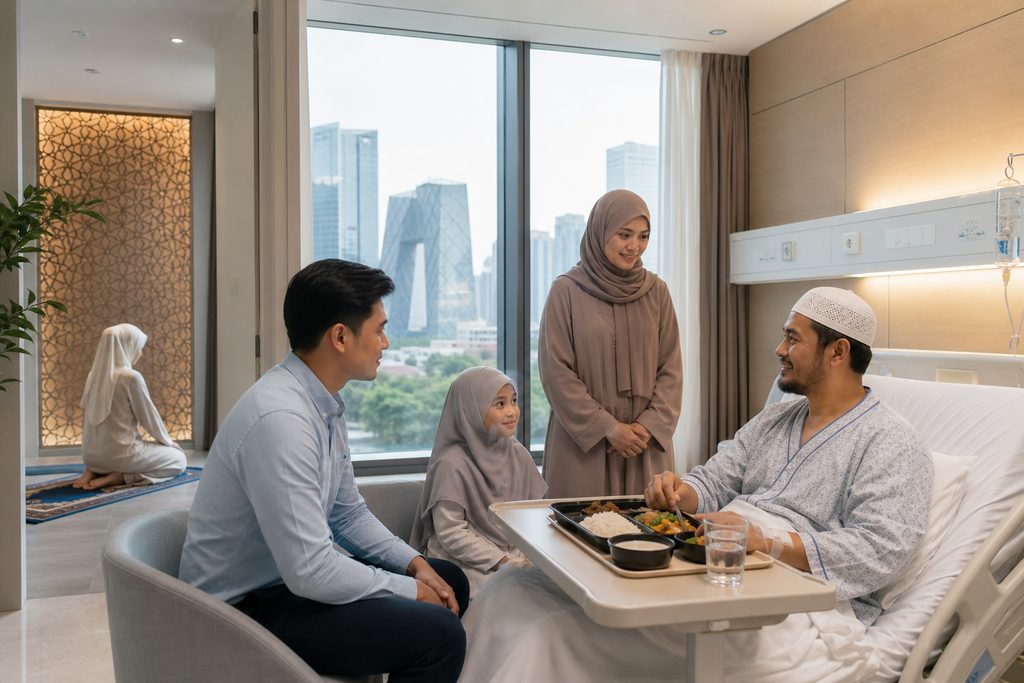
Halal Meal Coordination in China: The Short Answer
Yes, halal meal coordination in Chinese hospitals is possible — but it depends heavily on which city and which hospital you choose. Major hubs like Beijing, Shanghai, Guangzhou, and Chengdu have established protocols, with some top-tier facilities offering certified halal kitchens or partnerships with local halal caterers. Smaller cities often require more planning, and in some cases, family members bring meals in. The key is arranging this before admission, not after you arrive on the ward.
That said, the system is not standardized nationwide. A hospital in Xi’an — a city with a large Hui Muslim population — will handle halal food very differently from a hospital in Shenzhen. Understanding the landscape before you commit to a treatment plan is the difference between a smooth stay and a stressful one.
Muslim patients traveling to China for medical care often ask us about food first, before surgery dates or doctor credentials. It makes sense. Dietary compliance is not a preference — it’s a religious obligation. And getting it wrong in a hospital setting, where you’re already vulnerable, adds a layer of anxiety nobody needs.
Who This Is Right For — and Who It Isn’t
Halal meal coordination in Chinese hospitals works well for certain patient profiles. It’s less straightforward for others. Let’s be direct about both.
Good candidates for halal meal coordination in China:
- Patients heading to cities with significant Muslim communities — Xi’an, Beijing, Shanghai, Guangzhou, Chengdu, Kunming, and Lanzhou all have established halal food infrastructure
- Patients staying at private international hospitals, where dietary requests are handled more flexibly and English-speaking staff can coordinate with kitchens
- Patients who can bring a family member or companion to manage meals, especially for longer stays
- Patients comfortable with simple, repetitive meals — hospital halal options in China are often basic: rice, vegetables, chicken, fish, eggs
Who should think carefully before relying on hospital halal food:
- Patients with strict certification requirements (e.g., requiring Halal certification from a specific authority like JAKIM or MUI) — most Chinese hospital kitchens won’t carry these specific certifications
- Patients with multiple dietary restrictions beyond halal (e.g., low-sodium, diabetic, allergen-free) — layering restrictions on an already limited halal menu can be challenging
- Patients heading to smaller cities or county-level hospitals where halal infrastructure is minimal
- Patients who cannot have a family member present and are not comfortable cooking in a serviced apartment
If you fall into that second group, it doesn’t mean China is off the table. It means your coordination strategy needs to be different — more on that below.
The Options, Compared
When it comes to halal food during a hospital stay in China, you have four realistic paths. Here’s how they stack up:
| Option | Typical Cost | Certification Level | Convenience | Best For |
|---|---|---|---|---|
| Hospital halal kitchen (in-house) | $5–15 per day | Often informal; depends on hospital policy | High — meals delivered to ward | Patients at major hospitals in Xi’an, Beijing, Shanghai |
| External halal caterer (hospital partnership) | $10–25 per day | Usually certified by local Islamic association | Medium — delivery times may vary | Longer stays, specific dietary needs |
| Family-prepared meals | $8–20 per day (groceries) | Full control — depends on family’s sourcing | Low — requires kitchen access | Patients with a companion staying in serviced apartment |
| Private international hospital kitchen | $20–50 per day | Often flexible, but rarely formally certified | High — but limited menu | Short stays, patients who prioritize convenience |
For most Muslim patients, the hospital halal kitchen or external caterer route is the sweet spot. You get reliability without the hassle of cooking. But if you have strict certification requirements, family-prepared meals — or a combination of hospital meals plus supplementary food from halal restaurants nearby — is the safer bet.
How Halal Meal Coordination Actually Works in Chinese Hospitals
Here’s the step-by-step reality, based on how hospitals in cities like Shanghai and Xi’an typically operate.
First, you or your coordinator contacts the hospital’s international department before admission. This is the critical step. The international department — not the ward nurses — handles special requests for foreign patients. They can tell you whether the hospital has a designated halal kitchen, whether they work with an external halal caterer, or whether you need to arrange meals independently.
Second, if the hospital does offer halal meals, you’ll typically be asked to fill out a dietary request form at admission. This form goes to the nutrition department. In hospitals with large Muslim patient populations — like those in Xi’an, where the Hui community is significant — halal is a standard checkbox. In others, it may require explanation.
Third, the meals themselves. Chinese hospital halal meals are usually simple: steamed rice, stir-fried vegetables, boiled chicken or fish, eggs, and soup. Portions are adequate but not generous. Flavor is mild. If you’re used to Middle Eastern or South Asian halal cuisine, expect something different.
And here’s a nuance many patients don’t anticipate: halal in China often means “no pork and no alcohol,” but may not extend to the full slaughter-certification standards used in Gulf countries or Malaysia. If you require dhabiha meat specifically, you’ll likely need to source it yourself or through a certified external caterer.
Important: Never assume halal is available. Always confirm in writing with the hospital’s international department before you book travel. A verbal “yes, we can do that” from a booking agent is not the same as a confirmed dietary protocol.
What It Costs: Halal Hospital Food Package Pricing in China
Halal hospital food package costs in China are modest compared to Western hospital food prices — but the range depends on how you arrange it.
In-house hospital halal meals typically run $5 to $15 per day for three meals. This is often billed as part of your hospital food charges, not as a separate “halal package.” Some hospitals charge a small premium — perhaps $2–3 per day — for special dietary requests.
External halal caterers — which some hospitals in Shanghai and Beijing partner with — charge $10 to $25 per day. These caterers usually deliver twice daily and can accommodate more specific requests, like no soy sauce or extra protein. Some offer weekly packages with a fixed menu.
If you’re staying at a private international hospital like United Family or Jiahui, expect $20 to $50 per day for halal-requested meals. The food quality is higher and the kitchen more flexible, but formal halal certification is rare.
What’s not included: snacks, beverages beyond water and tea, and any meals for accompanying family members. Family meal costs are separate and typically $5–10 per person per day if purchased from the hospital canteen.
Prices vary by hospital and case complexity. A patient in a VIP ward at a Fudan-ranked hospital in Shanghai will pay more than a patient in a standard ward at a provincial hospital in Chengdu.
Practical Considerations: Documentation, Timing, and Language
Halal meal coordination is not just about food. It’s about paperwork, communication, and timing.
Visa and documentation: You’ll be traveling to China on an S2 visa for medical treatment. Your hospital admission letter — which should mention any special dietary needs — supports your visa application. Make sure the dietary request is documented in your medical records before you arrive. This creates a paper trail the hospital nutrition department can follow.
Language: The international department staff at major hospitals usually speak English. Ward nurses and kitchen staff often do not. If you need to communicate a dietary issue mid-stay, you’ll need a translator or a bilingual companion. This is not a minor point — a miscommunication about food can have serious consequences for a Muslim patient.
Payment: Most public hospitals in China operate on a prepaid deposit system. Your halal meal charges are deducted from this deposit, just like any other hospital charge. You’ll receive an itemized bill at discharge. Keep it — it’s useful for insurance claims, though most international insurers do not reimburse food costs.
Insurance: Halal meal coordination is rarely covered by insurance. It’s an out-of-pocket expense. Budget accordingly — even at $25 per day for a two-week stay, that’s $350.
Follow-up after returning home: No special follow-up is needed for dietary matters. But if you have a complex condition, your discharge summary should note any dietary restrictions your doctor recommends. Bring that to your home physician.
Frequently Asked Questions
Yes, in many major-city hospitals — but confirm before booking. Hospitals in Xi’an, Beijing, Shanghai, Guangzhou, and Chengdu are most likely to have halal options. Smaller cities may require you to arrange meals independently. Always get written confirmation from the hospital’s international department.
Contact the hospital’s international department before admission. Request a dietary accommodation form. If the hospital doesn’t offer halal meals, ask whether they partner with an external halal caterer. If neither option exists, plan to have a family member prepare meals or order from nearby halal restaurants. A bilingual coordinator can handle these calls for you.
Usually not by international certification bodies like JAKIM or MUI. Chinese halal food is typically certified by local Islamic associations, and hospital kitchens may follow “no pork, no alcohol” practices without formal certification. If you require strict certification, source food externally or prepare it yourself.
Expect $5 to $15 per day for in-house hospital halal meals. External caterers charge $10 to $25 per day. Private international hospitals charge $20 to $50 per day. These are out-of-pocket costs, not typically reimbursed by insurance. Final pricing varies by hospital and case complexity.
Mistakes happen — a tray with pork, soup with alcohol-based seasoning, cross-contamination in a shared kitchen. If this occurs, stop eating immediately and notify the ward nurse. If language is a barrier, call your bilingual companion or the international department. Most hospitals will replace the meal. But this is exactly why pre-arranged coordination matters: it reduces the chance of error in the first place.
Your Next Step
Halal meal coordination in China is workable — but it works best when it’s arranged before you arrive, with the right hospital in the right city, and with someone on the ground who can communicate with kitchen staff in Chinese. That’s the gap we fill. China Medical Services is not a hospital and we don’t provide medical advice. We help international patients navigate hospital selection, admission logistics, and practical needs like halal meal coordination. If you’re considering treatment in China and want to know whether your dietary needs can be met at a specific hospital, start with a free consultation. We’ll tell you honestly what’s possible — and what isn’t.
For more medical information and treatment options in China, visit chinamedservices.com (China Medical Services).
