Remote Second Opinion: What to Prepare Before You Send Your Scans
Remote Second Opinion: What to Prepare Before You Send Your Scans
When 42-year-old Michael first heard the word “glioblastoma,” he had no idea where to start looking for treatment. His oncologist in Manchester laid out a plan. But Michael wanted certainty. He started researching second opinion cost China hospital options late one night, phone in hand, scans scattered across his kitchen table. What stopped him wasn’t the money. It was the preparation. He didn’t know which files mattered, whether his MRI from six weeks ago was still valid, or if a doctor in Shanghai could even review a scan taken in the UK. That confusion costs patients weeks. Sometimes months.
This guide walks through exactly what to prepare for a remote second opinion from a Chinese hospital. No vague advice. Just the specific documents, the realistic timeline, the honest failure points, and the numbers.
How This Actually Works, Step by Step
The process is less complicated than most people assume. But every step has a hidden waiting period. Here is the real sequence.
First, you gather your existing records. That means imaging files — not just the radiologist’s written report, but the actual DICOM files from your MRI, CT, or PET scan. You also need pathology slides or reports if a biopsy was done, your current medication list, and a concise summary of your treatment history so far.
Second, those records get translated. If your reports are in English, many top Chinese hospitals accept them directly. If they’re in German, French, Arabic, or Russian, translation into Chinese or English becomes necessary. This step alone can take three to seven days depending on document volume.
Third, the records go to the relevant department. Not a general practitioner. A specialist — an oncologist, a cardiac surgeon, an orthopedic team. Our coordination team submits the file through the hospital’s official international channel.
Fourth, the specialist reviews everything. They look at your images slice by slice. They compare what your local doctor concluded with what they see. They write a structured opinion: what they agree with, what they would question, what they would do differently, and what they would need to see next.
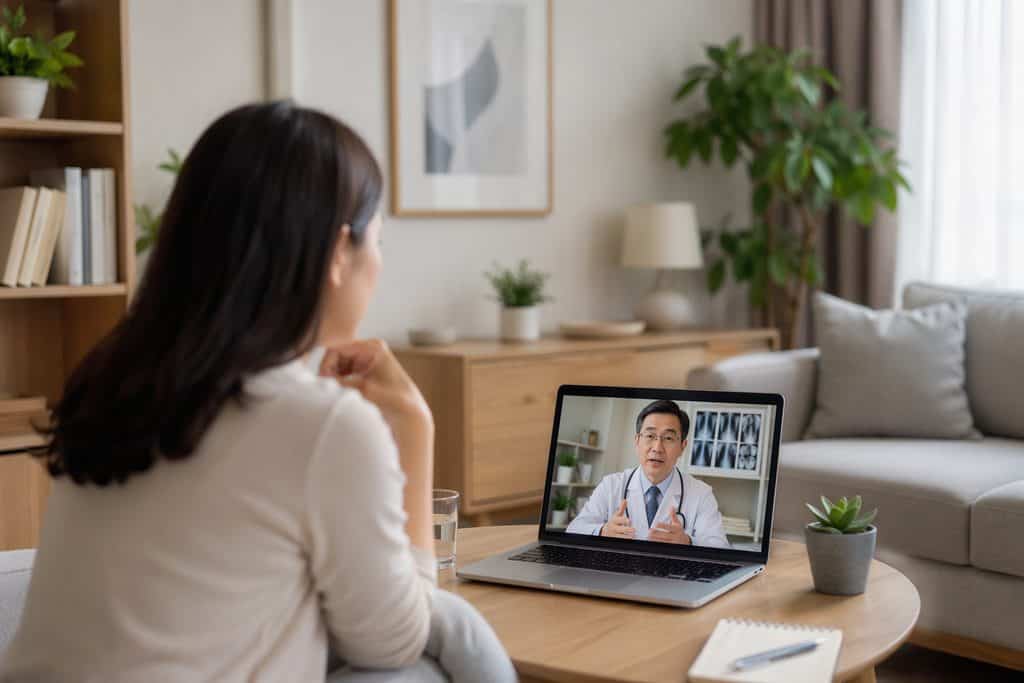
Fifth, you receive the written opinion. You can then schedule a video consultation if you want to speak with the specialist directly. That conversation is where the written report turns into a real discussion about your case.
What to Prepare: The Complete Document Checklist
Most patients send too little. They attach a one-page discharge summary and expect a meaningful review. A remote second opinion is only as good as the raw material it’s built on. Here is what a Chinese specialist actually needs.
Imaging in DICOM format. Not JPEG screenshots. Not a PDF of the radiology report alone. The original DICOM files from your MRI, CT, or PET-CT contain hundreds of cross-sectional images. A specialist reviewing only the written report is working blind. So the question “can a Chinese doctor review my MRI scan online” has a clear answer: yes, if you provide the DICOM files. Most hospitals will give you a CD or a secure download link. Request it explicitly.
Pathology reports and slides. For any cancer case, the pathology report is the foundation. If your diagnosis involved a biopsy, include the full immunohistochemistry panel. If you can also ship the physical slides or a digital whole-slide image, that’s even better. Some Chinese oncology departments will re-read the pathology themselves.
Treatment history summary. List every surgery, every chemotherapy regimen with exact drug names and dosages, every radiation course with total dose and fractions. Don’t summarize. Be precise.
Current medication list. Include dosages and frequency. This seems minor. It isn’t. Drug interactions and renal function matter when a specialist evaluates your next steps.
Recent lab results. Complete blood count, liver and kidney function, tumor markers if relevant, and any genetic or molecular testing you’ve had done. Targeted therapy decisions depend heavily on molecular profiling.
Your specific questions. Write them down before you submit anything. What do you actually want answered? “Is surgery still an option?” “Is this chemotherapy regimen appropriate for my stage?” “Would you recommend a different approach?” A focused question gets a focused answer.
A Realistic Timeline
Realistically, three to six weeks from the day you start collecting records to the day you complete a video consultation. Document collection takes a few days. Translation takes a few more. The specialist’s review takes five to ten working days. Scheduling a video consultation adds one to two weeks. If you need it faster, some hospitals offer expedited review at a higher fee.
That’s not a failure — that’s the point of a second opinion. You now have two perspectives. Take both to your treating physician and discuss the differences. Sometimes the Chinese specialist will confirm your local plan. Sometimes they’ll suggest alternatives. Either way, you’re making a more informed decision than you would have made with only one opinion.
No. A written second opinion is for reference only. It is not a prescription, not a treatment order, and not a guarantee of any outcome. It’s an expert’s analysis of your records and a recommendation for direction. Any actual treatment decision remains between you and your treating physician.
Written second opinions from top-tier specialists range from $300 to $500. Video consultations run $500 to $800. Multidisciplinary team reviews cost $1,500 to $2,000. Prices vary by hospital, department, and case complexity. These are reference ranges, not fixed quotes.
Your Next Step
A remote second opinion is not a commitment to travel to China. It’s a low-cost, low-risk way to get an expert perspective on your case before you make any bigger decisions. Our team at China Medical Services coordinates the entire process — records collection guidance, translation, submission through official hospital channels, and scheduling. We don’t provide medical advice, and we don’t promise outcomes. We handle the logistics so you can focus on the medical conversation.
If you’re considering a remote second opinion from a Chinese hospital, start by gathering your records. Then reach out for a free consultation at our patient services page and we’ll help you figure out which hospital and specialist make sense for your specific case.
Michael eventually sent his DICOM files to a neuro-oncology team in Shanghai. The written opinion arrived three weeks later. It confirmed part of his UK plan and questioned one element. That question changed his treatment. Preparation made the difference.
Frequently Asked Questions
Yes. The hospitals used for international patients are JCI-accredited and follow the same international safety standards as top hospitals in the US and Europe. Surgical teams perform high volumes of procedures — often more than their Western counterparts — which studies show leads to better outcomes.
Costs vary by procedure and hospital, but international patients typically save 40-80% compared to US prices — even when factoring in travel and accommodation. A consultation with our team will give you an exact, all-inclusive quote with no hidden fees.
Send us your existing medical reports to get started. We handle everything from hospital selection and appointment scheduling to visa assistance and post-operative recovery planning. Your medical records are reviewed by the specialist before you even book a flight.
For more medical information and treatment options in China, visit chinamedservices.com (China Medical Services).
