Varicose Vein Treatment China: Laser, RF & Glue Ablation Full Journey
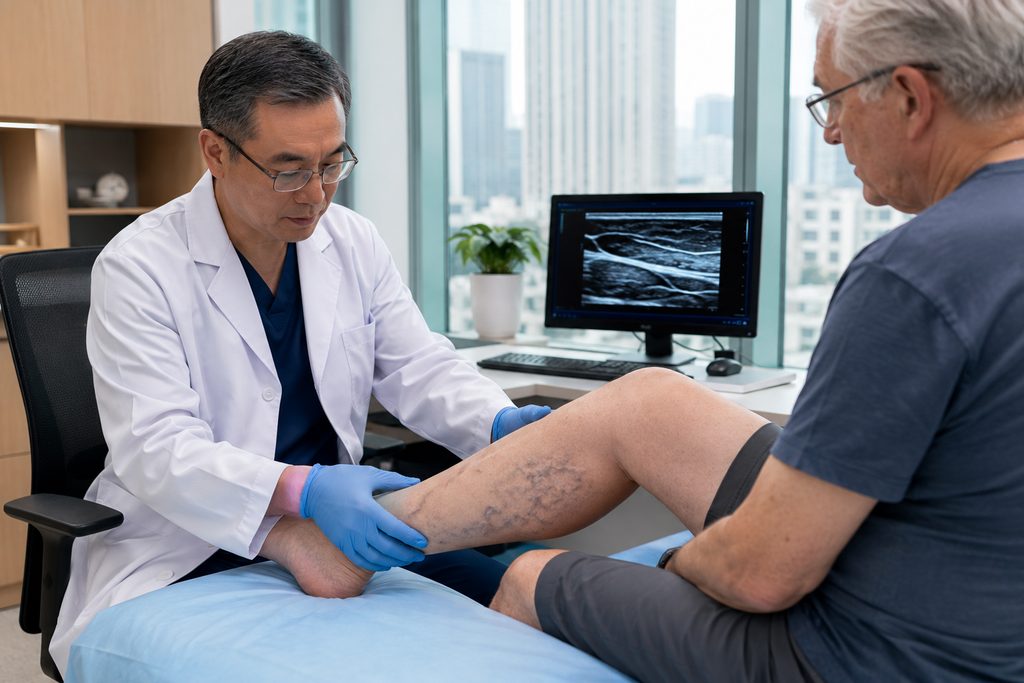
When 42-year-old Sarah first noticed the twisted, bulging veins on her calf after her third pregnancy, she dismissed them as a cosmetic nuisance. Six months later, the throbbing ache and nightly leg cramps made standing through her shift as a schoolteacher nearly unbearable. Her specialist in Manchester told her the waiting list for endovenous laser ablation on the NHS stretched past 18 months. Going private locally? A quote for £4,500 per leg. She started searching for alternatives and landed on a phrase she never thought she would type: varicose vein laser treatment cost China.
She is not alone. Chronic venous insufficiency affects approximately 25% of women and 15% of men globally. For many, the choice is between suffering through years of waiting or paying a small fortune close to home. An increasing number are choosing a third path: combining effective, modern treatment with international travel.
Key Takeaways
- Modern varicose vein treatments in China—including laser, radiofrequency, and medical glue—cost 60-80% less than in the US or UK, with total packages often starting from $2,500 per leg.
- Top-tier Chinese vascular centers perform thousands of these procedures annually, and many use the same FDA-approved equipment found in Western hospitals.
- Navigating China’s public hospital system alone is extremely difficult without Mandarin fluency; a dedicated medical concierge handles registration, payment, and translation.
- Recovery is fast—most patients walk immediately after the procedure and fly home within 3 to 5 days—but planning the logistics before you travel is essential.
The Problem: When Waiting Is Not an Option
Varicose veins are not just about appearance. Left untreated, they progress. The pooled blood stretches the vein wall further. The valve damage worsens. What starts as aching and swelling can lead to skin discoloration, venous eczema, and eventually venous leg ulcers that are notoriously difficult to heal. In a study published in the Journal of Vascular Surgery, patients with untreated symptomatic varicose veins reported quality-of-life scores comparable to those with chronic heart failure.
Yet in many public healthcare systems, vein surgery is classified as low-priority. Wait times of 12 to 24 months are common in Canada, the UK, and parts of Australia. Private care solves the wait but creates a financial barrier. In the United States, endovenous laser treatment averages $3,000 to $5,000 per leg, and many insurance plans classify it as cosmetic unless complications are already severe. That leaves a gap. Patients need treatment now, at a price they can afford. The question of how is varicose vein glue ablation done, and whether it is available at high quality for less abroad, becomes urgent.
Who We Are
We are China Medical Services, a medical concierge organization based in China. We are not a hospital. We do not employ doctors, and we never provide clinical diagnoses or treatment recommendations. Our team functions as your logistical bridge—we connect international patients with the appropriate specialists among our network of 340+ top-ranked hospitals across 37 cities. We handle the practical barriers: hospital matching, appointment coordination, bilingual medical companions, visa guidance, and recovery logistics. Think of us as the people who make sure you walk into the right clinic, see the right specialist, and understand every word spoken along the way.
Why China Delivers Results for Varicose Vein Treatment
Clinical Volume Drives Procedural Precision
Scale matters in surgery. A vascular surgeon who performs 10 laser ablations a week operates on a different level from one who does 10 a year. In China’s top-tier hospitals, the patient volume is staggering. A single vascular surgery department in a major Shanghai or Beijing hospital may complete over 1,500 endovenous procedures annually. That repetition breeds a kind of intuitive precision. Complications like endovenous heat-induced thrombosis (EHIT) are rare, but when they do occur, a high-volume center has the immediate resources to manage them. When patients ask us is laser vein removal safe in China, we point to this: safety is not just about the laser device. It is about the team holding it and the system backing them up.
Technology Parity with the West
There is a persistent myth that traveling abroad for surgery means accepting outdated technology. That is wrong for the centers we work with. The 1470nm diode lasers and ClosureFast radiofrequency catheters used in major Chinese vascular centers are the same models deployed at the Mayo Clinic or Charité in Berlin. Medical glue ablation—using cyanoacrylate adhesive to seal the diseased vein shut—was introduced in China shortly after its FDA approval and is now a standard offering at top hospitals. The equipment is identical. The difference is operational cost, not clinical capability.
The Cost Structure Is Fundamentally Different
Let us address the obvious question directly. Why is the varicose vein laser treatment cost China so much lower? A procedure that bills at $4,000 in California might cost $1,200 to $1,800 in Shanghai. The answer is not lower quality. It is structural economics. Chinese hospital systems operate on high volume and thin margins. Physician salaries, while competitive locally, are a fraction of Western equivalents. Malpractice insurance costs are lower. Hospital administrative overhead is leaner. The cost of the laser fiber and catheter kit is roughly the same worldwide—the savings come from everything else. Our patients typically see all-inclusive treatment packages for one leg starting from approximately $2,500, covering the procedure, compression stockings, post-op ultrasound, and basic local aftercare. That figure varies by hospital and case complexity, but it consistently represents a 60-80% reduction compared to US private-pay rates.
| Procedure | Estimated Cost China (per leg) | Estimated Cost US (per leg) | Estimated Cost UK Private (per leg) |
|---|---|---|---|
| Endovenous Laser Ablation (EVLA) | $1,200 – $1,800 | $3,000 – $5,000 | £2,500 – £4,500 |
| Radiofrequency Ablation (RFA) | $1,500 – $2,200 | $3,500 – $5,500 | £3,000 – £5,000 |
| Medical Glue Ablation (VenaSeal/Cyanoacrylate) | $2,000 – $2,800 | $4,500 – $7,000 | £3,500 – £5,500 |
| Foam Sclerotherapy (adjunct) | $300 – $600 | $500 – $1,500 | £400 – £1,200 |
Note: Costs are approximate ranges only. Final pricing depends on the hospital tier, specialist seniority, and case complexity. These figures do not include international travel or accommodation.
What You Need to Know Before Going Alone
China’s top hospitals deliver world-class care. We say this without hesitation. But accessing that care as a foreigner without local knowledge is genuinely difficult. Here is what stands in the way.
- Registration requires a Chinese ID-linked system. Public hospital outpatient departments do not accept foreign passports for online booking. You cannot simply log onto a portal and reserve a slot. Walk-in registration means queuing at dawn, often for hours, with no guarantee of seeing the specialist you need. The forms are in Mandarin. The payment terminals accept UnionPay or WeChat—not Visa or Mastercard.
- Language is a hard barrier, not a soft inconvenience. Even in top-tier teaching hospitals, English fluency among nursing staff and administrative personnel is rare. The vascular surgeon may speak some English. The nurse explaining your compression protocol probably will not. The consent form will be in Chinese. The ultrasound technician giving you post-procedure instructions will speak Mandarin. One misunderstanding about medication or activity restrictions can compromise your recovery.
- Payment works differently. Chinese public hospitals operate on a prepaid deposit system. You load funds onto a hospital card at admission, and charges are deducted as services are rendered. International credit cards are not accepted at most public hospital counters. You need a local bank card or a Chinese mobile payment app. Insurance direct billing is virtually nonexistent in the public system—you pay upfront and seek reimbursement later.
How We Help You Navigate This
These barriers exist for structural reasons, not malice. China’s hospital system was built to serve a domestic population of 1.4 billion. It was never optimized for international walk-ins. That is precisely the gap we fill.
Our process starts with your medical records. You send us your duplex ultrasound report and a brief history. We translate and forward these to the vascular department of an appropriate hospital—often a center ranked among China’s top 10 for vascular surgery, or a JCI-accredited private international hospital if you prefer full English-language care and direct insurance billing. The specialist reviews your case and confirms whether you are a candidate for laser, radiofrequency, or glue ablation. Only then do we coordinate dates.
On the ground, a bilingual medical companion meets you at the hospital entrance. They handle registration, queue for your consultation, translate every interaction with the surgeon, and guide you through payment at each step. After the procedure, they ensure you understand the compression protocol, activity restrictions, and follow-up ultrasound schedule. This is not a luxury add-on. It is the operational core of a safe medical travel experience. For patients seeking a medical tourism varicose vein surgery package Shanghai, this coordination is what transforms a chaotic solo attempt into a smooth, predictable journey.
The Procedure Itself: What Actually Happens
If you have been researching how is varicose vein glue ablation done, or how laser differs from radiofrequency, the basic principles are the same regardless of where you are treated. But understanding the flow helps set expectations.
Laser Ablation (EVLA)
The surgeon uses ultrasound to map the incompetent vein—almost always the great saphenous vein or small saphenous vein. A tiny puncture is made near the knee or ankle under local anesthesia. A laser fiber is threaded up the vein to the groin. Tumescent anesthesia—a dilute lidocaine solution—is injected around the vein to protect surrounding tissue and provide pain relief. The laser is then activated and slowly withdrawn. The thermal energy collapses the vein walls, and the body eventually absorbs the sealed vessel. The whole thing takes about 45 minutes. You walk out of the procedure room.
Medical Glue Ablation
Glue ablation, often referred to by the brand name VenaSeal, works differently. No tumescent anesthesia is needed—just a single entry point. The catheter delivers small aliquots of medical-grade cyanoacrylate adhesive along the length of the diseased vein, with the surgeon applying external ultrasound pressure to seal the vein walls together. No heat. No risk of nerve damage from thermal spread. It is particularly appealing for veins that run close to the skin or nerves. The procedure is faster, typically 20 to 30 minutes, and post-procedure compression stockings are often optional rather than mandatory. This is why patients who book varicose vein treatment abroad fast recovery frequently choose glue over laser—the absence of tumescent bruising and the reduced need for compression makes the post-treatment days more comfortable for travel.
Recovery and Travel Logistics
Recovery from modern endovenous procedures is remarkably quick. Most patients are advised to walk immediately—a 20-minute stroll right after the procedure is standard advice to reduce the risk of deep vein thrombosis. Bruising and tightness along the treated vein are normal and resolve over two to four weeks. The critical follow-up is a duplex ultrasound within the first week to confirm the vein is closed and there is no DVT.
For international patients, this means you should plan to stay in China for a minimum of 3 to 5 days post-procedure. That allows for the initial recovery, the follow-up scan, and a final consultation before you fly. Long-haul flights do carry a slightly elevated DVT risk, so your surgeon will likely prescribe a short course of prophylactic low-molecular-weight heparin for the return journey and insist you wear compression stockings and move regularly during the flight.
Visa-wise, you will need an S2 visa with a medical treatment annotation. Your accompanying family member applies for the same. We provide the formal invitation letter and hospital documentation required for the visa application. This is not an M visa situation—that is for business visitors. Using the wrong visa category risks denial at the border.
Choosing the Right Hospital
If you search for the best hospital for varicose veins in Beijing, you will find several credible options. The key is matching the hospital type to your priorities.
Public top-tier hospitals—like those ranked in the Fudan University hospital rankings—offer the highest clinical volume and the most experienced specialists. A vascular surgery department at a major Beijing or Shanghai public hospital may handle over 2,000 venous cases annually. The trade-off is environment: busy corridors, limited English, and a distinctly Chinese hospital experience. For patients whose primary concern is clinical excellence and cost, this is the right path.
Private international hospitals—such as those listed on our private hospitals page—provide a Western-style experience. English-speaking staff, JCI accreditation, direct insurance billing, and private recovery suites. The specialists are often the same senior doctors who hold positions at the public hospitals and consult privately. The cost is higher, though still well below Western private rates. For patients who want the reassurance of familiar processes and full language access, this option makes sense. Explore our Beijing and Shanghai city pages to understand the hospital landscape in each location.
Frequently Asked Questions
At accredited top-tier hospitals, the safety profile mirrors that of any advanced healthcare system. The laser devices are FDA-approved or CE-marked. The complication rate for endovenous laser ablation—primarily EHIT, infection, or nerve injury—is consistently reported at less than 2% in published Chinese clinical studies, in line with international benchmarks. The critical variable is not the country. It is the specific hospital and the experience of the vascular team. We only connect patients with departments that have demonstrable high volume and published outcomes.
A realistic budget for one leg, including the procedure, hospital fees, compression garments, a 5-night hotel stay, round-trip economy airfare from Europe or North America, and our coordination service, typically falls between $4,000 and $6,500. For two legs treated in the same trip, the marginal procedure cost is lower, and the total might land between $6,000 and $9,000. These are estimates. Actual costs shift based on your departure city, hotel preferences, and the hospital tier you select. The procedure itself remains the smallest fraction of what you would pay at home.
This is the hardest question, and it deserves an honest answer. Your treating surgeon in China will provide a detailed procedure report and ultrasound images in English for your local doctor. We strongly recommend establishing a relationship with a vascular specialist in your home country before you travel—someone who agrees to provide follow-up care. Most post-procedure complications, like a small area of phlebitis or residual discomfort, are managed conservatively and do not require intervention. If a serious complication occurs, such as a DVT, it would be managed by your local healthcare system. The cost savings from the procedure should not come at the expense of a follow-up plan. We help you build that plan before you leave.
Yes. Walking right after laser, radiofrequency, or glue ablation is not just allowed—it is prescribed. The muscle pump action of walking reduces venous stasis and lowers DVT risk. You will not be running a marathon. But you will be on your feet, moving normally, the same day. Most patients report a tight, pulling sensation rather than sharp pain. The absence of general anesthesia means no grogginess or recovery-room delay.
Your Next Step
Varicose veins do not get better on their own. The treatments available today—laser, radiofrequency, and medical glue—are minimally invasive, remarkably safe, and effective. The barrier has always been access: either waiting too long or paying too much. China offers a genuine third option, where high-volume clinical expertise meets a cost structure that makes treatment affordable without sacrificing quality.
If you are considering this path, start with information, not commitment. Our team can review your duplex ultrasound, suggest appropriate hospitals, and outline a realistic timeline and budget. There is no pressure and no obligation. Just a clear picture of what is possible. Request a free consultation and let us help you understand your options.
For more medical information and treatment options in China, visit chinamedservices.com (China Medical Services).
