Medical Treatment in Taiyuan China: Shanxi Province Hospital Access and North China Treatment Guide
Key Takeaways
- Shanxi Province Hospital in Taiyuan delivers complex procedures at approximately 20% of the cost found in US private hospitals, with clinical volumes that rival major Western centers.
- Accessing this system as an international patient requires navigating a unique S2 visa process and a mandatory in-person consultation before any surgery can be scheduled.
- Language remains the single largest barrier in North China’s public hospitals; without a bilingual companion, the registration and payment systems are nearly impossible to navigate independently.
- The true value proposition of Taiyuan is not luxury medical tourism—it is high-volume surgical expertise at a structural cost advantage that makes treatment accessible when Western prices have shut you out.
The Problem: When the Price of Survival Exceeds a Lifetime of Savings
A cardiac bypass in the United States now routinely exceeds $120,000. In Canada, a patient referred for orthopedic surgery waits a median of 27.4 weeks, according to the Fraser Institute’s 2023 survey. During that wait, a deteriorating knee or hip steals mobility, independence, and often the ability to work. The math is brutal. The system that is supposed to save you can also bankrupt you—or simply make you wait so long that the window for optimal intervention closes.
These are not edge cases. Approximately 1 in 4 American adults report delaying or forgoing necessary medical care due to cost. The anxiety is not abstract. It is a spreadsheet on a kitchen table at 2 a.m., comparing a surgical quote to a mortgage balance. For many, the search for alternatives begins with a desperate question: is there another way? The answer increasingly points toward China’s top-tier public hospitals, where surgical volumes are staggering, outcomes are comparable to Western benchmarks, and the cost of medical treatment in Taiyuan China and other North China cities represents a fraction of what patients face at home.
Who We Are
We are not a hospital. We do not provide medical treatment, clinical diagnoses, or surgical procedures. Our team functions as a logistical bridge—we connect international patients with the resources of China’s top 5% of hospitals, a network of 340+ institutions across 37 cities ranked by the Fudan University hospital ranking system and JCI accreditation. We handle the ground-level friction that makes Chinese healthcare inaccessible to foreigners: visa guidance, hospital matching, appointment coordination through official international departments, and bilingual medical companionship. Our role is to ensure you understand exactly what you are walking into, and that you never walk in alone.
Why Medical Treatment in Taiyuan China Deserves Serious Consideration
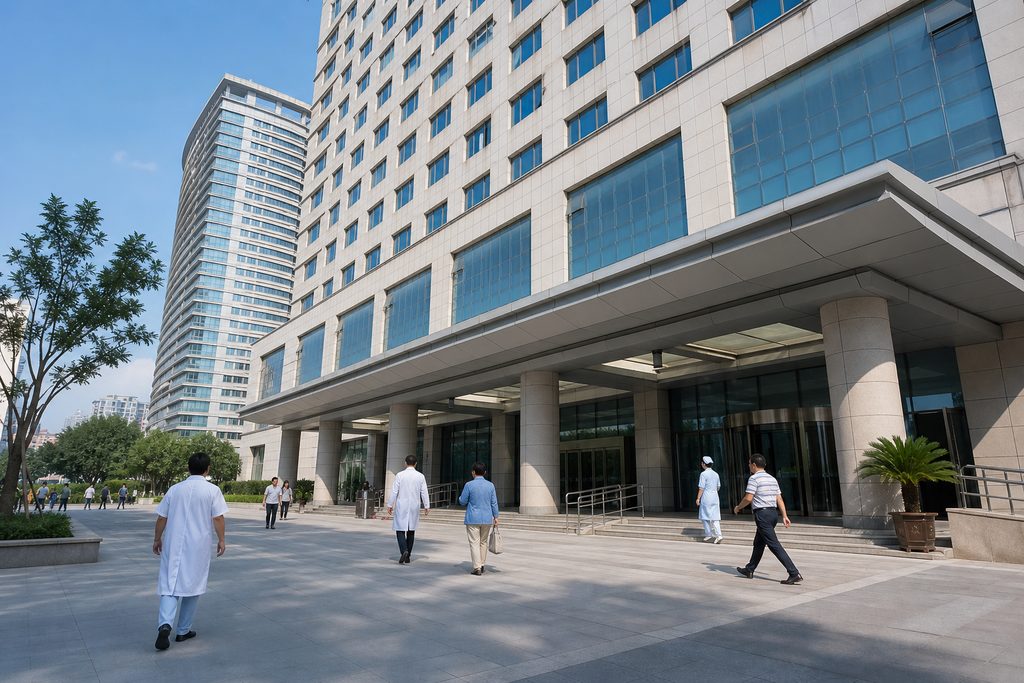
Taiyuan is not Beijing or Shanghai. It does not have the glossy international clinics or the English-speaking concierge desks that those cities have built for medical tourists. What it has is something more fundamental: a provincial flagship hospital with immense clinical volume, deep subspecialty expertise, and a cost structure untethered from the pricing bubbles of coastal megacities. Shanxi Province Hospital—officially Shanxi Provincial People’s Hospital—is a Grade A, Class 3 (三级甲等) institution, the highest classification in China’s hospital tier system. It handles over 2 million outpatient visits annually and performs more than 60,000 inpatient surgeries each year. Those numbers reflect a pace of clinical exposure that few Western surgeons ever experience.
Clinical Volume Drives Surgical Precision
The relationship between surgical volume and patient outcomes is well-documented. A 2017 study in The Lancet found that for complex abdominal aortic aneurysm repair, patients treated at high-volume centers had a 30-day mortality rate nearly 40% lower than those at low-volume facilities. Shanxi Province Hospital’s thoracic surgery department, for example, performs over 1,200 esophageal cancer resections annually—a disease with high prevalence in Shanxi’s population. An average US thoracic surgeon might perform 20 to 30 such procedures in a year. The difference is not marginal. It is an order of magnitude. When a surgical team has seen every anatomical variant, every intraoperative complication, and every post-operative recovery trajectory thousands of times, their pattern recognition becomes a clinical asset that no textbook can replicate.
Technology Adoption Without the Bureaucratic Lag
China’s public hospitals operate on a scale that forces efficiency. Shanxi Province Hospital adopted the Da Vinci Xi surgical robotic system in 2020 and has since accumulated one of the largest robotic-assisted surgery datasets in North China. The hospital’s imaging center runs 3.0T MRI and dual-source CT units on extended schedules—often 12 hours a day, six days a week—which means a foreign patient can typically complete a full pre-operative imaging workup in two to three days, not two to three weeks. This is not because the technology is newer. It is because the operational tempo is fundamentally different. The system is designed to absorb volume, not ration it.
The Cost of Medical Treatment in Taiyuan China: A Structural Advantage, Not a Discount
Let us address the obvious question directly. How can a hospital performing complex cardiac or orthopedic surgery charge a fraction of what a US facility bills? The answer is not a compromise on quality. It is a function of labor economics, hospital ownership structures, and the absence of the multi-layered insurance billing apparatus that inflates US healthcare costs. A total hip replacement at Shanxi Province Hospital typically ranges from $8,000 to $12,000 USD, depending on implant choice and case complexity. The same procedure in the United States averages $40,000 to $60,000. A coronary artery bypass graft in Taiyuan runs between $12,000 and $18,000 USD. In the US, the figure is north of $120,000. These are not promotional prices. They are the standard rates for international patients accessing the hospital’s official international medical service channel.
| Procedure | Shanxi Province Hospital (USD) | US Average (USD) |
|---|---|---|
| Total Hip Replacement | $8,000 – $12,000 | $40,000 – $60,000 |
| Coronary Artery Bypass Graft | $12,000 – $18,000 | $120,000+ |
| Laparoscopic Cholecystectomy | $2,500 – $4,000 | $15,000 – $20,000 |
| Esophageal Cancer Resection | $10,000 – $16,000 | $80,000 – $120,000 |
Figures are estimates for international patients and vary by hospital and case complexity. Always confirm with the hospital’s international department before making any financial decisions.
How to Access Shanxi Province Hospital as a Foreigner
The mechanics of getting through the door are not intuitive. China’s public hospital system was not built for walk-in international patients. The registration system is Chinese-language only, linked to a national ID card or a local phone number. Payment is expected upfront at each step—consultation, imaging, lab work, and inpatient admission are all separate transactions. There is no centralized billing desk that speaks English. This is the reality. It is manageable, but only if you know the sequence.
Step One: The S2 Visa—Your Legal Foundation
Medical treatment in China requires an S2 visa with a specific annotation for medical purposes. This is non-negotiable. An L (tourist) visa does not legally cover hospital admission, and an M (business) visa is for commercial activity only. The S2 application requires an invitation letter from the receiving hospital, a medical certificate from your home physician outlining the diagnosis and recommended treatment, and proof of sufficient funds to cover the estimated treatment cost. Our team handles the invitation letter coordination with the hospital’s international office, which is often the bottleneck for independent applicants.
Step Two: The Mandatory In-Person Consultation
Here is the rule that surprises most Western patients: you cannot book surgery from overseas. Chinese public hospitals require a face-to-face consultation with the attending surgeon before any procedure can be scheduled. This is not a bureaucratic hurdle to be circumvented. It is a clinical gatekeeping mechanism that ensures the surgeon assesses your case personally and orders the necessary pre-operative workup. Expect to spend three to five days in Taiyuan for this initial evaluation phase. The hospital will run its own labs and imaging, regardless of what you bring from home. This is standard practice and, from a safety standpoint, entirely reasonable.
Step Three: Payment and Admission
International patients pay a deposit upon admission, typically 50% to 70% of the estimated total. The hospital’s international department will provide a cost breakdown before you commit. Payment methods are usually limited to UnionPay cards, wire transfers, or cash. Major international credit cards are not reliably accepted at the hospital cashier. This is a friction point we solve by pre-clearing payment logistics before you arrive. After discharge, you receive a detailed invoice and medical records suitable for insurance reimbursement. The hospital does not bill your insurer directly. You pay, then you claim.
What You Need to Know Before Going Alone
The barriers are real. Acknowledging them upfront is the only honest way to prepare you.
- Language Isolation: Fewer than 5% of clinical staff at Shanxi Province Hospital speak functional medical English. The registration kiosks, pharmacy labels, discharge instructions, and consent forms are in Mandarin Chinese. A single miscommunication about your drug allergies or surgical history can have consequences. This is not a scenario where a translation app suffices.
- Navigation Complexity: The hospital campus spans multiple buildings connected by covered walkways. Outpatient clinics, imaging, labs, and inpatient towers are in separate structures. A typical pre-surgical workup involves stops at four to five different departments, each with its own queue number system. Without someone who knows the layout and the workflow, you will lose hours—potentially days—to confusion.
- Cultural Friction: Chinese public hospitals are busy. The consultation may last five minutes. The surgeon may not make eye contact or offer the empathetic bedside manner you expect. This is not rudeness. It is a function of patient volume and cultural norms around clinical efficiency. If you interpret brevity as indifference, the experience will be jarring.
How We Help You Navigate This
These barriers exist for structural reasons, not because anyone is trying to exclude you. Our role is to absorb the friction so you can focus on your treatment and recovery. Before you travel, we coordinate with the hospital’s international department to secure the invitation letter, translate and submit your medical records, and schedule the initial consultation with the appropriate specialist. We confirm the estimated cost breakdown and arrange the deposit payment logistics. We also guide you through the S2 visa application with the correct documentation.
During your stay in Taiyuan, a bilingual medical companion accompanies you to every appointment. This person handles registration, queue ticket collection, payment at each service point, and real-time interpretation between you and the clinical team. They ensure your medical history is communicated accurately and that you understand every instruction you receive. After discharge, we help you collect and translate your medical records, final invoices, and imaging reports for insurance claims. If you need follow-up care in your home country, we ensure your local physician receives a complete, translated treatment summary.
We do not promise to secure a specific surgeon or a guaranteed surgery date—those decisions rest with the hospital’s clinical team. We do promise that if we cannot secure the appointment you need, our coordination fee is refunded in full. And if you later decide to proceed with on-the-ground treatment coordination, any prior consultation fee is credited entirely toward that service.
Affordable Surgery in North China Hospitals: Beyond Taiyuan
Shanxi Province Hospital is one node in a broader network of high-volume, cost-efficient institutions across North China. If your condition requires subspecialty expertise not available in Taiyuan, we can facilitate access to hospitals in Beijing, Tianjin, or Xi’an—all within a three-hour high-speed rail radius. The same cost structure applies across the region. A complex spinal fusion that might cost $80,000 in the US can be performed at a top-tier North China orthopedic center for $15,000 to $25,000. The savings are not unique to Taiyuan. They are a feature of the Chinese public hospital system’s economic model.
We have seen a growing number of patients from the Middle East, Southeast Asia, and Eastern Europe exploring medical tourism packages in Taiyuan and Shanxi province. The interest is driven by a convergence of factors: the province’s historical strength in thoracic surgery and cardiology, the lower cost base compared to Beijing or Shanghai, and the improving infrastructure for international visitors. Taiyuan Wusu International Airport now has direct connections to several Asian hubs, and the city’s hotel infrastructure has expanded significantly in the past five years. Medical tourism here is still nascent—do not expect a polished concierge experience—but the clinical fundamentals are solid.
Is Shanxi Province Hospital Good for Foreigners? An Honest Assessment
The honest answer is nuanced. Shanxi Province Hospital is an excellent clinical institution with deep expertise in several specialties, particularly cardiothoracic surgery, interventional cardiology, and oncology. Its surgical outcomes in esophageal cancer, a disease with high regional prevalence, are among the best in China. The hospital is research-active, with over 200 published studies indexed in international journals annually. The clinical staff are rigorously trained, and the equipment is modern and well-maintained.
But the hospital was not designed with foreign patients in mind. The signage is not bilingual. The food is Chinese hospital food—nutritious but unfamiliar to most Western palates. The inpatient rooms in the general wards are functional, not luxurious. The international patient department exists and is improving, but it does not yet offer the seamless experience of a United Family or Jiahui private hospital. If you arrive expecting a Western-style private room with an English-speaking nurse call button and an international menu, you will be disappointed. If you arrive understanding that you are accessing world-class surgical expertise at a fraction of Western cost, and you have prepared for the logistical challenges, the value proposition is compelling.
Shanxi Province Hospital international patient reviews from those who have navigated the process with proper support are generally positive regarding clinical outcomes and cost. The frustrations cited almost universally relate to language barriers and administrative complexity—the very problems that a bilingual companion solves. This pattern holds across North China’s public hospitals. The medicine is strong. The patient experience, for a foreigner navigating alone, is difficult.
Frequently Asked Questions
No. Chinese public hospital regulations require an in-person consultation with the attending surgeon before any surgical procedure can be scheduled. You must travel to Taiyuan for an initial evaluation. The surgeon will review your case, order hospital-specific pre-operative tests, and only then confirm a surgery date. Plan for a gap of 5 to 10 days between your initial consultation and the surgery itself, depending on the complexity of your case and the surgeon’s schedule.
Shanxi Province Hospital follows standard clinical protocols for managing surgical complications, and its intensive care capabilities are robust. However, the legal framework for medical malpractice in China differs from Western systems, and pursuing a claim as a foreign national is procedurally complex. Our role is to ensure clear communication between you and the clinical team at every stage, which significantly reduces the risk of misunderstandings that lead to dissatisfaction. We also recommend that you carry comprehensive international medical insurance that includes coverage for complication management and, if necessary, medical evacuation.
Before you leave Taiyuan, we help you obtain a complete set of translated medical records, including the surgical report, pathology results, imaging on CD or cloud link, and the discharge summary with medication instructions. You can share these directly with your local physician. If your home doctor needs to consult with the surgeon in Taiyuan, we can facilitate a video consultation, typically priced from $100 to $300 USD. The continuity of care is manageable, but it requires proactive coordination—it will not happen automatically.
The hospital provides a line-item estimate that covers the procedure, anesthesia, standard inpatient stay, and routine medications used during admission. It does not typically include extended ICU stays beyond the standard post-operative period, complications requiring additional intervention, or premium implant choices if you select an imported prosthesis over a domestic equivalent. Always ask for a detailed breakdown and clarify what is excluded. Budget an additional 15% to 20% contingency above the quoted estimate for unforeseen costs.
Your Next Step
The decision to travel across the world for surgery is never simple. It sits at the intersection of financial pressure, clinical hope, and the deep vulnerability of placing your body in an unfamiliar system. What we have seen, across hundreds of patient journeys, is that the outcome depends less on the hospital’s reputation and more on the quality of preparation. A great surgeon in a system you cannot navigate is a resource you cannot access. A clear pathway through the logistics transforms that resource into a real option.
If you are weighing this decision, start with a conversation—not a commitment. Request a free consultation with our team. We will discuss your diagnosis, your treatment needs, and whether Shanxi Province Hospital or another institution in our network is a suitable match. There is no pressure and no pitch. Just an honest assessment of what is possible, what it will cost, and what you need to know before you book a flight.
For more medical information and treatment options in China, visit chinamedservices.com (China Medical Services).
