Brain Second Opinion: From Afar — Remote Review by China’s Top Neurosurgeons
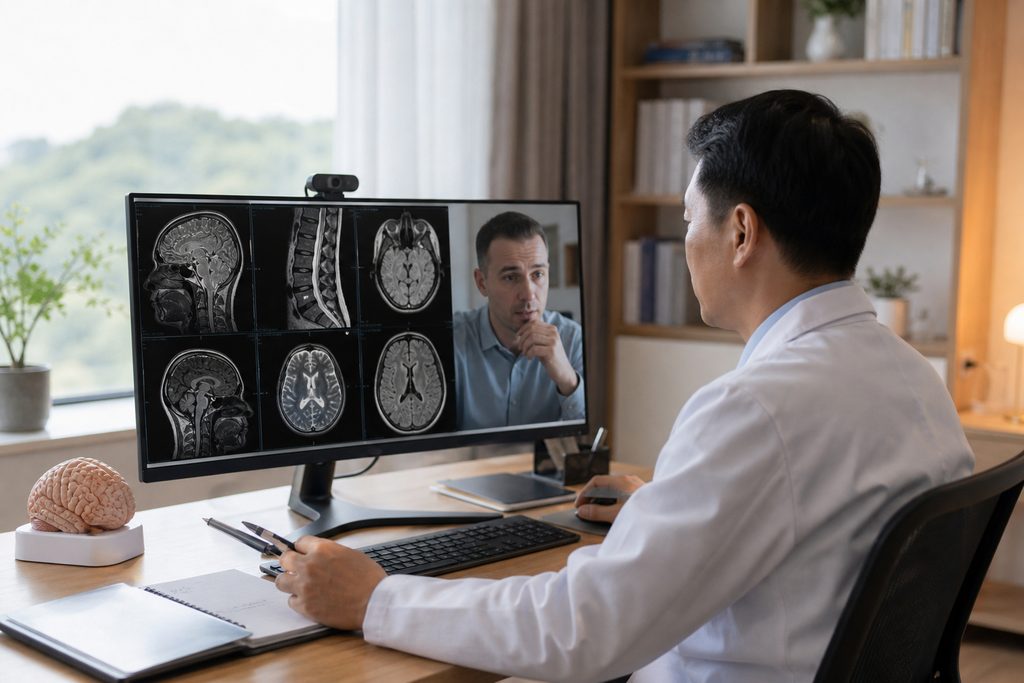
Brain Second Opinion: From Afar — The Short Answer
Yes, you can get a rigorous brain second opinion from a top Chinese neurosurgery team without boarding a plane. The process starts by sending your existing MRI, CT scans, and pathology reports for remote review. A written second opinion from a senior specialist at a Fudan-ranked hospital typically costs between $300 and $500. If you want a live discussion, a video consultation with a top specialist runs $500 to $800. The entire remote process, from initial document submission to receiving the written report, usually takes 5 to 10 business days.
But there is a catch worth stating plainly. The quality of the second opinion depends almost entirely on the quality of the imaging you send. A blurry phone photo of an MRI film will not cut it. You need the original DICOM files on a CD or a secure upload link. That single detail separates a useful second opinion from an expensive guess.
Who This Is Right For — and Who It Isn’t
Remote brain second opinions serve a specific set of patients well. You are a strong candidate if any of these apply:
- You received a brain tumor diagnosis and want confirmation of the pathology reading before committing to surgery or radiation.
- Your local team proposed a treatment plan, but you want a second perspective on whether a less invasive approach exists.
- You have a rare or complex lesion — like a brainstem glioma, pineal region tumor, or skull base meningioma — and your local center sees only a handful of these each year.
- You are comparing treatment costs across countries and want a credible clinical assessment before spending money on travel.
- Your imaging is recent (ideally within 3 months) and you have the DICOM files available.
Remote review is not for everyone. You should not pursue this if you need an emergency intervention — a remote second opinion cannot triage an acute crisis. If your tumor is fast-growing and your local team says surgery cannot wait, do not delay for a remote review. Also, remote opinions are not a substitute for in-person neurological examination. A video call cannot test your reflexes, pupil response, or coordination. If your symptoms are evolving rapidly, you need hands-on care, not a file review. Finally, if you cannot obtain the original DICOM files, the remote process loses most of its value.
The Options, Compared
When patients search for a brain second opinion from afar, they are really comparing four distinct service models. Here is how they stack up:
| Option | What You Get | Typical Cost | Turnaround | Best For |
|---|---|---|---|---|
| Written Second Opinion (China, top hospital) | Senior neurosurgeon or neuro-oncologist reviews DICOM files and reports, issues a written analysis with treatment direction | $300–$500 | 5–10 business days | Confirming diagnosis, comparing surgical vs. conservative approaches |
| Video Consultation (China, top specialist) | Live online discussion with the specialist after they review your files; you can ask questions directly | $500–$800 | 7–14 days to schedule | Patients who want dialogue, not just a document |
| MDT Video Consultation (China) | Multidisciplinary team — neurosurgery, radiology, oncology, pathology — reviews your case together | $1,500–$2,000 | 10–20 days | Complex or rare tumors where treatment decisions cross specialties |
| Remote Second Opinion (US academic center) | Subspecialist reviews records and imaging, issues written report | $800–$2,500+ | 10–21 days | Patients who want a US-based opinion and can pay more |
The Chinese written second opinion is the most cost-efficient starting point for most international patients. It delivers a senior specialist’s assessment at roughly one-third to one-half the price of a comparable US remote review. The video consultation adds a live conversation, which matters when you have specific questions about surgical risk or recovery timelines. The MDT option makes sense for rare tumors where no single specialist owns the answer.
How to Get a Brain Scan Second Opinion From a Chinese Hospital
Ask for the reviewing specialist’s name, title, and department before you pay. At Fudan-ranked hospitals, second opinion reports are issued by attending physicians or professors — not residents or fellows. A reputable coordination service will tell you exactly who is reviewing your case and provide the hospital’s official documentation. If a service refuses to name the reviewing specialist, walk away.
That is the point of a second opinion. You take the written report back to your local team and discuss the discrepancy. Sometimes the difference is interpretive — two pathologists reading the same slide differently. Sometimes it is substantive — one team recommends surgery, the other recommends watchful waiting. Your local doctors retain responsibility for your care. The remote opinion is additional data, not a directive.
Generally yes, if the report comes from a recognized institution. Most physicians respect a well-documented second opinion from a Fudan-ranked neurosurgery department. The key is that the report must be specific — citing your actual imaging findings, not generic statements. A good remote opinion reads like a consultation note, not a brochure. You may need to have the report translated if it is issued in Chinese, though most international departments issue reports in English.
For genuinely urgent cases, the written second opinion can sometimes be expedited to 3 to 5 business days, depending on the specialist’s availability. But “urgent” in this context means your local team needs the input to make a decision within a week or two. It does not mean a medical emergency. If you are in an acute crisis — sudden neurological decline, uncontrolled seizures, loss of consciousness — you need emergency care where you are, not a remote review.
Your Next Step
A brain tumor diagnosis is frightening, and the instinct to get more information is the right one. A remote second opinion from a top Chinese neurosurgery team gives you that information without the cost and stress of international travel before you are ready. It is a measured, evidence-based step — not a leap of faith.
We are China Medical Services, a coordination team that connects international patients with top-tier Chinese hospitals. We are not a hospital, and we do not diagnose or treat anything. What we do is handle the logistics: document preparation, hospital matching, specialist scheduling, and bilingual support. If you want to explore a remote brain second opinion, start with a free consultation at our patient services page. Tell us what you have, what you need, and we will tell you honestly whether this path makes sense for you.
Frequently Asked Questions
Yes. The hospitals used for international patients are JCI-accredited and follow the same international safety standards as top hospitals in the US and Europe. Surgical teams perform high volumes of procedures — often more than their Western counterparts — which studies show leads to better outcomes.
Costs vary by procedure and hospital, but international patients typically save 40-80% compared to US prices — even when factoring in travel and accommodation. A consultation with our team will give you an exact, all-inclusive quote with no hidden fees.
Send us your existing medical reports to get started. We handle everything from hospital selection and appointment scheduling to visa assistance and post-operative recovery planning. Your medical records are reviewed by the specialist before you even book a flight.
For more medical information and treatment options in China, visit chinamedservices.com (China Medical Services).
