Imaging Review: A Second Read — What It Costs and How It Works
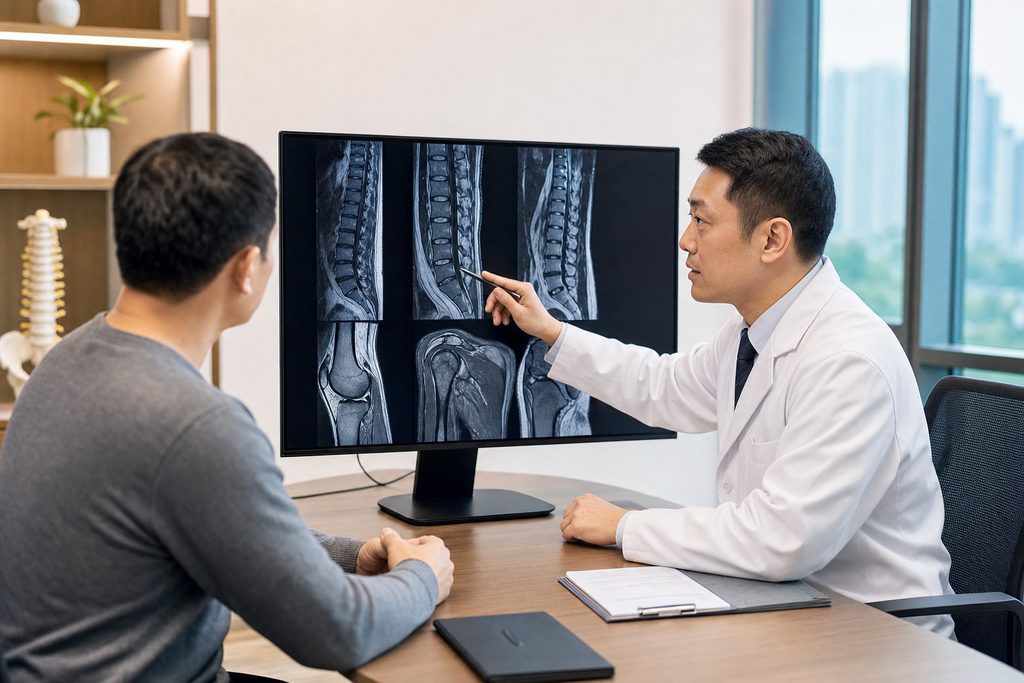
While a radiology report in the United States might take 3 to 7 days to return from an overloaded imaging center, a specialist at a top-tier Chinese hospital can frequently deliver a structured written second read within 48 to 72 hours of receiving your DICOM files. That discrepancy in turnaround time — not just price — is what drives thousands of international patients each year to seek an imaging review abroad. And the second opinion MRI scan cost China is often a fraction of what patients pay at Western academic centers for the same service.
A second read doesn’t mean flying to Beijing with a stack of CDs. It means uploading your existing scans, letting a Chinese subspecialty radiologist or clinician re-examine every slice, and receiving a written analysis that either confirms the original interpretation or flags something that was missed. Our team coordinates this daily for patients across North America, Europe, the Gulf states, and Southeast Asia.
How This Actually Works, Step by Step
The sequence is straightforward, but every step has a failure point. Understanding the mechanics before you commit saves time and money.
1. You gather what you already have. This includes the original DICOM files from the MRI or CT scanner — not just the JPEG snapshots or the printed film. You also need the original radiology report, any prior imaging for comparison, relevant lab results, and a concise clinical summary from your treating physician. If your hospital gave you a CD, that’s usually sufficient. If you only have a patient portal with images, our team can guide you on requesting the raw files.
2. We match your case to the right department. A neuroradiologist reads brain and spine studies. A musculoskeletal radiologist reads joints and soft tissue. A thoracic radiologist reads lung nodules. Generic reads are worthless. At China Medical Services, we route your case based on the body region and the clinical question — not just the next available doctor.
3. The reviewing specialist examines the images in full. This is not a 10-minute glance. A proper second read means scrolling through every sequence, comparing signal characteristics, measuring lesions, and cross-referencing against your clinical history. At high-volume Chinese hospitals, subspecialists see more rare pathology in a month than many Western radiologists encounter in a year.
4. You receive a written report in English. The report states what the reviewer agrees with, what they interpret differently, what additional sequences or studies they recommend, and what the findings suggest clinically. This document is for reference and decision-making — not a prescription.
5. You take that report back to your local doctor. Or, if you choose, you use it as the basis for a video consultation with the reviewing team to discuss next steps.
What a Radiology Second Read Actually Costs in China
Let’s talk numbers, because that’s what most people search for first. A radiology second read price Shanghai or Beijing typically falls between $300 and $500 for a written report from a senior specialist at a top-tier public hospital’s international department. That’s the realistic range for a single-region study — one MRI of the brain, one CT of the chest, one MRI of the lumbar spine.
What drives the price up? Multiple body regions, comparison against multiple prior studies, pediatric cases, or requests for a specific named expert. A CT scan review service abroad that includes a live video discussion with the radiologist usually lands between $500 and $800. Multidisciplinary reviews — where a radiologist, a surgeon, and an oncologist all weigh in on the same scan — run $1,500 to $2,000.
| Service Type | Typical Cost (USD) | What You Receive |
|---|---|---|
| Written second opinion, single region | $300–500 | Structured English report, 2–5 pages |
| Written second opinion, complex/multi-region | $500–800 | Extended report with comparison to prior studies |
| Video consultation with reviewing specialist | $500–800 | Live discussion, Q&A, next-step guidance |
| Multidisciplinary team (MDT) review | $1,500–2,000 | Radiologist + surgeon + oncologist joint opinion |
These figures are starting points. Final quotes vary by hospital and case complexity. Any consultation fee you pay is credited in full toward on-the-ground coordination services if you later decide to pursue treatment in China within 90 days.
How Accurate Is a Second Opinion on Imaging?
The honest answer: it depends on who is reading and what they’re reading for. How accurate is a second opinion on imaging is the wrong question if it assumes a binary “right or wrong” outcome. The better question is: what’s the discrepancy rate, and does it change management?
Published data gives us a benchmark. A 2017 study in the American Journal of Roentgenology found that second-opinion interpretations of cross-sectional imaging at a major academic center produced a clinically significant discrepancy in roughly 29% of cases. Other studies across subspecialties — neuroradiology, musculoskeletal, oncologic imaging — consistently report discrepancy rates between 15% and 35%. Not all discrepancies change treatment. But a meaningful subset do.
What Chinese hospitals bring to this equation is volume and subspecialization. A radiologist at a hospital like Huashan or Xuanwu in Shanghai may read 50 to 80 brain MRIs per day. They see patterns that a general radiologist reading 15 studies a day across all body regions simply won’t recognize. That’s not marketing language. That’s the structural reality of high-volume, single-organ specialization.
But — and this matters — a second read is only as good as the images you send. Low-field MRI, motion artifact, missing sequences, or compressed files degrade accuracy. If the original scan quality is poor, the second reader will tell you that honestly. Sometimes the most valuable output is: “This study is technically inadequate. You need a repeat scan.” That’s a frustrating answer. It’s also the correct one.
A Realistic Timeline
People assume the delay is in the reading. It’s usually not. The delay is in getting usable files out of your home hospital and into the right hands. Here’s what the process actually looks like:
| Stage | Duration | What’s Happening |
|---|---|---|
| Gathering records | 2–7 days | Requesting DICOM files, reports, lab results from your hospital or portal |
| Document translation | 1–3 days | Clinical summaries translated to English or Chinese as needed |
| Case review and department matching | 1–2 days | Our team confirms the right subspecialty and hospital |
| Specialist review | 2–5 days | The actual image interpretation and report writing |
| Report delivery | 1 day | English report sent by email, follow-up questions addressed |
Total realistic window: one to two weeks from first contact to receiving your written report. Urgent cases can be expedited, but that requires a clinical justification — not just impatience.
For patients who later decide to come to China for treatment, the S2 visa process adds another layer. Short-stay medical treatment typically falls under the S2 category, with hospital documentation required to support the application. That’s a separate timeline — often 2 to 4 weeks depending on your home country’s Chinese embassy or consulate. We cover this in more detail in our service coordination guide.
What Can Go Wrong — and What Happens Then
Most physicians care about the quality of the analysis, not the flag on the letterhead. What matters is that the report is structured, specific, and written by a recognized subspecialist. If your doctor has concerns, a video consultation with the reviewing specialist usually resolves them.
Disagreement is common — published discrepancy rates for cross-sectional imaging run 15% to 35%. The next step is usually a focused discussion with the reviewing specialist to understand why the interpretations differ and what additional imaging or testing would settle the question.
Most patients upload DICOM files through a secure transfer link provided after the initial consultation. Some hospitals accept physical CDs by courier, but digital transfer is faster and equally secure. Never email raw medical images as unencrypted attachments.
No. A remote written second opinion requires no travel and no visa. If you later decide to pursue in-person treatment in China, you’ll need an S2 visa for short-stay medical purposes, supported by hospital documentation.
Your Next Step
A second read is one of the highest-value, lowest-risk moves you can make when facing an uncertain diagnosis or a major treatment decision. It costs a few hundred dollars and a couple of weeks — and it can change everything.
We coordinate imaging second opinions with specialists at China’s top-ranked hospitals, handling file collection, department matching, and report delivery. We don’t practice medicine, and we don’t promise outcomes. What we do is make the process straightforward enough that you can actually use it. If you’re ready to see what a Chinese subspecialist thinks of your scans, start with a free consultation — we’ll tell you honestly whether a second read makes sense for your case.
Frequently Asked Questions
Yes. The hospitals used for international patients are JCI-accredited and follow the same international safety standards as top hospitals in the US and Europe. Surgical teams perform high volumes of procedures — often more than their Western counterparts — which studies show leads to better outcomes.
Costs vary by procedure and hospital, but international patients typically save 40-80% compared to US prices — even when factoring in travel and accommodation. A consultation with our team will give you an exact, all-inclusive quote with no hidden fees.
Send us your existing medical reports to get started. We handle everything from hospital selection and appointment scheduling to visa assistance and post-operative recovery planning. Your medical records are reviewed by the specialist before you even book a flight.
For more medical information and treatment options in China, visit chinamedservices.com (China Medical Services).
