Full Companion for Patients With Mobility Needs: Navigating Surgery in China
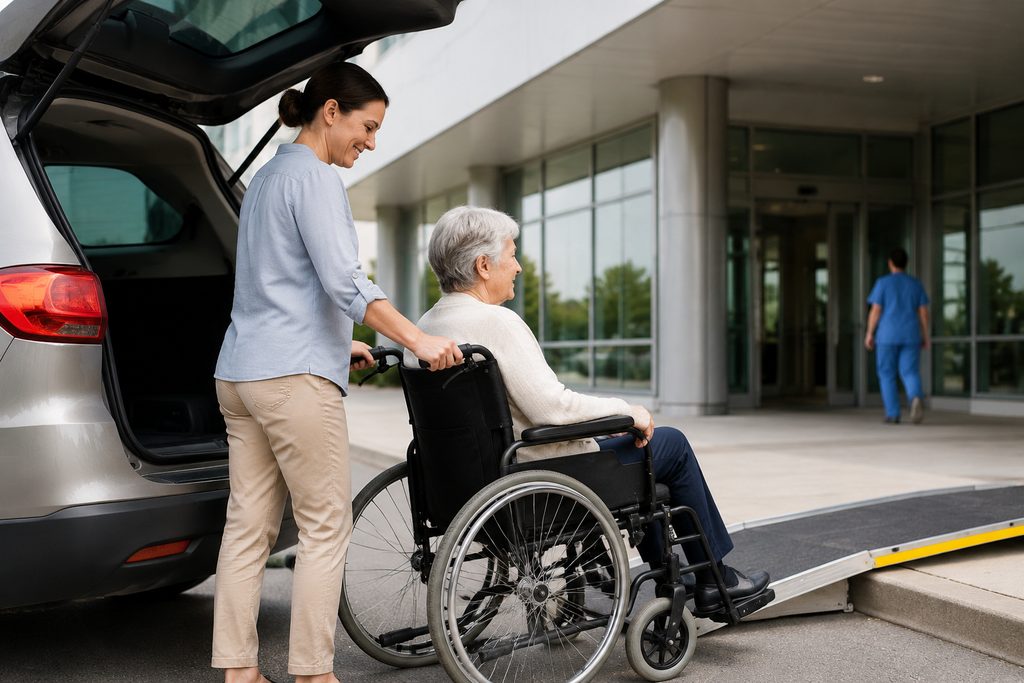
Mobility needs change everything about medical travel. A patient who uses a wheelchair, walks with a cane, or requires transfer assistance between bed and wheelchair faces a fundamentally different journey than someone who can navigate airports and hospital corridors independently. The term “full companion for patients with mobility needs” refers to a coordinated support model — not just a single escort, but a layered system of physical assistance, logistical planning, and medical coordination. Some international patients search for medical tourism packages for disabled patients China expecting a turnkey product. The reality is more nuanced: China’s top hospitals deliver world-class orthopedic and neurological care at a fraction of Western prices, but accessibility infrastructure and hands-on support must be arranged deliberately, not assumed.
How This Actually Works, Step by Step
You start by sending existing medical records — imaging reports, physician notes, current medication lists, and a detailed description of the patient’s mobility status. Our team translates these documents into Chinese and submits them to the appropriate specialty department at one of the 340+ top-ranked hospitals in our network. Within 5 to 10 working days, you receive a written second opinion or an invitation for a video consultation. That step costs between $300 and $500 for a written review, or $500 to $800 for a top-specialist video call.
Once the Chinese medical team confirms they can treat the condition, we move to logistics. This is where mobility needs dictate every choice. Which airport has step-free access from gate to curb? Which hotel has roll-in showers and elevator access to the room floor? Which hospital entrance avoids stairs? These questions get answered before booking anything.
The patient then applies for an S2 visa, with supporting documents from the hospital. Processing typically takes 5 to 10 business days after submission. Meanwhile, our team coordinates the hospital appointment, arranges airport pickup with a wheelchair-accessible vehicle, and assigns a bilingual medical companion who stays with the patient from arrival through discharge. The companion handles registration, queueing, payment, translation, and physical assistance — but does not provide nursing care. For that, the hospital assigns its own nursing staff on the ward.
After surgery, the companion remains available for follow-up visits, pharmacy runs, and communication with the medical team. The patient flies home with translated discharge summaries and a rehabilitation plan. That is the full sequence.
What “Full Companion” Actually Means in a Chinese Hospital
Private international hospitals generally are. Public top-tier hospitals vary by building age and city. Newer facilities in Shanghai, Shenzhen, and Guangzhou tend to be more accessible than older Beijing hospital wings. Our team scouts the route in advance and advises on which entrance, elevator, and restroom to use. Some older buildings require assistance through service entrances. We tell patients the truth before they book.
Admission decisions rest with the hospital’s medical team. If the in-person assessment reveals a condition different from what the records suggested, the hospital may adjust the plan or decline surgery. In that case, we work with the patient to find an alternative hospital in our network or revise the treatment approach. The appointment coordination fee is refunded in full if we cannot secure the appointment we committed to arrange. Hospital treatment charges are paid directly to the hospital and are governed by the hospital’s own refund policies.
Both options work. Many patients bring their own wheelchair for comfort and familiarity. Airlines check wheelchairs free of charge. For those who prefer to travel lighter, wheelchair rental in major Chinese cities costs $10 to $25 per day, and our team arranges delivery to the airport or hotel. Hospital wards also have wheelchairs available for in-facility use, though availability can be limited during peak hours.
A companion handles logistics, translation, and mobility assistance during hospital visits. A companion does not provide overnight care, bathing assistance, or emotional support equivalent to a family member. For patients with significant mobility limitations, we strongly recommend traveling with a family member or close friend. The companion and the family caregiver work together — the companion navigates the system, the family member provides personal care.
Your Next Step
Navigating surgery in China with mobility needs is not a solo endeavor. It requires honest assessment of the patient’s physical limitations, deliberate selection of hospital and accommodation, and a support team that knows the terrain. Our organization, China Medical Services, connects international patients with 340+ top-ranked hospitals across 37 Chinese cities. We coordinate records, appointments, companions, and logistics. We do not perform medical treatment, and we do not promise outcomes. What we do is remove the friction between you and the care you are seeking.
Start with a conversation. Send us the medical records and a description of the mobility situation. We will tell you honestly whether China is the right choice for your case, and what it would cost. No pressure. Just clarity.
Frequently Asked Questions
Yes. The hospitals used for international patients are JCI-accredited and follow the same international safety standards as top hospitals in the US and Europe. Surgical teams perform high volumes of procedures — often more than their Western counterparts — which studies show leads to better outcomes.
Costs vary by procedure and hospital, but international patients typically save 40-80% compared to US prices — even when factoring in travel and accommodation. A consultation with our team will give you an exact, all-inclusive quote with no hidden fees.
Send us your existing medical reports to get started. We handle everything from hospital selection and appointment scheduling to visa assistance and post-operative recovery planning. Your medical records are reviewed by the specialist before you even book a flight.
For more medical information and treatment options in China, visit chinamedservices.com (China Medical Services).
