Organ-Sparing Care: A Remote Consult Before You Travel
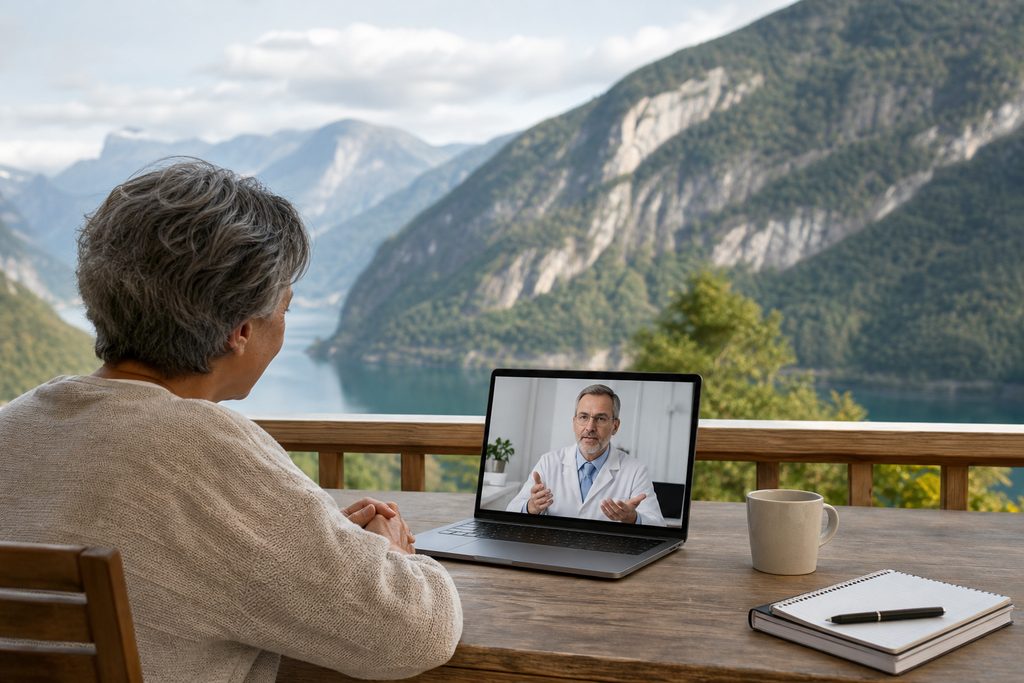
According to a 2024 analysis published in The Lancet Regional Health – Western Pacific, China’s top-tier hospitals now perform over 140,000 interventional oncology procedures annually — many of them organ-sparing ablations and embolizations that never reach an operating table. For Western patients facing a stark choice between radical surgery and watchful waiting, that number matters. The organ sparing surgery cost China offers — typically $8,000 to $25,000 for procedures billed at $80,000 to $150,000 in the United States — is only part of the story. The bigger question is whether you are even a candidate. And that question can now be answered from your living room.
Key Takeaways
- China’s top interventional radiology centers perform 3-5 times more organ-sparing procedures annually than comparable Western centers, with published complication rates below 2% for thermal ablation.
- A remote consult costs $300 to $800 and can tell you definitively whether your tumor, fibroid, or lesion qualifies for organ-sparing treatment — before you spend anything on travel.
- Language, hospital navigation, and post-procedure follow-up are real barriers. Without local coordination, even a successful remote consult can stall at the hospital gate.
- Not every patient is a candidate. Tumor location, vascular involvement, and prior treatments all matter. A written second opinion should be your first step, not a flight booking.
The Problem: Radical Surgery Is Often the Default, Not the Necessity
A 2023 study in JAMA Surgery found that 41% of patients with small renal masses in the United States still undergo full nephrectomy — complete kidney removal — despite guidelines from the American Urological Association recommending partial nephrectomy or ablation whenever technically feasible. That is not a small gap. Thousands of Americans lose an entire kidney every year for tumors smaller than 4 centimeters.
The same pattern shows up elsewhere. For uterine fibroids, hysterectomy remains the second most common surgery among American women, with approximately 600,000 performed annually. Yet uterine fibroid embolization (UFE) — a minimally invasive procedure that shrinks fibroids while preserving the uterus — has a 90% symptom improvement rate and requires no hospital stay in most cases. For early-stage liver cancer, resection and transplant dominate Western treatment algorithms, while thermal ablation offers equivalent five-year survival for tumors under 3 centimeters. The gap between what is possible and what is offered is wide. And it is expensive.
Why a Remote Consult Changes the Decision
Here is the structural problem: you cannot fly to Shanghai or Beijing on a hunch. International travel, visa processing, hospital registration, imaging review — it all costs time and money before you even meet a doctor. A remote consult flips the sequence. You send your existing scans and records. A specialist reviews them. You get a written assessment of whether organ-sparing treatment is technically feasible for your specific case. Only then do you decide whether travel makes sense.
Clinical Volume Drives Technical Confidence
Interventional radiologists at major Chinese centers perform 300 to 500 ablation procedures per year. The average Western interventional radiologist performs 50 to 80. That volume difference translates into comfort with difficult tumor locations — central kidney tumors near the collecting system, liver lesions adjacent to major vessels, fibroids with complex blood supply. Fuwai Hospital in Beijing performs over 14,000 cardiac surgeries annually, the highest volume in the world. The same concentration of experience exists in interventional oncology at hospitals like Zhongshan Hospital Fudan University and Peking Union Medical College Hospital. When a specialist has seen your exact anatomical challenge hundreds of times, their assessment carries weight.
Imaging Review Is the Real Bottleneck — Not Distance
Most organ-sparing eligibility decisions hinge on imaging. A multiphase CT or MRI tells the specialist whether a tumor can be safely ablated, whether a fibroid’s blood supply is accessible for embolization, whether a liver lesion sits too close to the bile duct. That review does not require your physical presence. Our team coordinates with the hospital’s international department to have your DICOM files reviewed by the appropriate specialist. You get a written report explaining what is feasible, what is borderline, and what is not advisable. The cost for a written second opinion from a top-tier hospital specialist runs $300 to $500. A video consultation with a senior specialist runs $500 to $800. Compared to the cost of an unnecessary flight, that is a rounding error.
Cost Advantage Without Quality Compromise
The organ sparing surgery cost China offers reflects structural economics, not discount medicine. Chinese hospital systems operate at enormous scale — a single top-tier hospital may see 10,000 outpatient visits per day. Labor costs for nurses, technicians, and support staff are lower. Equipment is the same: Siemens, GE, and Philips machines dominate Chinese interventional suites just as they do in Europe and North America. The result? A microwave ablation for a small kidney tumor runs $8,000 to $15,000 at a top Chinese hospital, versus $40,000 to $70,000 in the US. Uterine fibroid embolization runs $6,000 to $12,000, versus $25,000 to $45,000. HIFU for liver cancer — high-intensity focused ultrasound — runs $10,000 to $20,000. These are published ranges from hospital international departments, and they vary by hospital and case complexity.
What a Remote Organ-Sparing Consult Actually Evaluates
When you ask “can I keep my kidney with tumor ablation China,” the honest answer is: it depends on three things. First, tumor size and location. Ablation is most reliable for tumors under 4 centimeters that are exophytic (growing outward) rather than central. Second, your overall kidney function. If your other kidney is already compromised, preserving the affected one becomes more urgent — and ablation becomes more attractive. Third, prior treatments. If you have had a failed partial nephrectomy, the scar tissue changes the ablation plan. A remote consult gets you a specific answer to these questions, not a general brochure.
| Procedure | Typical US Cost | China Top Hospital Range | Organ Preserved |
|---|---|---|---|
| Kidney tumor ablation (RFA/Microwave) | $40,000–$70,000 | $8,000–$15,000 | Kidney |
| Uterine fibroid embolization (UFE) | $25,000–$45,000 | $6,000–$12,000 | Uterus |
| HIFU for liver cancer | $50,000–$90,000 (limited availability) | $10,000–$20,000 | Liver |
| Liver tumor ablation (RFA/Microwave) | $35,000–$60,000 | $9,000–$18,000 | Liver |
These figures come from hospital international department price lists and patient-reported data collected by our coordination team between 2023 and 2026. They are ranges, not quotes. Your actual cost depends on tumor size, number of lesions, hospital tier, and whether you use the standard international channel or the VIP green channel (which typically runs 1.5 to 2 times standard rates).
Choosing the Right Hospital: What the Numbers Mean
You can initiate the process remotely. You send your imaging and records, the hospital’s interventional oncology team reviews them, and you receive a written assessment of whether HIFU is appropriate for your lesion. If it is, the hospital can schedule the procedure and issue the documents needed for your S2 visa. You still need to travel for the procedure itself — HIFU cannot be done remotely. But you will arrive knowing the procedure is planned, not hoping it might be possible.
Then you have spent $300 to $800 to avoid a wasted international trip. You also have a documented specialist opinion you can take back to your local doctor. In some cases, the Chinese specialist may recommend a different organ-sparing approach you had not considered — a different ablation modality, a staged approach, or a combination therapy. The consult is not a sales pitch. It is a clinical review.
Most Western physicians will review a written second opinion from a recognized Chinese academic medical center with an open mind, particularly if the imaging review is detailed and the recommendations are specific. The Fudan-ranked hospitals publish in international journals and participate in global clinical trials. The report you receive should include the reviewing specialist’s name, credentials, and a line-by-line response to your clinical questions. That format travels well.
Verify the hospital’s name against the Fudan University hospital rankings and check whether it has a JCI accreditation or an active international department. Legitimate hospitals issue official invoices, provide treatment records in English on request, and communicate through hospital email domains — not Gmail or WhatsApp. Our top hospitals directory lists only institutions that meet these criteria. If a broker cannot tell you which hospital your consult is with, walk away.
Your Next Step
Organ-sparing care is not a niche option anymore. It is a standard of care that many Western patients never hear about because their local system defaults to radical surgery. A remote consult costs less than a domestic specialist copay and answers the only question that matters: is this possible for me? We help you get that answer — coordinating record translation, hospital selection, and specialist review. We are not a hospital and we do not provide diagnoses. What we do is make the path from “I wonder if I could keep my organ” to “here is what the specialist said” shorter and clearer. If you are ready to find out, request a free consultation and we will map out what a remote review would look like for your case.
Frequently Asked Questions
Yes. The hospitals used for international patients are JCI-accredited and follow the same international safety standards as top hospitals in the US and Europe. Surgical teams perform high volumes of procedures — often more than their Western counterparts — which studies show leads to better outcomes.
Costs vary by procedure and hospital, but international patients typically save 40-80% compared to US prices — even when factoring in travel and accommodation. A consultation with our team will give you an exact, all-inclusive quote with no hidden fees.
Send us your existing medical reports to get started. We handle everything from hospital selection and appointment scheduling to visa assistance and post-operative recovery planning. Your medical records are reviewed by the specialist before you even book a flight.
For more medical information and treatment options in China, visit chinamedservices.com (China Medical Services).
