Remote Second Opinion: A Written Report From China’s Top Hospitals
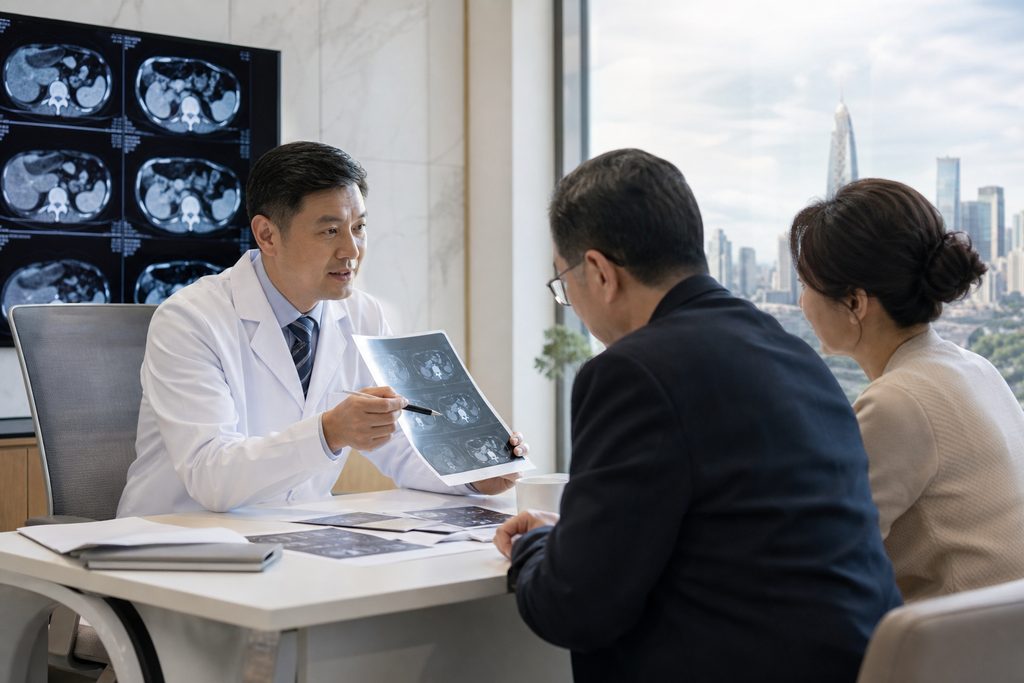
When 42-year-old Elena received a stage III colorectal cancer diagnosis in Manchester, her local oncologist recommended a treatment protocol she wasn’t entirely confident about. Surgery first, then adjuvant chemotherapy. A colleague mentioned that oncologists in Shanghai were using a different sequencing—neoadjuvant chemoradiation before surgery—with published five-year survival data that looked compelling. But flying to China for a consultation felt impossible. She had a job, two children, and a treatment clock ticking. That’s when she found the middle path: a remote second opinion, delivered as a written report. No flights. No language barrier. Just her existing scans, pathology slides, and clinical history reviewed by a specialist at a Fudan-ranked hospital—for a fraction of what she’d already spent on diagnostics.
The remote second opinion written report cost China model has matured significantly over the past five years. What was once an informal, ad-hoc arrangement has become a structured service with defined deliverables, clear timelines, and transparent pricing. For international patients weighing treatment options in oncology, cardiology, neurosurgery, or complex autoimmune conditions, a written second opinion from a Chinese top-tier hospital offers something genuinely different: access to physicians who see case volumes that simply don’t exist in most Western centers. And the cost—typically $300 to $500 for a comprehensive written review—is less than what many patients pay for a single specialist copay in the United States.
Key Takeaways
- A written remote second opinion from a top Chinese hospital costs $300–500 and typically takes 5–10 business days to complete.
- Chinese specialists at Fuwai, Zhongshan, and PUMCH handle case volumes 3–5 times higher than Western peers in cardiac surgery, oncology, and orthopedics.
- The written report is for reference only—it is not a prescription, and no hospital will admit you based on it alone.
- Any second opinion fee can be credited in full toward on-the-ground coordination if you later travel to China for treatment within 90 days.
The Problem: When Your Diagnosis Feels Like a Dead End
Approximately 1 in 5 patients who seek a second opinion at a major US academic center receive a materially different diagnosis or treatment plan, according to a 2017 study published in the Journal of Evaluation in Clinical Practice. That number jumps to over 40% for complex oncology cases reviewed at specialized cancer centers. Yet most patients never seek one. The barriers are predictable: cost, time, fear of offending their primary physician, and the logistical nightmare of gathering and transferring medical records.
For patients outside major Western medical hubs, the situation is worse. A patient in Nairobi, Jakarta, or Riyadh may have no local access to a true subspecialist. Their options are limited to whatever their regional hospital can offer—which may be a protocol that was standard a decade ago. The gap between what is possible and what is available locally is where a remote written second opinion earns its value. And China, with its 35,000+ hospitals and a top tier of Fudan-ranked institutions that treat volumes Western centers rarely see, has become an increasingly credible source for that second look.
Why a Remote Second Opinion Written Report From China Delivers Results
The case for seeking a written second opinion from a Chinese hospital rests on three structural advantages: clinical volume, subspecialty depth, and cost efficiency. None of these are marketing claims—they’re observable facts about how the Chinese healthcare system operates at its peak.
Clinical Volume Drives Pattern Recognition
Fuwai Hospital in Beijing performs over 14,000 cardiac surgeries annually—more than any single center in the world. That’s roughly 40 major heart operations every single day. A cardiac surgeon at Fuwai will see in one year what a competent surgeon at a mid-sized US hospital might see in a decade. The same pattern holds in oncology. Cancer hospitals in Shanghai and Guangzhou treat esophageal, gastric, and liver cancers at volumes that dwarf Western centers, simply because these cancers are far more prevalent in East Asia. When a specialist has seen 5,000 cases of a disease your local oncologist has encountered 200 times, their written assessment carries a different weight.
Subspecialty Depth You Won’t Find at Home
China’s Fudan hospital ranking system evaluates 45 distinct clinical specialties and assigns top-10 rankings in each. That means a patient with a rare hepatobiliary tumor can be matched with a hospital ranked among China’s top 10 for hepatobiliary surgery—not just a general oncologist who happens to treat liver cases. The department-level rankings on our site list these subspecialty leaders by city, so patients can see exactly which institutions have the deepest expertise for their specific diagnosis. This granularity matters. A written second opinion is only as good as the specialist reviewing your case, and China’s ranking system makes it possible to identify true subspecialists rather than generalists.
Cost Advantage Without Quality Compromise
Let’s address the obvious question: does a $300–500 written report from Shanghai reflect lower quality than a $2,000+ second opinion from a US academic center? The answer is no—and the reasons are structural, not qualitative. Chinese physician salaries are lower than Western counterparts, hospital overhead is leaner, and the sheer volume of cases spreads fixed costs across far more patients. The specialists reviewing your case at Zhongshan Hospital or Peking Union Medical College Hospital are the same physicians publishing in The Lancet and NEJM. They are not a budget tier. The price difference reflects economics, not expertise.
How Does an Online Second Opinion From a Chinese Hospital Work?
The process is more structured than many patients expect. Here is exactly what happens when you request a written remote second opinion through our coordination team.
Step 1: Records Collection and Translation. You send us everything you have—CT and MRI scans (DICOM files preferred), pathology reports, blood work, surgical notes, current medication list, and a summary of your treatment history. Our bilingual medical coordinators translate all documents into Chinese. This is not machine translation. It’s done by people who understand medical terminology in both languages, because a mistranslated pathology term can change a specialist’s entire assessment.
Step 2: Specialist Matching. Based on your diagnosis, we identify the appropriate department at a Fudan-ranked hospital. For oncology cases, this might be the medical oncology department at a hospital ranked among China’s top 10 for your cancer type. For cardiac cases, it could be a cardiovascular surgery team at Fuwai or Zhongshan. You receive the specialist’s credentials and departmental ranking before any fee is charged.
Step 3: Written Review. The specialist reviews your translated records, studies your imaging, and prepares a written report. The report typically includes: confirmation or revision of the primary diagnosis, assessment of your current treatment plan, alternative approaches used in China for similar cases, and specific questions you should ask your local physician. The report is written in Chinese and professionally translated into English.
Step 4: Delivery and Follow-up. You receive the report within 5–10 business days. If you have clarifying questions, we can arrange a brief follow-up exchange or, if you prefer, upgrade to a video consultation with the same specialist.
Is a Written Second Opinion From China Accepted Internationally?
In our experience, most Western physicians are professionally receptive to written opinions from Chinese colleagues, particularly from hospitals they recognize—Fuwai, Zhongshan, PUMCH, and others with international reputations. The report is a formal medical document. Your local doctor may or may not agree with its recommendations, but they will almost always read it seriously. We recommend sharing it openly rather than presenting it as a challenge to their judgment.
That’s precisely the point of a second opinion. If the written report recommends a different approach, you bring that recommendation back to your local medical team and discuss it. Sometimes the difference is minor—a dosing adjustment or a different sequencing. Sometimes it’s substantial. Either way, you now have more information than you had before, and you can make a more informed decision about your care.
Yes, and this is a common pathway. The written report gives both you and the Chinese hospital a clearer picture of your case before you commit to travel. If you later decide to pursue treatment in China, the second opinion fee is credited in full toward our on-the-ground coordination service—a one-time credit that applies to the coordination fee only, never to hospital treatment charges. The credit is valid for 90 days.
What records
Frequently Asked Questions
Is it safe to have surgery in China?
Yes. The hospitals used for international patients are JCI-accredited and follow the same international safety standards as top hospitals in the US and Europe. Surgical teams perform high volumes of procedures — often more than their Western counterparts — which studies show leads to better outcomes.
How much does medical treatment cost in China?
Costs vary by procedure and hospital, but international patients typically save 40-80% compared to US prices — even when factoring in travel and accommodation. A consultation with our team will give you an exact, all-inclusive quote with no hidden fees.
How do I start the process?
Send us your existing medical reports to get started. We handle everything from hospital selection and appointment scheduling to visa assistance and post-operative recovery planning. Your medical records are reviewed by the specialist before you even book a flight.
Frequently Asked Questions
Yes. The hospitals used for international patients are JCI-accredited and follow the same international safety standards as top hospitals in the US and Europe. Surgical teams perform high volumes of procedures — often more than their Western counterparts — which studies show leads to better outcomes.
Costs vary by procedure and hospital, but international patients typically save 40-80% compared to US prices — even when factoring in travel and accommodation. A consultation with our team will give you an exact, all-inclusive quote with no hidden fees.
Send us your existing medical reports to get started. We handle everything from hospital selection and appointment scheduling to visa assistance and post-operative recovery planning. Your medical records are reviewed by the specialist before you even book a flight.
For more medical information and treatment options in China, visit chinamedservices.com (China Medical Services).
