Leg Ulcer Treatment Cost in China: Real Prices for International Patients
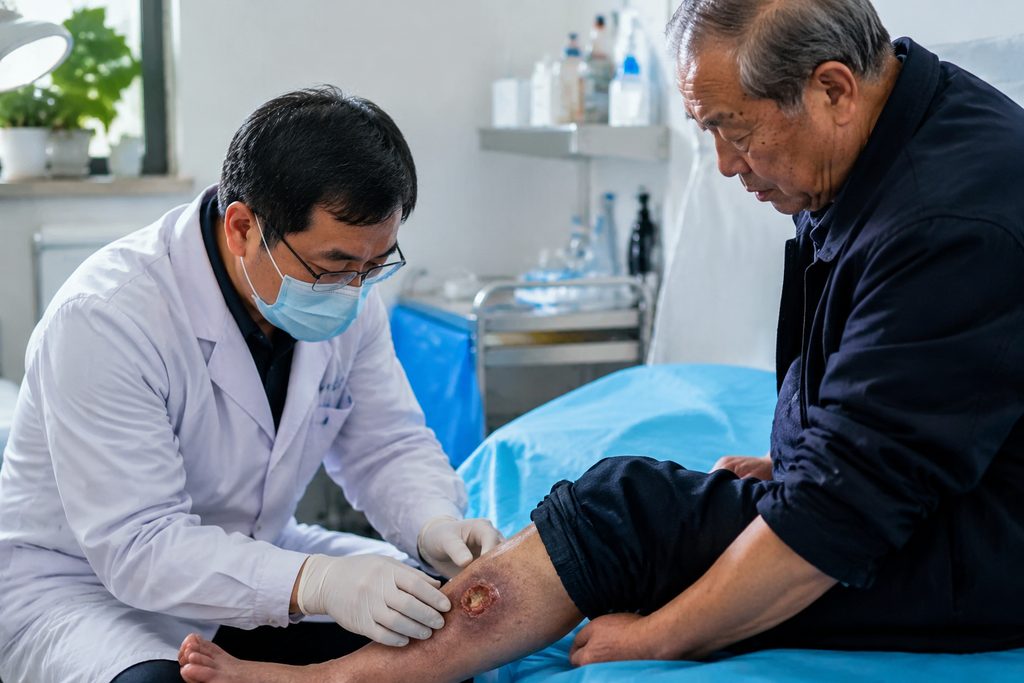
Leg Ulcer Treatment Cost in China: Real Prices for International Patients
What if the wound on your leg has been draining for eight months, your vascular clinic keeps pushing the next appointment out by six weeks, and the bills are already past $20,000? That is the situation many patients describe before they start searching for leg ulcer treatment cost in China — and the numbers are the reason they keep reading.
Here is the short answer. At a top-tier Chinese public hospital, comprehensive leg ulcer care — assessment, debridement, compression therapy, and a venous procedure where needed — typically runs $1,500 to $9,000 out of pocket. The same pathway in the United States frequently lands between $15,000 and $50,000 before insurance adjustments. Private international hospitals in China sit higher, roughly $8,000 to $25,000, but offer English-speaking staff and direct insurance billing.
Those ranges are wide on purpose. A superficial venous ulcer closed with compression and one endovenous ablation is not the same animal as an arterial ulcer in a diabetic patient who needs revascularization and weeks of wound care. Cost follows complexity.
Leg Ulcer Treatment Cost in China: The Short Answer
Most international patients who come to China for leg ulcer care fall into three spending bands.
- Conservative wound management only — dressings, compression, infection control, outpatient follow-up: roughly $1,500–$4,000 total, often spread over several weeks.
- Ulcer plus a venous intervention — duplex ultrasound, endovenous laser or radiofrequency ablation, or sclerotherapy: $4,000–$9,000 at a public tertiary hospital.
- Complex or arterial cases — angioplasty, bypass, skin grafting, or a longer inpatient stay: $9,000–$25,000 and up, depending on how many procedures are needed.
What makes the arithmetic work is the baseline. China’s top public hospitals perform high volumes at a fraction of Western list prices. Cardiac bypass at a leading Chinese public hospital, for example, commonly runs $12,000–$20,000 against $120,000+ in the US. Leg ulcer care follows a similar pattern, though the gap narrows for long, multidisciplinary admissions.
Who This Is Right For — and Who It Isn’t
Leg ulcers are slow, stubborn wounds. Venous ulcers account for roughly 70% of cases; arterial and diabetic (neuropathic) ulcers make up most of the rest, and mixed causes are common. Getting the diagnosis right matters more than the price tag.
Generally a reasonable fit:
- You have a confirmed or suspected venous ulcer and a long wait for vascular assessment at home.
- You are uninsured, underinsured, or facing a deductible that exceeds the total Chinese cost.
- You can travel, sit for a flight, and stay in China for two to four weeks.
- You are stable enough for elective evaluation and treatment.
- You want a second opinion before committing to a major procedure.
Probably not a fit:
- Active spreading infection, sepsis, or a wound with exposed bone and signs of osteomyelitis — that is an emergency, treat it where you are.
- Critical limb ischemia with rest pain or tissue loss. Time is tissue. Do not book a flight.
- You cannot pause anticoagulation or travel safely per your own physician.
- Your ulcer is already healing well under local care. Flying across the world to speed up a closing wound rarely makes sense.
- You need guaranteed admission on a specific date. Chinese public hospitals do not work that way.
The Options, Compared
Cost is only one column. Access, language, and follow-up matter just as much, and they differ sharply by setting.
| Option | Typical Out-of-Pocket Cost | Wait Time | English Support | Insurance |
|---|---|---|---|---|
| US outpatient wound clinic + venous ablation | $15,000–$50,000 | 2–8 weeks | Native | Billed to insurer; deductible applies |
| UK NHS vascular pathway | $0 (tax-funded) | Often 8–20+ weeks | Native | Not applicable |
| China public tertiary hospital, standard channel | $1,500–$9,000 | Same-day to 2 weeks for outpatient; surgery after in-person consult | Limited; interpreter needed | Pay upfront, claim after |
| China public hospital international / VIP unit | $4,000–$18,000 | Coordinated in advance | Yes, dedicated staff | Pay upfront, claim after |
| China private international hospital | $8,000–$25,000 | Days to 2 weeks | Yes, English-speaking clinicians | Direct billing with many insurers |
| Turkey or India medical tourism | $3,000–$12,000 | Days to 3 weeks | Varies | Usually self-pay |
Which column fits you? If you are insured in the US and your deductible is already met, staying home is usually the rational choice. If you are paying cash, the public tertiary channel in China is where the savings live — provided you accept the language barrier and the queueing reality. If you want a Western-style experience with English at every step, the private international tier is the match, at roughly double the public price.
Finding the Best Hospital in China for Leg Ulcer Care
This is where the search gets specific, because “best” depends on what is actually wrong with your leg.
Venous ulcers belong to vascular surgery. Arterial ulcers may need vascular surgery or interventional radiology. Diabetic foot ulcers often sit at the intersection of endocrinology, vascular surgery, and plastic surgery — and the strongest programs run those specialties as a team. If your ulcer has been biopsied or looks atypical, you want a hospital with serious dermatopathology and oncology backup.
China’s hospital landscape is enormous — more than 35,000 hospitals nationwide. The Fudan-ranked top 100 hospitals by city represent roughly the top 5% of that pool, and they are concentrated in a handful of cities: Beijing leads with 21 ranked hospitals, Shanghai follows with 18, and Guangzhou with 10. For vascular and wound care, the practical shortlist usually runs through Beijing, Shanghai, Guangzhou, Chengdu, and Hangzhou.
Specialty rankings matter more than overall prestige here. The Fudan specialty reputation lists rank hospitals within 45 individual disciplines, so you can check which facilities sit among China’s top 10 for vascular surgery rather than relying on a general reputation score. Our department-by-department ranking pages map exactly that, and each hospital has its own profile page with contact and service details.
One structural fact shapes everything: at Chinese public hospitals, outpatient registration cannot be booked from overseas in advance. You queue for a same-day number, and surgery is scheduled only after an in-person consultation. The workaround is the hospital’s international or VIP unit, which allows pre-arranged appointments and English-speaking staff — at roughly 1.5 to 2 times the standard-channel price.
How Much Does Leg Ulcer Treatment Cost in China? What Drives the Variance
Two patients with the same diagnosis can differ by $6,000. Here is what moves the number.
- Number of procedures. A single endovenous ablation is one line item. Ablation plus grafting plus a week of inpatient wound care is several.
- Inpatient versus outpatient. Bed days, nursing, and daily dressing changes add up fast. A two-week admission can double a bill that started as an outpatient estimate.
- Imaging and labs. Duplex ultrasound is inexpensive. CT angiography, MR angiography, and repeated cultures push costs upward.
- Materials. Advanced dressings, skin substitutes, and stents are priced closer to global levels than surgery fees are. This is where the “China is 80% cheaper” story weakens.
- Hospital tier. Public standard channel, public international unit, or private international hospital — the same operation can differ by 2 to 3 times across those three doors.
- Complications. Infection, delayed healing, or a readmission resets the clock.
What is typically not included in a quoted surgical fee: pre-operative workup if done separately, medications taken after discharge, compression garments, accommodation, flights, airport transfers, and interpreter or companion services. Budget for those explicitly.
For planning purposes, a realistic all-in figure for a straightforward venous ulcer treated at a public tertiary hospital — including a two-week stay, flights from Europe, and a bilingual companion for several days — often lands between $8,000 and $15,000. That is still well below the US cash price for the procedure alone.
Practical Considerations: Records, Visas, Payment, and Follow-Up
Records first. Before anything is booked, gather your duplex ultrasound report, recent wound cultures, HbA1c and vascular labs, medication list, and clear photos of the ulcer with a ruler in frame. Chinese specialists evaluate these remotely and tell you whether the case is treatable, what the likely plan is, and roughly what it will cost. That remote step is what prevents a wasted trip.
Visa category. International patients coming to China for medical treatment apply for the S2 visa, which covers short-stay private affairs including medical care; stays beyond 180 days fall under S1. Accompanying family members apply under the same S2 category. Requirements shift, so confirm current documentation with the nearest Chinese embassy or consulate — hospital invitation and appointment documents are usually part of the packet. Approval is never guaranteed, and no single visa category fits every case.
Payment. Chinese public hospitals require prepayment. International insurance is typically reimbursed after the fact, not billed directly — private international hospitals are the exception and often settle directly with major insurers. Bring a card that works internationally and confirm your bank’s daily limit before admission.
Language. China’s flagship hospitals see tens of thousands of outpatient visits a day. Signage, registration kiosks, and most clinical staff operate in Chinese. A bilingual medical companion handles registration, queueing, payment, wayfinding, and interpretation so you are not navigating a 10,000-person outpatient hall alone.
Follow-up at home. Ask for a discharge summary in English with the procedure details, compression specifications, and a wound-care plan your local nurse can execute. Arrange a local wound clinic appointment before you fly home. Ulcers recur — 12-month recurrence rates for venous ulcers are commonly cited above 50% without sustained compression, so the aftercare plan matters as much as the operation.
Frequently Asked Questions
At Fudan-ranked tertiary hospitals and JCI-accredited private international hospitals, surgical safety standards and infection control are comparable to Western academic centers, and procedure volumes are often higher. The real risks are logistical: language gaps, unfamiliar processes, and the fact that public hospitals cannot pre-book outpatient slots from abroad. Those are manageable with planning, but they are not trivial.
For a venous ulcer requiring ablation, expect roughly $4,000–$9,000 at a Chinese public tertiary hospital versus $15,000–$50,000 in the US. The savings shrink for complex arterial or diabetic cases involving stents, grafts, or long admissions, where materials are priced closer to global rates. Always request a written estimate after records review rather than relying on published ranges.
Not through the standard public channel. Outpatient registration happens on the day, and surgery is scheduled only after an in-person consultation. International or VIP units at major hospitals can pre-arrange appointments, and a written second opinion or video consultation with the specialty team is a practical first step that lets you confirm the plan before buying a ticket.
Recurrence is common in venous disease, particularly without lifelong compression. Chinese hospitals will provide an English discharge summary and wound-care instructions, and you can follow up with your local clinic. Remote follow-up consultations with the Chinese team are possible, but ongoing care should be anchored where you live. No hospital anywhere can promise a permanent cure.
It depends on your insurance position and the complexity of your case. If you are paying cash and your case is straightforward, the savings can be substantial. If your deductible is met or your ulcer is healing under local care, staying home is usually the better call. Run the numbers for your own situation before committing.
Your Next Step
The honest summary: leg ulcer treatment in China costs a fraction of US cash prices, the clinical capability at the top hospitals is genuinely strong, and the friction is almost entirely logistical — visas, queues, language, and payment mechanics. None of that is insurmountable, but none of it is invisible either.
We are China Medical Services, a coordination team, not a hospital and not a provider of medical advice. We do not diagnose, we do not treat, and we do not promise admission or outcomes. What we do is connect international patients with the right Chinese specialty, arrange written second opinions and video consultations, and handle the on-the-ground logistics when you decide to travel.
If you want to know what your specific case would cost and which hospitals are realistic options, start with a records review. You can request a free consultation through our patient services page — no commitment, no pressure, just a clear picture of what is possible before you make any decision.
For more medical information and treatment options in China, visit chinamedservices.com (China Medical Services).
