Rehabilitation Visits: A Companion for Motivation and Recovery in China
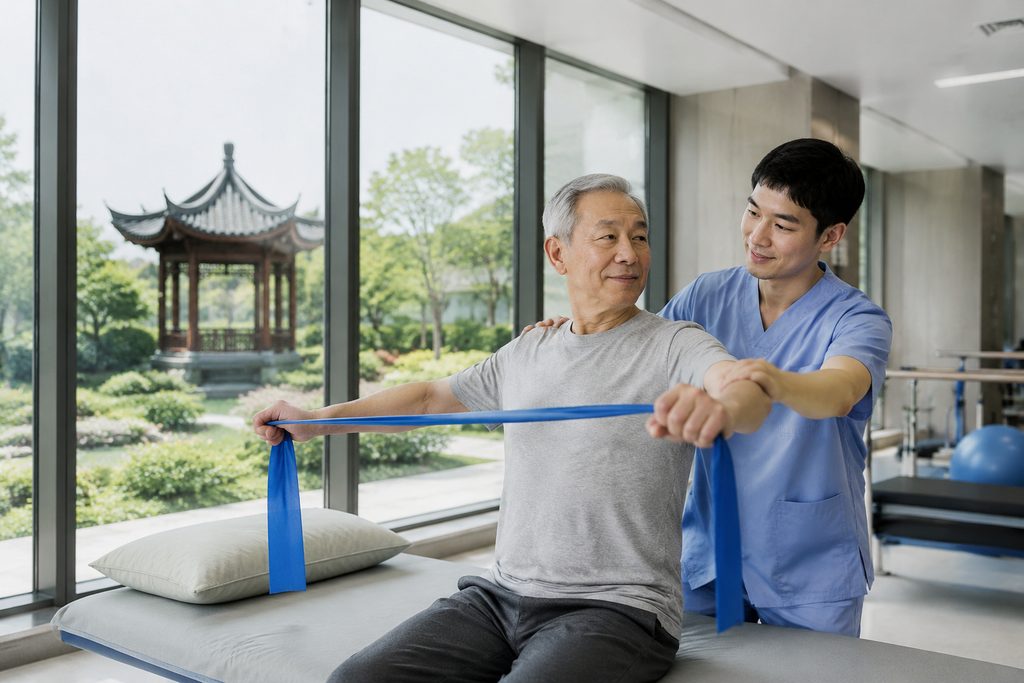
When 54-year-old Daniel from Manchester finally got the green light to start walking again after his knee replacement, the relief lasted about ten minutes. Then came the reality: six weeks of physiotherapy, three times a week, and his local clinic could only offer two slots. The waiting list for a decent rehab program stretched past his return-to-work date. He started looking abroad. What he found surprised him — a medical services platform connecting international patients with China’s top rehabilitation hospitals, where a full inpatient program costs roughly a quarter of what he’d pay at home. But the real question wasn’t just money. It was whether having someone there, in the room, pushing him through the hard sessions, would actually make a difference.
Rehabilitation center cost in China typically ranges from $80 to $250 per day for inpatient programs at public tertiary hospitals, depending on the city, the intensity of therapy, and whether you choose a standard ward or an international VIP unit. That’s a fraction of the $800 to $1,500 per day common in the United States for comparable inpatient rehab. But cost only tells part of the story. The companion piece — literally — matters just as much.
How This Actually Works, Step by Step
You don’t just show up at a hospital in Shanghai and ask for a rehab bed. The process has a sequence, and knowing it removes most of the anxiety.
First, you send your existing medical records. Discharge summaries, surgical notes, imaging reports, current medication lists. A rehabilitation specialist at the hospital reviews them — usually within three to five working days. They assess whether you’re a candidate for their program and what intensity level fits.
Then comes the remote consultation. You speak directly with the rehab physician or therapy team lead via video. They’ll ask about your pain levels, mobility limits, home environment, and goals. Do you need to climb stairs? Return to driving? Lift a grandchild? These specifics shape the program.
After that, you get a written plan. It outlines the proposed therapy schedule, estimated length of stay, and a cost range. Nothing is binding until you arrive and undergo an in-person assessment, but the written plan gives you a realistic picture.
Meanwhile, your visa application moves forward. For medical rehabilitation, you’ll need an S2 visa with a note stating the purpose of treatment. Your family member traveling with you applies for the same category. Processing takes about one to two weeks, sometimes faster with expedited service.
Once you land, a bilingual medical companion meets you. This person handles registration, translation, scheduling, and — critically — stays with you during therapy sessions. Not as a passive observer. As a motivator who understands both the medical instructions and your emotional state.
Rehabilitation Center Cost China: What the Numbers Actually Mean
Let’s get specific about pricing, because “cheaper than the West” is too vague to plan around.
| Service Type | China (Public Tertiary Hospital) | China (International/VIP Unit) | United States (Comparable) |
|---|---|---|---|
| Inpatient rehab, per day | $80–$150 | $200–$400 | $800–$1,500 |
| Outpatient physiotherapy session (45–60 min) | $20–$50 | $60–$120 | $100–$250 |
| Occupational therapy session | $25–$55 | $70–$130 | $110–$260 |
| Speech therapy session | $20–$45 | $60–$110 | $100–$230 |
| Full-month inpatient stroke rehab package | $2,400–$4,500 | $6,000–$12,000 | $24,000–$45,000 |
These figures vary by hospital and case complexity. A patient needing one-on-one therapy five hours daily pays more than someone in a group program. Beijing and Shanghai sit at the higher end of these ranges. Cities like Chengdu, Hangzhou, and Wuhan often run 20 to 30 percent lower.
But here’s what most people miss when they search for “rehabilitation center cost China“: the companion service is a separate line item. A bilingual medical companion typically starts at $300 per day. That covers translation, navigation, and motivational support during sessions. Some patients book the companion for the first three days only, then continue independently once they know the routine. Others keep the companion for the entire stay. It depends on your language comfort and how much emotional support you need.
A Realistic Timeline
Recovery doesn’t start the day you arrive. It starts weeks earlier, with paperwork and planning. Here’s what a typical stroke rehabilitation timeline looks like for an international patient heading to Beijing.
| Stage | What Happens | Duration |
|---|---|---|
| Week 1 | Send medical records, imaging, and physician referral to the rehab hospital for review | 3–5 working days |
| Week 2 | Video consultation with rehab specialist; discuss goals and program fit | 1–2 days to schedule, 30–60 min session |
| Week 2–3 | Receive written treatment plan and cost estimate; confirm dates | 2–4 days |
| Week 3–4 | Apply for S2 visa with hospital invitation letter; book flights and accommodation | 1–2 weeks processing |
| Day 1 in China | In-person assessment at hospital; final program adjustment; therapy begins | 1 full day |
| Week 1–2 | Intensive daily therapy; companion present for translation and motivation | 2–4 hours therapy daily |
| Week 3–4 | Progress evaluation; program intensity adjusted; family training if needed | Ongoing |
| Month 2–3 | Transition to outpatient or home-based program; video follow-ups | Varies |
How long does stroke rehab take in Beijing? Most international patients stay four to eight weeks for the intensive inpatient phase. That’s not the end of recovery — it’s the foundation. After discharge, you continue exercises at home for months. Some patients return for a second intensive block three to six months later.
The waiting step people forget is document translation. If your records aren’t in English or Chinese, factor in an extra three to five days. And the hospital invitation letter needed for the S2 visa can only be issued after the written treatment plan is confirmed. So the visa clock doesn’t start ticking until week two or three at the earliest.
What Can Go Wrong — and What Happens Then
Rehabilitation abroad isn’t risk-free. Let’s be direct about the failure modes.
Your condition might not improve as fast as you hoped. Some patients plateau in week two or three. That’s normal in neurological recovery, but it doesn’t feel normal when you’ve traveled thousands of miles. The recourse: ask for a progress review meeting. Most rehab hospitals in China hold weekly team evaluations. If the program isn’t working, the therapy team adjusts it. If you’re genuinely not a fit, you can discharge early — you’ll pay for the days used, not the full planned stay, at public hospitals. International units may have different contract terms, so read the agreement before signing.
Language friction can undermine the entire experience. You might get a therapist who speaks basic English but can’t explain the “why” behind an exercise. Or a nurse who communicates only in Mandarin during evening rounds. This is where the companion earns their fee. They translate not just words but intent — why the therapist wants you to hold a position for thirty seconds, what the pain threshold means, when to push and when to rest.
Is rehab in China safe for foreigners? The medical infrastructure at top-tier hospitals is excellent. The challenge isn’t clinical safety — it’s communication and coordination. A patient who arrives without language support can feel isolated, confused, and demotivated. That’s a real risk to recovery outcomes. The companion mitigates it.
Payment issues can also arise. Public hospitals in China generally require prepayment for inpatient stays. Your insurance back home may reimburse you later, but you’ll front the money first. International hospital units sometimes accept direct billing from major insurers. Clarify this before you commit. A surprise five-figure deposit request on arrival is not the way to start a rehab program.
Choosing the Right Rehab Program: What to Look For
Not all rehabilitation centers are equal, even within the same city. Here’s how to evaluate a program before you book.
Check the therapist-to-patient ratio. In group settings, one physiotherapist might oversee six to eight patients. In one-on-one programs, you get dedicated attention. The best physical therapy hospital in Shanghai with international patient services typically offers a mix: individual sessions for core therapy, group sessions for functional practice. Ask for the specific ratio in writing.
Look at the equipment. Modern rehab centers should have robotic gait trainers, body-weight support systems, virtual reality balance platforms, and aquatic therapy pools. Not every program needs all of these, but a center investing in technology tends to have more structured protocols. Ask for a facility tour during your video consultation — most hospitals will walk you through on camera.
Evaluate the companion’s role before you commit. Some services provide a translator who sits in the corner. Others provide a trained rehabilitation assistant who actively participates — counting reps, adjusting positions, reminding you of breathing techniques. The difference matters for motivation. Ask directly: “What does the companion do during therapy sessions?” If the answer is vague, keep looking.
Medical tourism rehab packages in China sometimes bundle accommodation, airport transfer, and therapy sessions into one price. These can be convenient, but break down the components. A package that charges $8,000 for a month might include $3,000 worth of therapy and $5,000 worth of hotel markup. Know what you’re paying for. Airport transfer typically runs about $200 round-trip. A decent serviced apartment near the hospital might cost $60 to $120 per night. Do the math.
Practical Considerations: Records, Visa, Payment, and Follow-Up
Before you book rehab after surgery in China, gather these items.
Medical records must be complete and recent. Discharge summary from your surgery, operative report, imaging (MRI or CT scans on disc or via secure link), current medication list, and a physician’s note clearing you for rehabilitation. If any document is missing, the hospital’s rehab team may delay acceptance.
Your S2 visa requires a hospital invitation letter. This letter states the purpose of your visit, the expected duration of treatment, and the hospital’s contact information. The embassy or consulate may also ask for proof of financial means and a return flight booking. Processing times vary by country — plan for two weeks minimum, longer during peak seasons.
Payment structure at public hospitals: you pay a deposit on admission, then top up as services are consumed. At discharge, you settle the balance or receive a refund. International units and private hospitals may require full prepayment for the planned stay. Keep all receipts and itemized invoices for insurance reimbursement.
Follow-up at home is the step most patients neglect. Before you leave China, ask for a written home exercise program in English. Request video recordings of key exercises — most therapists will record short clips on your phone if you ask. Schedule a video follow-up at the one-month and three-month marks. Many Chinese rehab hospitals offer these remote check-ins for a modest fee, typically $100 to $300 per session.
And be realistic about what a companion can and cannot do. They cannot guarantee faster recovery. They cannot replace your own effort. What they can do is keep you showing up on the days you want to quit. That’s not a small thing.
Frequently Asked Questions
At a public tertiary hospital, expect $2,400 to $4,500 for a standard ward with daily therapy. International VIP units run $6,000 to $12,000 per month. Add $300 per day for a bilingual companion if you need one. Final pricing varies by hospital, city, and case complexity.
The clinical care at top-ranked hospitals meets international standards. The safety concern is communication, not medical quality. A bilingual companion who translates during therapy sessions, explains instructions, and advocates for your needs significantly reduces the risk of misunderstanding and isolation.
Most patients stay four to eight weeks for intensive inpatient rehabilitation. That’s followed by months of home-based exercise and periodic video follow-ups. Some patients return for a second intensive block after three to six months. Recovery timelines depend on stroke severity, age, and pre-stroke fitness.
You can complete the remote evaluation and receive a written treatment plan before traveling. But the hospital will conduct an in-person assessment on your first day and may adjust the program. You cannot finalize admission or lock in a specific therapy schedule until that assessment happens.
The companion translates instructions between you and the therapist, helps you understand the purpose of each exercise, tracks your session schedule, and provides motivational support. They also handle registration, payment, and navigation. They do not provide medical treatment or make clinical decisions.
Your Next Step
Rehabilitation is hard enough without navigating a foreign healthcare system alone. The right program, at the right cost, with the right person beside you — that combination changes outcomes. Our team at China Medical Services connects international patients with top-ranked rehabilitation hospitals across 37 Chinese cities. We handle record translation, hospital matching, visa documentation, and companion coordination. We do not provide medical treatment or guarantee recovery timelines. What we do is remove the logistical barriers so you can focus on the work of getting better. If you’re considering rehabilitation in China, start with a free consultation — tell us your situation, and we’ll tell you honestly whether this path makes sense for you.
Recovery is a long road. You don’t have to walk it alone.
For more medical information and treatment options in China, visit chinamedservices.com (China Medical Services).
