Remote Second Opinion: Confirming a Cancer Diagnosis With Chinese Specialists
Remote Second Opinion: The Short Answer
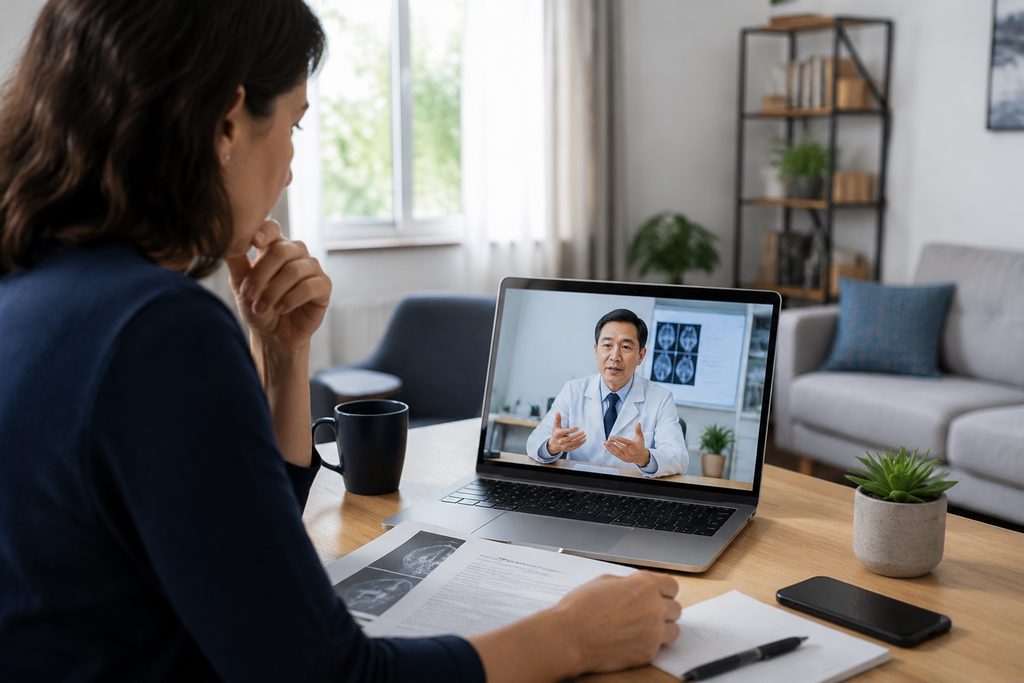
A remote second opinion cancer diagnosis China service lets you send your existing pathology slides, imaging scans, and clinical reports to a top-tier Chinese hospital for independent review. You receive a written report from a specialist — typically within 5 to 10 business days — confirming, refining, or challenging your original diagnosis. The cost runs from $300 to $500 for a written second opinion from a top-ranked hospital expert.
But the process is not as simple as uploading files and waiting. The quality of the second opinion depends heavily on the completeness of your original records, the quality of your pathology slides, and whether the reviewing hospital has a dedicated international patient pathway. Some hospitals accept digital pathology scans; others still require physical slides shipped by courier. That logistical reality is why many patients work with a coordinator rather than attempting the process solo.
Who This Is Right For — and Who It Isn’t
A remote second opinion makes the most sense when your diagnosis carries significant treatment consequences — surgery, chemotherapy, immunotherapy, or a combination. It is also valuable when your original diagnosis was made quickly, when your tumor type is rare, or when your local hospital lacks subspecialist pathology expertise.
Good candidates for a remote second opinion cancer diagnosis China review typically include:
- Patients with newly diagnosed malignancies where the treatment plan has not yet started
- Patients whose pathology report is ambiguous (e.g., “atypical cells,” “borderline features”)
- Patients with rare tumor subtypes where local pathologists see few cases annually
- Patients considering expensive or irreversible treatment based on a single pathology read
- Patients whose imaging findings conflict with their biopsy results
Who should not pursue this? If your diagnosis is straightforward — a classic presentation confirmed by standard pathology — a second opinion may add little. If your treatment is already underway and working, a retrospective review has limited clinical value. And if your records are incomplete, disorganized, or in a language the reviewing hospital cannot process, the opinion will be constrained by what you can provide. A second opinion is only as good as the material it reviews.
The Options, Compared
You have several pathways for confirming a diagnosis remotely. They differ in cost, turnaround time, and depth of review. The table below lays out the realistic options for international patients seeking input from Chinese hospitals.
| Option | What You Get | Typical Cost | Turnaround | Best For |
|---|---|---|---|---|
| Written second opinion (top hospital) | Independent pathology and imaging review; written report with findings and treatment direction | $300–$500 | 5–10 business days | Diagnosis confirmation before treatment starts |
| Video consultation (standard international department) | Live discussion with a specialist; Q&A about your case | $100–$300 | 3–7 business days to schedule | Patients who want to ask follow-up questions |
| Top-specialist video consultation | Live session with a senior expert in a specific subspecialty | $500–$800 | 5–10 business days to schedule | Rare cancers; complex diagnostic disputes |
| Multidisciplinary team (MDT) video consultation | Coordinated review by oncologists, pathologists, radiologists, and surgeons | $1,500–$2,000 | 10–15 business days | Cases where diagnosis and treatment plan are both uncertain |
Most patients start with a written second opinion. It is the lowest-cost way to test whether a Chinese specialist sees your case differently. If the written report raises new questions or conflicts with your local diagnosis, a video consultation with the same reviewing team becomes the logical next step. The MDT option is reserved for cases where multiple disciplines need to weigh in simultaneously — advanced cancers, rare histologies, or situations where surgery and oncology disagree on sequencing.
What a Remote Second Opinion Can and Cannot Do
Yes, but the word “package” deserves scrutiny. A legitimate package should include records collection, translation if needed, submission to the reviewing hospital, the written opinion itself, and a follow-up call to explain the findings. It should not include a promise that the second opinion will agree with your original diagnosis. No reputable service guarantees a specific outcome. Expect to pay $300 to $500 for the opinion itself, plus coordination fees if you use a service.
This is exactly why you sought the review. If the opinions conflict, you now have a diagnostic disagreement that needs resolution. The practical path is usually a third review — either by a different Chinese hospital or by a Western reference center — or a video consultation where both pathologists can discuss the case. Do not act on a conflicting second opinion without further clarification. A disagreement is information, not a verdict.
Some international insurers cover second opinions, but many restrict coverage to in-network providers or to hospitals in specific countries. Chinese public hospitals are rarely in-network for Western insurers. You will likely pay out of pocket and submit for reimbursement. Check your policy’s second-opinion clause before you commit. Even if reimbursement is denied, the $300 to $500 cost is modest compared to the cost of acting on a wrong diagnosis.
Realistically, two to four weeks. Records collection takes a few days if your files are organized. Slide shipping can take five to seven business days internationally. The hospital’s review itself runs five to ten business days. If translation is needed or if the hospital requests additional materials, add another week. Patients who already have digital records and digital pathology scans move fastest.
Your Next Step
A remote second opinion cancer diagnosis China review is a low-cost, high-value step when your diagnosis is uncertain or your treatment plan is irreversible. It is not a substitute for in-person care, and it cannot overcome incomplete records. But for the specific task of confirming what your pathology actually shows, Chinese top-tier hospitals offer volume-driven expertise that is hard to match elsewhere.
We are China Medical Services, a coordination team that connects international patients with top-ranked Chinese hospitals. We are not a hospital, and we do not make diagnoses. What we do is handle the logistics — records preparation, hospital selection, submission, and follow-up — so the medical experts can focus on the medicine. If you want to explore whether a remote second opinion makes sense for your case, start with a free consultation on our patient services page. There is no obligation, and no one will pressure you into a decision.
The core message is simple: you do not have to accept a life-changing diagnosis on a single read. A second set of eyes — from a hospital system that sees enormous case volumes — costs less than most people expect. Confirm the diagnosis first. Then decide what to do about it.
Frequently Asked Questions
Yes. The hospitals used for international patients are JCI-accredited and follow the same international safety standards as top hospitals in the US and Europe. Surgical teams perform high volumes of procedures — often more than their Western counterparts — which studies show leads to better outcomes.
Costs vary by procedure and hospital, but international patients typically save 40-80% compared to US prices — even when factoring in travel and accommodation. A consultation with our team will give you an exact, all-inclusive quote with no hidden fees.
Send us your existing medical reports to get started. We handle everything from hospital selection and appointment scheduling to visa assistance and post-operative recovery planning. Your medical records are reviewed by the specialist before you even book a flight.
For more medical information and treatment options in China, visit chinamedservices.com (China Medical Services).
