Emergency One-Touch Contact in China: How to Reach Your Medical Team Instantly
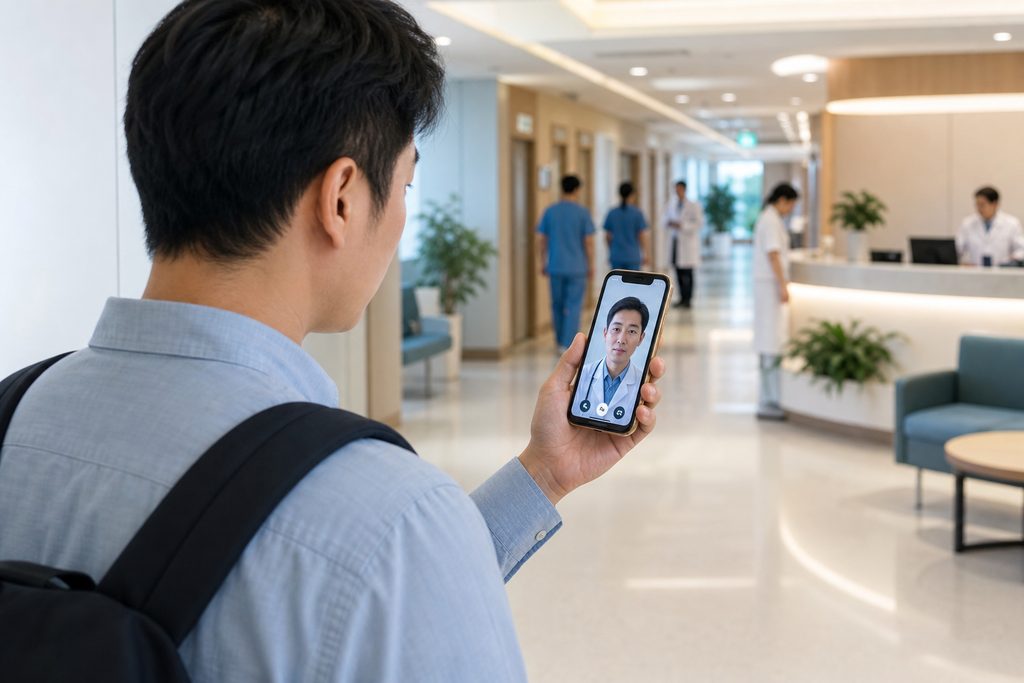
You have probably heard that navigating a foreign healthcare system alone is manageable with a good translation app and some patience. That works fine until something goes wrong at 2 a.m. and you cannot read the discharge instructions, or your surgeon’s office only speaks Mandarin, or a post-operative symptom flares and you need to know immediately whether it is normal or a crisis. The gap between routine navigation and emergency access is where most international patients in China hit a wall. It is also exactly where a structured medical concierge service China price model proves its value—not as a luxury add-on, but as a clinical safety net.
What does instant connection actually mean when you are a foreign patient in Shanghai, Beijing, or Guangzhou? It means having a direct, pre-established line to a bilingual coordinator who already knows your case, your surgeon, and your hospital floor. Not a generic hotline. Not a chatbot. A real person who can reach your medical team within minutes when every minute counts.
Key Takeaways
- A structured one-touch emergency contact system connects you to your actual medical team—not a generic call center—within minutes of an urgent need, reducing the risk of miscommunication during critical moments.
- China’s top hospitals perform surgical volumes that often dwarf Western benchmarks; Fuwai Hospital alone completes over 14,000 cardiac surgeries annually, creating clinical expertise that directly benefits international patients.
- Standalone navigation fails hardest at night, on weekends, and during complications—precisely when language barriers and hospital bureaucracy become dangerous rather than merely inconvenient.
- Any medical concierge service China price should be evaluated against the cost of a single preventable emergency room visit or delayed diagnosis, not against the price of an unassisted trip.
The Problem: When “Figure It Out Yourself” Becomes Dangerous
Approximately 1 in 5 international patients in China reports a significant communication barrier during an unplanned medical event, according to data from the International Medical Travel Journal. That statistic becomes visceral when you are the one standing in a hospital corridor at midnight, holding a phone with a dead battery, trying to explain chest pain to a triage nurse who speaks no English.
China’s top-tier public hospitals are extraordinary clinical machines. They are also massive, high-volume institutions where a single outpatient department can see 10,000 patients in one day. Without a direct line to someone inside the system, you are one person in a crowd of thousands. The emergency contact systems that exist for domestic patients—WeChat-based hospital mini-programs, local hotlines, QR code queues—are almost entirely Chinese-language and assume local residency. They were not built for you.
We have seen the pattern repeat across dozens of patient cases. A patient arrives for a scheduled procedure. Everything goes smoothly during business hours. Then a complication arises on a Saturday evening. The patient calls the hospital’s main number. Nobody answers. The patient tries the international department. Closed until Monday. The patient ends up in a general emergency room where no one has access to their surgical records. The treating physician is unreachable. What could have been a five-minute phone consultation becomes a twelve-hour ordeal, an unnecessary admission, and a bill that could have been avoided.
This is not a hypothetical. It is the structural reality of seeking care in a system that was not designed for international patients. And it is the reason a best hospital emergency contact China solution is not a convenience—it is a clinical requirement.
Who We Are
We are not a hospital. We do not provide medical treatment, clinical diagnoses, or any form of direct healthcare. Our team functions as your logistical architects and communication bridge—we connect international patients with China’s top-tier medical expertise and ensure that connection stays live before, during, and after treatment. We handle hospital matching, appointment coordination, bilingual medical companionship, visa guidance, and the emergency contact infrastructure that keeps you tethered to your care team around the clock. We operate across 340+ top-ranked hospitals in 37 cities, drawing on the Fudan University hospital rankings and JCI accreditation standards to match each patient with the right institution for their specific condition.
Why a Direct Emergency Contact Line Changes Everything
The core value of a one-touch emergency contact system is deceptively simple: it eliminates the gap between a patient’s urgent need and a clinical response. But behind that simplicity sits a complex coordination challenge that most patients do not see until it is too late. Understanding how to reach your surgeon in China quickly requires understanding why the default system fails.
Volume Creates Expertise, But Also Distance
A top Chinese orthopedic surgeon may complete 200 to 500 joint replacements annually. The average US orthopedic surgeon performs approximately 65, according to data from the American Academy of Orthopaedic Surgeons. That volume gap is not a minor difference—it represents a fundamentally different level of procedural repetition and pattern recognition. When a surgeon has seen thousands of post-operative recovery trajectories, they can identify a deviation from normal almost instantly. The problem is accessing that expertise when you need it. Without a direct channel, that surgeon might as well be on another continent.
Fuwai Hospital in Beijing performs more than 14,000 cardiac surgeries each year—the highest volume of any cardiac center globally. Zhongshan Hospital at Fudan University in Shanghai handles a comparable caseload in cardiology and thoracic surgery. These institutions do not just treat patients; they refine techniques at a scale that generates clinical data most Western hospitals cannot match. For an international patient recovering from a complex cardiac procedure, the ability to reach a coordinator who can immediately consult the surgeon who performed the operation is not a luxury. It is the difference between an informed response and a guess.
What Is One-Touch Medical Support for International Patients, in Practice?
The term sounds like marketing jargon until you break it down operationally. One-touch support means you have a single point of contact—typically a bilingual case coordinator—who holds your complete medical file, knows which surgeon performed your procedure, has direct mobile access to the hospital department where you were treated, and can reach the relevant clinical team within minutes. You do not call a switchboard. You do not explain your case to three different people. You press one number, speak to one person who already knows your situation, and that person activates the clinical response.
This model differs fundamentally from a 24/7 doctor hotline China medical tourism companies sometimes advertise. A generic hotline connects you to an available physician who has never seen your chart. That physician can offer general advice but cannot coordinate with your surgical team, cannot access your hospital records, and cannot make decisions about your specific post-operative protocol. A concierge-linked emergency contact connects you to your team. That distinction matters most when the clinical question is specific: “Is this level of drainage normal for a patient who had a Whipple procedure four days ago?” A general hotline doctor cannot answer that. Your surgeon’s team can.
Instant Medical Team Connection Shanghai Cost and the Economics of Prevention
International patients often ask about the instant medical team connection Shanghai cost because Shanghai and Beijing are the two primary entry points for medical travelers. The question is reasonable, but it frames the issue backward. The cost of the connection service itself—typically embedded in a broader coordination package—is measured in hundreds of dollars. The cost of a single unplanned emergency room visit, unnecessary hospital readmission, or delayed complication management can run into thousands. More importantly, the clinical cost of a miscommunicated symptom during a critical recovery window cannot be measured in dollars at all.
A medical concierge service China price structure typically bundles emergency contact access with other coordination services: hospital matching, appointment scheduling, bilingual companionship during consultations, and post-discharge follow-up. Standalone emergency contact without the surrounding infrastructure would be less effective, because the coordinator needs to know your case before an emergency happens. The relationship is built during the pre-treatment phase, tested during the hospital stay, and activated when needed during recovery.
What You Need to Know Before Going Alone
The barriers to independent navigation in China’s hospital system are real, structural, and not solvable with a phrasebook. Honesty about these barriers is essential, because patients who underestimate them end up in trouble.
- Visa Requirements Are Specific and Unforgiving: Medical treatment in China requires an S2 visa with a treatment-purpose annotation. Accompanying family members also need S2 visas. An M visa—which is for commercial and trade activities—is not valid for medical treatment. Getting the wrong visa category can result in denied entry, hospital admission refusal, or complications with payment systems that require valid visa documentation. Our team provides the invitation letters and documentation framework that hospitals and visa offices require.
- Public Hospital Registration Is Not Designed for Foreigners: China’s public hospital outpatient system operates on same-day registration. You cannot book a specialist appointment from overseas through the standard public channel. Appointments are released in batches, often at specific morning hours, and are claimed within minutes. The system runs entirely in Chinese. International department and VIP channels exist specifically to bridge this gap, but they require coordinator access and cannot be navigated through the hospital’s public-facing platforms.
- Payment Systems Assume Domestic Banking: Chinese hospitals operate on a pre-payment model. You deposit funds before treatment and settle afterward. The payment terminals accept UnionPay and Chinese mobile payment platforms like WeChat Pay and Alipay. International credit cards are often not accepted at public hospital counters. International departments and private hospitals offer more flexible options, including direct insurance billing in some cases, but the public system’s payment infrastructure remains largely domestic.
How We Help You Navigate This
These barriers exist for structural reasons, not because the system is hostile to foreigners. China’s hospital infrastructure was built to serve a domestic population of 1.4 billion people. International patient services are a relatively recent development, concentrated in the top-tier institutions that have invested in international departments. Bridging the gap between that domestic infrastructure and international patient needs is what our coordination model does.
Before you travel, we match your medical history and treatment requirements to the right hospital and department. We work with China’s top-ranked hospitals across 37 cities, selecting institutions based on Fudan University specialty rankings and JCI accreditation status rather than brand recognition alone. For cardiac cases, that might mean Fuwai Hospital or Zhongshan Hospital. For oncology, it could be the Cancer Hospital Chinese Academy of Medical Sciences or Fudan University Shanghai Cancer Center. The matching process considers surgical volume, specialist availability, and the specific clinical question at hand—not just which hospital has the most famous name.
During your stay, a bilingual medical companion handles the operational friction: registration queues, payment deposits, medication pickup, pre-operative instructions, and the constant back-and-forth between departments that characterizes any hospital stay anywhere in the world. The companion is not a clinician, but they are the person who ensures that clinical information flows accurately between you and your care team. That flow is what prevents the midnight scenarios described earlier.
After discharge, the emergency contact line stays active. If a symptom develops, you reach your coordinator. The coordinator reaches your surgeon’s department. A clinical response comes back through the same channel. The loop is closed. No general hotlines, no language barriers, no explaining your case from scratch to a stranger.
Our coordination fees follow a transparent structure. Bilingual companionship starts from $200 per day. Hospital appointment coordination starts from $300, with a full refund if the specified appointment cannot be secured. Video consultations with top specialists range from $500 to $800, and multidisciplinary team consultations run $1,500 to $2,000. Any consultation fee is credited in full toward on-the-ground coordination services if you proceed with treatment in China within 90 days. Final pricing always depends on the specific hospital, the case complexity, and the coordination level required.
Frequently Asked Questions
Some hospitals do have international departments with English-speaking staff during business hours. Outside business hours—nights, weekends, public holidays—those departments are typically closed. A general emergency room will treat you, but the staff may not speak English and will not have access to your elective procedure records. The emergency contact line we provide bridges that gap by maintaining a direct channel to your specific clinical team regardless of the hour.
Surgeons are not on call 24/7 for individual patients, and no service can guarantee that your specific surgeon will answer a phone at 3 a.m. What the emergency contact system provides is access to the department team—a resident, a fellow, or an attending colleague who has access to your surgical records and can consult with your surgeon if the situation requires it. The coordinator facilitates that chain of communication. The standard for a 24/7 doctor hotline China medical tourism patients sometimes expect—a direct line to a named specialist at any hour—is not clinically realistic, and we do not promise it. What we do promise is that your case reaches the right clinical eyes quickly.
Our network covers 37 cities, including Guangzhou, Shenzhen, Chengdu, Hangzhou, Nanjing, Wuhan, and Xi’an. The response time and the specific hospital departments accessible depend on the city and the institution. Top-tier hospitals in major medical centers like Shanghai and Beijing offer the broadest specialist coverage and the most established international patient infrastructure. In smaller cities, the coordination model adapts—the principle of a single point of contact remains, but the speed of clinical response may vary based on local hospital resources.
Hospital matching is the first step in our process and the foundation on which everything else rests. We use the Fudan University specialty rankings, which evaluate 45 clinical specialties and rank the top 10 hospitals in each, combined with JCI accreditation data and our own operational experience with international patient cases. For a given diagnosis, we identify the hospitals with the highest case volumes, the most experienced specialist teams, and the international patient infrastructure to support your stay. You can explore our specialty pages to see how hospitals compare across different clinical areas before you even contact us.
Your Next Step
Medical travel is not a transaction. It is a relationship between you, a hospital, and a clinical team that will be responsible for your outcome. That relationship needs a communication infrastructure that works when everything is fine and when it is not. The emergency contact system we have described is not an add-on feature—it is the backbone of safe international care. If you are considering treatment in China, the first conversation is about whether the right hospital and the right specialist exist for your condition. From there, everything else can be built. That conversation costs nothing and commits you to nothing. It simply tells you what is possible.
For more medical information and treatment options in China, visit chinamedservices.com (China Medical Services).
