Is That Payment Request a Scam? How to Know Before You Pay
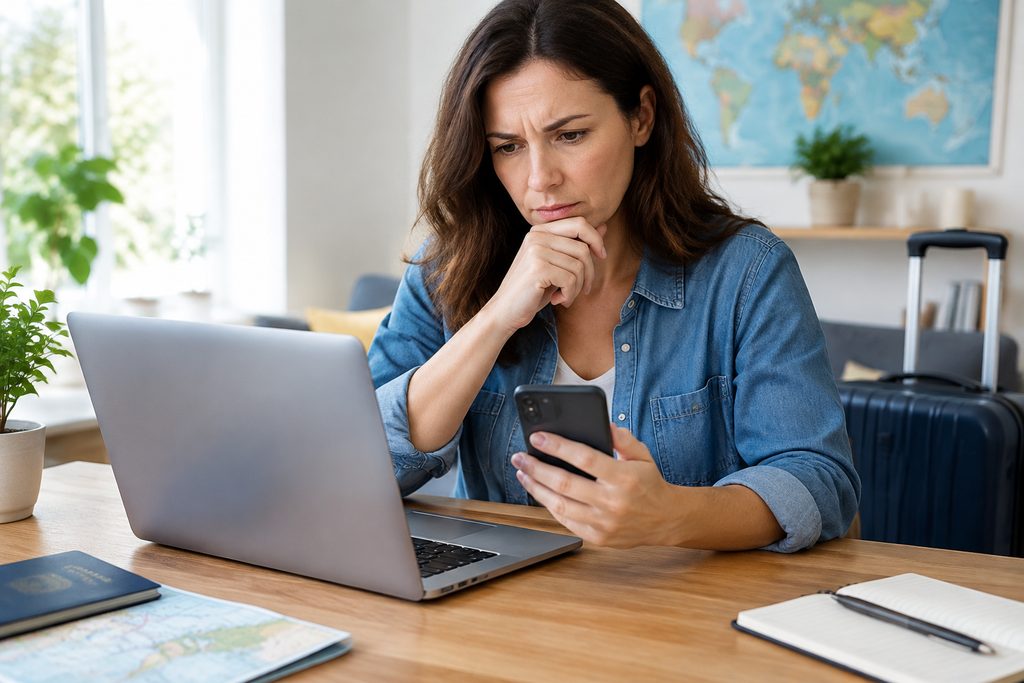
Have you ever stared at an invoice from a hospital or a “medical coordinator” overseas and felt that knot in your stomach — the one that whispers this doesn’t look right? You are not alone. International patients lose an estimated $2.6 billion annually to medical payment fraud, according to a 2024 report from the Coalition Against Insurance Fraud. And the people targeted are almost always in a vulnerable spot: sick, far from home, and desperate for a clear path forward. Knowing is that payment request a scam? how to know the answer before wiring money is not just smart — it is a survival skill.
Our team at China Medical Services has spent years helping Western patients navigate the Chinese healthcare system. We have seen legitimate billing processes confuse people. We have also seen outright fraud attempts that mimic hospital invoices with disturbing accuracy. This guide walks through how to tell the difference.
How This Actually Works, Step by Step
Let’s trace what a real payment request looks like when you are planning treatment in China, and where the fraudsters typically slip in.
Step 1: You receive a document. It might be an email, a PDF attachment, or a WhatsApp message. Legitimate hospitals in China send invoices from official domain emails — think @pumch.cn or @fuwaihospital.org. Scammers use Gmail, Outlook, or domains that look close but are off by one letter. Check the sender address character by character.
Step 2: The invoice references a specific service. A real invoice from a Chinese public hospital will list the department, the service code, the patient name (or a registered patient ID), and the amount in RMB. It will never ask for payment to a personal bank account. Never. If the account name is an individual rather than the hospital’s official entity, stop.
Step 3: Payment instructions arrive. Legitimate international departments at Chinese hospitals accept wire transfers to the hospital’s official corporate account. Some private international hospitals like United Family or Jiahui accept credit cards or direct insurance billing. If someone pressures you to use Western Union, MoneyGram, cryptocurrency, or a “friend’s account” because the hospital’s account is “temporarily unavailable,” that is the moment to walk away.
Step 4: You verify independently. Call the hospital’s international department using the number on their official website — not the number in the email you received. Ask them to confirm the invoice number and amount. This single phone call takes ten minutes and blocks the majority of payment scams.
Step 5: You pay through traceable channels. Bank wire transfer. Credit card. Escrow services where applicable. Never cash, never gift cards, never peer-to-peer apps without a paper trail.
Is That Payment Request a Scam? How to Know the Red Flags
The question is not whether scammers target medical travelers. They do, aggressively. The question is whether you can spot the pattern before the money leaves your account. Here are the markers we have documented in real cases involving patients seeking care in China.
Urgency that feels manufactured. “Your surgery slot expires in 24 hours.” “Pay now or lose your bed.” Legitimate hospitals in China do hold surgical slots, but they do not threaten you with loss via email within a day. Real coordinators give you time to verify. Scammers compress your decision window because they know verification takes time.
Requests for a “deposit” before any formal evaluation. Chinese public hospitals do require prepayment for inpatient care, but only after you have a confirmed admission notice from the hospital’s admission office. If someone asks for money before you have even spoken to a doctor or seen a treatment plan, that is a red flag. A legitimate process starts with medical records review, not payment.
Invoices that look almost right. We have seen fake invoices bearing the logo of Peking Union Medical College Hospital with a single typo in the English name. The amounts looked plausible. The account number did not match the hospital’s registered corporate account. Fraudsters count on you not cross-checking.
Payment to an overseas account. A Chinese public hospital will almost never ask you to wire money to a bank in another country. If the invoice says the hospital is in Shanghai but the bank account is in Hong Kong or Singapore under a different entity name, verify. Sometimes third-party billing agents are legitimate, but you must confirm the agent’s relationship with the hospital in writing from the hospital itself.
A Realistic Timeline
Understanding how long a legitimate payment process takes helps you spot a scam. Fraudsters compress timelines. Real processes have built-in waiting periods that scammers hate.
| Stage | What happens | Typical duration |
|---|---|---|
| Day 1–3 | You submit medical records for review by the hospital’s international department or a coordination service | 1–3 business days for acknowledgment |
| Week 1–2 | Specialist reviews records; hospital confirms whether they can treat your condition and provides a preliminary treatment plan and cost estimate | 5–10 business days, depending on department workload |
| Week 2–4 | If you proceed, the hospital issues a formal admission notice with the official invoice and payment instructions | 1–2 weeks after plan confirmation |
| Week 3–6 | You apply for the S2 visa (short-stay, medical treatment purpose) with the hospital’s invitation letter | 5–15 business days, varies by embassy |
| Week 4–8 | You wire the prepayment to the hospital’s official account; hospital confirms receipt in writing | 3–7 business days for international wires |
| Arrival | In-person registration, face-to-face consultation with the specialist, final treatment plan signed | Day 1–2 in China |
Notice something. The payment comes after the medical evaluation, not before. Any process that demands money upfront before a doctor has reviewed your records deserves scrutiny.
Document translation adds time people forget. If your medical records are not in English or Chinese, expect 3–5 extra days for certified translation. Visa processing can stretch longer during peak seasons. A legitimate coordinator tells you this. A scammer pretends it does not exist.
What Can Go Wrong — and What Happens Then
Even careful people get caught. Here is what failure looks like, and what recourse actually exists.
You paid a fraudulent invoice. The money is gone. Wire transfers are difficult to reverse once the recipient withdraws the funds. Your bank may attempt a recall if you act within 24–48 hours, but success rates are low — roughly 15–20% according to banking industry data. File a report with your local police and with the Internet Crime Complaint Center (IC3) if you are in the US. The funds are likely unrecoverable, but the report helps build a case pattern.
You paid a legitimate hospital but the service changed. Sometimes the treatment plan shifts after in-person evaluation. Chinese hospitals generally refund unused prepayments, but the process takes 2–4 weeks and requires paperwork. Ask for the hospital’s refund policy in writing before you pay anything.
You used a middleman who disappeared. This is the hardest case. If a “medical travel agent” took your money and vanished, you are dealing with a commercial dispute. Your recourse depends on where the agent is registered. If they are in China, you can file a complaint with the local Administration for Market Regulation. If they are elsewhere, you need legal advice in that jurisdiction. This is why we tell patients: never pay a middleman for hospital fees directly. Pay the hospital. Pay the coordination service separately for their coordination work.
And the uncomfortable truth: no one can guarantee recovery. The best protection is never sending money you cannot afford to lose without independent verification.
How to Evaluate Any Payment Request Before You Send Money
You have a specific invoice in front of you. Run it through this decision sequence.
One: Who is asking? A hospital you contacted directly? A coordination service you found online? A stranger who reached out to you first? Unsolicited contact is the starting point for most medical payment fraud. Legitimate hospitals do not cold-call international patients asking for payment.
Two: What is the payment for? A specific service with a medical basis, or a vague “processing fee,” “registration deposit,” or “priority access charge”? Be especially wary of “access fees” that promise to jump queues or secure a specific surgeon. Chinese public hospitals do not sell queue-jumping. Anyone who says they can buy you faster access for a fee is either scamming you or describing something that violates hospital policy.
Three: Can you verify the invoice independently? Find the hospital’s official phone number through their website or a trusted directory. Call. Ask for the international department. Quote the invoice number. If they cannot find it, you have your answer.
Four: Does the payment path make sense? Bank account name matches the hospital’s legal entity. Currency matches the country. No pressure to use untraceable methods. No request to split payments across multiple accounts.
Five: What is the rush? A legitimate medical process has deadlines, but they are measured in weeks, not hours. If you feel rushed, that feeling is data. Use it.
Practical Considerations: Payment, Records, and Visa Timing
When you are planning treatment in China, the payment question sits inside a larger administrative process. Getting the context right helps you spot anomalies.
Medical records come first. Before any payment, a Chinese hospital needs your existing examination reports, imaging, pathology slides, and treatment history. Our team handles document translation and submission to the relevant specialty department. Without records, no legitimate hospital will quote you a treatment price. If someone gives you a price without seeing your records, that is not a quote — it is a guess or a lure.
Visa category matters. Foreign patients traveling to China for medical treatment apply for the S2 visa, which covers short stays for medical or private affairs. Accompanying family members also apply for S2. The hospital’s invitation letter is part of the visa application package. The M visa is for commercial and trade activities — it has nothing to do with medical treatment. If a “coordinator” tells you to apply for an M visa for your hospital visit, they do not understand the process, and that ignorance should worry you.
Payment structure varies by hospital type. Public hospitals in China typically require prepayment for inpatient procedures, with insurance reimbursement handled after the fact. Private international hospitals like United Family or Jiahui often bill insurance directly. The private international hospital options in China tend to have more transparent billing practices for Western patients, but they cost more. Public hospitals listed in the Fudan-ranked top hospital database offer lower prices but less hand-holding.
Language barriers amplify risk. A bilingual invoice you cannot read is a risk. A bilingual coordinator who can call the hospital on your behalf is a safeguard. This is the core value of a medical companion service — not just translation, but verification. Our bilingual medical companions can stand at the hospital cashier with you, confirm the invoice matches the service, and ensure the receipt is issued in your name. That service starts from $300 per day, and it can prevent a $20,000 mistake.
Frequently Asked Questions
Call the hospital’s international department using the phone number listed on their official website. Quote the invoice number and patient ID. Ask them to confirm the amount, the service, and the bank account details in writing. If anything does not match, do not pay. A legitimate hospital will never pressure you to skip this step.
Yes, for public hospitals. They generally require a deposit or full prepayment for inpatient procedures, with the final settlement done at discharge. What is not normal is a demand for prepayment before you have received an official admission notice, before a doctor has evaluated your records, or to a personal bank account. The sequence matters as much as the amount.
Contact your bank immediately and request a wire recall. File a police report in your home country and a complaint with IC3 if you are in the US. Document everything — emails, invoices, bank confirmations. Recovery is unlikely but not impossible, especially if you act within 48 hours. The report also helps authorities track the scam network.
Your Next Step
You do not need to navigate Chinese hospital billing alone. Our team at China Medical Services helps international patients verify hospital communications, coordinate with official international departments, and ensure every payment goes to the right place. We do not ask you to pay us for hospital fees — you pay the hospital directly. We bill separately for coordination and companion services, always with a written agreement.
If you are considering treatment in China and want someone who can read the invoices, call the hospital on your behalf, and walk you through the payment process honestly, start with a free consultation. Tell us your situation. We will tell you what is real, what is not, and what your options look like. No pressure, no scare tactics — just the facts you need to make a safe decision.
Get started with a free consultation on medical treatment coordination in China. The right information costs nothing. The wrong payment can cost everything.
For more medical information and treatment options in China, visit chinamedservices.com (China Medical Services).
