When a Remote Consult Feels Off: How to Verify a Chinese Specialist Online
Key Takeaways
- China’s top 5% of hospitals — 340+ institutions ranked by Fudan and JCI — now offer structured remote consultation pathways for international patients, with written second opinions typically costing $300–500.
- Verification starts with the hospital, not the doctor: a legitimate specialist should be traceable through an official hospital department page, a Fudan specialty ranking, or a peer-reviewed publication record.
- The biggest risk is not medical incompetence — it is process opacity. Unverifiable credentials, pressure to commit to treatment, and refusal to provide written documentation are the red flags that matter most.
- You should never make a treatment decision based solely on a remote consult. A written second opinion is a directional tool, not a prescription — and the best use of it is to decide whether an in-person visit is justified.
The Problem: A Gut Feeling You Can’t Quite Name
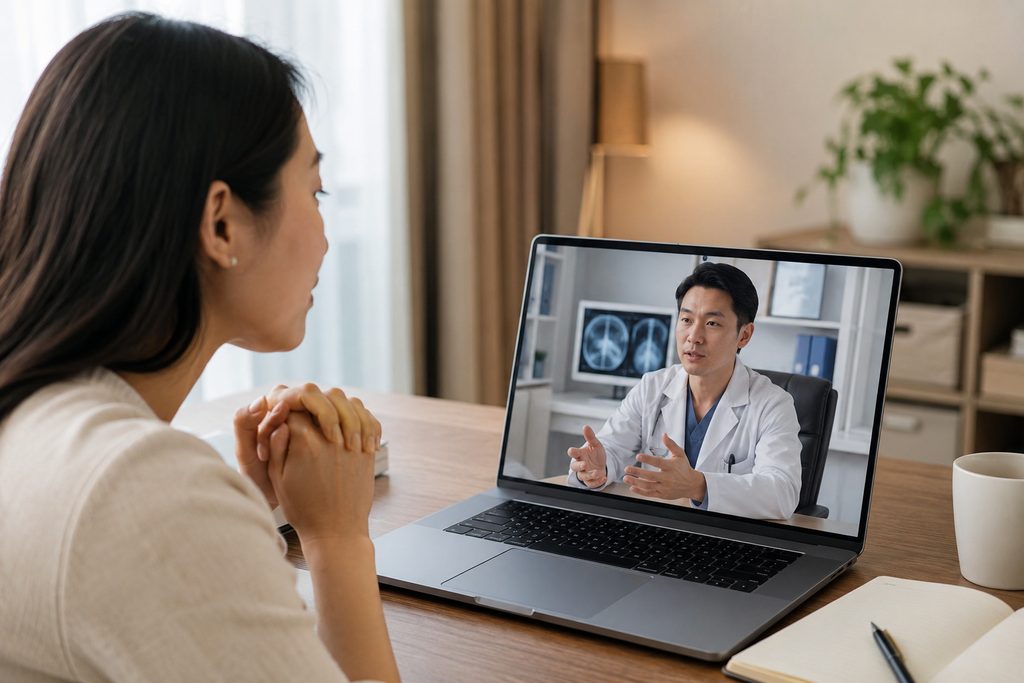
You have just finished a video call with a specialist. The connection was fine. The doctor seemed knowledgeable. But something felt off. Maybe the recommendations arrived too quickly. Maybe the credentials were vague. Maybe the fee was quoted before any records were reviewed. And now you are asking yourself a question that has no clean Google answer: can I trust online doctor consultation China?
You are not alone in that uncertainty. Cross-border telemedicine grew 38% annually between 2020 and 2023 across Asia, according to a McKinsey analysis of digital health adoption. But that growth brought noise with it. Thousands of intermediaries now claim to connect you with “top Chinese specialists.” Some are legitimate case managers working through official hospital international departments. Others are brokers with a WhatsApp number and a stock photo of a doctor in a white coat.
What makes this harder: the Chinese medical system is genuinely excellent at the top end, and genuinely difficult to navigate from outside. Fuwai Hospital in Beijing performs more than 14,000 cardiac surgeries a year — the highest volume of any heart center globally. Zhongshan Hospital in Shanghai runs one of the largest liver cancer programs in the world. The expertise is real. The question is whether the person on your screen actually represents it.
So how do you tell the difference between a legitimate second opinion from a Chinese hospital online and a well-packaged sales pitch? The answer is not to trust your gut. It is to verify the right things in the right order.
Why Verification Matters More Than the Consultation Itself
A remote consult is only as valuable as the institution behind it. A brilliant doctor giving a rushed opinion without access to your full imaging is less useful than a competent doctor reviewing your case systematically through a structured hospital pathway. The verification question — how to verify Chinese doctor credentials — is really a question about institutional accountability.
Clinical Volume Creates Pattern Recognition
Chinese top-tier hospitals see patient volumes that are almost impossible to match in Western systems. A senior oncologist at a Fudan-ranked cancer center may review 80–120 cases per week. An orthopedic surgeon at a major teaching hospital might complete 300–500 joint replacements annually, compared to roughly 65 for the average US surgeon, according to data from the American Academy of Orthopaedic Surgeons and published Chinese hospital volume reports.
That volume matters for remote consults. A specialist who has seen 2,000 cases of a particular cancer subtype recognizes patterns faster. But volume only translates into better advice if the specialist is real, employed where they claim to be, and reviewing your actual records — not a summary written by a sales agent.
Structured Pathways Beat Ad Hoc Calls
The most reliable remote consultations in China run through official international departments or designated telemedicine platforms attached to specific hospitals. These pathways require you to submit records first, get a written report, and then speak with the specialist. That sequence is not bureaucratic friction — it is a quality control mechanism.
By contrast, a broker who offers a same-day video call with a “top professor” without reviewing your scans first is selling access, not medical judgment. The difference shows up in the output. A written second opinion from a top Chinese hospital — typically priced at $300–500 — includes a documented review of your imaging, a differential assessment, and treatment direction. A rushed video call gives you a verbal impression and a request for payment.
Cost Transparency Is a Signal of Legitimacy
Remote consultation pricing in China is remarkably consistent across legitimate channels. A video consultation with a specialist at an ordinary top-tier hospital international department runs $100–300. A written second opinion from a leading expert costs $300–500. A top-specialist video consultation sits at $500–800, and a multidisciplinary team review runs $1,500–2,000.
If someone quotes you $5,000 for a “VIP remote consultation” without specifying the hospital, the department, or the specialist’s name, walk away. Real remote consults are priced by the hospital, not by an intermediary’s sense of what you can pay. And here is the structural safeguard: any consultation fee you pay through a legitimate coordination service should be credited in full toward on-the-ground coordination if you later decide to travel for treatment. That 90-day credit mechanism exists precisely because remote consults are meant to be a first step, not a final transaction.
So the question of whether it is safe to get a diagnosis from China online comes down to structure. An unstructured call with an unverifiable doctor is risky anywhere in the world. A structured consult through an official hospital pathway is no riskier than a telemedicine appointment with a major US academic center — and often more thorough.
How to Verify a Chinese Specialist Before You Commit
Verification is a checklist, not a feeling. Here is the process we walk every patient through before any remote consultation is scheduled.
Step 1: Verify the Hospital First
The hospital is the anchor. A doctor’s credibility derives from the institution. Start by checking whether the hospital appears in the Fudan University Hospital Rankings — the most authoritative public ranking of Chinese hospitals, published annually. The comprehensive list covers the top 100 hospitals in tiers from A++++ to A, and the specialty reputation lists rank the top 10 hospitals in each of 45 specialties, from oncology to cardiac surgery to orthopedics.
You can browse our directory of Fudan-ranked hospitals by city to cross-reference any hospital name you have been given. If the hospital is not there, that does not automatically mean it is bad — but it does mean you need to check harder. Look for JCI accreditation, which signals international operational standards. Look for an official English-language website with a functioning international patient department.
Step 2: Verify the Doctor’s Affiliation
Once the hospital checks out, verify the doctor. A legitimate specialist at a Chinese teaching hospital will have a profile on the hospital’s official website, usually under a department page. That profile will list their title (chief physician, associate chief physician, attending physician), their subspecialty, and often their publication record.
Cross-reference on PubMed or CNKI (China National Knowledge Infrastructure). A senior specialist at a top-tier hospital will have published peer-reviewed papers. If the doctor’s name appears nowhere in the academic literature and is not listed on the hospital’s official site, that is a red flag. Not every excellent clinician publishes heavily — but at the top 5% of Chinese hospitals, most senior specialists do.
Step 3: Verify the Intermediary’s Relationship
If you are working through a coordination service, ask a direct question: “Can you provide written confirmation from the hospital’s international department that this consultation is scheduled?” Legitimate coordinators work through official channels and can produce documentation. Brokers cannot.
Also ask about the records review process. A real remote consult requires you to submit existing imaging, pathology reports, and treatment history before the specialist agrees to review. If someone offers you a consultation without asking for records, they are not offering a medical service. They are offering a conversation.
Red Flags That Should Make You Pause
Some warning signs are universal. They apply whether you are seeking a remote consultation in China, Germany, or anywhere else.
Five red flags to take seriously:
- No written output. A legitimate second opinion produces a written report. If the service only offers a verbal call with no documentation, you have no record of what was said and no basis for a second opinion from anyone else.
- Pressure to commit to treatment. A remote consult should give you options, not a deadline. Any service that pushes you to pay for surgery or travel within days of a video call is selling, not advising.
- Vague credentials. “Professor Wang, top oncologist in Beijing” is not a credential. A real specialist has a hospital, a department, a title, and a publication record. Demand all four.
- Payment before records review. Legitimate services collect records first, then schedule the consult, then charge. If payment is demanded before anyone has looked at your case, that is a transaction, not a medical service.
- Guaranteed outcomes. No ethical medical professional guarantees treatment results. If someone promises a specific outcome from a remote consult or a subsequent procedure, end the conversation.
One more point on the “is it safe to get a diagnosis from China online” question. A remote consult is not a diagnosis. It is a specialist’s review of your existing records with recommendations for next steps. No responsible doctor will give you a definitive diagnosis without seeing you in person and running their own tests. If a remote consult claims to diagnose you, that is itself a red flag.
What a Legitimate Remote Consult Actually Looks Like
Let us walk through the structure of a proper remote consultation with a Chinese hospital, because the structure itself is the best verification tool you have.
The Written Second Opinion Path
You submit your existing records — imaging files, pathology reports, blood work, treatment history. A coordinator translates them into Chinese and submits them to the relevant department at a Fudan-ranked hospital. A specialist reviews the materials over several days. You receive a written report, typically 3–8 pages, outlining the specialist’s assessment of your current status, their view on the diagnosis, and their recommendations for treatment direction.
That report costs $300–500 from a top-tier hospital. It is a document you can take to any other doctor in the world. It is reviewable, shareable, and verifiable. And it is the single most underused tool in cross-border medical decision-making.
The Video Consultation Path
After a written review — or sometimes in parallel — you can schedule a video consultation with the specialist. This is where you ask questions, explain symptoms in your own words, and hear the specialist’s reasoning directly. A video consult with a specialist at a top hospital international department runs $100–300. With a leading expert, $500–800.
The video call should follow the records review, not replace it. If a service offers a video call without any prior records submission, the specialist is flying blind. That is not a medical consultation. That is a meet-and-greet.
The MDT Option for Complex Cases
For complex or multi-system cases, a multidisciplinary team consultation brings together specialists from different departments — oncology, surgery, radiology, pathology — to review your case together. This runs $1,500–2,000 and is most appropriate when you have conflicting opinions from different doctors or a rare presentation that no single specialist can fully assess.
The MDT format is standard practice at top Chinese hospitals for complex cancer cases. It is also the format most likely to surface disagreements between specialists — which is exactly what you want when your case is complicated.
Practical Considerations: Records, Language, and Follow-Up
A video consultation with a specialist at a top-tier hospital international department typically costs $100–300. A written second opinion from a leading expert runs $300–500. A top-specialist video consultation costs $500–800, and a multidisciplinary team review runs $1,500–2,000. These are reference ranges — final pricing varies by hospital and case complexity. Any legitimate coordination service should credit these fees toward on-the-ground coordination if you later travel for treatment.
A remote consult is not a diagnosis. It is a specialist’s review of your existing records with recommendations for next steps. No responsible doctor will give you a definitive diagnosis without seeing you in person and running their own tests. If a remote consult claims to diagnose you, treat that claim as a red flag. The safe use of a remote consult is to get a second opinion on direction — not a final verdict.
Take the written report to your local doctor. Any recommendation from a remote consult should be evaluated in the context of your full medical history and your local treatment options. If the recommendation is for a specific procedure or therapy, ask for the clinical evidence supporting it. A legitimate specialist will cite studies and protocols. If the recommendation is vague or unsupported, seek another opinion before acting on it.
Your Next Step
A remote consult that feels off usually is off — but not always for the reasons you think. The fix is not to avoid remote consultations entirely. It is to demand structure, documentation, and verifiable institutional backing. We help international patients navigate this process: we verify hospitals and specialists, coordinate records translation and submission, and arrange written second opinions and video consultations through official hospital channels. We are not a hospital and we do not provide diagnoses. What we do is make sure the specialist on your screen is real, the records they review are complete, and the advice you receive is documented. If you are considering a second opinion from a Chinese hospital online, start with a conversation about your case. No commitment, no pressure — just a clear-eyed look at what is possible.
Frequently Asked Questions
Yes. The hospitals used for international patients are JCI-accredited and follow the same international safety standards as top hospitals in the US and Europe. Surgical teams perform high volumes of procedures — often more than their Western counterparts — which studies show leads to better outcomes.
Costs vary by procedure and hospital, but international patients typically save 40-80% compared to US prices — even when factoring in travel and accommodation. A consultation with our team will give you an exact, all-inclusive quote with no hidden fees.
Send us your existing medical reports to get started. We handle everything from hospital selection and appointment scheduling to visa assistance and post-operative recovery planning. Your medical records are reviewed by the specialist before you even book a flight.
For more medical information and treatment options in China, visit chinamedservices.com (China Medical Services).
