How to Check the Doctor on a Video Call: Verifying Credentials Before You Book
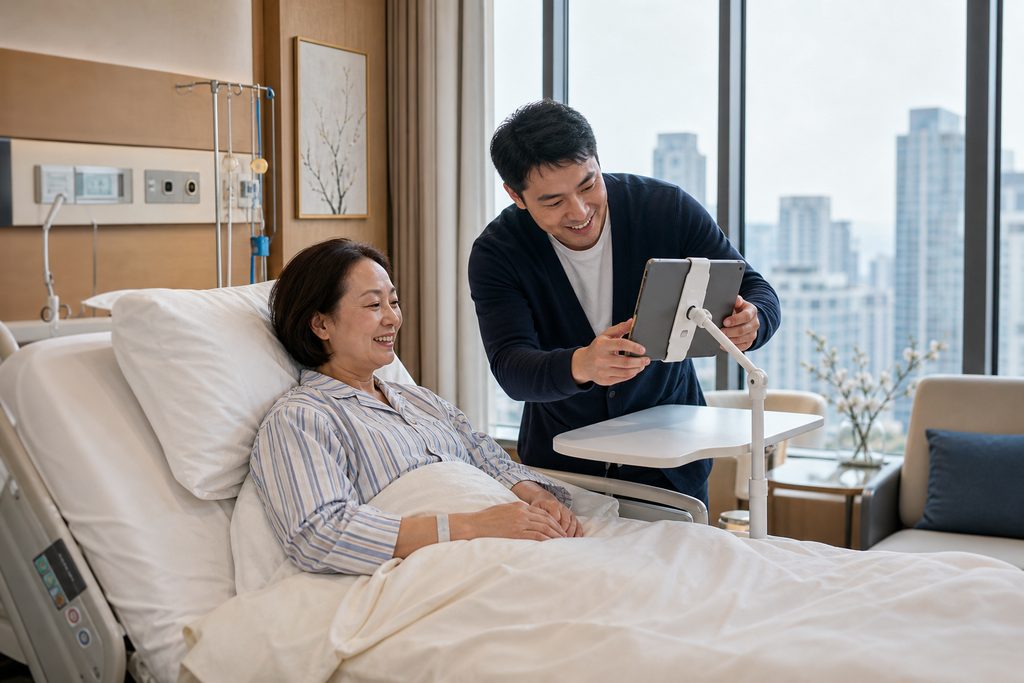
How to Check the Doctor on a Video Call: Verifying Credentials Before You Book
You have probably assumed that booking a video consultation with doctor in China cost savings means accepting a leap of faith on quality. The reality is that verifying a physician before a remote appointment is not only possible—it is standard practice for international patients who do their homework. And the process is more transparent than many expect.
But let us be direct. A video call is not a diagnosis. It is a structured conversation. What you are really paying for is access to a specialist’s time, their interpretation of your existing records, and a professional opinion on what should happen next. The cost of a video consultation with a doctor in China varies by hospital tier and specialty—typically from $100 to $300 for a standard international department consultation, and $500 to $800 for a top-specialist video consultation. Written second opinions from leading experts run $300 to $500.
Before you spend anything, you need to confirm the person on the other end of the screen is who they claim to be. Here is how to do that, step by step.
How This Actually Works, Step by Step
You start with medical records, not with a phone call. Gather your existing imaging reports, lab results, pathology slides, discharge summaries, and a concise timeline of your condition. If the documents are not in English or Chinese, arrange certified translation. This matters more than most patients realize—a specialist cannot give a meaningful opinion on records they cannot read.
Then you identify the hospital and department. For oncology, you might look at the Fudan University Hospital Ranking’s specialty reputation list. For cardiac surgery, you would review department-level rankings across 45 specialties. Once you have a shortlist, you contact the hospital’s international medical department directly or work through a coordinator who does.
You submit your records. The department reviews them and confirms which specialist is appropriate for your case. You receive the doctor’s name, title, department, and often their published research profile. Then you schedule the call, usually within 3 to 10 business days depending on the specialist’s clinical schedule.
On the call itself, you ask about your diagnosis, treatment options, what the specialist would recommend as a next step, and whether travel to China is justified for your case. Afterward, you receive a written summary. That summary is your reference document for deciding what comes next.
How to Verify Chinese Doctor Credentials Before a Video Call
This is the question that keeps people up at night. You are on one continent, the doctor is on another, and you have no local network to ask. So you verify through official channels.
Every licensed physician in China appears in the National Health Commission’s practitioner registry. The registry lists the doctor’s license number, primary institution, and specialty. You can ask for the license number before the call and cross-check it. This is not an unusual request—international departments expect it.
Hospital affiliation is the second layer. A doctor claiming to be from Peking Union Medical College Hospital should appear on that hospital’s official website or in its published faculty directory. Top hospitals publish department rosters. If the name does not appear, ask why.
Academic footprint is the third signal. Chinese specialists at top-tier hospitals publish in indexed journals. Search their name in PubMed or CNKI. You are not looking for a Nobel Prize. You are looking for consistent publication in the specialty you are consulting about. A cardiac surgeon with 15 papers on valve repair is verifiable. A doctor with no traceable academic record warrants caution.
And here is what many patients miss: ask about the doctor’s weekly surgical or clinical volume. A specialist who performs 200 procedures a year in your condition has a different level of pattern recognition than one who performs 20. Chinese top-tier hospitals handle volumes that Western hospitals rarely see. Fuwai Hospital in Beijing, for example, performs over 14,000 cardiac surgeries annually. That volume creates expertise you can hear in the consultation.
A Realistic Timeline
People underestimate the preparation phase. The call itself is 30 to 45 minutes. Getting to the call takes longer. Here is what a realistic timeline looks like for an international patient seeking a video consultation with a Chinese specialist.
| Stage | What Happens | Typical Duration |
|---|---|---|
| Day 1–3 | Gather records, confirm completeness, arrange translation if needed | 3 days |
| Day 4–7 | Identify target hospital and department; submit records for review | 4 days |
| Day 8–14 | Department confirms appropriate specialist; scheduling aligns with clinical rotations | 7 days |
| Day 15–21 | Video consultation conducted; written summary delivered within 48–72 hours | 7 days |
| Week 4–6 | If travel is recommended, visa preparation and appointment coordination begin | 2–3 weeks |
Document translation is the forgotten step. If your records are in German, Arabic, or French, factor in 2 to 5 days for professional medical translation. Rushing this step produces a consultation where the specialist spends half the call asking clarifying questions instead of giving opinions.
Visa timing also matters if the consultation leads to travel. Foreign patients seeking medical treatment in China apply for an S2 visa, with hospital documentation supporting the application. That process runs parallel to scheduling, not after it.
What Can Go Wrong — and What Happens Then
Ask for the doctor’s license number and cross-check it in the National Health Commission’s practitioner registry. Confirm the doctor’s name appears on the hospital’s official department roster. Search their publication record in PubMed or CNKI. If any of these checks fails, ask for clarification before proceeding.
A video consultation provides a professional assessment, not a formal diagnosis. It is safe when used for second opinions, treatment plan review, or determining whether travel is justified. It is not a substitute for in-person examination when the specialist says one is needed. Reputable specialists will be clear about the limits of remote assessment.
Yes, but availability depends on the specialist’s clinical schedule. You can request a named specialist when submitting your records. The international department will confirm whether that specialist is available and appropriate for your case. If not, they may recommend another specialist in the same department.
That is a common and honest outcome. The specialist will explain what additional testing or examination is needed. You can then decide whether to travel. If you do, the S2 visa is the applicable category for medical treatment, supported by hospital documentation. Coordination services can help with scheduling and logistics.
Your Next Step
Checking a doctor before a video call is not about suspicion. It is about due diligence—the same care you would apply to any significant medical decision. Verify the license, confirm the affiliation, review the publication record, and understand exactly what the consultation includes.
We help international patients navigate this process with hospital databases covering 340+ top-ranked institutions across 37 Chinese cities. We do not diagnose, treat, or promise outcomes. What we do is connect you with the right specialist, organize your records, and make sure the conversation is productive. When you are ready, request a free consultation to discuss your situation and whether a video consultation is the right starting point.
Frequently Asked Questions
Yes. The hospitals used for international patients are JCI-accredited and follow the same international safety standards as top hospitals in the US and Europe. Surgical teams perform high volumes of procedures — often more than their Western counterparts — which studies show leads to better outcomes.
Costs vary by procedure and hospital, but international patients typically save 40-80% compared to US prices — even when factoring in travel and accommodation. A consultation with our team will give you an exact, all-inclusive quote with no hidden fees.
Send us your existing medical reports to get started. We handle everything from hospital selection and appointment scheduling to visa assistance and post-operative recovery planning. Your medical records are reviewed by the specialist before you even book a flight.
For more medical information and treatment options in China, visit chinamedservices.com (China Medical Services).
