Hysterectomy Surgery China: Robotic & Minimally Invasive Options with Full Support
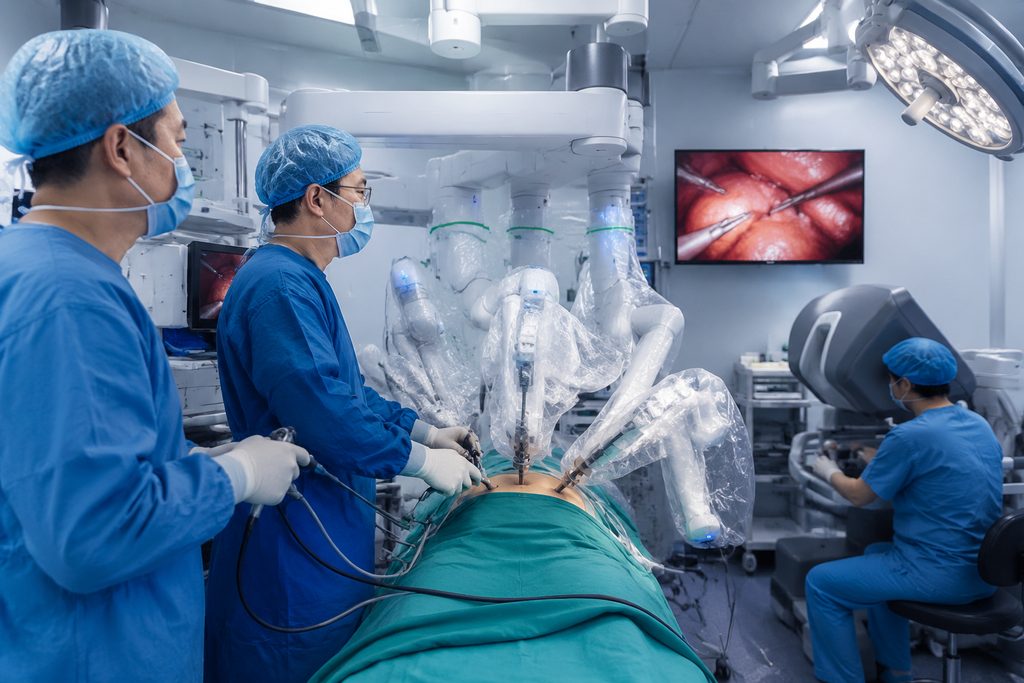
In the United States, a robotic hysterectomy can drain $30,000 to $50,000 from your savings even with insurance. A comparable procedure at a top-tier Chinese hospital using the same da Vinci system? Expect $12,000 to $18,000. That gap—the cost of a reliable used car—is the difference between suffering in silence and taking decisive action. But price is only the beginning of the conversation.
Key Takeaways
- A robotic hysterectomy in China costs $12,000–$18,000, roughly 60–70% less than the US average, with no compromise in surgical technology or clinical protocols.
- Chinese surgeons at high-volume centers perform 300–500+ robotic procedures annually, a caseload that directly correlates with lower complication rates.
- Navigating China’s public hospital system independently is nearly impossible without Mandarin fluency—visa restrictions, registration barriers, and payment systems demand local logistical expertise.
- Full-support medical tourism packages exist that handle everything from S2 visa documentation to bilingual operating room coordination, but you must verify the provider’s hospital partnerships before committing.
The Problem: When Your Body Becomes a Waiting Room
A woman with severe endometriosis or persistent fibroids does not have the luxury of time. Yet in Canada, the median wait for gynecological surgery stretches past 14 weeks. In the UK’s NHS, non-urgent hysterectomies can slip beyond 18 weeks. During those months, she is not just uncomfortable—she is anemic, exhausted, missing work, and watching her quality of life erode. Some women wait so long that their fibroids grow larger, turning a laparoscopic candidate into an open-surgery case.
The financial alternative is not much kinder. Self-pay patients in the US face bills that rival a year of college tuition. High-deductible health plans leave insured patients with $8,000 to $15,000 in out-of-pocket costs anyway. Caught between the slow grind of public systems and the punishing expense of private care in the West, many women simply endure. They should not have to.
Who We Are
We are not a hospital. We do not perform surgeries, prescribe medications, or offer clinical diagnoses. Our team at China Medical Services functions as your logistical architects and cultural interpreters. We connect international patients with China’s top-tier hospitals—institutions ranked in the top 5% of the country’s 35,000+ medical facilities by the authoritative Fudan University rankings and JCI accreditation standards. We handle the visa paperwork, schedule the consultations, put a bilingual medical companion at your side, and ensure that when you arrive in Shanghai or Beijing, you walk into the hospital prepared, not panicked. We bridge the gap between your need and China’s medical expertise.
Why Robotic Hysterectomy in China Delivers Results
Clinical Volume Drives Better Outcomes
Surgeons get better at what they do every day. A gynecological surgeon at a major Chinese teaching hospital may perform over 400 robotic hysterectomies in a single year. Compare that to a typical US surgeon, who might log 80 to 100 annually. This volume gap matters. Studies published in the Journal of Minimally Invasive Gynecology have shown a direct inverse relationship between surgeon case volume and complication rates in robotic gynecologic surgery. When you ask “is robotic hysterectomy safe in China,” the answer rests not on national borders but on surgical repetition. The da Vinci Xi system at Shanghai Zhongshan Hospital runs six days a week, not five. The operating rooms at Peking Union Medical College Hospital (PUMCH) handle a daily surgical volume that smaller Western facilities might see in a month. Repetition breeds precision. Precision reduces risk.
Technology and Efficiency at Scale
Chinese hospitals did not slowly adopt robotic surgery—they scaled it aggressively. As of 2024, mainland China operates over 380 da Vinci surgical systems, the second-largest installed base in the world after the US. These are not older, refurbished units. Most are the latest Xi models with integrated fluorescence imaging and advanced instrumentation. The real difference is operational. At a high-volume center, the robotic platform is not a novelty—it is a production tool. Turnover time between cases can be as short as 20 minutes. The surgical team, from the console surgeon to the bedside assistant to the scrub nurse, works together constantly. This team cohesion is something no amount of individual brilliance can replicate. For a patient considering the best hospital for laparoscopic hysterectomy abroad, the question is not just about machine availability. It is about team fluency.
Cost Advantage Without Quality Compromise
The robotic hysterectomy cost in China averages $12,000 to $18,000 all-in—surgeon’s fee, hospital stay, anesthesia, and device charges. This price reflects structural economics, not discount surgery. Chinese hospital systems operate on lower labor costs, higher patient throughput, and government-subsidized infrastructure. The sterile processing department, the preoperative testing labs, and the postoperative monitoring units all run at a scale that spreads fixed costs thin. The clinical protocols? They mirror international guidelines. The anesthesia drugs are the same. The da Vinci robot is the same. The difference is the economic layer wrapped around identical clinical quality. For a minimally invasive hysterectomy price in Shanghai specifically, you might see rates at the lower end—around $10,000 to $14,000—due to competitive density among the city’s top hospitals.
| Procedure | US Average Cost (USD) | China Average Cost (USD) |
|---|---|---|
| Robotic Hysterectomy (da Vinci) | $35,000–$50,000 | $12,000–$18,000 |
| Laparoscopic Hysterectomy | $20,000–$30,000 | $8,000–$14,000 |
| Open Abdominal Hysterectomy | $15,000–$25,000 | $6,000–$10,000 |
Costs vary by hospital tier, surgeon seniority, and case complexity. Figures shown are all-inclusive estimates for international patients through hospital international departments.
What You Need to Know Before Going Alone
China’s medical infrastructure is world-class. Its patient intake system is not built for foreigners traveling independently. The barriers are real and they are structural. Walk into a public hospital registration hall without Mandarin and a local ID card, and you will understand within five minutes why logistical support exists as a service category.
- Visa Requirements: You cannot enter China on a tourist visa for surgery. Medical treatment requires an S2 visa with a specific treatment-purpose annotation. The hospital must issue an official invitation letter confirming your treatment plan. The Public Security Bureau processes these applications, and incomplete documentation triggers delays of weeks. There is no workaround. You either have the correct visa or you risk denied entry.
- Payment Systems: Chinese public hospitals operate on a prepaid deposit model. You load funds onto a hospital account card before any service is rendered. International credit cards are often not accepted at public hospital cashiers. WeChat Pay and Alipay dominate. Without a Chinese bank account or a local intermediary, the simple act of paying your bill becomes an obstacle course.
- Registration and Queue Navigation: Top specialists at public hospitals see 80–100 patients in a single morning session. Appointments cannot be booked months in advance from overseas through the standard public registration system. You show up, you queue, and if the specialist’s slots are full, you try again tomorrow. The hospital international VIP departments operate differently—they do allow pre-scheduled appointments—but these channels are not publicly listed on English-language websites.
How We Help You Navigate This
These barriers exist for structural reasons, not malice. Chinese public hospitals serve a domestic population of 1.4 billion people. Their systems are optimized for local efficiency, not international accessibility. That is where we step in.
Before you travel, we secure the S2 visa invitation letter from the hospital’s international department. We translate and submit your medical records, imaging, and pathology reports to the surgical team for preoperative review. We schedule your consultation and surgery slot through the VIP channel—the only pathway that allows a confirmed surgical date before you board a plane. When you land, a bilingual medical companion meets you. This person handles registration, payment deposits, queue tickets, and translation during every doctor interaction. They sit with you in the preoperative holding area and ensure you understand every consent form before you sign it. After surgery, they coordinate discharge instructions, pharmacy runs, and follow-up appointments. Your job is recovery. Our job is everything else.
For patients seeking a medical tourism package hysterectomy China all inclusive, this is the operational reality behind that phrase—not a vacation bundled with surgery, but a structured care pathway that removes administrative friction from a clinically serious event.
Recovery and What to Expect
How long to recover from hysterectomy with da Vinci depends on the surgical approach, your preoperative health, and your adherence to postoperative instructions. Robotic assistance enables smaller incisions, less blood loss, and reduced tissue trauma compared to open surgery. Most patients walk within six hours of emerging from anesthesia. Hospital stays typically last two to three days—not the four to six common with open procedures. You will feel tired. That is normal. You will have lifting restrictions for six weeks. Also normal.
The real advantage of recovering in China, if you choose to stay, is access to postoperative monitoring that does not rush you out the door. Hospital international wards are designed for longer observation when clinically indicated. Your surgeon remains directly involved in your care, not handing you off to a rotating hospitalist team. And if complications arise—a fever, unexpected bleeding, pain that does not respond to medication—you are already inside the system, not navigating an emergency room in a foreign country alone.
Frequently Asked Questions
Safety depends on the institution and surgeon, not the country. Hospitals ranked in the Fudan University Top 100 and holding JCI accreditation follow international surgical safety protocols. Their infection rates, complication rates, and readmission statistics are tracked and benchmarked. Ask any potential hospital for their surgical site infection rate and 30-day readmission rate for robotic hysterectomy. A reputable center will share these numbers without hesitation.
Expect $10,000 to $14,000 for a laparoscopic or robotic-assisted hysterectomy at a Shanghai hospital’s international department. This includes surgeon fees, anesthesia, operating room charges, the robotic system fee if applicable, a private room for two to three nights, and standard preoperative testing. It does not include airfare, accommodations, or extended postoperative stay beyond medical necessity. Prices vary by hospital tier and case complexity—complex endometriosis with bowel involvement costs more than a straightforward fibroid uterus.
No surgeon will clear you for a long-haul flight within days of a hysterectomy. The risk of deep vein thrombosis increases significantly after pelvic surgery combined with prolonged immobility. Most surgeons require you to remain in the city for at least 7–10 days post-discharge for a wound check and final clearance. Plan for a total stay of two to three weeks from arrival to departure. Your coordination service should build this timeline into your visa application.
Chinese hospitals in the top tier have full intensive care capabilities, 24-hour in-house surgical residents, and attending surgeons reachable by phone. Complications are managed within the same hospital system, not transferred elsewhere. Your bilingual companion remains with you through any extended stay and communicates with your family back home. This is not a scenario anyone wants, but the system is built to handle it. Ask about the hospital’s complication management protocols during your preoperative consultation.
Look beyond marketing. Verify the hospital’s Fudan ranking, JCI accreditation status, and annual surgical volume for your specific procedure. Ask how many robotic hysterectomies the surgeon performed last year—not over their entire career. Request to speak with the surgeon via video consultation before committing. A hospital that refuses a preoperative video call is not one you should trust with your surgery. Visit our specialty department rankings to compare hospitals by gynecological surgery volume and reputation.
Your Next Step
A hysterectomy is a major decision made harder by cost barriers and access delays that have nothing to do with medical necessity. The surgical skill and technology exist. The financial and logistical obstacles are what keep patients waiting. Understanding the robotic hysterectomy cost in China and the support infrastructure available gives you an option you may not have known existed. If you want to explore whether this path fits your specific diagnosis, timeline, and budget, reach out for a no-pressure conversation. We ask about your case. We explain what is possible. You decide.
For more medical information and treatment options in China, visit chinamedservices.com (China Medical Services).
