Verify the Deposit Receipt Has a Real Stamp: Avoiding Fake Payment Proof in Chinese Hospitals
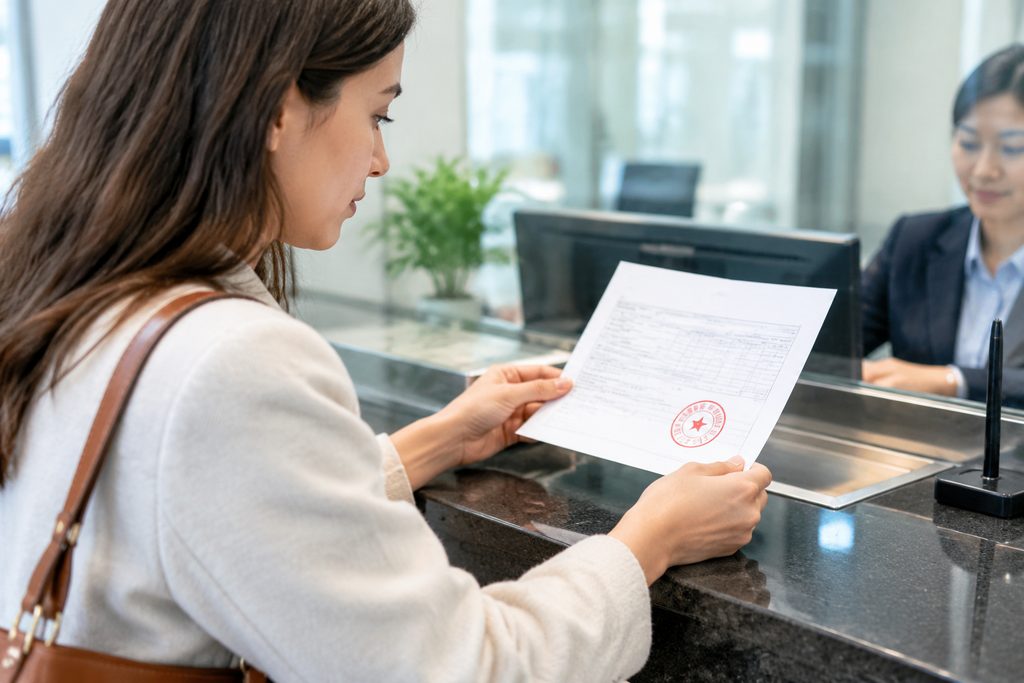
You’ve probably heard that paying a hospital deposit overseas means handing over money and hoping for the best. The reality is more manageable. A legitimate Chinese hospital deposit receipt carries a specific, verifiable stamp — and knowing what that stamp looks like is your first line of defense. This article explains how to verify hospital deposit receipt stamp China authenticity, what a real stamp contains, and what to do if something feels off.
Every year, thousands of international patients wire deposits to Chinese hospitals for scheduled surgeries, diagnostic workups, and inpatient care. The overwhelming majority of these transactions are processed correctly. But the rise of medical tourism has also attracted intermediaries who fabricate documents. A fake receipt can mean losing your deposit, arriving in China with no reserved bed, or discovering your surgery was never actually booked.
Verify Hospital Deposit Receipt Stamp China: The Short Answer
A real Chinese hospital deposit receipt must show a round, red official seal — called a gongzhang — stamped directly onto the paper. The seal contains the hospital’s full registered name in Chinese characters, a five-pointed star in the center, and a 13-digit registration code along the rim. If the receipt lacks this stamp, or if the stamp is printed rather than physically impressed, treat it as unverified.
But the stamp alone is not enough. You also need to confirm the receipt number, the patient name, the deposit amount in RMB, and the hospital’s official bank account details. Cross-checking these elements against the hospital’s international department is the only way to be certain.
Who This Is Right For — and Who It Isn’t
Verifying a deposit receipt before traveling is essential for patients who have never worked with a particular hospital or coordinator. It is also critical for anyone paying a large upfront sum — typically above $5,000 — for a scheduled surgery or multi-day inpatient stay.
Who should absolutely verify every deposit receipt:
- Patients booking directly with a hospital’s international department for the first time
- Patients using a third-party medical travel agency they found online
- Anyone asked to wire money to an individual’s bank account rather than the hospital’s corporate account
- Patients scheduling high-cost procedures such as cardiac surgery, orthopedic implants, or oncology treatment
Who may not need this level of scrutiny:
- Patients using well-established international hospitals with JCI accreditation and direct insurance billing, such as those listed on our private international hospital directory
- Patients paying small outpatient consultation fees, typically under $300, where the risk is limited
- Patients whose insurance company is handling payment directly with the hospital
If you are wiring a five-figure deposit to a bank account you have never seen before, verification is not optional. It is the bare minimum.
The Options, Compared
There are three common ways international patients pay hospital deposits in China. Each carries different levels of risk and verification difficulty.
| Payment Method | Typical Deposit Range | Receipt Format | Verification Difficulty | Risk Level |
|---|---|---|---|---|
| Direct wire to hospital corporate account | $3,000 – $20,000 | Official stamped receipt issued by hospital finance office | Low — call hospital to confirm | Lowest |
| Payment through medical travel agency | $3,000 – $15,000 | Agency-issued receipt, sometimes with hospital stamp | Medium — must verify with both agency and hospital | Medium |
| Cash payment on arrival | Variable | Immediate stamped receipt at hospital cashier | Low — you watch it happen | Lowest, but requires carrying cash |
Direct wire to the hospital’s corporate account is the safest route. The receipt comes from the hospital’s finance department, and the stamp is physically impressed. Paying through an agency is common for patients who need help with scheduling, but it introduces an extra layer you must verify independently. Cash on arrival works if you are already in China, but carrying large amounts of cash across borders is impractical and sometimes illegal above certain thresholds.
What a Real Chinese Hospital Stamp Looks Like on a Deposit Receipt
This is the section that answers the specific search: what does a real Chinese hospital stamp look like on a deposit receipt. The physical characteristics matter, because scanners and printers can reproduce colors but not the texture of an impressed seal.
A genuine hospital stamp has these features:
- Round shape, typically 40–42 millimeters in diameter
- Red ink, though some older hospitals use blue for financial stamps
- Hospital name in Chinese characters along the upper arc of the circle
- A five-pointed star in the exact center
- A 13-digit unified social credit code or organization code along the bottom arc
- Physically impressed — you can feel the indentation on the back of the paper
If the stamp is printed flat as part of a PDF or scanned document, it is not a physical seal. Some hospitals do issue electronic receipts with digital stamps, but these come with a verification QR code or a receipt number you can check on the hospital’s official website or WeChat mini-program. Always ask for the verification path.
A printed image of a stamp is not proof of payment. Scammers can copy a real stamp image from any hospital website and paste it onto a fake receipt. Physical texture, or an official electronic verification code, is what separates real from fake.
How to Check If a Chinese Hospital Deposit Receipt Is Real
The question how to check if Chinese hospital deposit receipt is real deserves a step-by-step answer. Verification happens in three layers: document inspection, hospital confirmation, and bank confirmation.
First, inspect the receipt itself. Look for the stamp features described above. Check that the patient name matches your passport exactly — Chinese hospitals use the name on your passport for all records. Check that the deposit amount is written in RMB, not USD, unless the hospital explicitly invoices in foreign currency. Confirm the receipt number is sequential and the date matches the date you sent the wire.
Second, call the hospital. Do not use the phone number printed on the receipt — find the hospital’s official international department number from their official website. Ask to confirm the receipt number and deposit amount. Any legitimate hospital finance office can look up a receipt in their system within minutes.
Third, confirm the bank account. The account name on your wire transfer confirmation must match the hospital’s registered legal name, which may differ from the English brand name. For example, a hospital might market itself as “Beijing United Family Hospital” but the receiving account might be under a corporate entity name. Ask the hospital to provide their official bank details in writing before you wire anything.
Fake Hospital Deposit Receipt China Medical Tourism: Red Flags
Fraud in the fake hospital deposit receipt China medical tourism space follows predictable patterns. Knowing them makes you a harder target.
Common red flags include:
- The coordinator asks you to wire money to a personal bank account or an account in a different country from the hospital
- The receipt arrives within hours of your wire, before the hospital could possibly have processed it
- The stamp is blurry, printed, or looks like it was pasted from a website
- The receipt lacks a receipt number or uses a suspiciously round number
- The coordinator pressures you to pay quickly without allowing time for verification
- The hospital name on the receipt does not match any hospital in the city where your surgery is supposedly booked
One common scam involves a “deposit” for a hospital that does not actually have an international department. The fraudster invents a hospital name, creates a fake website, and issues a fake receipt. Always confirm the hospital exists in an independent directory, such as our list of 340+ top-ranked Chinese hospitals.
Medical Deposit Payment Confirmation Stamp Authenticity China: What It Costs to Verify
Verifying a receipt costs almost nothing but time. A phone call to the hospital’s international department is free. An email confirmation is free. If you need help navigating the language barrier, a bilingual medical companion can assist with verification calls and document checks. That service typically starts at $300 per day, which is a small fraction of the deposit you are protecting.
Some patients consider hiring a local lawyer to verify documents. That is rarely necessary for a deposit receipt. A direct call to the hospital, ideally with a Chinese speaker on the line, resolves most questions in under ten minutes.
Practical Considerations: Documentation, Timing, and Language
Stop all further payments immediately. Contact your bank and ask about wire recall options — this works best within 24 to 48 hours of sending the wire. Then contact the hospital directly using contact information from their official website, not from the receipt. If the hospital confirms no receipt exists, report the incident to your local police and to the Chinese embassy or consulate in your country.
Refund policies vary by hospital and by how far in advance you cancel. Most Chinese public hospitals refund deposits minus an administrative fee if you cancel before admission. Once you are admitted, refunds become harder. Always ask for the written refund policy before paying. Get it in English if possible.
No. The round red seal is standard for official documents, but the exact layout, the presence of a registration code, and the color can vary. Some hospitals use a dedicated financial stamp for receipts that differs from their general official seal. The key is not the exact design, but whether the stamp is physically impressed and whether the hospital confirms the receipt number.
For many patients, yes. Paying in person at the hospital cashier means you watch the stamp go onto the receipt. But it means carrying significant cash or arranging payment on arrival, which has its own risks and logistical challenges. Some patients compromise by paying a small booking fee remotely and the main deposit in person.
Your Next Step
Verifying a deposit receipt is not about distrusting every Chinese hospital. It is about protecting yourself from the small number of bad actors who exploit the complexity of cross-border medical payments. Most receipts are genuine. The verification process exists to catch the exceptions.
Our team at China Medical Services helps international patients navigate hospital selection, booking, and payment verification. We are not a hospital, and we do not provide medical advice or diagnoses. But we can help you confirm that a hospital is real, that a receipt is legitimate, and that your deposit went where it was supposed to go. When you are ready, start with a free consultation about your situation.
Frequently Asked Questions
Yes. The hospitals used for international patients are JCI-accredited and follow the same international safety standards as top hospitals in the US and Europe. Surgical teams perform high volumes of procedures — often more than their Western counterparts — which studies show leads to better outcomes.
Costs vary by procedure and hospital, but international patients typically save 40-80% compared to US prices — even when factoring in travel and accommodation. A consultation with our team will give you an exact, all-inclusive quote with no hidden fees.
Send us your existing medical reports to get started. We handle everything from hospital selection and appointment scheduling to visa assistance and post-operative recovery planning. Your medical records are reviewed by the specialist before you even book a flight.
For more medical information and treatment options in China, visit chinamedservices.com (China Medical Services).
