Robotic Single-Port Surgery in China: Your Path to Scarless Recovery
Key Takeaways
- Single-port robotic surgery in China costs roughly 40-60% less than equivalent procedures in the US, with total packages often ranging from $18,000 to $35,000 depending on the procedure and hospital tier.
- Shanghai’s leading university hospitals now perform high-volume single-port urologic, gynecologic, and general surgery procedures — some centers complete over 400 cases annually, a volume that directly correlates with better outcomes.
- International patients cannot simply book a surgery date online. Chinese public hospitals require an in-person consultation first. Skipping this step means no procedure — and that is where coordination becomes essential.
- The scarless claim is real but specific: the incision hides inside the navel. Yet not every patient qualifies. Surgical candidacy depends on your anatomy, prior surgeries, and the surgeon’s assessment.
The Problem: When a Scar Is More Than a Scar
In the United States, a robotic prostatectomy typically leaves five to six small incisions scattered across the abdomen. For some patients, those marks are trivial. For others — a young woman facing a myomectomy, a professional whose body is part of their livelihood, or anyone who has already endured multiple abdominal surgeries — each scar is a permanent reminder. The psychological weight is real. Studies published in the Journal of the American College of Surgeons show that patient satisfaction with cosmetic outcomes directly influences overall surgical satisfaction, particularly in benign gynecologic procedures.
But the barrier is not just cosmetic. It is access. The da Vinci SP (Single Port) system received FDA clearance for urologic procedures in 2018 but remains limited to a small number of US centers. Wait times for a surgeon proficient in the technique can stretch months. And the out-of-pocket cost for an uninsured or underinsured patient? It can exceed $60,000. That is the gap this article addresses — not with vague promises, but with specifics about what China offers, what it costs, and how to navigate the process without making costly mistakes.
Who We Are
We are not a hospital. We do not provide medical treatment, offer clinical diagnoses, or make promises about surgical outcomes. Our team functions as your logistical architects — we bridge the gap between you and China’s top-tier medical expertise. From the moment you search for single port robotic surgery cost China to the day you board your flight home, we handle the coordination that turns a complex international medical journey into a structured, predictable process. We work with 340+ top-ranked hospitals across 37 cities. We know which centers have da Vinci SP systems. We know which surgeons have the case volumes that matter. And we tell you honestly when single-port is not the right choice — because preserving trust matters more than booking a procedure.
How Does Robotic Single Port Surgery Work — And Why It Matters
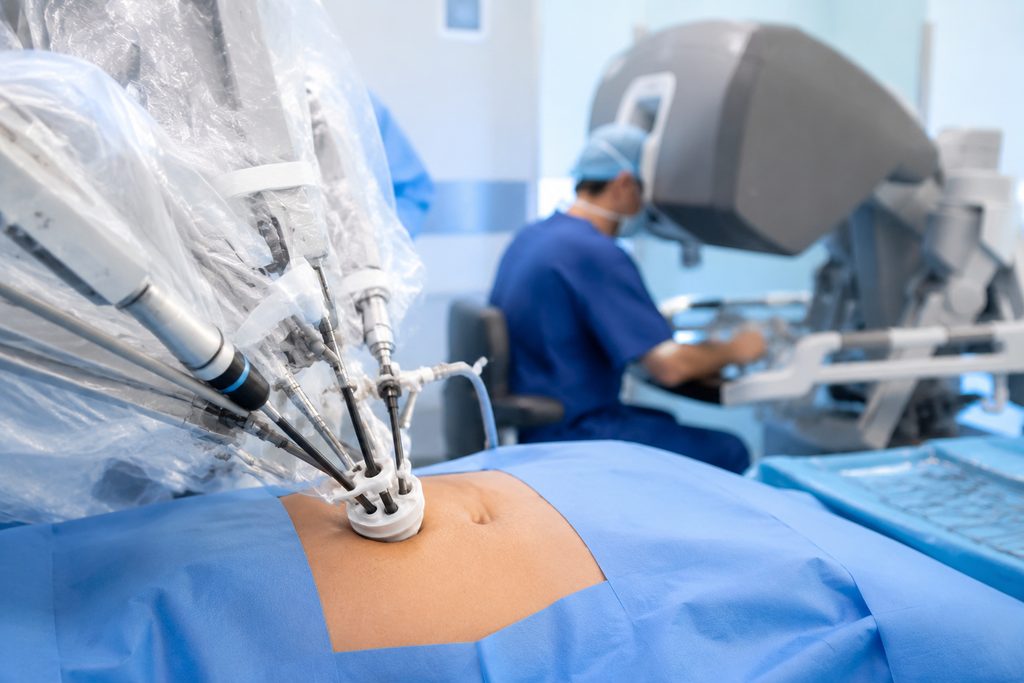
The core idea is deceptively simple. Traditional robotic surgery uses multiple small incisions: one for the camera, others for instruments. Single-port surgery consolidates everything through one entry point, almost always the navel. A specialized multi-channel port sits in that single incision. Through it, the surgeon passes a 3D high-definition camera and fully wristed instruments that mimic human hand movement but with greater precision and tremor filtration.
The surgeon sits at a console several feet away, viewing a magnified 3D image of the surgical field. Every movement of their fingers translates to scaled, precise movements of the instruments inside you. The system filters out hand tremors. The visualization is extraordinary — structures appear 10 to 15 times larger than they would to the naked eye during open surgery.
What changes with single-port is the incision count. One instead of four, five, or six. The incision typically measures 2.5 to 3.5 centimeters and sits within the natural folds of the umbilicus. Once healed, it is effectively invisible to anyone not specifically looking for it. That is the scarless claim — and when it works, it is genuine.
But the technique demands more from the surgeon. Instrument crowding is real. The camera and tools compete for space in a way that multi-port surgery avoids entirely. Surgeons must relearn triangulation — the geometric principle that makes laparoscopic surgery possible — because all instruments now enter from the same plane. That learning curve is steep. It is why surgeon volume matters enormously, and why we only connect patients with centers that can demonstrate meaningful experience with the specific procedure you need.
Is Robotic Single Incision Surgery Safe? Examining the Evidence
The short answer is yes — in the right hands, for the right patient, for the right procedure. But that qualifier is everything. A 2021 meta-analysis in the Annals of Surgery examined 17 studies comparing single-port to multi-port robotic surgery across urology, gynecology, and general surgery. The findings: equivalent complication rates, equivalent operative times once the surgeon passed their learning curve (typically 20 to 40 cases), and superior cosmetic satisfaction scores. No difference in serious adverse events. No difference in hospital readmission rates.
However. Single-port surgery is not safer than multi-port. It is equivalent. The benefit is cosmetic, not clinical. Any surgeon who tells you otherwise is overselling. The clinical outcomes — cancer control rates, blood loss, recovery time — are the same. What you gain is one hidden scar instead of several visible ones. For many patients, that trade-off is worth it. For others, it is not. Neither answer is wrong. The key is knowing which answer is yours before you make decisions based on marketing rather than medicine.
There are also clear contraindications. Extensive intra-abdominal adhesions from prior surgeries can make single-port access dangerous. Very large tumors or organs may simply not fit through a single small extraction incision. Morbid obesity changes the geometry of instrument placement in ways that can compromise safety. A responsible surgeon will screen for these factors during the pre-operative consultation — and will tell you honestly if you are not a candidate.
Why China for Single-Port Robotic Surgery?
Volume Creates Competence
Chinese surgeons operate at volumes that are difficult to match in most Western systems. A urologist at a major Shanghai teaching hospital may perform 150 to 200 robotic partial nephrectomies annually. The average US urologist performs perhaps 25 to 30. This is not a reflection of individual skill — it is a function of system design. China’s top hospitals serve enormous populations, and surgical teams work with an efficiency born of relentless repetition. When a surgeon has done a procedure 400 times, the 401st case is qualitatively different from someone’s 40th. The learning curve for single-port surgery is real and well-documented. High-volume surgeons pass it faster and stay on the other side of it consistently.
Technology Deployment at Scale
China is the world’s largest market for da Vinci surgical systems. Intuitive Surgical reports that over 330 da Vinci systems are installed across the country, with the SP variant concentrated in major academic centers in Shanghai, Beijing, and Guangzhou. That density means multiple surgeons at multiple hospitals have access to the platform. Competition among institutions drives quality improvement and keeps pricing rational. It also means that if one center’s schedule is full, another option often exists — something that cannot be said for most countries with only a handful of SP systems nationwide.
The Cost Equation: Single Port Robotic Surgery Cost China vs. the West
Let us address the question that brings most international patients to this page. The single port robotic surgery cost China advantage is real and substantial. Here is how the numbers compare for common procedures:
| Procedure | US Average Cost (USD) | China Top Hospital Range (USD) | Savings |
|---|---|---|---|
| Robotic Single-Port Prostatectomy | $35,000 – $65,000 | $20,000 – $30,000 | 40-55% |
| Robotic Single-Port Partial Nephrectomy | $30,000 – $55,000 | $18,000 – $28,000 | 40-50% |
| Robotic Single-Port Hysterectomy | $25,000 – $45,000 | $15,000 – $25,000 | 40-45% |
| Robotic Single-Port Myomectomy | $20,000 – $35,000 | $12,000 – $22,000 | 35-45% |
| Robotic Single-Port Cholecystectomy | $15,000 – $25,000 | $8,000 – $15,000 | 40-50% |
These figures are not abstract. They reflect the actual pricing we see when coordinating care for international patients at leading public hospital international departments and JCI-accredited private facilities. The ranges account for hospital tier, surgeon seniority, and case complexity. A straightforward procedure at a public hospital’s VIP wing lands at the lower end. A complex case with a department chair at a private international hospital trends higher.
What drives the difference? Not quality compromises. Chinese top-tier hospitals report clinical outcomes that match international benchmarks. The cost gap exists because of structural factors: lower physician labor costs, higher patient throughput, government-subsidized hospital infrastructure, and a medical device pricing environment that — while still expensive for robotic systems — does not carry the same administrative overhead burden that US hospitals face. A surgery that costs $50,000 in the US is not buying $50,000 worth of better materials or more skilled hands. It is buying the same thing through a more expensive system.
Scarless Surgery Packages Shanghai: What Is Included
Shanghai has become the epicenter of single-port robotic surgery in China. Three institutions dominate the landscape: Ruijin Hospital (Shanghai Jiao Tong University School of Medicine), Zhongshan Hospital (Fudan University), and Renji Hospital (also Shanghai Jiao Tong). Each runs a dedicated robotic surgery program with published case volumes and research output that makes verification possible.
When international patients inquire about scarless surgery packages Shanghai hospitals offer, they are usually asking about bundled pricing that covers the full episode of care. A typical package through a hospital international department includes:
- Pre-operative consultation and surgical evaluation with the operating surgeon
- All required pre-operative imaging and laboratory work
- The surgical procedure itself, including robotic system fees and disposable instruments
- Inpatient stay (typically 3 to 7 days depending on the procedure)
- Post-operative nursing care and basic medications during admission
- One or two post-discharge follow-up consultations
- English-language coordination through the hospital’s international patient center
What is typically not included: airfare, accommodation outside the hospital, extended rehabilitation, treatment for complications unrelated to the primary procedure, and any pre-existing condition management. These exclusions are standard worldwide — they are not unique to China. We always advise patients to budget an additional 20 to 30% beyond the quoted package price for travel, accommodation, and contingencies.
Best Hospital for Robotic Single Port Surgery China: How to Choose
Ranking a single best hospital for robotic single port surgery China is misleading. The right hospital depends entirely on your specific procedure. A center that excels at single-port urology may have limited experience with single-port gynecology. The da Vinci SP system is the same machine, but the surgical skills are procedure-specific.
For urologic procedures — prostatectomy, partial nephrectomy, pyeloplasty — Renji Hospital in Shanghai and Peking University First Hospital in Beijing both run high-volume robotic programs with documented single-port experience. Renji’s urology department is consistently ranked among China’s top three for the specialty under the Fudan University hospital ranking system. Their surgeons have published single-port technique papers in peer-reviewed international journals, which means their outcomes are publicly scrutable.
For gynecologic procedures — hysterectomy, myomectomy, adnexal surgery — the Obstetrics and Gynecology Hospital of Fudan University in Shanghai and Peking Union Medical College Hospital in Beijing lead the field. Both have dedicated robotic gynecology teams. Both have English-speaking international department staff. Both see significant international patient volumes.
For general surgery — cholecystectomy, hernia repair, bariatric procedures — Zhongshan Hospital and Huashan Hospital (both Fudan University affiliates) are the reference points. Their general surgery departments are ranked in China’s top 10 and have integrated robotic surgery into routine practice for years.
We do not recommend hospitals. We present options based on your specific diagnosis, your imaging, your surgical history, and your preferences. Then we connect you with the institutions that genuinely match your needs. Sometimes that means one hospital. Sometimes it means two or three to choose between. The decision is always yours.
What You Need to Know Before Going Alone
Planning to book robotic scarless surgery China medical tourism independently is possible. It is also difficult in ways that are not obvious from outside the country. Here is what you will face:
- Visa requirements are specific and unforgiving. Medical treatment in China requires an S2 visa with the purpose of medical treatment explicitly noted. You need an invitation letter from the hospital confirming your consultation or procedure date. Without that letter, the visa application stalls. Hospitals issue these letters only after you have a confirmed appointment — and getting that appointment as an overseas patient without local representation is the first bottleneck.
- Public hospital registration systems are not built for international patients. China’s top public hospitals operate on domestic registration platforms that require a Chinese ID number, a local phone number, and often payment through WeChat or Alipay. As a foreigner, you have none of these. The international department is a separate channel with separate scheduling — and finding the right contact person in a 2,000-bed hospital is not a matter of calling a main switchboard.
- The consultation must happen in person before any surgery is scheduled. This is non-negotiable in Chinese public hospitals. You cannot email your MRI and receive a surgery date in return. You fly to China, meet the surgeon, undergo any additional testing they require, and only then is a surgical date set. That means your first trip may be for consultation only, with surgery following days or weeks later. Some patients combine both into one trip. That requires precise coordination.
- Language barriers in clinical settings are absolute. Even at hospitals with English-speaking international staff, the surgical team, nurses, and support staff communicate in Mandarin. Informed consent discussions, pre-operative instructions, post-operative care — these happen in Chinese unless you have a dedicated translator present. Misunderstanding a post-operative instruction is not a minor inconvenience. It is a patient safety issue.
How We Help You Navigate This
These barriers exist for structural reasons, not because anyone is trying to make the process difficult. China’s healthcare system was built to serve a domestic population of 1.4 billion people. International patients are an afterthought in most hospitals — even ones with international departments. Our role is to make you something other than an afterthought.
Before you travel, we collect your medical records, have them professionally translated into Chinese, and submit them to the appropriate department heads at hospitals that match your clinical needs. We confirm that the surgeon will review your case, that the hospital can accommodate your timeline, and that the necessary technology — the da Vinci SP system, in this case — is available. We secure the invitation letter that makes your S2 visa application possible. We give you a clear cost estimate before you book a flight.
During your stay, we provide bilingual medical companions who accompany you to every consultation, every test, every pre-operative appointment. They translate in real time. They ensure you understand what the surgeon is recommending and why. They handle registration, payment, pharmacy pickups — the hundreds of small logistical tasks that consume hours in a Chinese hospital and become impossible without language skills. Our companion service starts from $200 per day. It is not a luxury add-on. For most international patients, it is the difference between a manageable experience and a bewildering one.
After discharge, we coordinate follow-up appointments, arrange for medical record translation back into English for your home physician, and stay available for any questions that arise during recovery. If you need a video consultation with your Chinese surgeon three months later to review follow-up imaging, we arrange that too — and any consultation fees you paid are credited in full toward the coordination service if your follow-up becomes an in-person visit within 90 days.
We also coordinate the full VIP experience for patients who want it — airport pickup, hotel arrangements, dedicated transport to and from the hospital. Our VIP End-to-End Coordination package ranges from $5,000 to $8,000 and covers every logistical detail from landing to departure. For most patients, a more selective coordination package makes sense. We discuss your needs and quote accordingly. There is no pressure and no one-size-fits-all pricing.
Frequently Asked Questions
Can I book a single-port robotic surgery in China remotely without an in-person consultation?
No. Chinese public hospitals require an in-person consultation before any surgical procedure is scheduled. This is a universal rule, not
For more medical information and treatment options in China, visit chinamedservices.com (China Medical Services).
