Medical Concierge in Qingdao: What to Know Before You Go
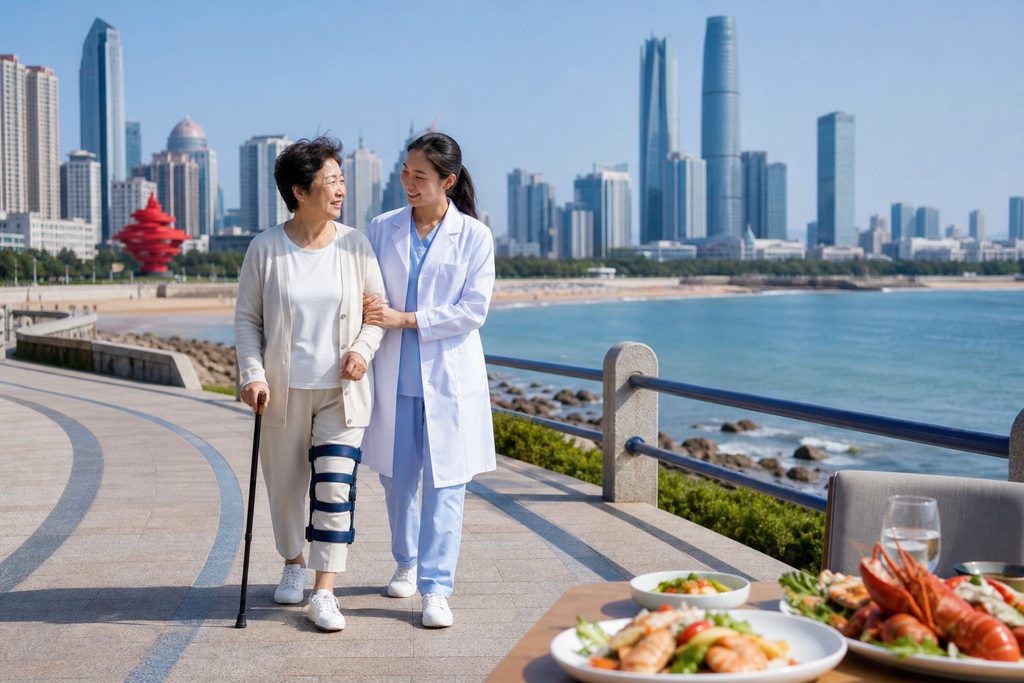
Medical Concierge in Qingdao: What to Know Before You Go
You have probably been told that arranging medical care in China as a foreigner is either impossibly complicated or suspiciously cheap. Both stories miss the mark. Qingdao — a coastal city of roughly 10 million people in Shandong Province — sits somewhere in the middle: a genuine medical hub with several strong tertiary hospitals, far less crowded than Beijing or Shanghai, and a real need for language and logistics support. The medical concierge Qingdao cost question usually lands between $300 and $8,000 depending on how much coordination you actually need, and that range deserves a proper explanation rather than a sales pitch.
Here is the honest version of what a concierge does, what it cannot do, and how to decide whether you need one at all.
Medical Concierge in Qingdao: The Short Answer
A medical concierge is a coordination service, not a medical provider. In Qingdao, that typically means three things: helping you identify the right hospital and department, navigating registration and payment inside a large public hospital where English signage is limited, and providing a bilingual companion who stays with you through appointments. Costs start around $300 for appointment coordination and run to $5,000–8,000 for full end-to-end VIP coordination.
The caveat matters. No concierge can book you into a public hospital’s regular outpatient clinic from overseas in advance. That is not a service limitation — it is how Chinese public hospitals work. Same-day registration, in-person first consultation, and surgery scheduled only after that consultation. What a concierge can do is get you into the international or VIP channel where advance scheduling is genuinely possible, at roughly 1.5 to 2 times the standard price.
Who This Is Right For — and Who It Isn’t
Concierge support makes sense for a specific kind of traveler. It is close to essential for others. And for a third group, it is simply money spent on something they do not need.
Typically a good fit:
- Patients arriving from the US, Europe, the Middle East, or Southeast Asia for a scheduled procedure, with no Mandarin and no local contacts
- Anyone managing a complex or multi-department case — oncology workups, cardiac evaluation, orthopedic surgery — where appointments must be sequenced
- Older patients traveling with a spouse who also does not speak Chinese
- People who need medical records translated and submitted to a hospital’s international office before arrival
- Patients who want a written second opinion before committing to travel at all
Probably not worth it:
- Fluent Mandarin speakers with family in Qingdao who can handle registration themselves
- Routine health checkups at a private international clinic, where English-speaking staff handle everything
- Anyone whose case has not yet been evaluated remotely — coordinating logistics before a specialist has confirmed a plan is premature
- Patients seeking treatment that Qingdao hospitals do not offer at the level they need; sometimes the right answer is Beijing or Shanghai, and a good coordinator will say so
The Options, Compared
Foreign patients in Qingdao generally choose between four paths. The differences are real and worth understanding before you spend anything.
| Option | Typical Cost | English Support | Advance Scheduling | Best For |
|---|---|---|---|---|
| Public hospital, standard channel, self-guided | Lowest treatment cost; $0 service fee | Minimal — queueing, forms, and payment in Chinese | Not possible from overseas | Mandarin speakers with local help |
| Public hospital international/VIP channel | Treatment roughly 1.5–2× standard | English-speaking coordinators on site | Yes, with hospital approval | Patients who want senior specialists and smoother logistics |
| Private international hospital | Highest treatment cost; direct insurance billing common | Full English service | Yes | Simple procedures, insurance holders, Western-style care preference |
| Public hospital + independent concierge | Standard treatment cost + service fee from $300 | Bilingual companion throughout | Via the international office | Complex cases needing sequencing and translation |
Which column fits you depends mostly on two things: how complex your case is, and how much of the process you are willing to manage personally. A single dermatology consultation is a different project from a three-week cardiac workup.
Is Qingdao Good for Medical Tourism?
Qingdao is not Beijing, and it does not pretend to be. It has no hospital in the very top tier of the Fudan rankings the way Peking Union or Fuwai do. What it does have is a manageable scale, a pleasant coastal setting, and several solid tertiary facilities — plus a short flight or high-speed rail connection to Beijing and Shanghai if a case turns out to need subspecialty depth Qingdao cannot provide.
That last point is the practical one. Qingdao works well as a base for rehabilitation, Traditional Chinese Medicine programs, health screening, and routine surgical procedures. For rare cancers, complex pediatric cardiac surgery, or anything requiring a nationally ranked specialist team, the realistic move is to start in Qingdao for evaluation and then transfer — or to begin in Beijing or Shanghai from the outset. Our database of 340+ top-ranked hospitals across 37 cities exists precisely so patients can see where a given specialty actually concentrates.
For context on scale: China has more than 35,000 hospitals. The ones we work with represent roughly the top 5%, ranked by Fudan University’s hospital index and JCI accreditation. Qingdao’s better hospitals are credible regional centers within that landscape, not national outliers.
How Does Medical Concierge Work in China?
The mechanics differ from Western healthcare in ways that surprise first-time patients. Understanding them in advance prevents most of the frustration.
Start with a remote review. You send existing examination reports, imaging, and pathology slides. A relevant Chinese specialty team reviews them and returns a written analysis with treatment direction. This costs $300–500 for a top-hospital written second opinion, or $100–300 for a video consultation with a standard tertiary or private international department. If your case warrants it, a top-specialist video consultation runs $500–800, and a multidisciplinary team review $1,500–2,000.
That remote stage is not a formality. It determines whether travel makes sense at all, which hospital is appropriate, and what the realistic cost range will be. Any consultation fee you pay is credited in full toward on-the-ground coordination if you proceed within 90 days — a one-time credit applied to the coordination fee, never to hospital treatment charges.
Then comes arrival. A bilingual medical companion meets you, handles registration, queueing, payment, wayfinding, and translation. Companion service starts at $300 per day, covering either a four-hour half day or an eight-hour full day. Airport transfers run $200 round-trip.
Admission itself always remains subject to hospital rules. We coordinate; the hospital decides.
What It Costs
Two cost streams matter, and conflating them causes confusion. The first is our coordination fee. The second is what the hospital charges for treatment — which we do not set and cannot discount.
Coordination fees, as a reference:
- Hospital appointment coordination (checkup, outpatient, or inpatient and surgery): from $300. If we cannot secure the appointment described, the fee is refunded in full.
- Bilingual medical companion: from $300 per day
- In-person top-specialist consultation coordination: $800–1,200
- VIP end-to-end coordination: $5,000–8,000
Treatment costs vary widely by hospital and case complexity. As a broad reference point, major surgical procedures at top Chinese public hospitals commonly run one-fifth to one-tenth of comparable US charges — coronary bypass, for example, typically falls in the $12,000–20,000 range in China against $120,000 or more in the United States. Those figures are illustrative, not quoted prices. Final numbers depend on the hospital, the procedure, implant or medication choices, and length of stay.
Public hospitals require prepayment, with insurance reimbursed afterward. Private international hospitals in Qingdao more often bill insurers directly. Check your policy’s China coverage before assuming either path works for you.
Practical Considerations: Visas, Records, and Language
The visa question trips up more patients than any other single item. For medical treatment in China, the applicable short-stay category is the S2 visa, annotated for medical treatment purposes. Stays exceeding 180 days fall under S1. Accompanying family members apply under S2 as well. Requirements are set by the latest embassy and consulate guidance, and supporting documents from the treating hospital are normally part of the application.
One clarification worth stating plainly: the M visa is for commercial and trade activity. It is not a medical visa. Patients who arrive on the wrong category create problems for themselves at the border.
Documentation matters as much as the visa. Bring original imaging on disc or film, not just printed reports. Bring pathology slides if a diagnosis is in question. Bring a medication list with generic drug names. Chinese specialists work from source materials, and translated summaries alone often trigger requests for the originals.
Language is the other practical wall. A major Chinese tertiary hospital can see more than 10,000 outpatient visits in a single day. Signage is in Chinese. Registration kiosks are in Chinese. Payment apps are in Chinese. This is where a Qingdao hospital interpreter service for foreigners earns its cost — not as a luxury, but as the difference between a two-hour appointment and a two-day ordeal.
Finally, plan for follow-up. Ask your Chinese treating team for a discharge summary and imaging in a format your home physician can read. Continuity of care after you fly home is your responsibility, and it is much easier to arrange before you leave.
Frequently Asked Questions
Not through the standard public channel. Chinese public hospitals require an in-person first consultation before scheduling surgery, and regular outpatient registration cannot be reserved from overseas. Through the international or VIP channel, advance coordination is sometimes possible — but it depends on the hospital, the department, and the surgeon’s schedule. We coordinate and advocate; we do not guarantee a named specialist or a specific date. If we cannot secure the appointment described, the coordination fee is refunded.
Often not. For a single consultation at a private international clinic with English-speaking staff, you can likely manage alone. The math changes when you need records translated, multiple departments sequenced, hospital registration created, and a companion present for several days. At that point $300–600 in coordination typically saves more than it costs in wasted trips and miscommunication.
That happens, and it is usually a good outcome rather than a bad one — remote evaluation is exactly where unrealistic plans get corrected. If a Qingdao hospital cannot offer what you need, the honest answer is to say so and redirect you to a center that can, whether that is Beijing, Shanghai, or elsewhere. We are not a hospital and we do not diagnose. We coordinate access and logistics around a plan that qualified physicians determine.
Be cautious with fixed-price packages. Treatment pricing depends on findings that only appear after examination, and a package quoted before anyone has seen your imaging is a marketing number, not a clinical estimate. Staged arrangements — remote review first, then a cost range, then coordination — produce more accurate expectations. Anyone quoting a firm all-in surgical price before reviewing your records is guessing.
Your Next Step
Qingdao is a reasonable choice for many international patients and the wrong one for some. The way to find out which applies to you is not a phone call with a salesperson — it is a specialist reading your actual reports and telling you what they see. Our team is not a hospital and does not provide diagnoses or treatment. What we do is translate records, route them to the appropriate Chinese department, arrange consultations through official international offices, and put a bilingual companion beside you when you arrive. If that sounds like the support you need, start with a free consultation at our patient services page and we will tell you honestly whether Qingdao fits your case.
This article is for general information only and does not constitute medical advice. Treatment decisions should be made with a qualified physician who has reviewed your individual case. Costs cited are reference ranges and vary by hospital and case complexity.
For more medical information and treatment options in China, visit chinamedservices.com (China Medical Services).
