Pediatric Cardiology in China: Top Hospitals, Costs, and How to Book
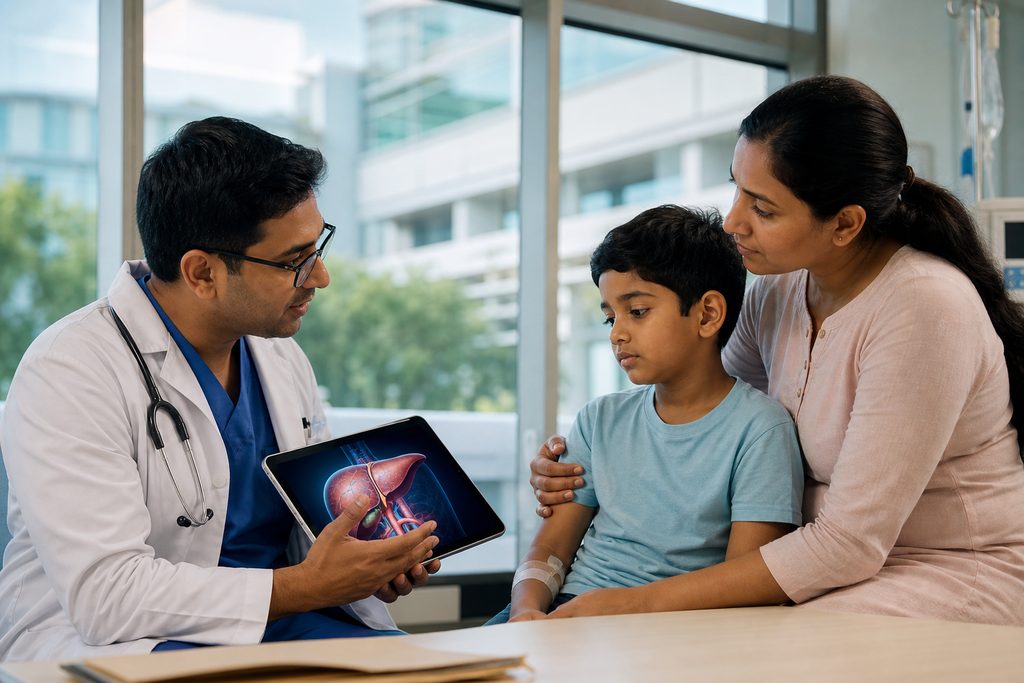
You’ve probably heard that taking a child abroad for heart surgery means either spending a fortune in the US or accepting questionable care in a developing country. The reality is messier than that binary. China now performs more than 14,000 cardiac surgeries annually at a single hospital — Fuwai Hospital in Beijing — and several Chinese children’s heart centers hold JCI accreditation, the same international quality standard used by hospitals in Singapore and the US. The question isn’t whether China can handle pediatric cardiology. It’s which hospital fits your child’s specific condition, and how you actually get from a diagnosis at home to a booked consultation in Beijing or Shanghai without wasting months.
That’s what we’ll walk through here. No vague promises. Just the structure of how this works, what it costs, and where it can go sideways.
How This Actually Works, Step by Step
Most families arrive at this decision after a cardiologist at home has already diagnosed the problem — a ventricular septal defect, tetralogy of Fallot, a valve anomaly. You’re not starting from zero. You have echocardiogram images, maybe a cardiac MRI, blood work, and a doctor’s notes. That existing file is your entry ticket.
Here’s the sequence we see work most reliably:
Step 1: You send us the records. Not a summary — the actual DICOM files from the echo, the MRI sequences, the catheterization report if one was done. We translate the written reports into Chinese and organize everything into the format Chinese cardiology departments expect.
Step 2: A pediatric cardiac team reviews the file. This is a written second opinion. The specialist looks at the images and reports, then writes back with their assessment: whether they agree with the home diagnosis, what surgical or interventional approach they’d recommend, and whether they think treatment in China is appropriate for this case. That costs $300–500 and typically takes 5–10 working days.
Step 3: You decide whether to proceed. You’re under no obligation. The written opinion is for reference only, not a prescription. But it gives you something concrete: a named department saying “yes, we can treat this, here’s how.”
Step 4: Video consultation. If the written opinion makes sense, the next step is a video call with the same team. You show the child on camera, describe symptoms, ask your questions directly. This runs $100–300 for a standard international department consultation, or $500–800 for a top-specialist video session. Any consultation fee gets credited in full toward on-the-ground coordination if you travel within 90 days.
Step 5: Travel and in-person evaluation. You apply for the S2 visa — the short-stay category used for private affairs including medical treatment. We provide the hospital invitation letter and supporting documents. In China, the surgeon will do their own echocardiogram and preoperative workup. No reputable hospital will schedule surgery based solely on foreign images.
Step 6: Surgery and recovery. Once the in-person evaluation confirms the plan, the hospital schedules the procedure. Recovery for many congenital repairs means 7–14 days in hospital, then another 1–3 weeks in-country before the child is cleared to fly home.
That’s the honest sequence. The written second opinion exists precisely because flying a sick child to another country on a hunch is a bad idea. The remote review lets you test the waters for a few hundred dollars before committing to international travel.
Which Hospitals in China Offer Pediatric Cardiology?
China has 35,000+ hospitals. Our database covers 340+ top-ranked institutions across 37 cities — roughly the top 5% by the Fudan ranking and JCI accreditation. For pediatric cardiology specifically, the landscape concentrates in two cities.
Beijing is the heavyweight. Fuwai Hospital operates the largest cardiovascular surgery program in the world by volume — over 14,000 cardiac operations per year, a substantial share of those on children with congenital defects. The hospital’s pediatric cardiac unit handles complex repairs that smaller centers won’t touch. Also in Beijing, Anzhen Hospital runs a dedicated pediatric heart center with strong outcomes data, and Peking Union Medical College Hospital offers the broadest multidisciplinary support for children with cardiac issues alongside other congenital anomalies.
Shanghai is the other pole. Shanghai Children’s Medical Center is the reference center for pediatric cardiology in eastern China, with a cardiac surgery volume among the highest for children in the country. Zhongshan Hospital at Fudan University handles adolescent and adult congenital heart disease — relevant if your child is a teenager whose condition was missed in infancy or has residual defects from earlier surgery.
For families specifically searching for the best children’s heart hospital Beijing has to offer, the choice usually comes down to Fuwai for surgical volume and complex cases, or Anzhen for a dedicated pediatric cardiology environment. Both are public Class A tertiary hospitals. Both have international departments that handle foreign patients.
If you want JCI accredited pediatric cardiology hospitals China offers, the picture shifts slightly. JCI is the international hospital accreditation standard, and several Chinese facilities hold it. Shanghai Children’s Medical Center is JCI-accredited. United Family Hospital in Beijing and Shanghai runs a pediatric cardiology clinic — not a surgical center, but a diagnostic and follow-up option with English-speaking staff and direct insurance billing. For surgery, JCI-accredited public centers like Shanghai Children’s Medical Center are the realistic targets. Full detail on accreditation and the difference between public and private international hospitals is on our private international hospitals page.
A Realistic Timeline
People underestimate how long the document and visa steps take. Here’s the actual sequence with realistic ranges:
| Stage | What Happens | Realistic Duration |
|---|---|---|
| Week 1 | You gather and send medical records; we translate and format them | 3–7 days |
| Week 2–3 | Written second opinion from the pediatric cardiac team | 5–10 working days |
| Week 3–4 | Video consultation with the specialist | 3–7 days to schedule |
| Week 4–8 | Hospital issues invitation letter; you apply for S2 visa | 2–6 weeks depending on your consulate |
| Week 8–10 | Travel to China; in-person evaluation and preoperative testing | 3–7 days |
| Week 10–12 | Surgery | Depends on case complexity |
| Week 12–16 | In-hospital recovery and post-op observation before flying home | 2–4 weeks |
The forgotten waiting step is document translation. Chinese cardiology departments won’t review English reports in raw form. A complete, properly formatted Chinese translation of a 50-page cardiac file takes days, not hours. Visa processing is the other variable — some consulates issue S2 visas in a week, others take a month. We tell families to budget 8–12 weeks from first contact to surgery date, and we’ve seen it run longer when records are incomplete.
What Can Go Wrong — and What Happens Then
Let’s be direct about the failure modes, because pretending they don’t exist doesn’t help anyone.
The Chinese team disagrees with the home diagnosis. It happens. Sometimes the imaging is inconclusive, sometimes the home cardiologist missed a subtle anatomic detail. If the written second opinion says the diagnosis is wrong or the proposed surgery is inappropriate, you’ve spent $300–500 to avoid flying a sick child across the world for the wrong operation. That’s a bargain. We don’t push forward when the medical team says no.
The hospital won’t schedule surgery without an in-person visit. This isn’t a failure — it’s the rule. No reputable Chinese hospital will book a pediatric cardiac operation based on foreign images alone. If a facilitator promises you a surgery date before you’ve set foot in China, walk away. The in-person evaluation exists to protect your child.
The visa gets delayed. S2 visa processing times vary by consulate, season, and your nationality. We’ve seen applications sail through in 10 days and others stall for 6 weeks. The hospital invitation letter helps, but no one can guarantee a consulate’s timeline. We advise applying as soon as the written opinion comes back positive.
The child gets sick before travel. A respiratory infection in a child with a congenital heart defect can postpone surgery by weeks. Airlines won’t board a febrile child, and surgeons won’t operate on one. We’ve had families delay travel for a month waiting out a cold. It’s frustrating, but it’s also exactly what a responsible hospital should do.
Insurance refuses to pre-authorize. Most international insurers will reimburse treatment at a JCI-accredited Chinese hospital, but many won’t pre-authorize it. That means you pay upfront and claim after. Public Chinese hospitals require a deposit before admission. For pediatric cardiac surgery, expect the hospital to ask for a deposit covering the estimated procedure cost. We help families understand the payment structure before they travel, but we don’t lend money or guarantee insurance outcomes.
Pediatric Cardiac Surgery Cost China vs. the US
The cost question is usually the second thing families ask, right after “is it safe?” Here’s the honest answer: pediatric cardiac surgery cost China runs roughly one-fifth to one-tenth of what the same procedure costs in the United States.
| Procedure | China (Public Tertiary Hospital) | United States (Average) |
|---|---|---|
| VSD closure (surgical) | $8,000–15,000 | $60,000–120,000 |
| Tetralogy of Fallot repair | $15,000–25,000 | $100,000–200,000 |
| Atrial septal defect closure (catheter) | $6,000–12,000 | $40,000–80,000 |
| Complex single-ventricle palliation (staged) | $30,000–60,000 total | $300,000–600,000 total |
These are ranges, not quotes. Final cost varies by hospital and case complexity — a child with pulmonary hypertension or prior failed surgery will cost more than a straightforward VSD closure. The international department channel, which gives you English-speaking coordination and senior specialists, typically runs 1.5 to 2 times the standard public price. That still lands far below US figures.
And the safety question — how safe is pediatric heart surgery in China? — deserves a straight answer. Fuwai Hospital’s overall cardiac surgery mortality rate is published in peer-reviewed journals and compares favorably with major Western centers. Shanghai Children’s Medical Center reports outcomes for common congenital repairs that are in line with international benchmarks. The volume matters: a surgical team doing hundreds of tetralogy repairs a year has seen the anatomic variations that a team doing twenty has not. Safety in pediatric cardiac surgery correlates with volume, and China’s top centers have volume that few Western hospitals can match.
That said, safety isn’t just the operation. It’s the ICU, the anesthesia, the blood bank, the infection control. The JCI-accredited centers maintain those standards. A provincial hospital without accreditation may not. This is why hospital selection matters more than country selection.
Practical Considerations: Records, Visa, Payment, Follow-Up
Medical records. You need the complete file: echo images in DICOM format, cardiac MRI if done, catheterization reports, genetic testing results, current medication list, and the referring cardiologist’s summary. Incomplete records are the single most common cause of delay. We can’t emphasize this enough: gather everything before you contact anyone.
Visa category. The S2 visa is the short-stay category used for private affairs including medical treatment. Your child applies for S2 with the hospital’s invitation letter and medical records attached. Accompanying parents apply for S2 as well. Stays beyond 180 days require S1. The M visa is for commercial and trade activities — it is not a medical visa and using it for treatment would be incorrect. Always check with the Chinese embassy or consulate in your country, because requirements shift.
Payment. Public Chinese hospitals require a deposit before admission. The deposit for pediatric cardiac surgery typically covers 50–100% of the estimated procedure cost. International insurance plans that include China coverage may reimburse after the fact. Private international hospitals like United Family offer direct billing with major insurers, but their pediatric cardiology services are diagnostic, not surgical. For surgery, you’re almost certainly paying the public hospital upfront and claiming from insurance later.
Language. Public hospital staff in Beijing and Shanghai rarely speak medical English at a level sufficient for complex cardiac discussions. The international department provides interpreters, but the quality varies. A bilingual medical companion who understands both the language and the hospital workflow changes the experience — from registration to pharmacy to discharge instructions. Our bilingual medical companion service exists for exactly this reason.
Follow-up at home. The Chinese surgical team will give you a discharge summary in English (through the international department) and a follow-up schedule. Your home cardiologist needs that document to continue care. Some Chinese centers offer remote follow-up via video for the first year. Others refer you back to your local team immediately. Clarify the follow-up plan before you leave China, not after.
Frequently Asked Questions
For surgical volume and complex congenital repairs, Fuwai Hospital in Beijing is the global leader, with over 14,000 cardiac operations annually. Shanghai Children’s Medical Center is the top JCI-accredited pediatric cardiac center. Anzhen Hospital in Beijing and Zhongshan Hospital in Shanghai are strong alternatives. The right choice depends on the specific defect and the child’s age.
You start with the remote review: send the child’s records, get a written second opinion from the Shanghai team, then schedule a video consultation. Booking a pediatric cardiology consultation Shanghai requires the hospital’s international department to accept the case first — you cannot simply register online from abroad. The written opinion is the standard entry path.
At JCI-accredited, high-volume centers, published outcomes for common congenital repairs are comparable to Western benchmarks. The key variables are hospital volume, ICU quality, and the child’s preoperative condition. A center doing hundreds of the same procedure annually is generally safer than one doing a handful. Hospital selection is the primary safety decision.
Some international departments do offer bundled packages for congenital heart defect treatment abroad — typically including the in-person evaluation, surgery, hospital stay, and basic interpretation. Prices vary by hospital and case complexity. Packages rarely include flights, accommodation for parents, or post-discharge rehabilitation. Always confirm exactly what a package covers before paying.
No. Reputable Chinese hospitals require an in-person evaluation before scheduling pediatric cardiac surgery. Any facilitator who promises a locked surgery date based on foreign records alone is not working with a legitimate hospital. The sequence is: written opinion, video consultation, travel, in-person evaluation, then surgery scheduling.
Your Next Step
The decision to pursue pediatric heart surgery in China is not one to make from a Google search. It starts with a file review by the actual surgical team that would treat your child. That’s the low-risk first move — a written second opinion that tells you whether the Chinese team agrees with the diagnosis, what they’d recommend, and whether they’ll accept the case. We are China Medical Services, a coordination team that connects international families with top-tier Chinese hospitals. We don’t perform surgery, we don’t guarantee outcomes, and we don’t promise access that hospitals don’t offer. What we do is handle the records, the translation, the hospital communication, and the on-the-ground logistics so you can make a clear-eyed decision. When you’re ready to see what a Chinese pediatric cardiac team actually says about your child’s case, start with a free consultation. We’ll tell you honestly whether this path makes sense for your family.
For more medical information and treatment options in China, visit chinamedservices.com (China Medical Services).
