First Affiliated Hospital of Zhengzhou University Dermatology: Costs and Access for International Patients
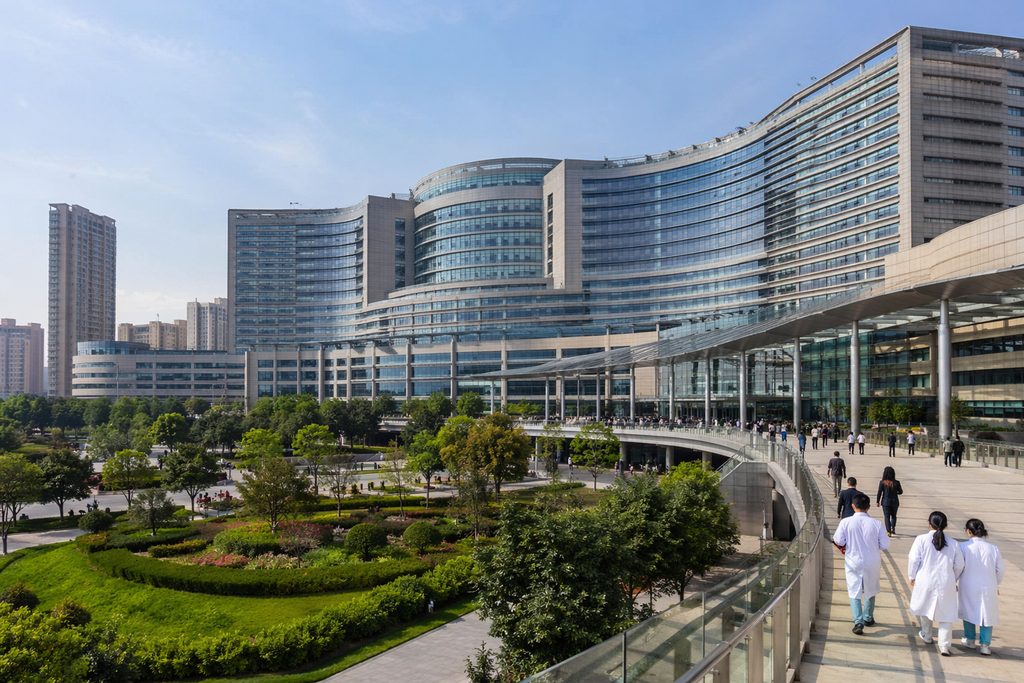
According to the World Health Organization, skin diseases affect nearly 1.8 billion people globally at any given moment. That staggering figure covers everything from chronic eczema to psoriasis, autoimmune blistering disorders, and complex skin cancers. If you’ve been searching for dermatology hospital Zhengzhou costs and whether the First Affiliated Hospital of Zhengzhou University accepts international patients, you’re likely weighing quality against affordability — and wondering how to even start the process from abroad.
We work with international patients navigating China’s top-tier hospital system every day. The First Affiliated Hospital of Zhengzhou University — often called “Zhengzhou University First Hospital” — is one of the largest medical centers in central China, with a dermatology department that handles an enormous patient volume. That volume matters. It means specialists see rare conditions repeatedly, not once a year. But access for foreigners requires a specific pathway, and costs vary significantly by treatment type and channel. This article breaks down exactly what to expect.
How This Actually Works, Step by Step
The process of accessing dermatology care at this hospital as an international patient follows a predictable sequence. Here’s the real flow, not the idealized version.
First, you send your existing medical records — biopsy reports, pathology slides, blood work, current medication list, and photographs of the affected skin. A written summary from your home dermatologist helps enormously. Our team translates these documents into Chinese and submits them to the dermatology department for preliminary review. This is the remote evaluation stage. You are not booking a treatment yet; you’re establishing whether this hospital is the right fit for your specific condition.
Second, based on the review, the department either confirms they can help or recommends a different center. Not every case is a match. If they confirm, you choose between a written second opinion, a video consultation, or traveling to Zhengzhou for an in-person visit. Most patients start with a written opinion or video call before committing to travel.
Third, if you decide to travel, we coordinate your S2 visa application with a formal invitation letter from the hospital’s international office. Visa processing typically takes two to four weeks depending on your home country’s Chinese embassy or consulate. You’ll need the hospital’s supporting documents, proof of financial means, and a clear treatment plan.
Fourth, you arrive in Zhengzhou. A bilingual medical companion meets you, handles registration, payment, queue management, and in-person translation during your consultation. The dermatologist examines you directly, may order additional tests, and then proposes a treatment plan with specific costs.
Only after that in-person consultation can any procedure, admission, or ongoing treatment be scheduled. Chinese public hospitals do not book surgeries or treatment courses from overseas without a face-to-face consultation first. This is a hard rule across the system.
Is Zhengzhou University Hospital Good for Dermatology?
The short answer: yes, for specific conditions and with realistic expectations. The dermatology department at the First Affiliated Hospital of Zhengzhou University is a major regional referral center. It handles complex psoriasis, severe atopic dermatitis, autoimmune skin diseases, skin cancers requiring Mohs surgery, and difficult-to-treat infections. The department sees thousands of outpatients daily across its clinics — a scale that is hard to comprehend until you witness it.
That scale produces clinical experience. Doctors here treat conditions that a suburban dermatologist in the US or UK might see once a year, on a weekly or even daily basis. For biologic therapy management, phototherapy, and traditional Chinese medicine adjunct treatments for chronic skin conditions, the department offers options that are either unavailable or prohibitively expensive in many Western countries.
But volume has a downside. Wait times for the most senior specialists can stretch weeks. The outpatient hall is crowded, loud, and operates entirely in Chinese. Without a bilingual companion, you will struggle. The hospital’s international department exists precisely to route foreign patients through a calmer, English-supported channel — at a premium.
For patients who want a second opinion on a complex diagnosis before committing to expensive treatment at home, or who need biologic therapy for psoriasis at a fraction of Western costs, this hospital is a serious option. For simple acne or routine eczema, the travel investment rarely makes sense. A local dermatologist at home can handle that.
A Realistic Timeline
Here’s what a typical international patient journey looks like, from first contact to starting treatment.
| Stage | Duration | What Happens |
|---|---|---|
| Document collection and translation | 3–7 days | You gather records; we translate into Chinese. Incomplete records stall this stage. |
| Department preliminary review | 3–10 days | Dermatology specialists assess whether your case fits their expertise. |
| Written second opinion or video consult | 5–14 days | You receive a written analysis or speak directly with the team. |
| Decision and S2 visa application | 2–4 weeks | Embassy processing time varies by country. Hospital invitation letter required. |
| Travel to Zhengzhou | 1–2 days | Flights to Zhengzhou Xinzheng International Airport (CGO). |
| In-person consultation and testing | 1–3 days | Face-to-face exam, possible biopsy or blood work, treatment plan finalized. |
| Treatment start | Varies | Phototherapy, biologic infusion, or surgical procedure begins after consultation. |
Total realistic timeline from first message to starting treatment: six to ten weeks. Anyone promising faster is not telling you the truth about Chinese public hospital bureaucracy.
What Can Go Wrong — and What Happens Then
Honesty matters more than comfort here. Several things can go wrong on this path, and you should know the recourse for each.
The department declines your case. This happens. Some conditions are better treated elsewhere — for example, rare genetic skin disorders might be better served at a specialized center in Beijing or Shanghai. If this happens, we receive a written explanation and either redirect you to another hospital in our network or refund any coordination fees for services not yet rendered.
Your visa is delayed or denied. Chinese S2 visa processing is generally reliable for medical purposes with proper documentation, but embassies can request additional materials or take longer than expected. We reschedule appointments accordingly. No one can guarantee a visa outcome — and you should be wary of anyone who claims otherwise.
The specialist you requested is unavailable. Top dermatologists at this hospital have packed schedules. If Professor X is fully booked, the department assigns another senior specialist in the same subspecialty. You are not getting a junior resident — the international channel routes to attending-level physicians — but you may not get your first choice. If seeing a specific named doctor is non-negotiable for you, we need to know that upfront, and we’ll tell you honestly whether it’s feasible.
Your condition changes between remote review and in-person visit. Skin diseases are dynamic. A lesion that looked benign in photos may have evolved. The in-person consultation is not a formality — it can change the treatment plan entirely. That’s a feature, not a bug. You are paying for an accurate diagnosis, not a rubber stamp.
Dermatology Hospital Zhengzhou Costs: What to Expect
Let’s talk numbers. Chinese public hospital pricing is dramatically lower than US or European equivalents, but the international channel adds coordination costs. Here’s a realistic picture.
| Service | Estimated Cost (USD) | Notes |
|---|---|---|
| Written second opinion (top specialist) | $300–500 | Written analysis only, not a prescription. |
| Video consultation (standard international dept) | $100–300 | Online conversation with dermatology team. |
| Video consultation (top specialist) | $500–800 | Named senior professor, if available. |
| In-person consultation coordination | $800–1,200 | Includes registration, translation, queue management. |
| Bilingual medical companion | from $300/day | Half-day or full-day support. |
| Biologic therapy (per dose, e.g., dupilumab) | $800–1,500 | Varies by drug and dosage; significantly less than US list prices. |
| Phototherapy session | $30–80 | Narrowband UVB, per session. |
| Mohs surgery for skin cancer | $1,500–3,000 | Varies by lesion size and complexity. |
These figures are ranges, not quotes. Final pricing depends on your specific condition, the specialist assigned, and the hospital’s current fee schedule. That said, the cost advantage is real. Biologic therapies that list for $3,000–5,000 per dose in the US can be accessed for a fraction of that in China’s public hospitals. Eczema treatment price China hospital comparisons consistently show savings of 50–80% for comparable therapies.
Any consultation fee you pay through us is credited in full toward on-the-ground coordination if you proceed to in-person treatment within 90 days. This applies to coordination fees only — never to hospital treatment charges.
Book Dermatology Appointment First Affiliated Hospital Zhengzhou International: The Right Way
You cannot simply walk into this hospital and register at the front desk as a foreigner. Well, you can — but you’ll wait for hours, navigate a Chinese-language system, and likely end up in the general queue with a junior doctor. That’s the reality of a hospital that serves over 20,000 outpatients daily.
The international channel works differently. You submit records in advance, the department reviews them, and your appointment is scheduled with a senior specialist through the hospital’s international office. This is not queue-jumping in the corrupt sense — it’s a formal, hospital-sanctioned pathway that costs more because it includes English coordination, priority scheduling, and dedicated support staff.
Here’s what we need from you to start:
- Passport copy and contact information
- Complete medical history summary in English
- All relevant test results, pathology reports, and imaging
- Current medication list with dosages
- Clear photographs of the affected skin (natural light, multiple angles)
- Your specific question or goal — diagnosis confirmation, treatment plan, second opinion, or direct treatment
Once we have these, the process moves through the stages described above. Patients who provide complete records upfront move fastest. Those who drip-feed documents over weeks experience predictable delays.
Medical Tourism Skin Clinic Zhengzhou Reviews: Reading Between the Lines
If you search for reviews of this hospital’s dermatology department in English, you’ll find very few. That’s not because the care is bad. It’s because the overwhelming majority of patients are Chinese, and they review hospitals on Chinese platforms like Dianping or WeChat, not Google or Trustpilot.
So how do you evaluate quality without English reviews? Look at these signals instead:
Peer reputation. The First Affiliated Hospital of Zhengzhou University appears in the Fudan University hospital rankings for central China across multiple specialties. While dermatology-specific rankings are not published the same way cardiac surgery or oncology rankings are, the hospital’s overall standing as a top-tier public institution is well documented. Our hospital database includes Fudan-ranked institutions across China, and this hospital is among them.
Clinical volume. This is the strongest signal. A dermatology department that treats thousands of patients daily has seen everything. Rare presentations, treatment failures, unusual drug reactions — the volume produces pattern recognition that no textbook can replicate.
Research output. The department publishes in peer-reviewed international journals, including work on psoriasis biologics and autoimmune skin disease. You can search PubMed for “First Affiliated Hospital of Zhengzhou University dermatology” and read the research yourself.
For Western patients accustomed to polished private clinics with English websites, the experience here will feel different. The hospital is enormous, crowded, and utilitarian. The international department smooths the roughest edges, but this is not a luxury medical tourism destination. It’s a high-volume, high-expertise public hospital. You come for the clinical capability and the cost, not the ambiance.
Practical Considerations: Records, Visa, Payment, and Follow-Up
Medical records. Bring everything. Original pathology slides are particularly important for skin cancer cases — digital photographs of slides are not sufficient for definitive diagnosis. If your home hospital can release the actual tissue blocks, that’s even better. Ask your pathologist about this before you travel.
Visa. You need an S2 visa for medical treatment in China, not an M visa. M visas are for commercial and trade activities only. Your accompanying family members also apply for S2 visas. The hospital’s international office provides the invitation letter that supports your application. Processing times vary by embassy, so start early.
Payment. Public hospitals in China require prepayment. You deposit funds at registration, and treatment costs are deducted as you go. Insurance reimbursement happens after the fact — the hospital does not bill your insurer directly. Private international hospitals in China do offer direct insurance billing, and if that’s a priority for you, our private hospital directory lists JCI-accredited options in major cities. But for this specific public hospital, expect to pay upfront and claim later.
Language. Assume zero English in the general outpatient areas. The international department provides English-speaking coordinators, and a bilingual medical companion handles translation during consultations, at the pharmacy, and during any procedures. Without this support, the language barrier is severe.
Follow-up at home. Before you leave Zhengzhou, ask the dermatologist for a written treatment summary in English. This document is essential for your home physician to continue care. For chronic conditions requiring ongoing biologic therapy, discuss whether your home doctor can administer the medication or whether you’ll need to return to China periodically. Some patients combine treatment in China with remote follow-up consultations via video.
Frequently Asked Questions
Consultation fees through the international channel range from $100–1,200 depending on whether you choose a video consult, written opinion, or in-person visit with coordination. Treatment costs vary widely — phototherapy sessions run $30–80, while biologic therapies cost $800–1,500 per dose. Compared to US prices, most patients save 50–80% on equivalent care. Exact quotes require a formal evaluation of your case.
Not through the standard public channel. Regular outpatient registration requires in-person queueing on the day of your visit, and the system operates entirely in Chinese. The international department accepts advance bookings with supporting medical records, but this requires coordination through a service like ours or direct contact with the hospital’s international office. Even then, you cannot book a specific procedure or surgery before an in-person consultation.
For complex psoriasis, severe eczema, autoimmune skin diseases, and skin cancer, yes — the clinical volume and specialist expertise are substantial. For routine dermatology that your local doctor can handle, the travel investment is not justified. The hospital is best understood as a high-capability public institution, not a luxury medical tourism destination.
We can request a specific senior dermatologist, but availability is not guaranteed. The international channel routes to attending-level physicians in the relevant subspecialty. If your first-choice doctor is fully booked, the department assigns another senior specialist. Tell us upfront if a specific name is essential to your decision, and we’ll confirm feasibility before you commit.
Request a written treatment summary in English before leaving the hospital. For ongoing biologic therapy, discuss with the dermatologist whether your home physician can administer the medication. Some patients return to Zhengzhou periodically; others use video consultations for remote follow-up. The key is establishing a clear handoff plan before you leave.
Your Next Step
Dermatology care in China’s top public hospitals offers genuine clinical expertise at a fraction of Western costs — but the pathway requires planning, translation, and honest expectation-setting. We help international patients navigate exactly this process, from record translation to appointment coordination to on-the-ground support in Zhengzhou. We do not practice medicine, and we do not guarantee outcomes or access to any specific doctor. What we do is make a complex system navigable for patients who need it.
If you’re considering dermatology treatment at the First Affiliated Hospital of Zhengzhou University, start with a free consultation to discuss
For more medical information and treatment options in China, visit chinamedservices.com (China Medical Services).
