Medical Treatment in Zhengzhou China: Navigating Henan’s Largest Hospital System
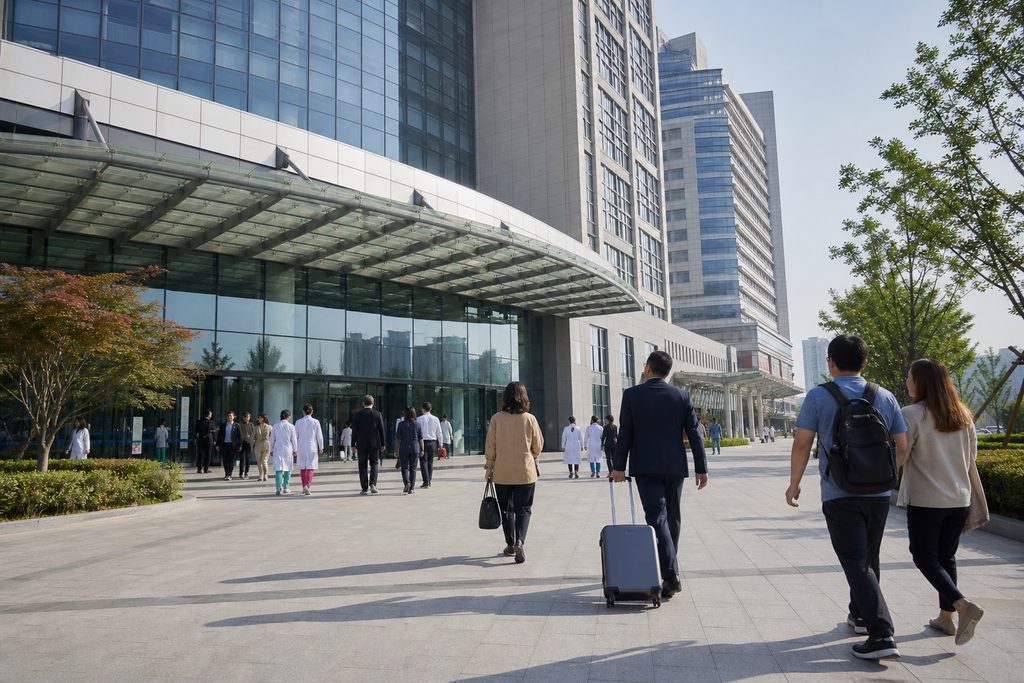
Walking into a hospital that handles over 20,000 outpatient visits daily is not just intimidating — it can feel physically impossible to navigate. That is the reality at the First Affiliated Hospital of Zhengzhou University, the largest hospital in the world by bed capacity. For an international patient, figuring out where to register, which building houses your department, and how to communicate symptoms to a Mandarin-speaking triage nurse presents a genuine logistical puzzle. Finding the best hospital in Zhengzhou for foreigners is not about picking the fanciest name. It is about matching your clinical needs to a massive system, then having the right infrastructure in place so you do not get lost in it.
Key Takeaways
- Zhengzhou’s top-ranked public hospital operates over 10,000 beds and is a national center for oncology and cardiac surgery, but its scale makes independent navigation extremely difficult for non-Mandarin speakers.
- Surgery costs in Henan Province typically run 70% to 85% lower than equivalent procedures in the United States, with a cardiac bypass ranging from $12,000 to $20,000 compared to over $120,000 in the US.
- Standard public outpatient departments cannot be pre-booked from overseas and require on-the-day registration — a structural barrier that surprises many first-time visitors.
- International patients gain safe, structured access through hospital international departments and VIP channels, which provide English coordination and the ability to lock in specialist consultations before travel.
The Problem: You Found a World-Class Hospital, But You Cannot Get In
A patient from London diagnosed with esophageal cancer discovers that the First Affiliated Hospital of Zhengzhou University performs over 6,000 esophagectomies annually — a surgical volume that simply does not exist anywhere in Europe. The data is compelling. High-volume centers consistently report lower complication rates and better long-term survival for complex oncologic procedures. So the patient emails the hospital. No response. Calls the general number. The operator speaks only Mandarin. Tries to register online through a Chinese-language app. The system requires a national ID number.
This is not a broken system. It is a system optimized for domestic patients, and it processes millions of them efficiently. But for someone outside that ecosystem, the door appears locked. The medical expertise exists. The technology exists. The barrier is entirely operational. That gap between clinical capability and accessible entry is precisely where international patients get stuck — and it is a gap that grows wider the more prestigious and high-volume the institution becomes.
Who We Are
We are not a hospital. We do not provide medical treatment, offer clinical diagnoses, or make claims about therapeutic outcomes. Our team functions as your operational architects in the Chinese healthcare system — we handle the logistics that sit between you and the medical expertise you need. That means we coordinate with hospital international departments, arrange bilingual medical companions, manage appointment scheduling through official channels, and ensure your medical records are professionally translated before any specialist ever reviews them. We connect international patients with more than 340 top-ranked hospitals across 37 cities in China. We do not promise miracles. We promise process.
Why Zhengzhou’s Hospital System Delivers Results That Rival Coastal Medical Hubs
Most international coverage of Chinese healthcare focuses on Beijing and Shanghai. Those cities house excellent institutions. But Henan Province has quietly built a clinical infrastructure that, in certain specialties, matches or exceeds the volume and outcomes of its coastal counterparts. The province serves a population of nearly 100 million people, and its flagship hospital system has evolved to handle case volumes that most Western academic medical centers will never see in a decade.
Clinical Volume That Reshapes Surgical Expertise
The First Affiliated Hospital of Zhengzhou University is not just large — it is structurally designed to concentrate complex cases from across central and western China. Its oncology department manages one of the highest volumes of esophageal and gastric cancer surgeries in the world. This matters because the relationship between surgical volume and patient outcomes is well-documented. A 2017 study in The Lancet Oncology found that for esophagectomy, moving from a low-volume center to a high-volume center reduced 30-day mortality by nearly half. When a surgical team performs a procedure thousands of times, the rare complications become routine management problems rather than emergencies.
Cardiac surgery tells a similar story. The hospital’s cardiovascular center performs over 4,000 open-heart procedures annually. Compare that to the average US cardiac surgery program, which performs around 200 to 300 cases per year. The difference is not just numerical. It reflects a depth of experience that permeates the entire perioperative team — from the perfusionists managing the heart-lung machine to the ICU nurses who recognize subtle signs of postoperative bleeding before they become crises.
Technology Deployed at a Scale That Changes Economics
China’s hospital procurement system allows large public institutions to acquire advanced imaging and surgical equipment at scales that fundamentally change unit economics. The Zhengzhou system operates multiple da Vinci surgical robots, PET-CT scanners, and linear accelerators for radiotherapy. Because patient throughput is so high, the cost per procedure drops significantly. The same robotic-assisted prostatectomy that might cost $35,000 in a US hospital can be performed here for approximately $8,000 to $12,000 — not because the robot is different, but because the fixed equipment cost is amortized across ten times the patient volume.
This scale also drives protocol standardization. When a radiology department reads 5,000 scans daily, it develops refined workflows that reduce error rates. The hospital’s pathology lab processes over 400,000 tissue samples annually. That volume supports subspecialty expertise — pathologists who see nothing but liver tumors or thyroid nodules develop diagnostic precision that generalists cannot match. For international patients seeking a definitive diagnosis, this concentrated expertise carries real clinical value.
Cost Structures That Reflect Structural Economics, Not Quality Tradeoffs
Let us address the question that every international patient asks, usually with some hesitation: how much does cancer treatment cost in Henan province? The numbers are striking, and they deserve honest context.
| Procedure | Henan Province (USD) | United States (USD) | United Kingdom – Private (USD) |
|---|---|---|---|
| Cardiac Bypass Surgery (CABG) | $12,000 – $20,000 | $120,000+ | $35,000 – $45,000 |
| Esophagectomy (Cancer) | $10,000 – $18,000 | $80,000 – $120,000 | $30,000 – $50,000 |
| Total Hip Replacement | $8,000 – $15,000 | $40,000 – $60,000 | $18,000 – $25,000 |
| PET-CT Scan | $400 – $700 | $3,000 – $6,000 | $1,500 – $2,500 |
| Radiotherapy Course (IMRT, 30 sessions) | $6,000 – $10,000 | $50,000 – $80,000 | $25,000 – $40,000 |
These prices are not low because corners are cut. They are low because Chinese public hospitals operate on nonprofit models with government-subsidized infrastructure, physician salaries are a fraction of Western equivalents, and the sheer patient volume drives down per-unit costs. The implants, the surgical instruments, the chemotherapy drugs — these are frequently the same international brands used in Western hospitals. The difference is the economic layer wrapped around clinical care, not the clinical care itself.
Prices vary by hospital tier, ward class, and case complexity. International department pricing typically runs 1.5 to 2 times higher than standard public ward rates, which still places most procedures well below Western private-pay thresholds.
What You Need to Know Before Going Alone
We have guided enough patients through this process to know where things break down. The clinical quality inside Zhengzhou’s top hospitals is real. So are the barriers. Understanding them upfront prevents the kind of frustration that can derail a treatment plan.
- Standard Outpatient Registration Cannot Be Done From Overseas: The public outpatient system operates on same-day registration. Patients arrive, queue for a number, and see whichever specialist is on duty. There is no mechanism for an international patient to email a department and reserve a Thursday morning slot three weeks out. This surprises many Western patients accustomed to scheduled appointments. The workaround — and it is the only reliable one — is going through the hospital’s international medical center or VIP department, which can pre-schedule consultations with senior specialists.
- Payment Is Upfront, and Insurance Reimbursement Comes Later: Chinese public hospitals require prepayment. You deposit funds at admission, and the hospital draws down against that balance as services are rendered. Direct insurance billing is rare outside of private international hospitals. If your insurance plan reimburses overseas care, you will likely need to pay out of pocket first and file for reimbursement afterward. This creates cash flow demands that patients should plan for explicitly.
- Language Barriers Are Absolute, Not Relative: A hospital with 10,000 beds employs thousands of staff. Fewer than a dozen may speak functional medical English. Signage, medical records, consent forms, pharmacy instructions — all in Mandarin. A bilingual medical companion is not a luxury in this environment. It is the difference between understanding your discharge medications and guessing.
- Medical Records Must Be Professionally Translated Before Arrival: Chinese specialists will not review English-language medical records on the fly. Imaging must be provided in DICOM format. Pathology slides may need to be shipped for re-reading by the hospital’s own pathologists. This preparation phase takes one to two weeks and cannot be rushed without compromising the quality of the clinical review.
How We Help You Navigate This
These barriers exist for structural reasons. They are not signs of institutional indifference — they reflect a system designed for domestic scale. Our role is to bridge that structural gap without pretending it does not exist.
Before you travel, we collect and translate your medical records, imaging, and pathology reports. We submit these through the hospital’s official international patient channel for specialist review. This step alone saves weeks of uncertainty. You receive a preliminary assessment and a treatment plan outline before booking a flight. We handle the scheduling coordination — not by jumping the queue, but by working through the correct institutional pathway that international departments have established for exactly this purpose.
During your stay, a bilingual medical companion accompanies you to every appointment. This person handles registration, payment, pharmacy pickup, and real-time interpretation during consultations. They know which building houses which department, which floor processes which test, and how to read the queuing system displays that flash only in Chinese characters. After discharge, we coordinate follow-up appointments and medication refills, and we maintain communication with the hospital’s international office on your behalf.
For patients exploring Zhengzhou medical tourism packages, it is important to understand what this term actually means in the Chinese context. There are no all-inclusive, fixed-price bundles marketed to Western consumers the way you might find in Thailand or South Korea. What exists instead is a coordinated pathway: international department pricing, pre-arranged specialist consultations, and logistical support bundled into a predictable cost structure. This is less a “package” in the resort sense and more a managed care pathway — which, for serious medical treatment, is ultimately what you want.
Is the Largest Hospital in Henan Safe for International Patients?
The question surfaces in almost every initial consultation: is the largest hospital in Henan safe for international patients? The short answer is yes — with the right entry point. The longer answer requires understanding what “safe” means in a high-volume Chinese public hospital.
Clinical safety standards at the First Affiliated Hospital of Zhengzhou University are governed by China’s National Health Commission, which mandates infection control protocols, surgical safety checklists, and adverse event reporting systems comparable to international norms. The hospital holds accreditation from China’s national hospital evaluation system at the highest tier (Grade A, Class 3 — commonly called “3A”). Its international department maintains separate inpatient wards with higher staff-to-patient ratios and English-speaking nursing teams.
The safety risk for international patients is rarely clinical. It is operational. Medication errors can occur when discharge instructions are misunderstood. Follow-up appointments can be missed when scheduling changes are communicated only in Mandarin. Diagnostic delays can happen when patients cannot navigate the physical campus to find the correct testing center. These are not failures of medical quality. They are failures of communication and logistics — and they are entirely preventable with proper on-the-ground support.
Reading Zhengzhou international patient center reviews on forums and social media reveals a consistent pattern. Patients who went through the hospital’s official international department generally report positive experiences with clinical care but note that administrative processes still required patience. Patients who attempted to navigate the standard public pathway independently often describe the experience as overwhelming. The reviews do not point to a quality problem. They point to an access problem — one that a coordinated entry strategy solves.
Frequently Asked Questions
You cannot book surgery through the standard public outpatient system from overseas. That pathway requires in-person consultation first. However, you can pre-arrange a specialist consultation, surgical evaluation, and tentative procedure scheduling through the hospital’s international medical center or VIP department. This requires submitting translated medical records and imaging for preliminary review. The international department can then reserve a consultation slot with the relevant surgical team and outline an expected timeline for the procedure. Final surgery scheduling still depends on the in-person evaluation, but the framework is locked in before you travel.
The First Affiliated Hospital operates a 24-hour emergency department with trauma, cardiac, and stroke emergency capabilities. If you are already an established patient through the international department, they can coordinate your emergency intake. If you arrive independently, expect Mandarin-only triage. We recommend all international patients carry a card with their diagnosis, medications, and emergency contact information translated into Chinese. In a true emergency, call 120 (China’s emergency services number) and have someone who speaks Mandarin communicate your location and situation.
This depends entirely on your policy. Some international health insurance plans with overseas coverage will reimburse treatment at Chinese public hospitals, but almost none offer direct billing. You will need to pay upfront and submit claims for reimbursement. Private international hospitals in China — such as United Family Healthcare — do offer direct billing with many major insurers, but these facilities are located primarily in Beijing, Shanghai, and Guangzhou, not Zhengzhou. Check your policy’s out-of-network and overseas coverage provisions carefully before committing to treatment. We can provide the documentation you need for pre-authorization submissions.
Look for the “Grade A, Class 3” (三级甲等 or “3A”) designation — this is China’s highest hospital accreditation tier and indicates compliance with national standards for clinical quality, safety, and teaching. The First Affiliated Hospital of Zhengzhou University holds this designation. For specialty-specific quality, consult the Fudan University Hospital Rankings, which evaluate China’s top hospitals by clinical reputation and research output. The hospital’s oncology and cardiac surgery departments consistently rank among China’s top programs in these independent assessments. You can also request outcome data for your specific procedure from the international department — high-volume centers typically track and can share these metrics.
This requires planning before you leave Zhengzhou. Your Chinese surgical team will provide a discharge summary and follow-up protocol. We arrange for these documents to be professionally translated into English. You should identify a local physician in your home country who is willing to manage postoperative follow-up before you travel to China — not after. The Chinese team can provide imaging and lab work electronically. Telemedicine follow-up consultations with your Zhengzhou specialist can be arranged through the international department, typically at a cost of $100 to $300 per session. The key is establishing this continuity pathway before surgery, not scrambling to create it during recovery.
Your Next Step
Zhengzhou’s hospital system represents a genuine option for international patients who need high-volume surgical expertise at a fraction of Western prices — provided they enter through the right door. The clinical capabilities are real. The cost advantages are structural, not cosmetic. The barriers are operational, and operational barriers can be managed with the right planning and on-the-ground support. If you are considering treatment in Henan Province, the most productive next step is a preliminary case review: submit your medical records, receive a specialist assessment, and understand your options before committing to travel. That clarity costs nothing and can save months of uncertainty.
To learn more about how we coordinate treatment at China’s top-ranked public hospitals, visit our patient coordination services page. You can also explore our database of top-ranked Chinese hospitals to understand how Zhengzhou’s institutions compare with other leading centers across the country.
For more medical information and treatment options in China, visit chinamedservices.com (China Medical Services).
