Shanghai Ninth Hospital Guide: Where Plastic Surgery and Dental Care Both Rank Top 3
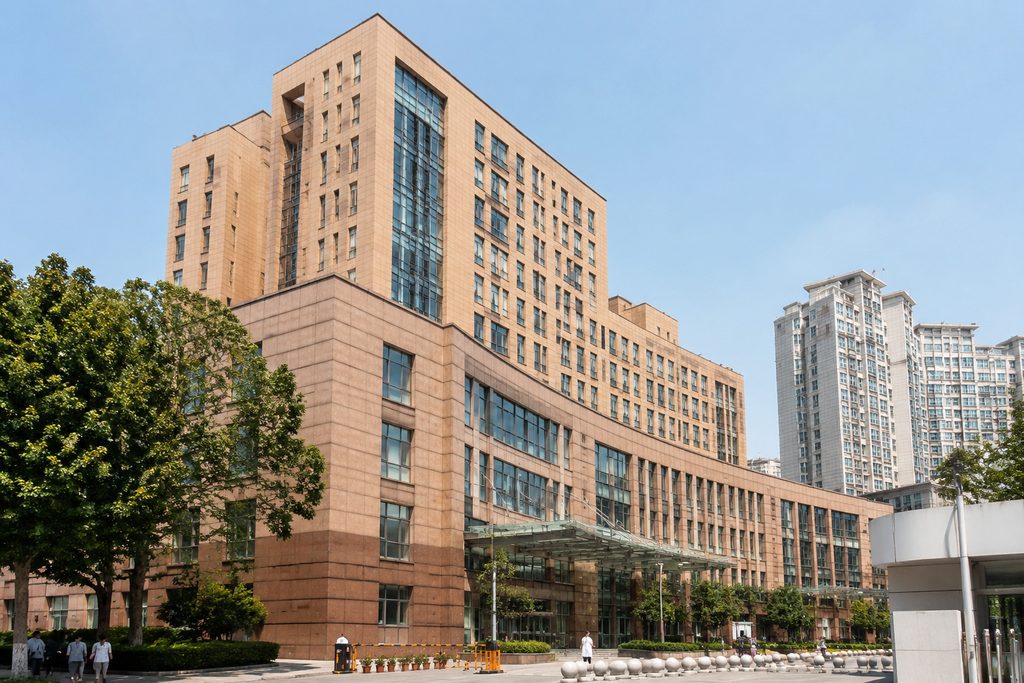
Have you ever searched for a hospital that genuinely excels at two entirely different specialties, only to find most places are famous for just one thing? That is exactly what makes Shanghai Ninth People’s Hospital unusual. It is not simply a good hospital. It is a powerhouse in two fields that rarely sit together at the top of any national ranking: plastic and reconstructive surgery, and dental and craniofacial care. This guide walks through what that means for someone considering treatment there, what the Shanghai Ninth People’s Hospital plastic surgery price range actually looks like, and how the dental implant costs compare. No vague promises. Just the data, the structure, and the practical steps.
How This Actually Works, Step by Step
The path from thinking about treatment to sitting in a consultation room at Shanghai Ninth follows a sequence that surprises many first-time international patients. The hospital’s public outpatient system does not accept overseas pre-bookings through a simple online form. You show up, you queue, you register. That works fine if you already live in Shanghai and speak Mandarin. For everyone else, the practical route runs through the hospital’s International Medical Center or a coordination team that handles document translation, appointment scheduling, and on-the-ground support.
Here is the sequence we see most often.
Step 1: Records review. You send over existing diagnostic materials — CT scans, panoramic X-rays, clinical photos, referral letters. A specialist reviews them remotely. This step alone saves a lot of wasted travel. Not every case is a fit for Ninth’s particular strengths, and you want to know that before booking a flight.
Step 2: Written opinion or video consultation. Depending on complexity, the reviewing team provides either a written second opinion or schedules a live video call. This is where you hear whether the proposed approach makes sense, what the timeline looks like, and what preliminary cost brackets apply.
Step 3: Visa and travel planning. Medical treatment in China falls under the S2 short-stay visa category, not the M business visa. Our team provides the supporting documentation letter from the hospital, which the local Chinese embassy or consulate requires. Processing typically takes one to three weeks, varying by country.
Step 4: In-person consultation. Once you arrive, you meet the surgical or dental team face to face. Additional imaging is often done on-site. The final surgical plan and price quote are confirmed only after this appointment.
Step 5: Treatment and recovery. The hospital coordinates admission or outpatient scheduling. For complex jaw surgery, expect a hospital stay. For dental implants, multiple visits over several months may be needed.
Why Shanghai Ninth Ranks Top 3 in Both Plastic Surgery and Dental Care
Most people do not realize that Shanghai Ninth People’s Hospital is formally affiliated with Shanghai Jiao Tong University School of Medicine, one of China’s most respected medical institutions. The hospital’s full name is Shanghai Ninth People’s Hospital, Shanghai Jiao Tong University School of Medicine. That academic backbone matters. It means the clinicians are not just practicing — they are teaching, researching, and publishing.
In China’s Fudan University hospital rankings, which evaluate clinical reputation and research output across 45 specialties, Shanghai Ninth consistently appears near the very top of two separate lists. Its plastic surgery department is perennially ranked among the top three nationally. Its stomatology department — which covers everything from routine dental care to complex orthognathic surgery — holds the same distinction. That dual-top-3 status is exceptionally rare. Most elite Chinese hospitals dominate one field. Ninth owns two.
What drives that? Volume and focus. The hospital handles an enormous caseload in craniofacial reconstruction, cleft lip and palate repair, orthognathic surgery, and aesthetic plastic surgery. The dental implant center alone places thousands of fixtures annually. When a surgical team performs a procedure hundreds of times each year, their complication rates and aesthetic outcomes tend to reflect that repetition.
For someone asking is Shanghai Ninth Hospital ranked top for plastic surgery in China, the answer is an unambiguous yes. It has held a top-three position in the Fudan Plastic Surgery specialty ranking for years. That is not marketing language. It is publicly available ranking data.
Shanghai Ninth People’s Hospital Plastic Surgery Price: What to Expect
Let us address the question most international patients ask first. The Shanghai Ninth People’s Hospital plastic surgery price range varies dramatically by procedure, surgeon seniority, and whether you access care through the standard public channel or the International VIP pathway. The public channel is cheaper but requires Mandarin fluency and navigating a high-volume system independently. The International VIP pathway costs more — roughly 1.5 to 2 times the public price — and provides English-speaking coordination, shorter wait times, and private recovery rooms.
These are approximate ranges for common procedures, based on recent international patient cases. They are not quotes. Every case is priced individually after consultation.
| Procedure | Public Channel (USD) | International VIP (USD) |
|---|---|---|
| Upper blepharoplasty (double eyelid) | $1,200 – $2,500 | $2,400 – $4,500 |
| Rhinoplasty (primary) | $2,500 – $5,000 | $4,500 – $8,000 |
| Facelift (full) | $5,000 – $9,000 | $8,500 – $15,000 |
| Breast augmentation (implants) | $3,500 – $6,500 | $6,000 – $11,000 |
| Liposuction (single area) | $1,500 – $3,000 | $2,800 – $5,500 |
| Orthognathic surgery (single jaw) | $8,000 – $15,000 | $14,000 – $24,000 |
| Cleft lip repair | $2,000 – $4,000 | $4,000 – $7,000 |
These numbers sit well below what comparable procedures cost in the United States, Western Europe, or Australia. A full facelift that runs $30,000 to $60,000 in Los Angeles or London often lands between $8,500 and $15,000 at Ninth through the International VIP channel. That differential is what draws many international patients.
But price is not the only consideration. The real value at Ninth lies in the surgical volume and subspecialty depth. A rhinoplasty here is not performed by a general plastic surgeon who also does breast cases and liposuction. It is often performed by someone who does almost exclusively nasal surgery, year after year.
Best Dental Implants Shanghai Cost and the Dental Care Reality
Dental implant pricing in Shanghai spans a wide range depending on implant brand, bone grafting needs, and whether a sinus lift is required. At Shanghai Ninth, the best dental implants Shanghai cost typically falls between $1,200 and $2,800 per implant through the public channel, and $2,200 to $4,500 through the International VIP pathway. These prices include the fixture, abutment, and crown. They do not include preliminary extractions, bone grafts, or sinus lifts, which are quoted separately.
Implant brand matters. Straumann and Nobel Biocare implants cost more than Korean brands like Osstem or Dentium. Ninth offers both tiers. The surgeon will recommend based on bone quality and aesthetic zone considerations, not simply on cost.
A full-mouth rehabilitation — think All-on-4 or All-on-6 — runs anywhere from $18,000 to $35,000 per arch through the International VIP channel. That is still a fraction of the $60,000 to $90,000 per arch common in North America or Australia.
One thing to understand: dental implant treatment at Ninth is not a one-visit affair. Osseointegration takes three to six months. If bone grafting is needed, add another three to six months. Some international patients choose to have the surgical phase done at Ninth and the final restoration completed by a dentist back home. That is a viable pathway, but it requires careful coordination between the two clinical teams.
A Realistic Timeline
Timelines in Chinese academic hospitals do not always match the pace international patients expect. Here is what a typical journey looks like for someone traveling from abroad for orthognathic surgery or major plastic surgery at Shanghai Ninth.
| Stage | Typical Duration | What Happens |
|---|---|---|
| Remote records review | 1–2 weeks | You send scans and photos; the team reviews and determines if Ninth is appropriate for your case. |
| Written opinion or video consult | 1–3 weeks after records accepted | Specialist provides analysis, preliminary plan, and rough cost estimate. |
| Visa processing (S2) | 1–3 weeks | Hospital provides invitation letter; you apply at local Chinese embassy or consulate. |
| Travel and in-person consultation | Week 1 in Shanghai | Meet surgeon, complete additional imaging, finalize surgical plan and quote. |
| Surgery scheduling | 1–4 weeks after consultation | Depends on surgeon availability and your pre-operative preparation. |
| Hospital stay and immediate recovery | 3–10 days | For major jaw surgery or extensive plastic surgery; minor procedures may be outpatient. |
| Local recovery before flying home | 1–3 weeks after discharge | Surgeon wants to see you for at least one follow-up before you leave the country. |
| Total time in Shanghai | 4–8 weeks | Varies by procedure complexity and healing speed. |
For dental implants without major surgery, the initial surgical visit might be just one week in Shanghai, with a return trip months later for the final restoration — or coordination with a dentist at home.
What Can Go Wrong — and What Happens Then
No honest guide skips the failure modes. Here are the ones that actually occur.
You arrive and the surgeon says you are not a candidate. This happens. Remote imaging has limits. Sometimes the bone structure, soft tissue condition, or underlying health issue only becomes clear in person. If this happens, the surgeon will explain why and may suggest an alternative approach. If no treatment is possible, you have traveled for a consultation only. That is why the remote review step is critical — it screens out the clearest mismatches before you book a flight.
Complications after surgery. Infection, poor wound healing, implant failure, unsatisfactory aesthetic results — these are real risks in any surgical or dental procedure. Ninth has protocols for managing complications, and its surgeons handle revision cases regularly. But if a complication arises after you have returned home, managing it becomes more difficult. You need a local provider willing to take over post-operative care. Establish that relationship before you travel. Do not assume your home-country dentist or surgeon will happily manage another clinician’s work.
Communication breakdowns. Even through the International VIP pathway, not every nurse or junior staff member speaks fluent English. Expect moments of friction. Having a bilingual medical companion present during consultations and on the day of surgery reduces this considerably.
Unexpected costs. The quote you receive covers the surgical fee, anesthesia, and standard hospital stay. It may not cover extended ICU time, additional imaging, or revision procedures. Ask for a written breakdown of what is included and what is not before you commit.
How Good Is Shanghai Ninth Hospital for Jaw Surgery, Really?
If you are asking how good is Shanghai Ninth Hospital for jaw surgery, the short answer is that it is one of the highest-volume orthognathic surgery centers in the world. The department handles complex bimaxillary cases, asymmetry corrections, and combined orthodontic-surgical treatments at a scale that few Western centers match. Its surgeons regularly publish in the Journal of Cranio-Maxillofacial Surgery and other indexed journals.
But volume is not the same as the right fit for you. Ninth’s orthognathic surgeons tend to favor certain surgical approaches and aesthetic ideals. Their aesthetic sensibility often leans toward East Asian facial harmony norms. If your facial structure and aesthetic goals differ, you need to discuss this explicitly during the video consultation. Look at before-and-after photos of patients with similar facial morphology to yours. Do not assume the surgeon’s default aesthetic matches your expectations.
Also, orthognathic surgery at Ninth almost always requires pre-operative orthodontics. That means braces for six to eighteen months before the operation. Some international patients complete the orthodontic phase at home and travel to Shanghai only for the surgical phase. Others do everything at Ninth. Both paths work, but the split approach requires tight communication between your orthodontist and the Ninth surgical team.
Practical Considerations: Visa, Payment, Language, and Follow-Up
Medical travel to Shanghai Ninth involves several practical layers beyond the surgery itself.
Visa. The correct category is S2, endorsed for medical treatment. The hospital provides a formal invitation letter and treatment confirmation. Apply at the Chinese embassy or consulate in your country. Processing times vary. Plan for three weeks minimum. Family members accompanying you also apply for S2 visas. Do not let anyone tell you to apply for an M business visa for medical treatment — that is incorrect and can cause problems at the border.
Payment. Chinese public hospitals, including Ninth’s International VIP center, typically require payment in advance. Cash, UnionPay, and major credit cards are accepted, but confirm with the international office before relying on a specific card. International bank transfers are sometimes possible for large amounts. Insurance reimbursement works on a pay-and-claim basis — you pay the hospital, then submit to your insurer. Direct billing is rare outside private international hospitals like United Family or Jiahui.
Language. The International VIP pathway provides English-speaking coordinators and often English-speaking senior surgeons. But Shanghai Ninth is a Chinese hospital. Most signage, consent forms, and discharge instructions are in Chinese. A bilingual medical companion bridges this gap. Our team provides exactly this — not just translation, but navigation through the physical hospital campus, which is large and can be overwhelming.
Follow-up at home. Before you leave Shanghai, ask the surgeon for a detailed discharge summary in English, a list of post-operative instructions, and contact information for the department in case of questions. Identify a local provider — plastic surgeon, dentist, or GP — who agrees to see you for follow-up before you travel. Do this early. It is much harder to find someone willing to take over another surgeon’s case after a complication has already developed.
Frequently Asked Questions
You can try, but the public registration system operates in Mandarin and requires in-person queueing. The International Medical Center accepts direct contact from overseas patients, though response times vary. Most international patients use a coordination service to handle appointment scheduling, document translation, and on-site support. This is not a requirement — it is a practical reality of navigating a high-volume Chinese academic hospital.
No standardized “package” exists in the way some medical tourism agencies market for other destinations. What is possible is a coordinated treatment plan that sequences procedures logically — for example, orthognathic surgery followed by rhinoplasty, or dental implants combined with soft tissue grafting. Each component is quoted and scheduled separately. A coordination team can build a consolidated timeline and cost estimate, but the hospital itself does not sell bundled packages.
Revision policies vary by department and surgeon. In general, if a complication arises that is directly related to the surgical technique, the original surgeon will evaluate and may perform a revision at reduced or no surgical fee. However, hospital and anesthesia costs still apply. Aesthetic dissatisfaction is more complex — what one patient considers a poor result, the surgeon may consider within the normal range of outcomes. Discuss revision policies explicitly during your consultation, and get the terms in writing.
At an academic center like Shanghai Ninth, the attending surgeon overseeing your case is typically a senior clinician with years of subspecialty experience. Residents and fellows may participate in parts of the procedure under supervision — this is standard in teaching hospitals worldwide. Ask directly during your consultation: “Will you be performing the key portions of the surgery yourself, and who else will be involved?” Senior surgeons in the International VIP pathway are accustomed to this question and will answer it.
Can I get a precise quote before traveling?
You can
For more medical information and treatment options in China, visit chinamedservices.com (China Medical Services).
