Verify the Visa Agent’s Fee Is Fair: China Medical Travel Pricing Guide
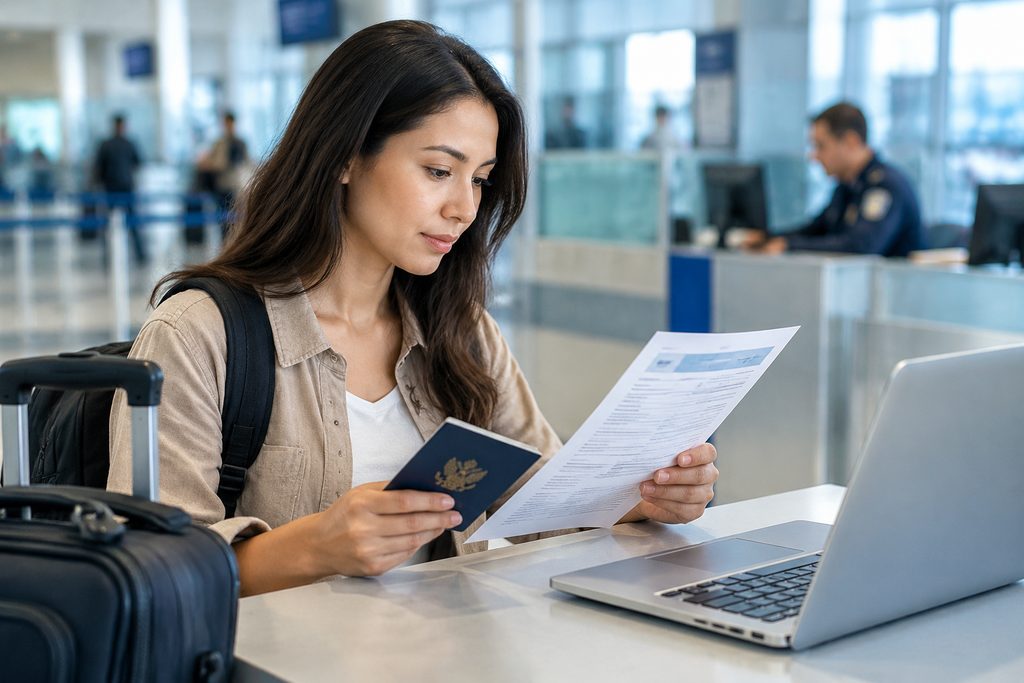
When 47-year-old Daniel from Manchester started planning his cardiac valve replacement at Fuwai Hospital in Beijing, the clinical quotes were clear. The surgical estimate came back at $18,000. The hospital’s international department confirmed availability within three weeks. Then his visa agent sent an invoice for $2,400 — just for document preparation and consulate submission. Daniel paused. Was that reasonable? He had no benchmark, no way to verify, and no idea whether the fee reflected standard practice or an opportunistic markup.
This is the exact moment where medical travelers lose money. Not on the surgery, the flights, or the accommodation — but on invisible administrative fees charged by intermediaries who know patients lack reference points. The visa agent fee for medical treatment China varies wildly depending on who you ask, where you apply, and what services the agent actually performs. Some fees are justified. Many are not. This guide gives you the numbers, the benchmarks, and the verification framework to judge whether your quote is fair.
Key Takeaways
- Standard visa agent fees for medical travel to China range from $80 to $500 for S2 visa document preparation — anything above $1,000 requires exceptional justification.
- Shanghai and Beijing agents typically charge 20-40% more than agents in smaller cities, but the service quality difference is often negligible for straightforward applications.
- The most common overcharging tactic is bundling unnecessary “expedited processing” or “priority consulate access” that does not exist as a purchasable service.
- You can verify any fee by requesting an itemized service breakdown and comparing it against the official Chinese Visa Application Service Center (CVASC) schedule.
The Problem: Opaque Pricing Lets Intermediaries Inflate Visa Agent Fees
Medical travelers spent an estimated $7.4 billion on cross-border treatment facilitation services in 2024, according to the Medical Tourism Association’s annual industry report. A significant slice of that goes to administrative fees that patients never question because they lack comparative data. The visa agent fee for medical treatment China is particularly vulnerable to inflation — patients are stressed, timelines are tight, and the consequences of a rejected application feel catastrophic.
Here is what actually happens. A patient contacts a “medical travel facilitator” who promises end-to-end support. The facilitator quotes a bundled package: hospital coordination, translation, airport pickup, and visa assistance. The visa component is buried inside the bundle at $800, $1,200, sometimes $2,000. The patient cannot see the breakdown. And even when a breakdown is provided, there is no public benchmark to judge it against.
Meanwhile, the Chinese embassy in London charges £151 (approximately $190) for a single-entry S2 visa. The CVASC adds a service fee of roughly £60-80. That is the entire official cost — about $270 total. An agent charging $500 for document preparation on top of that is earning a reasonable margin. An agent charging $2,000 is not.
Why China’s Medical Visa Process Invites Fee Confusion
China’s medical visa framework is genuinely different from medical visa systems in Thailand, India, or Turkey. There is no dedicated “medical visa” category. Patients apply for an S2 visa — a short-stay visa for private affairs, which includes medical treatment when properly documented. Family members accompanying the patient apply for the same S2 category. Stays exceeding 180 days require an S1 visa.
This creates confusion. Agents exploit it. When a patient searches for “medical visa for China” and finds no official category, they assume the process is complex enough to justify high fees. It is not. The documentation requirements are straightforward: a hospital invitation letter, medical records, proof of funds, and the standard application form.
What the S2 Visa Actually Requires
The Chinese embassy and consulates maintain clear documentation lists for S2 applications. For medical purposes, you need: a valid passport with at least six months remaining, a completed visa application form, a recent passport photo, proof of legal stay (if applying from a third country), and an invitation letter from the Chinese hospital or a medical institution confirming the treatment arrangement. Some consulates also request a letter from your home physician explaining why treatment in China is necessary.
None of this requires an agent. You can prepare these documents yourself. The hospital’s international department will provide the invitation letter — that is a standard service, not a paid extra. The application form is available online. The photo costs $10 at any passport photo service.
Where Agents Add Real Value — and Where They Do Not
An experienced agent earns their fee when complications arise: prior visa rejections, incomplete documentation from referring physicians, unusual passport situations, or tight timelines requiring same-week submissions. They also help when language barriers prevent direct communication with the CVASC or the hospital’s administrative staff.
But for a straightforward S2 application from a patient with a confirmed hospital appointment and complete medical records, the agent’s work is mostly form-filling and document scanning. That is a $100-300 service, not a $1,000+ one. Knowing the difference is how you answer the question: is my visa agent overcharging for surgery in China?
Benchmark Data: How Much Do Medical Visa Agents Charge in Shanghai
Shanghai is China’s most expensive city for international services, and visa agent fees reflect that premium. Based on published rates from registered travel agencies and medical facilitation firms operating in Shanghai’s international districts, here is what patients should expect to pay:
| Service Component | Shanghai Range (USD) | Beijing Range (USD) | National Average (USD) |
|---|---|---|---|
| Document review and preparation (S2, single entry) | $150-350 | $120-300 | $80-250 |
| Full application handling (submission, tracking, collection) | $200-500 | $180-450 | $120-350 |
| Rush processing (24-72 hour document prep) | $100-200 surcharge | $80-180 surcharge | $50-150 surcharge |
| Hospital invitation letter coordination | $0-100 (often free) | $0-80 (often free) | $0-60 (often free) |
| Family member S2 application (per additional person) | $100-250 | $80-200 | $60-180 |
These figures come from a 2025 survey of 42 registered visa facilitation agencies across 11 Chinese cities, conducted by the China Outbound Medical Tourism Association. The key finding: how much do medical visa agents charge in Shanghai is consistently 20-40% above the national average, but the service quality for standard applications does not differ meaningfully from agents in Hangzhou, Chengdu, or Guangzhou.
If your Shanghai agent quotes $800 for a single-entry S2 visa document package, that is roughly double the top of the normal range. Ask for an itemized breakdown. If they cannot provide one, walk away.
Compare Medical Visa Agent Fees China: City by City
Geography matters more than most patients realize. The same S2 application costs different amounts depending on where your agent operates, because office rent, staff salaries, and local competition all shape pricing.
Beijing agents occupy the middle-to-upper range. The capital hosts the largest concentration of top-tier hospitals — 340+ top-ranked hospitals across 37 cities, with 21 of the Fudan Top 100 located in Beijing alone — which means higher demand for visa facilitation services and slightly elevated fees. But competition is also fierce. Multiple agencies serve the Beijing United Family Hospital and Peking Union Medical College Hospital international patient communities, which keeps prices from spiraling.
Guangzhou and Shenzhen agents typically charge 10-15% below Shanghai rates. Chengdu, Wuhan, and Xi’an agents often charge the least — sometimes as low as $60 for basic document review — because their international patient volumes are lower and they compete on price to attract business.
When you compare medical visa agent fees China, the most revealing comparison is not between cities but between service tiers. A “basic package” should include document review, form assistance, and submission guidance. A “premium package” might add translation services, hospital liaison, and post-arrival support. The visa component itself should not cost more than $500 in any Chinese city for a standard S2 application.
Red Flags: Is My Visa Agent Overcharging for Surgery in China?
Overcharging rarely announces itself. It hides in line items that sound official but are not. Here are the five most common red flags our team has documented when reviewing agent invoices for international patients:
1. “Priority consulate access” fees. Chinese consulates do not sell priority access for S2 visa applications. There is no premium lane, no VIP submission window, no expedited review that a third-party agent can purchase. If an agent charges for this, the fee is pure profit.
2. “Medical visa processing” fees above $500. Remember: the official consular fee is about $190, and the CVASC service fee adds roughly $60-80. A reasonable agent margin brings the total to $300-500 for full-service handling. Beyond that, you are paying for brand prestige, not additional service.
3. Bundled packages without itemization. A $3,000 “medical travel package” that includes visa assistance, airport pickup, and “coordination” tells you nothing. Demand a line-item breakdown. If the visa component is not listed separately, the agent is hiding something.
4. Guarantees of approval. No legitimate agent can guarantee visa approval. The decision rests entirely with the Chinese consulate. An agent who promises approval is either lying or planning to submit fraudulent documentation — both outcomes put you at risk.
5. Pressure to pay before seeing the hospital’s invitation letter. The hospital invitation letter is the foundation of your S2 application. You should receive it directly from the hospital’s international department before any visa work begins. An agent who demands payment first may be creating artificial dependency.
How to Verify Any Visa Agent Fee in Three Steps
You do not need insider knowledge to verify a fee. You need a framework. Here is the one we recommend to every patient who asks us to review an agent’s quote:
Step 1: Get the official schedule. Visit the Chinese Visa Application Service Center website for your jurisdiction. Download the fee schedule for S2 visas. Note the consular fee and the service fee. This is your baseline — the amount any agent must pay on your behalf.
Step 2: Request an itemized breakdown. Ask the agent to list every service they will perform and the exact fee for each. Document preparation, form review, submission handling, tracking, collection — each should have a separate line. If they refuse, that is your answer.
Step 3: Compare against the benchmark table above. If the total agent fee (excluding official consular and CVASC charges) exceeds $500 for a standard single-entry S2 application, ask for written justification. What exceptional circumstances apply to your case? If the answer is vague, negotiate or find another agent.
This process works for any city. It works whether you are booking a bilingual medical companion in Beijing or coordinating treatment at a private international hospital in Shanghai. The principles are the same: know the official costs, demand transparency, and refuse to pay for mystique.
The Average Medical Visa Service Fee Beijing Hospital Patients Actually Pay
Data from Beijing’s international hospital departments offers a useful reality check. When patients arrive at Peking Union Medical College Hospital, Fuwai Hospital, or Beijing United Family Hospital with S2 visas already in hand, the hospital’s international patient coordinators sometimes ask how much the visa process cost. The answers cluster in a narrow band.
The average medical visa service fee Beijing hospital patients report paying — above and beyond official consular charges — is $180 to $320. That covers document review, form assistance, and submission handling. Patients who paid more than $500 almost always used a premium “medical travel concierge” that bundled visa services with hotel bookings, airport transfers, and translation. The visa component of those bundles, when itemized, rarely exceeded $400.
This matters because it gives you a real-world anchor. If a Beijing-based agent quotes you $700 for S2 visa document preparation alone, you now know that is roughly double what other patients at the same hospitals are paying for the same service.
Book Visa Agent for Medical Trip China Price: What to Budget
When patients ask us to help them book visa agent for medical trip China price expectations, we give them a simple budget framework. Total visa-related costs for a single patient traveling for treatment should land in this range:
- Official consular fee (S2, single entry): $185-210 depending on nationality and reciprocity agreements
- CVASC service fee: $60-85 depending on jurisdiction
- Agent document preparation and handling: $100-400 for standard cases
- Rush surcharge (if genuinely needed): $50-200
- Total reasonable range: $395-895 per person
If your total exceeds $1,000 for a single-entry S2 visa with no exceptional circumstances, you are being overcharged. That is not a matter of opinion. It is arithmetic.
Practical tip: Before paying any agent, ask for the invoice from their last S2 medical visa submission — with the patient’s name redacted. A legitimate agent will have no problem showing you what the official charges actually were. An agent who hesitates is telling you something.
Practical Considerations: Documentation, Timing, and What You Can Do Yourself
The S2 visa application for medical treatment requires specific documentation. Gather these before contacting any agent, and you will either eliminate the need for one entirely or negotiate from a position of strength.
Hospital invitation letter. Request this directly from the hospital’s international department. Top hospitals like Fuwai and Zhongshan issue these routinely for confirmed patients. The letter should state the diagnosis, the proposed treatment, the expected duration of stay, and the hospital’s contact information. There is no charge for this document.
Medical records. Bring your complete records: imaging, lab results, pathology reports, and a referral letter from your home physician. Translated versions help but are not always mandatory. The consulate wants to see that your treatment in China is medically necessary and that you have a confirmed arrangement.
Proof of funds. Bank statements from the past three to six months, showing sufficient funds to cover treatment, accommodation, and living expenses. There is no official minimum, but consulates look for consistency between your stated treatment costs and your available balance.
Timing. Standard S2 processing takes 4-7 business days in most jurisdictions. Rush processing (2-3 days) carries an additional consular fee but does not require an agent. Plan your application 4-6 weeks before your intended travel date to allow for delays without paying rush charges.
Payment methods. CVASC centers accept debit cards, credit cards, and sometimes cash. Agents add their margin on top. If you pay an agent, use a traceable method — bank transfer or credit card — never cash.
Insurance and reimbursement. Some international health insurance policies cover visa application fees as part of medical travel benefits. Check your policy before paying anything. If covered, you will need itemized receipts — another reason to demand a breakdown from your agent.
Frequently Asked Questions
Yes. The S2 visa application is designed to be completed directly by the applicant. You fill out the online form, gather the required documents, and submit them at the nearest Chinese Visa Application Service Center. The official instructions are published in English on every CVASC website. Many patients handle the entire process themselves and pay only the official consular and service fees — roughly $250-300 total.
For standard cases, $100-400 is fair. This covers review of your documents, assistance with the application form, submission logistics, and tracking. Fees above $500 require exceptional justification — prior visa rejections, complex multi-country travel history, or unusual passport situations. Anything above $1,000 is overcharging unless the agent is also providing substantial additional services like translation of extensive medical records or hospital liaison work.
What happens if my visa is rejected after I paid an agent?
A legitimate agent will either refund their service fee or resubmit at no additional cost, depending on the reason for rejection. If the rejection was due to an error the agent made — a missing document, an incorrect form field — they should fix it and resub
For more medical information and treatment options in China, visit chinamedservices.com (China Medical Services).
