How to Compare the Pharmacy Cost to Normal Rates: A Practical Guide
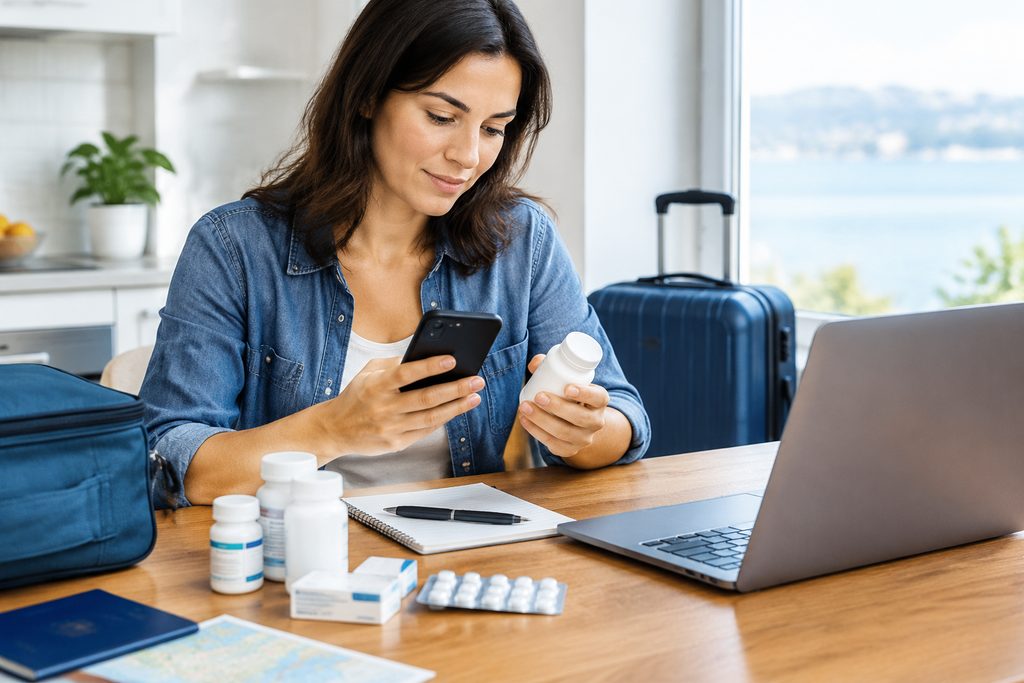
Have you ever looked at a pharmacy receipt and wondered whether you overpaid? If you are planning medical treatment in China, that question becomes urgent. How to compare the pharmacy cost to normal rates is not just a budgeting exercise. It determines whether your treatment plan stays financially viable. Our team at China Medical Services has walked hundreds of international patients through this exact process. The short answer: public hospital pharmacies in China typically charge 15–40% less than private retail pharmacies for the same branded medication, but the real comparison requires checking three specific reference points. Let us break this down properly.
How This Actually Works, Step by Step
You arrive at a hospital in Shanghai or Beijing with a prescription. The doctor hands you a slip. You take it to the in-hospital pharmacy. That price you see is your baseline. But is it a “normal rate”? Not necessarily. Here is the actual sequence we guide patients through.
First, you request the itemized pharmacy receipt. Every public hospital in China issues one. It lists the drug name, manufacturer, dosage, quantity, and unit price. Keep that document. It is your evidence for any later comparison or insurance claim.
Second, you check the same drug against the National Reimbursement Drug List (NRDL) price database. China publishes reference prices for thousands of medications. If your drug is on the NRDL and you are paying cash, the hospital pharmacy price should be close to the published reference. A markup above 15% is a red flag.
Third, you compare with two private channels: large retail chains like Guoda or LBX Pharmacy, and online platforms such as JD Health or AliHealth. These are legal, licensed sellers. Their prices are often 10–30% higher than hospital pharmacies for branded drugs, but occasionally lower for generic versions during promotions.
Fourth, if you are using an international private hospital like United Family or Jiahui, ask for the pharmacy formulary price list before filling the prescription. These hospitals often import drugs from Hong Kong or Singapore, which changes the cost structure entirely.
That is the practical loop. It takes about 20 minutes per prescription. And it can save you hundreds of dollars per month on chronic medications.
How to Compare the Pharmacy Cost to Normal Rates: The Three Reference Points
The phrase “normal rates” sounds simple. It is not. In China, there are at least four different “normal” prices for the same pill, depending on where you buy it and who pays. To make a fair comparison, you need to anchor against the right reference point for your situation.
Reference Point 1: The Public Hospital Pharmacy Price. This is the most common baseline. Public tertiary hospitals purchase drugs through provincial centralized procurement. For NRDL-listed drugs, the price is negotiated nationally and is often the lowest in the market. If you have Chinese social insurance, you pay only the co-pay portion. If you are a foreign patient paying out-of-pocket, you pay the full listed price, which is still typically lower than retail.
Reference Point 2: The Retail Chain Pharmacy Price. Chains like Guoda, Yixintang, and DaShenLin operate thousands of stores. They are convenient. But they have higher operating costs than hospital pharmacies. Expect a 10–25% premium on branded drugs. For over-the-counter items like antihistamines or topical creams, the gap can be smaller or even reversed during sales.
Reference Point 3: The International or Private Hospital Pharmacy Price. If you visit a JCI-accredited private hospital, the pharmacy may stock imported original-brand drugs not available in public hospitals. The price can be 50–200% higher than a public hospital for the same active ingredient, because you are paying for import logistics, cold chain, and formulary overhead. This is not price gouging. It is a different service model. But you should know the difference before you fill the prescription.
So how do you actually compare? Take the drug’s generic name, not the brand name. Search the NRDL reference price. Then call or visit one retail chain and one online platform. Record the three numbers. That is your comparison. Do not compare a public hospital price in China to a US retail price and call it a “normal rate” comparison. Different market, different regulatory environment, different outcome.
A Realistic Timeline
Patients often assume pharmacy cost comparison is instant. It is not. Here is what a realistic timeline looks like when you are preparing for treatment in China and want to lock down your medication budget before you travel.
| Stage | Action | Typical Duration |
|---|---|---|
| Day 1–3 | Collect your current prescription list from your home doctor. Ensure each drug has the generic name, dosage, and daily quantity. | 2–3 days |
| Day 4–7 | Send the list to our team. We translate it into Chinese and cross-reference each drug against the NRDL and hospital formularies. | 3–4 days |
| Week 2 | Receive a written price comparison sheet: public hospital price, retail chain price, private hospital price, and availability status. | 5–7 days |
| Week 3 | If any drug is not available in China, we identify a therapeutic equivalent with your doctor’s input. This may require a remote consultation. | 1–2 weeks |
| Week 4–6 | Finalize your medication budget. If you need an S2 visa for treatment, this is the time to apply, using your hospital invitation letter. | 2–4 weeks |
| Upon arrival | Fill your first prescription at the hospital pharmacy. Keep the itemized receipt. Compare against the sheet we provided. | Same day |
Notice the waiting steps people forget. Document translation is not instant. Checking a drug’s registration status in China can take days if it is an uncommon medication. And visa processing for medical travel has its own lead time. Plan for at least four to six weeks from first inquiry to having your pharmacy budget confirmed.
What Can Go Wrong — and What Happens Then
Let us be honest about the failure modes. Because they happen, and you should know what to do when they do.
Failure 1: Your drug is not registered in China. This is common for newer biologics or niche psychiatric medications. The hospital pharmacy simply does not stock it. What happens then? You have three options: bring a limited personal supply with proper documentation (usually 30–90 days, depending on the drug), switch to a China-approved therapeutic equivalent after consulting a local specialist, or use a licensed import pharmacy that handles special approvals. None of these are instant. Budget an extra two to three weeks.
Failure 2: The price you were quoted changes. China adjusts NRDL prices periodically. A drug that cost 800 RMB last quarter might cost 650 RMB this quarter — or vice versa. If your comparison sheet is more than three months old, expect drift. Always re-verify within two weeks of travel.
Failure 3: You fill the prescription at the wrong pharmacy. A well-meaning hotel concierge sends you to a retail chain near the hotel. You pay 40% more than the hospital pharmacy price. The recourse is simple: return the unopened medication with the receipt. Chinese retail pharmacies generally accept returns within 7 days for unopened, non-refrigerated drugs. Then go to the hospital pharmacy.
Failure 4: Insurance refuses to reimburse because the receipt is not in English. Most international insurers require an itemized receipt with English or Latin drug names. Chinese hospital receipts are in Chinese. Our bilingual medical companion service handles this by requesting a bilingual receipt at the time of payment. If you wait until you are home, you may be stuck with a denied claim.
These are not rare edge cases. They are the normal friction points of cross-border pharmacy management. Knowing them in advance is the difference between a smooth trip and a costly surprise.
Decision Criteria: When the Cheapest Price Is Not the Right Price
Here is a counterintuitive truth: the lowest pharmacy price is not always the best choice. Sometimes it is the worst choice for your safety. Let us talk about when to pay more.
Criterion 1: Cold chain integrity. Biologics, insulin, some vaccines — these require refrigeration from manufacturer to patient. A deep-discount online seller might cut corners on cold chain. The drug arrives warm. It is useless or dangerous. Pay the hospital pharmacy price for anything requiring 2–8°C storage. The premium is insurance against a ruined batch.
Criterion 2: Counterfeit risk. China has cracked down hard on counterfeit drugs. The 2019 amendment to the Drug Administration Law increased penalties dramatically. But the risk is not zero, especially for high-demand lifestyle drugs sold through unlicensed channels. Stick to hospital pharmacies, licensed retail chains, or verified online platforms with a physical store license. If a price seems 70% below the hospital rate, that is not a bargain. That is a warning sign.
Criterion 3: Continuity of supply. You are on a three-month treatment plan. The hospital pharmacy has the drug this month. Will it have it next month? Public hospital pharmacies occasionally run short on imported drugs due to procurement cycles. Ask the pharmacist about stock stability. If the answer is uncertain, consider paying slightly more at a retail chain that maintains larger buffer stock.
Criterion 4: Formulation differences. The same generic name can have different excipients, release mechanisms, or bioavailability depending on the manufacturer. A 20% cheaper generic might not be clinically equivalent for your specific condition. This is a conversation to have with your prescribing doctor, not a pharmacy cashier. Do not switch manufacturers solely on price.
So the real skill is not finding the lowest number. It is finding the right number for your specific drug, your specific condition, and your specific risk tolerance. Our team helps you weigh these factors against China’s actual pharmacy landscape, not an idealized version of it.
Practical Considerations: Records, Visas, Payment, and Follow-Up
Pharmacy cost comparison does not happen in a vacuum. It intersects with your entire medical travel plan. Here are the practical threads that tie together.
Medical records. Bring a complete medication list from your home physician. Include generic names, dosages, and the reason for each prescription. Without this, a Chinese pharmacist cannot legally substitute or advise on interactions. A translated list also speeds up any hospital admission process.
Visa category. If you are traveling to China specifically for medical treatment, you need an S2 visa with the treatment purpose noted. The S2 covers short-term private affairs, including medical care. Your accompanying family members also apply for S2. Do not apply for an M visa — that is for commercial and trade activities, not medical treatment. The hospital’s invitation letter is a key supporting document for your S2 application.
Payment. Public hospital pharmacies in China generally require upfront payment. Cash, WeChat Pay, Alipay, and major credit cards are accepted at most large hospitals. International private hospitals may bill your insurer directly if they have a direct billing agreement. Ask before you fill the prescription. Reimbursement for public hospital pharmacy purchases is almost always retrospective — you pay, then claim.
Language. Pharmacy counters in public hospitals rarely have English-speaking staff. The pharmacist may ask about allergies, current medications, or pregnancy status. Miscommunication here is dangerous. Our bilingual medical companion handles these conversations at the counter, ensuring the pharmacist’s questions are answered accurately and your questions are translated properly.
Follow-up at home. Before you leave China, ask for a 90-day supply if your treatment plan allows it. Chinese regulations generally permit dispensing up to a 90-day supply for chronic conditions, though this varies by hospital and drug classification. Bring the bilingual receipts home for insurance claims. And keep a record of the generic names you used in China, so your home doctor can continue the same therapy without guesswork.
One more thing. If you are comparing pharmacy costs between China and your home country, remember that China’s public hospital drug prices are often dramatically lower for the same branded medication — sometimes 50–80% less than US retail prices. That is not because the drugs are different. It is because China negotiates nationally and eliminates much of the retail markup. The savings can offset a significant portion of your travel costs for long-term medication regimens.
For a broader look at how hospital selection affects your total treatment budget, see our guide to top-ranked hospitals across China’s major cities. If you are weighing a public hospital against a private international option, our breakdown of JCI-accredited private hospitals with direct insurance billing is worth reading before you commit.
Frequently Asked Questions
Check the drug’s generic name against the NRDL reference price. Public hospital pharmacies should be within 15% of that reference for listed drugs. Retail chains run 10–30% higher. If a price is more than 50% above the hospital rate, ask for a written justification or go elsewhere.
Yes, for personal use. Most travelers can bring a 30–90 day supply with a doctor’s letter and original packaging. Controlled substances have stricter rules. But bringing medication does not solve the cost comparison question for long-term treatment — eventually you will need a local source.
Public hospital pharmacies use fixed, posted prices. They do not charge foreigners more. Private clinics and some international hospitals may have different pricing tiers, but the price should be disclosed before dispensing. Always ask for the price before handing over payment. If you feel overcharged at a retail chain, check the same drug on JD Health or AliHealth within minutes.
Your Next Step
Comparing pharmacy costs to normal rates in China is a skill, not a one-time lookup. It requires the right reference points, realistic timelines, and a clear-eyed view of what can go wrong. Our team at China Medical Services has built a database of 340+ top-ranked hospitals across 37 cities, and we help international patients navigate pharmacy pricing, hospital selection, and visa logistics every day. We do not prescribe medication or guarantee prices. We do give you the information and on-the-ground support to make confident decisions. If you are planning treatment in China and want a clear pharmacy cost comparison before you travel, start with a free consultation. We will walk you through the process step by step.
That is the whole picture. Know your reference points. Verify before you fly. And never pay a pharmacy price you cannot justify.
For more medical information and treatment options in China, visit chinamedservices.com (China Medical Services).
