Carpal Tunnel Surgery in China: Costs, Top Hospitals, and Recovery
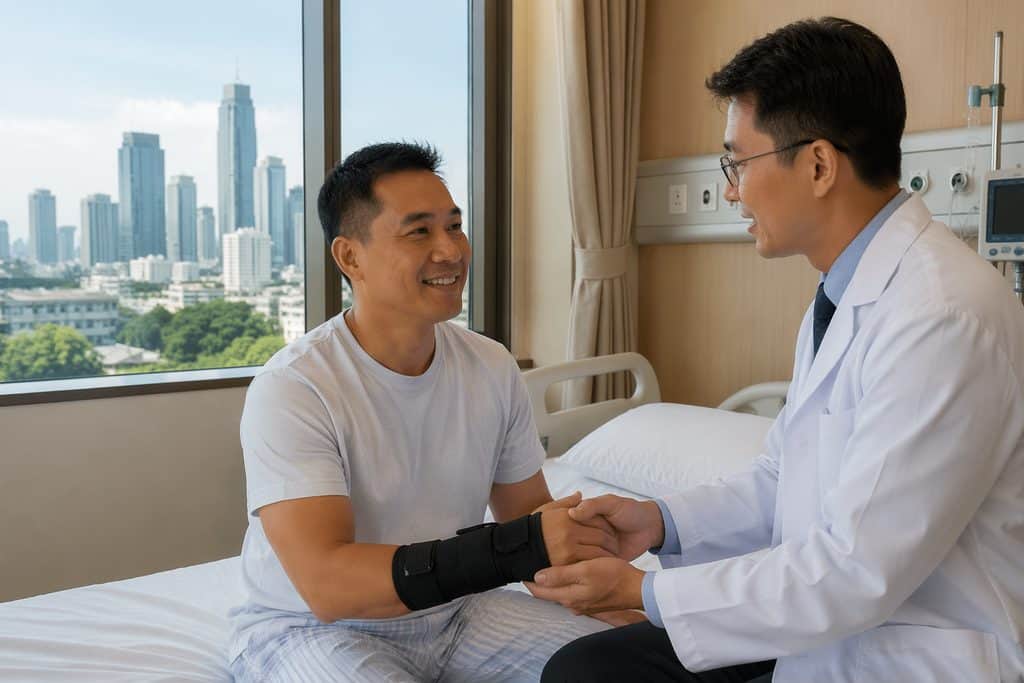
Carpal Tunnel Surgery in China: What It Costs, Where to Go, and How Recovery Works
Roughly 1 in 20 adults in industrialized countries will develop carpal tunnel syndrome at some point, and the American Academy of Orthopaedic Surgeons reports that more than 500,000 carpal tunnel release procedures are performed in the United States every year. For international patients comparing options, the carpal tunnel surgery cost in China typically runs between $1,500 and $4,500 at top-tier public hospitals — against $6,000 to $12,000 in the US for the same procedure. That gap is real. It is also not the whole story, because the price you see quoted is rarely the price you pay as a foreign patient navigating a system of 35,000+ hospitals where English is not the default.
This guide walks through the numbers, the hospital tiers, the visa rules, and the recovery timeline — the same ground our team covers with patients every week.
Is Carpal Tunnel Surgery Safe in China? The Short Answer
Yes — at the right hospital, with the right surgeon, and with realistic expectations about what “the right hospital” means. Carpal tunnel release is one of the most common hand surgeries performed worldwide, and China’s top orthopedic centers handle volumes that rival or exceed most Western institutions. The complication rate for standard open release is low globally, generally reported under 1% for major complications in published series.
The caveat matters. Safety is not evenly distributed. A release performed at a county-level hospital with limited hand-surgery subspecialization is a different proposition from one performed at a Fudan-ranked orthopedic department in Beijing or Shanghai. The variable that determines your outcome is not the country. It is the specific department, the surgeon’s case volume, and whether anyone in the room can explain the post-operative plan to you in English.
Who This Is Right For — and Who It Isn’t
Medical tourism for hand surgery is not for everyone. Being honest about that upfront saves people a lot of money and heartache.
Typically a good fit:
- Patients with confirmed moderate-to-severe carpal tunnel syndrome (positive EMG/NCS, failed conservative treatment) who are paying out of pocket or facing a long wait at home
- People already traveling to Asia for work, family, or other medical reasons
- Patients whose insurance does not cover the procedure domestically and who are comfortable with a staged, remote-first planning process
- Those willing to spend 10–14 days in China for surgery plus early follow-up
Probably not a good fit:
- Anyone with an active infection, uncontrolled diabetes, or severe bleeding disorders — these need to be managed before any elective hand surgery, anywhere
- Patients with mild symptoms that respond to splinting, steroid injection, or activity modification. Surgery is not the first line for everyone
- People who cannot travel for at least 10 days or arrange follow-up at home afterward
- Anyone expecting a same-week, fully English-language, concierge experience at a public hospital without coordination support. That is not how the system works
The Options, Compared
Here is how the realistic paths stack up. Prices are ranges and vary by hospital and case complexity.
| Option | Typical Cost (USD) | Wait Time | Language Support | Best For |
|---|---|---|---|---|
| Public top-tier hospital, standard channel | $1,500 – $3,000 | Days to weeks after in-person consult | Limited; interpreter needed | Cost-focused patients with coordination help |
| Public hospital international/VIP department | $2,500 – $4,500 | Faster scheduling, English staff | Good | Patients wanting senior surgeons + English service |
| Private international hospital (JCI) | $4,000 – $8,000 | Short | Excellent, direct insurance billing | Insured patients, Western-style care preference |
| United States | $6,000 – $12,000 | Weeks to months | Native | Patients with full insurance coverage |
| Western Europe (private) | $3,000 – $7,000 | Variable | Native/local | EU residents with private coverage |
If you are paying cash and want the lowest credible price, the public standard channel wins — but only if you have someone handling registration, interpretation, and scheduling. If you value a frictionless English experience and your insurance reimburses, the private international tier is worth the premium. The middle option, a public hospital’s international department, is where most of our patients land.
Finding the Best Hospitals for Carpal Tunnel Surgery in China
Hand surgery in China sits primarily within orthopedic departments, and the strongest programs cluster in a handful of cities. The Fudan Hospital Ranking — China’s most cited hospital quality index — evaluates hospitals across 45 specialties, and orthopedics is one of them. The composite Top 100 list is grouped into tiers (A++++ down to A) rather than numbered ranks, so be skeptical of any source claiming a specific “number 3 hospital in China.”
What you can rely on: the cities with the deepest orthopedic benches are Beijing (21 Fudan Top 100 hospitals), Shanghai (18), and Guangzhou (10). For hand and peripheral nerve work specifically, look for departments that list hand surgery or microsurgery as a subspecialty rather than general orthopedics. Our specialty directory breaks hospitals down by department, and the top hospitals index groups them by city so you can see what is available where.
Two practical filters cut the list fast. First, does the hospital have an international department or VIP channel? Without one, you cannot secure a surgical slot from abroad — public hospitals require an in-person consultation before any operation is scheduled. Second, does the department publish hand-surgery case volumes or outcomes? Departments that do tend to be the ones worth flying to.
What Carpal Tunnel Surgery Costs in China — and What’s Included
Breaking down a typical public hospital international-department quote:
- Pre-operative assessment (EMG/NCS if not already done, bloodwork, imaging): $150 – $400
- Surgeon and anesthesia fees: $700 – $1,800
- Operating room and facility: $400 – $900
- Hospital stay (often day surgery or one overnight): $200 – $600
- Splint, dressings, medications: $80 – $250
- Post-op follow-up visits: $100 – $300
Total: roughly $1,500 to $4,500 depending on hospital tier, technique, and whether you stay overnight. Not included: flights, accommodation, visa costs, and the coordination or interpretation services you may need. Those add up, and pretending otherwise would be dishonest.
For context on how far the savings stretch, comparable gaps show up across specialties — cardiac bypass at a top Chinese public hospital runs $12,000–$20,000 against $120,000+ in the US. Hand surgery follows the same pattern.
Practical Considerations: Visa, Records, Payment, and Follow-Up
Visa. Foreign patients coming to China for treatment apply for the S2 visa, which covers short-stay medical treatment and private affairs and requires supporting documents from the receiving hospital. Stays beyond 180 days fall under S1. Accompanying family members apply for S2 as well. The M visa is for commercial and trade activity only — it is not a medical visa, and using it for treatment is a mistake. Always confirm current requirements with the nearest Chinese embassy or consulate, since documentation rules change.
Records. Bring your EMG/NCS report, MRI or ultrasound if done, a medication list, and any prior conservative treatment history. Chinese specialists read English reports routinely, but a translated summary speeds things up. This is exactly what our written second-opinion service handles — you send records, the orthopedic department reviews them, and you get written analysis and treatment direction before booking anything.
Payment. Public hospitals require prepayment; insurance reimbursement happens afterward, on your own policy’s terms. Private JCI-accredited international hospitals often bill insurers directly. International credit cards work at most large hospitals, but confirm limits in advance.
Follow-up after you fly home. Arrange a local hand therapist or orthopedic follow-up before you leave China. Stitch removal typically happens 10–14 days post-op, and if that falls after your departure, a home clinician can handle it. Ask the Chinese surgeon for a written operative note and rehabilitation protocol in English — you will need both.
How Long Is Recovery After Carpal Tunnel Surgery Abroad?
Planning a trip around recovery is where most patients underestimate the timeline. A realistic week-by-week picture:
- Days 1–3: Splint on, hand elevated, mild pain managed with oral medication. Light finger movement encouraged.
- Days 4–10: You can travel short distances and do basic self-care. No lifting, no gripping. Most patients fly home around day 7–10 with surgeon clearance.
- Weeks 2–3: Stitch removal, splint often discontinued, gentle range-of-motion exercises begin.
- Weeks 4–6: Return to desk work is common. Grip strength returns gradually. Scar massage usually starts here.
- Months 2–3: Most patients report substantial symptom relief. Heavy lifting and repetitive gripping typically resume around week 6–12.
Numbness and tingling often improve within days, but full nerve recovery can take months — and in long-standing severe cases, some residual numbness may persist. That is true in every country, not just China.
Frequently Asked Questions
Not through the standard public channel. Chinese public hospitals generally require an in-person consultation before scheduling surgery, and outpatient slots cannot be reserved from abroad in advance. The workaround is the hospital’s international or VIP department, which can arrange a consultation and, if surgery is indicated, a slot — typically at 1.5 to 2 times the standard-channel price. Our coordination service handles registration, medical card creation, and appointment scheduling, with a full refund if the requested appointment cannot be secured.
The surgery itself is safe at qualified centers — the language gap is the real risk. Consent discussions, post-op instructions, and complication warnings all happen in Mandarin at most public hospitals. Misunderstanding a wound-care instruction is a genuine safety issue, not a convenience one. Bilingual medical accompaniment exists precisely for this. A companion handles registration, queuing, payment, interpretation, and stays with you through the process.
Sometimes, but rarely as a direct-billing arrangement at public hospitals — you typically pay upfront and file for reimbursement. Some international private hospitals in China are JCI-accredited and bill insurers directly. Call your insurer before committing and ask specifically about overseas elective surgery, reimbursement rates, and required documentation. Do not assume coverage.
Complications from carpal tunnel release are uncommon but possible — infection, pillar pain, scar sensitivity, or incomplete relief. Before flying home, get a written operative report and the surgeon’s contact protocol. Establish a local hand specialist or therapist in advance so you have somewhere to go. Remote follow-up with the Chinese department is possible through video consultation, but acute problems need a local clinician, not a video call.
Your Next Step
Carpal tunnel release in China can cost a fraction of Western prices at genuinely world-class orthopedic departments — but the savings only hold if the logistics are handled properly. The surgery is the easy part. The system around it is not.
We are China Medical Services, a coordination service, not a hospital. We do not diagnose or treat anyone. What we do is connect international patients with vetted departments across 340+ top-ranked hospitals in 37 cities, arrange written second opinions and video consultations, and provide bilingual accompaniment on the ground. If you would like to know whether your case fits, start with a free consultation — no pressure, no obligation, just a clear picture of what is possible.
This article is for general information only and is not medical advice. Treatment decisions should be made with a qualified physician who has reviewed your individual case.
For more medical information and treatment options in China, visit chinamedservices.com (China Medical Services).
