Da Vinci Surgery in China: Costs, Top Hospitals, and Recovery
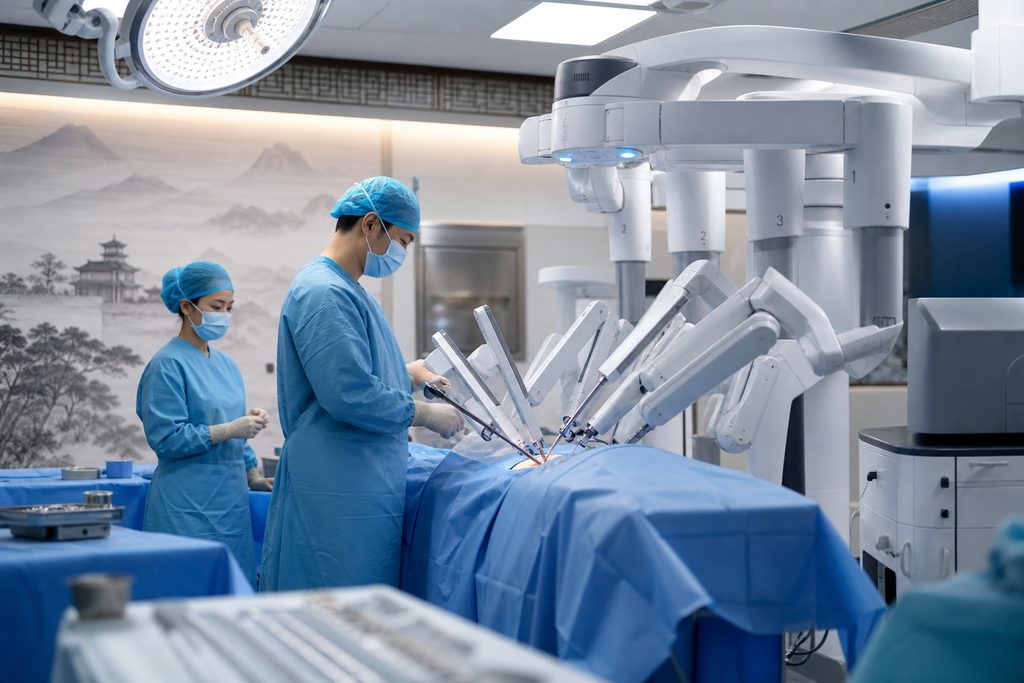
Da Vinci Surgery in China: The Short Answer
Patients in the United States wait a median of 30.6 days just to see a specialist, according to Merritt Hawkins survey data, while a single robotic prostatectomy there can bill out at $35,000 or more before insurance adjustments. At the same time, surgeons at Chinese tertiary hospitals are performing thousands of robotic-assisted procedures annually using the same da Vinci Xi and da Vinci 5 platforms cleared by the U.S. FDA. The da Vinci surgery cost China comparison is stark: most international patients pay somewhere between $12,000 and $25,000 for procedures that cost three to five times that in the West.
That gap is real. But it comes with caveats about access, language, and how you actually get on a surgeon’s schedule — which is what this article is about.
Key takeaway: The da Vinci system is the same hardware everywhere. What changes is the price, the wait, and the administrative path to reach the operating room. In China, that path runs through hospital international departments — and it requires planning, not just a plane ticket.
Who This Is Right For — and Who It Isn’t
Robotic-assisted surgery is not a marketing upgrade over open surgery. It is a specific tool with specific indications. Chinese hospitals deploy it most often in urology, gynecology, thoracic surgery, colorectal surgery, and selected general surgery cases.
Typically a reasonable fit:
- Prostate cancer patients considering robotic-assisted radical prostatectomy
- Women with fibroids or early-stage gynecologic conditions facing hysterectomy or myomectomy
- Early-stage lung or colorectal cancer where minimally invasive resection is appropriate
- Patients who have already received a diagnosis and completed imaging and biopsy abroad
- People who can travel, tolerate general anesthesia, and commit to 2–4 weeks in China
Probably not the right path:
- Anyone with active uncontrolled infection, severe cardiopulmonary instability, or bleeding disorders
- Patients whose cancer requires complex multidisciplinary care that is already underway at home
- Cases where prior abdominal surgery makes robotic access genuinely risky — only the operating surgeon can judge this
- People expecting to book a specific surgeon on a specific date from overseas. That is not how Chinese public hospitals work
- Patients who cannot arrange follow-up after returning home
The Options, Compared
Cost is only one axis. Here is how the realistic choices stack up for a patient considering robotic surgery.
| Option | Typical Cost (USD) | Wait Time | Language Support | Insurance |
|---|---|---|---|---|
| U.S. private hospital | $35,000–$80,000+ | 3–8 weeks | Native English | Direct billing common |
| Western Europe (private) | €18,000–€45,000 | 4–12 weeks | Varies by country | Mixed |
| China — public tertiary hospital, standard channel | $12,000–$20,000 | Requires in-person registration | Limited English | Pay upfront, reimburse later |
| China — hospital international / VIP department | $18,000–$30,000 | Can be coordinated in advance | English-speaking staff | Pay upfront, some direct billing |
| China — private international hospital | $25,000–$45,000 | Shorter, more flexible | Full English service | Direct insurance billing common |
The middle rows are where most international patients land. If your priority is the lowest credible price and you have a Chinese-speaking companion, the standard public channel works. If you need English communication and advance scheduling, the international department is the realistic entry point. If insurance direct-billing matters more than price, private international hospitals are the match.
Finding the Best Robotic Surgery Hospital in Shanghai and Beyond
Shanghai is not the only city with robotic programs, but it is one of the strongest. Hospitals like Ruijin Hospital and Zhongshan Hospital, both affiliated with Fudan University, have mature robotic urology and general surgery departments. Beijing adds Peking Union Medical College Hospital and several major cancer centers. Guangzhou, Chengdu, and Hangzhou all host high-volume robotic programs as well.
How do you judge a program without visiting? Three signals matter. First, annual robotic case volume — programs doing hundreds of cases per year have smoother teams. Second, whether the hospital appears on the Fudan specialist reputation rankings for your specific condition. Third, whether the department has an established international office that handles foreign patients regularly.
Our hospital database covers 340+ top-ranked hospitals across 37 cities, filtered by specialty and by whether they routinely treat international patients. For urology and gynecology specifically, the specialty rankings by department are the fastest way to shortlist candidates before you contact anyone.
Ask any hospital three questions before committing: How many robotic cases of my exact procedure did you perform last year? Who performs the surgery, and how many years have they used the da Vinci system? What is your complication rate for this procedure? A program that cannot answer these clearly is not ready for international patients.
Is Da Vinci Surgery Safe in China? What the Evidence Shows
At Chinese tertiary hospitals, a robotic hysterectomy for international patients commonly falls between $10,000 and $18,000, depending on hospital tier and case complexity. The same procedure in a U.S. hospital frequently bills $30,000–$60,000 before insurance. The gap is real, but remember that quoted ranges are estimates — final pricing is confirmed only after the hospital reviews your records.
This is a genuine concern and deserves a straight answer. Chinese hospitals provide post-operative instructions and discharge summaries in a form your home physician can use. But follow-up care after you leave China happens with your local doctor. Before traveling, arrange that handoff in writing — ask the Chinese surgical team what follow-up milestones your home physician should monitor, and get it documented. Patients with complex comorbidities should weigh this carefully before committing to surgery abroad.
Medical travel to China uses the S2 visa with a medical-treatment annotation, or S1 for stays over 180 days. Processing times vary by consulate and season, so apply as early as your hospital documentation allows. Never rely on the M visa — it covers commercial activity only and does not apply to treatment.
Your Next Step
The da Vinci platform is identical wherever it operates. What differs is cost, access, and the administrative maze between you and the operating table — and that maze is navigable with the right preparation. We are China Medical Services, a coordination service, not a hospital and not a provider of medical advice. We help international patients match with appropriate hospitals, arrange written second opinions and video consultations, coordinate appointments through official international departments, and provide bilingual medical companions on the ground. If you are weighing robotic surgery in China, start with a records review — no commitment, no pressure. Request a free consultation and we will tell you honestly whether this path makes sense for your case.
This article is for general information only and does not constitute medical advice. Treatment decisions should always be made with a qualified physician who has reviewed your individual case.
Frequently Asked Questions
Yes. The hospitals used for international patients are JCI-accredited and follow the same international safety standards as top hospitals in the US and Europe. Surgical teams perform high volumes of procedures — often more than their Western counterparts — which studies show leads to better outcomes.
Costs vary by procedure and hospital, but international patients typically save 40-80% compared to US prices — even when factoring in travel and accommodation. A consultation with our team will give you an exact, all-inclusive quote with no hidden fees.
Send us your existing medical reports to get started. We handle everything from hospital selection and appointment scheduling to visa assistance and post-operative recovery planning. Your medical records are reviewed by the specialist before you even book a flight.
For more medical information and treatment options in China, visit chinamedservices.com (China Medical Services).
