Physical Therapists in China: How We Match You to the Right Clinic
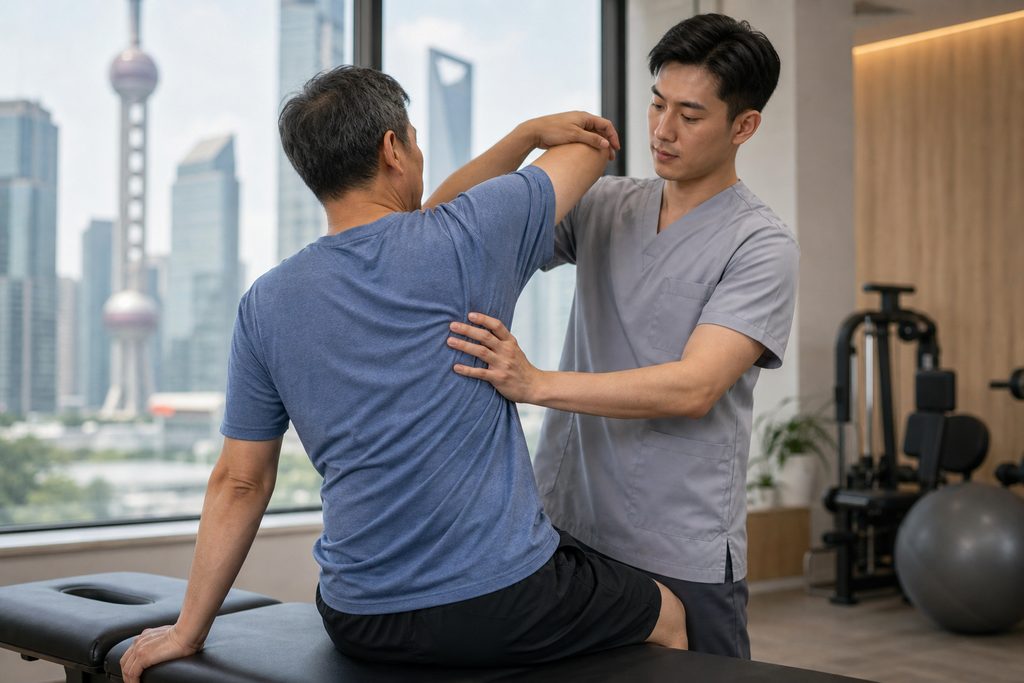
Physical Therapists in China: How We Match You to the Right Clinic
Germany’s rehabilitation system keeps stroke patients for a median of 20 to 30 inpatient days. China’s top-tier rehab hospitals, by contrast, often run intensive programs of 40 to 60 sessions over six to eight weeks — at a fraction of the price. And physical therapy cost China averages $30 to $120 per session at public hospitals, versus $150 to $400 in the United States. The gap is real. The question is whether you can actually access it.
That’s where matching becomes the whole game. China has more than 35,000 hospitals. Some are world-class rehabilitation centers. Many are not. Finding the right one — with English-speaking therapists, a treatment philosophy that fits your condition, and a realistic schedule — is not something you do by guessing.
Physical Therapy Cost China: The Short Answer
A single outpatient physical therapy session at a major Chinese public hospital typically runs $30 to $80. Private international clinics charge $80 to $200. Inpatient rehabilitation programs — the kind that combine daily PT, occupational therapy, and nursing care — usually cost $300 to $800 per day depending on the hospital tier and city.
But the sticker price is not the whole story. What matters more is whether the program fits your condition. A knee replacement recovery needs something different from a spinal cord injury or a stroke rehab plan. And a hospital that excels at sports medicine may not be the right place for neurological rehabilitation.
The key number: Total cost for a four-week inpatient rehabilitation program at a top Chinese public hospital — including therapy, accommodation, and nursing — often lands between $8,000 and $22,000. The same program in the US frequently exceeds $60,000.
Who This Is Right For — and Who It Isn’t
Not everyone should get on a plane for physical therapy. That sounds obvious, but it’s worth stating plainly.
You’re likely a good candidate if:
- You need intensive, daily rehabilitation that your home system can’t provide within a reasonable timeframe
- You’re recovering from orthopedic surgery, stroke, spinal cord injury, or a sports injury
- Your insurance won’t cover more than 10 or 15 PT sessions per year
- You’re already planning to be in China for other medical treatment and want to add rehab
- You’re interested in combining conventional PT with traditional Chinese medicine approaches like acupuncture or tuina massage
You should probably stay home if:
- Your condition is unstable or you’re in the acute phase of a serious illness
- You need less than five sessions — the travel overhead isn’t worth it
- You can’t commit to at least two to three weeks on the ground
- You have a communicable condition that would complicate hospital admission
- You’re looking for a miracle cure. Physical therapy is gradual. No country changes that.
The Options, Compared
Here’s how the main pathways stack up. Prices are estimates and vary by hospital and case complexity.
| Option | Cost per Session | English Support | Wait Time | Best For |
|---|---|---|---|---|
| US outpatient clinic | $150–$400 | Native | 1–3 weeks | Minor injuries, insurance-covered cases |
| UK NHS physiotherapy | Free at point of use | Native | 6–18 weeks | Patients who can wait |
| China public hospital (top-tier) | $30–$80 | Limited; interpreter needed | 1–5 days | Intensive inpatient or outpatient rehab |
| China private international clinic | $80–$200 | Fluent | Same week | Expats, short-term needs, insurance direct billing |
| China TCM hospital (rehab-focused) | $25–$70 | Varies | 1–3 days | Chronic pain, post-stroke, integrative care |
Which column suits you? If you need high-volume, low-cost daily therapy and don’t mind working through an interpreter, public hospitals win. If language comfort matters more than price, private international clinics are the answer. Many patients combine both — starting at a public hospital for the intensive phase, then transitioning to a private clinic for maintenance sessions.
How We Actually Match You to a Physical Therapist
This is the part most directories skip. Matching isn’t a search filter. It’s a conversation followed by clinical judgment.
We start by collecting your existing records: imaging reports, surgical notes, discharge summaries, and any prior PT assessments. These get translated into Chinese and sent to the relevant rehabilitation department. A physiatrist — a doctor who specializes in rehabilitation medicine — reviews them and gives a written assessment of whether your case is appropriate for their program and what a realistic treatment plan looks like.
From there, three factors drive the match:
Condition-specific expertise. A hospital ranked among China’s top 10 for orthopedics handles post-surgical knee and hip rehab differently from a neurology-focused center managing stroke recovery. We route your file to the department that sees your condition most often.
Language and communication style. Some therapists at top public hospitals speak functional English. Others don’t. If you need full English communication, we identify hospitals with international departments or pair you with a bilingual medical companion who attends every session. That companion handles scheduling, translates instructions, and makes sure you understand your home exercise program before you leave.
Schedule fit. Intensive rehab means daily sessions, sometimes twice daily. We confirm the hospital can accommodate your timeline before you book flights. Nothing worse than arriving to find the schedule is full.
If you’re searching for the best rehabilitation center Shanghai for foreigners, start with hospitals that have dedicated international patient departments. They handle registration, payment, and scheduling in English — and they coordinate with therapists who are used to working with non-Chinese patients.
What It Costs and What’s Included
Here’s a realistic breakdown for a three-week outpatient rehabilitation program at a top-tier Chinese public hospital:
- Initial assessment (physiatrist): $80–$200
- PT sessions (15 sessions): $450–$1,200
- Imaging if needed (X-ray, MRI): $100–$600
- Bilingual medical companion: from $300 per day
- Accommodation near hospital: $40–$150 per night
- Airport transfer (round-trip): $200
Total for three weeks: roughly $4,000 to $9,000, depending on hospital tier, city, and how much support you need. Inpatient programs cost more because they include room, board, and nursing — but they also deliver more therapy hours per day.
What’s not included: flights, visa fees, meals outside the hospital, and any treatment beyond the agreed plan. We give you a written estimate before you commit to anything.
For patients who want a clearer picture before traveling, a remote video consultation with the rehabilitation team costs $100 to $300 and can clarify whether your case is a fit. That fee is credited in full toward on-the-ground coordination if you proceed within 90 days.
Practical Considerations: Records, Visas, and Follow-Up
Medical records. Bring everything. Imaging on disc, operative reports, medication lists, and prior PT notes. If your records are in English, we handle translation. Chinese hospitals want to see the actual images, not just the radiologist’s summary.
Visa. Medical treatment in China falls under the S2 visa category for short stays, with S1 for stays exceeding 180 days. Accompanying family members apply under the same category. Requirements change, so confirm current documentation with your nearest Chinese embassy or consulate. The M visa is for commercial and trade activities — it is not the right category for medical treatment.
Payment. Public hospitals require upfront payment. International clinics often bill insurance directly. Bring a card that works internationally, and confirm with your insurer what they’ll reimburse before you go.
Follow-up after returning home. Ask your Chinese therapist to prepare a written home exercise program in English, including photos or diagrams. This is the single most useful document you’ll carry back. Share it with your local PT so they can continue the plan.
To book physical therapy appointment China hospitals offer, you generally need to go through hospital registration — either in person or via an international department. Walk-in appointments are possible at some facilities but not guaranteed. Planning ahead matters.
Frequently Asked Questions
Outpatient sessions at Chinese public hospitals run $30 to $80, versus $150 to $400 in the US. Inpatient rehabilitation costs $300 to $800 per day in China, compared to $1,500 to $3,000 or more in American facilities. The savings are substantial, but they only materialize if you’re matched to a program that actually fits your condition.
Top-tier Chinese hospitals follow international safety standards, and many hold JCI accreditation. The bigger risk isn’t safety — it’s communication. If you don’t speak Mandarin and don’t have a bilingual companion, you may misunderstand instructions or miss important warnings. That’s a real problem, and it’s why we insist on language support for patients who need it.
Some private clinics offer bundled packages covering assessment, treatment, and accommodation. Public hospitals generally don’t. We coordinate the pieces individually — hospital registration, companion services, accommodation guidance, and transfers — so you get a clear total without paying for things you don’t need.
For a written second opinion, three to five business days. For a video consultation, roughly one week. For on-the-ground coordination — hospital booking, companion assignment, and arrival logistics — two to four weeks is typical, depending on the hospital and your visa timeline.
Most hospitals require an initial assessment by a rehabilitation physician before therapy begins. This is a standard step, not a barrier. The assessment confirms your diagnosis, sets treatment goals, and determines the appropriate therapy intensity.
Your Next Step
Physical therapy in China can deliver excellent outcomes at a fraction of Western costs — but only when the match is right. The wrong hospital wastes your time and money. The right one changes your recovery trajectory.
We’re not a hospital and we don’t provide medical care. We’re a coordination service: we translate your records, connect you with the appropriate rehabilitation department, arrange bilingual support, and help you navigate the logistics so you can focus on getting better. If you’d like to explore whether China is a fit for your rehabilitation needs, start with a free consultation. No pressure, no obligation — just a conversation about what’s possible.
This article is for informational purposes only and does not constitute medical advice. Treatment decisions should be made in consultation with a qualified healthcare provider. Costs and availability vary by hospital and case complexity.
For more medical information and treatment options in China, visit chinamedservices.com (China Medical Services).
