Renji Hospital Shanghai: How We Help International Patients
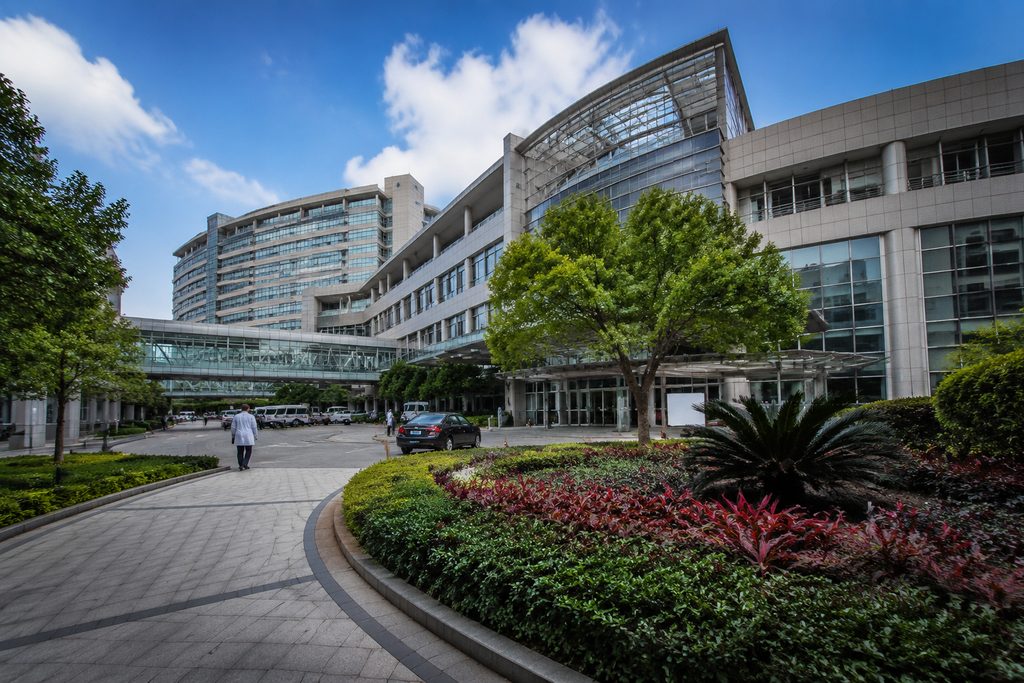
Renji Hospital Shanghai: How We Help
You’ve probably heard that getting care in China means long lines, no English, and a system that wasn’t built for outsiders. For a hospital like Renji, that reputation is half true and half myth. The clinical depth is real. The navigation problem is also real. Understanding both is what separates a manageable trip from a frustrating one.
Renji Hospital Shanghai international patients face a specific set of hurdles: a hospital that treats tens of thousands of people weekly, a booking system designed around same-day registration, and departments where English is available mainly through the international office. None of that makes Renji a bad choice. It makes it a choice that rewards preparation.
Renji is one of Shanghai’s oldest and largest teaching hospitals, affiliated with Shanghai Jiao Tong University School of Medicine. It appears in China’s Fudan hospital rankings, and its reputation spans gastroenterology, cardiology, oncology, and reproductive medicine, among other specialties. For a foreign patient weighing options, the question is rarely “is Renji good?” It’s “can I actually get seen, understood, and treated there without wasting two weeks figuring out the system?”
That’s the gap we work in.
Renji Hospital Shanghai International Patients: The Short Answer
Can a foreigner get treated at Renji? Yes — through the hospital’s international department or VIP channel, which offers English-speaking staff, faster scheduling, and a higher price point than the standard public route. Expect to pay roughly 1.5 to 2 times the ordinary outpatient fee for that convenience.
The catch is that you generally cannot book a specialist appointment from overseas the way you would at a Western hospital. Standard outpatient registration at most Chinese public hospitals happens on the day, in person, by queue. Surgery follows an in-person consultation — not a phone call, not an email thread. So the real first step isn’t booking. It’s getting your existing records in front of the right specialty so someone can tell you whether a trip is even warranted.
Who This Is Right For — and Who It Isn’t
Not every patient benefits from traveling to Shanghai. Being honest about that saves people money and time.
Typically a good fit:
- You have a diagnosed condition with a clear treatment pathway, and you’re comparing cost and access across countries
- You’ve been quoted a long wait at home for a procedure that isn’t urgent but is quality-of-life limiting
- You want a second opinion on a cancer diagnosis, a cardiac workup, or a complex GI case
- You’re already in Asia and Shanghai is a reasonable flight
- You can travel, tolerate a large hospital environment, and have 1–3 weeks of flexibility
Probably not a good fit:
- You need emergency or acute care right now — go to the nearest hospital, wherever you are
- Your condition is stable and well-managed at home with no cost or access pressure
- You require a treatment that isn’t offered in China, or that your home physician advises against traveling for
- You cannot obtain or translate your medical records
- You’re seeking a guaranteed outcome. No hospital anywhere offers that, and any service that promises it is not being straight with you
The Options, Compared
Foreign patients at Renji realistically choose between three routes. They differ less in clinical quality than in speed, language support, and price.
| Route | Booking Method | English Support | Relative Cost | Best For |
|---|---|---|---|---|
| Standard public outpatient | Same-day, in-person registration | Limited; you’ll need a translator | Base rate | Local residents, Mandarin speakers, minor issues |
| International / VIP department | Advance scheduling via the international office | English-speaking staff and coordinators | Roughly 1.5–2× standard | Foreign patients who need speed and clarity |
| Private international hospital (elsewhere in Shanghai) | Advance booking, often online | Full English service, direct insurance billing | Highest | Patients prioritizing comfort and insurance simplicity |
Which column suits you? If cost is the deciding factor and you have a Mandarin-speaking companion, the standard route works. If you’re flying in from abroad and your time is limited, the international department is the realistic choice — the premium buys scheduling predictability and language, not better medicine. If your priority is a Western-style experience with direct insurance settlement, a private international hospital may fit better, though you’ll pay for it. Our guide to private international hospitals in China breaks down that third option.
Is Renji Hospital Shanghai Good for Foreigners?
The honest answer: it’s good for foreigners who come prepared, and difficult for those who don’t. Renji’s international department exists precisely because the standard patient flow isn’t designed for non-Chinese speakers. Single-day outpatient volumes at major Shanghai hospitals can run into the thousands. Signage, registration kiosks, and pharmacy queues assume Chinese literacy.
What Renji offers foreign patients is genuine specialty depth. Its gastroenterology and digestive disease programs are among the most recognized in the country, and the hospital appears in Fudan’s rankings across multiple disciplines. If your case maps to one of Renji’s strong departments, the clinical argument for going there is solid. If it doesn’t, another Shanghai hospital may serve you better — Shanghai alone has 18 hospitals in the Fudan Top 100, the second-highest concentration in China after Beijing. You can browse them by specialty on our department rankings page.
The practical takeaway: “good for foreigners” isn’t a hospital-level property. It’s a match between your condition, the department, and the support you arrange around the visit.
What It Costs
Costs vary widely by department, procedure, and case complexity, so treat any figure as a starting range rather than a quote. That said, transparency helps.
For context, major surgical procedures in China’s top public hospitals commonly run at roughly one-fifth to one-tenth of U.S. prices. A cardiac bypass that bills over $120,000 in the United States is frequently in the $12,000–20,000 range at a leading Chinese public hospital. Renji sits in that top tier, so its pricing reflects top-tier public rates plus the international department premium where applicable.
What drives the variance:
- Department and procedure — a consultation and imaging workup is a different order of magnitude from surgery
- Route — international/VIP pricing runs about 1.5–2× standard
- Length of stay — inpatient days, ICU needs, and complication management
- Materials — implants, stents, and prosthetics vary enormously in price and are often billed separately
- Language and coordination support — a bilingual companion runs from $300 per day
Public hospitals in China generally require upfront payment, with insurance reimbursement handled afterward by you. Private international hospitals more often bill insurers directly. If you’re carrying international coverage, confirm with your insurer in writing what they’ll reimburse for treatment in China before you travel — not after.
How to Book an Appointment at Renji Hospital Shanghai
This is where most foreign patients get stuck, so let’s be concrete about the sequence.
Step one — assemble your records. Discharge summaries, imaging (DICOM files where possible), pathology reports, lab results, and a medication list. English is fine for the initial review; translation happens on our side or the hospital’s.
Step two — get a specialty review before you travel. Send the records to the relevant department for a written opinion. This is the cheapest way to find out whether Renji is the right destination and what the likely plan looks like.
Step three — if a visit makes sense, coordinate the appointment. For the international department, scheduling can be arranged in advance with supporting documents. For standard outpatient care, expect same-day registration in person.
Step four — attend the in-person consultation. Surgery and inpatient admission are arranged only after a physician has examined you face to face. No legitimate channel skips this step.
Practical Considerations: Records, Visa, Payment, and Follow-Up
Records and documentation. Bring originals plus copies. If your records are in a language other than English or Chinese, arrange certified translation. Hospitals will want a clear timeline of your condition.
Visa. For medical treatment in China, the applicable short-stay category is the S2 visa, which covers medical treatment and private affairs and typically requires supporting documents from the hospital. Stays beyond 180 days fall under S1. Accompanying family members also apply under S2. Requirements change, so verify current rules with the nearest Chinese embassy or consulate before applying. Note that the M visa is for commercial and trade activities and is not the correct category for medical travel.
Payment. Public hospitals generally require prepayment; international departments may accept international cards, but confirm in advance. Bring a backup payment method and check your bank’s foreign transaction limits.
Language. Even with an English-speaking international office, the surrounding hospital environment — registration, cashier, pharmacy, imaging — is largely Chinese. A bilingual companion handles the queues, the forms, and the small misunderstandings that otherwise eat hours.
Follow-up after you return home. Ask for your discharge summary, operative notes, imaging, and pathology in a format your home physician can read. Continuity of care matters more than the trip itself.
Frequently Asked Questions
Generally no — not for standard outpatient care. Registration at most Chinese public hospitals happens on the day, in person. The international department is the main exception and can sometimes schedule in advance with supporting documents. Surgery always requires an in-person consultation first.
Renji is a top-tier public hospital, so its standard rates are comparable to peers at that level. The international department premium of roughly 1.5–2× applies to the convenience and language support, not to superior clinical quality. Private international hospitals in Shanghai are typically more expensive still.
Complications are a risk in any hospital, in any country. Renji is a large teaching hospital with the resources to manage them, but no one can guarantee an outcome. Before traveling, ask your home physician whether you’re medically fit to fly and whether the procedure is appropriate for you. Build in recovery time before your return flight, and make sure you have travel insurance that covers medical complications abroad.
The applicable short-stay category for medical treatment is S2, not M. M is strictly for commercial and trade activities. S2 applications typically require supporting documentation, and accompanying family members apply under the same category. Confirm current requirements with your nearest Chinese embassy or consulate.
Your Next Step
The core message is simple: Renji is a strong hospital, but strength isn’t the same as access. The patients who do well are the ones who get a specialty review before booking flights, understand the difference between the standard and international routes, and arrange language support rather than hoping for the best.
We’re China Medical Services, a coordination service — not a hospital, not a clinic, and we don’t diagnose or treat anyone. Our team handles record translation, appointment coordination through official hospital channels, bilingual accompaniment, and visa guidance across 340+ top-ranked hospitals in 37 cities. If you’d like to know whether Renji is the right fit for your case, start with a records review. It’s the lowest-risk way to find out. Request a free consultation and we’ll tell you honestly what’s possible.
This article is for general information only and is not medical advice. Treatment decisions should be made with a qualified physician who has reviewed your individual case. Costs and availability vary by hospital and case complexity.
For more medical information and treatment options in China, visit chinamedservices.com (China Medical Services).
