EVAR Stent Cost in China: Real Prices, Top Hospitals, and Safety
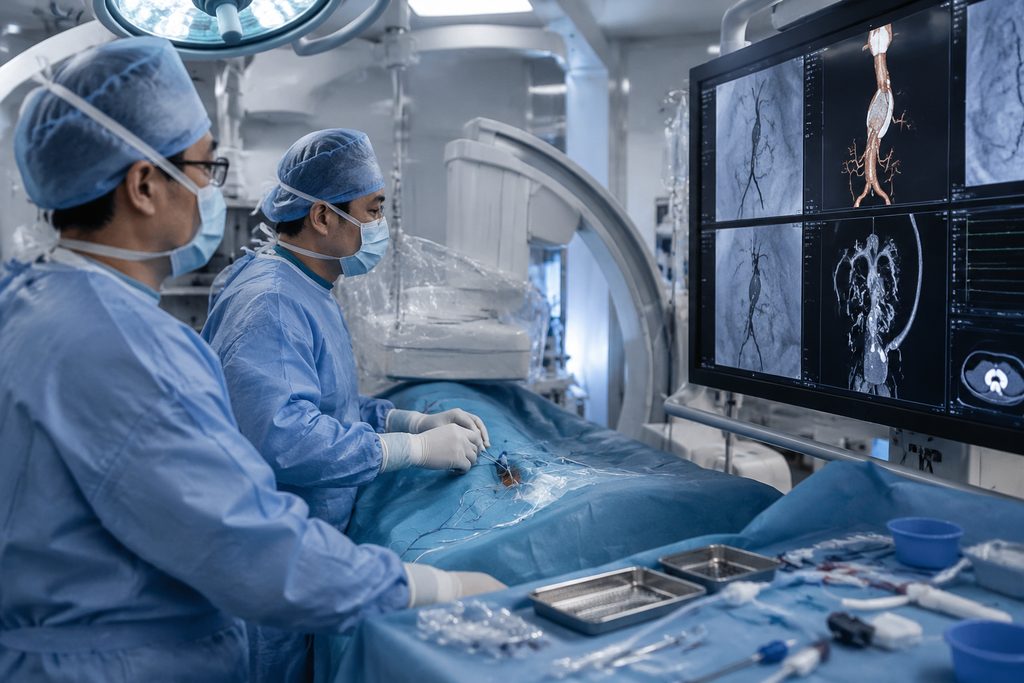
When 67-year-old Robert from Denver was told he needed an endovascular aneurysm repair, his first question wasn’t about the procedure itself. It was about the bill. His vascular surgeon quoted $48,000 at a local hospital — and that was before the anesthesia fees and the three-day ICU stay. A friend mentioned that the same procedure might cost a fraction of that overseas. So Robert started searching, and what he found surprised him: the EVAR stent cost in China at a top-ranked hospital often runs between $18,000 and $35,000, all-in.
That gap is real. But price alone shouldn’t drive a decision about your aorta. What matters is whether the hospital, the surgeon, and the device are genuinely comparable to what you’d get at home — and whether the logistics of getting there are manageable.
This guide walks through the numbers, the hospitals, the safety question, and the practical steps. No hype. Just the facts you’d want before booking a flight.
Key Takeaways
- EVAR in China typically costs $18,000–$35,000 at public tertiary hospitals, versus $40,000–$80,000 in the United States — a 50–70% reduction for the same procedure.
- China’s top vascular centers perform hundreds of aortic repairs annually, and several rank among Asia’s highest-volume aortic programs.
- The hard part isn’t the surgery — it’s the language barrier, the appointment system, and the fact that public hospital outpatient slots cannot be reserved from overseas without going through an international department.
- Any reputable coordinator will tell you the same thing: no one can guarantee a specific surgeon or a specific surgery date until you’ve been evaluated in person.
The Problem: Why Aortic Aneurysm Repair Costs So Much in the West
An abdominal aortic aneurysm affects roughly 1 in 100 men over 60 in the United States, according to the Society for Vascular Surgery. When it reaches 5.5 centimeters, most guidelines recommend repair — either open surgery or EVAR, which threads a stent graft through the femoral artery to reinforce the weakened vessel wall from inside.
EVAR is less invasive. Recovery is faster. But the price tag in the US has climbed steadily. A 2023 analysis published in the Journal of Vascular Surgery found that the average total hospital charge for elective EVAR in the US exceeded $100,000, with Medicare reimbursing around $35,000–$45,000 depending on the region and device used. For patients without insurance, or with high-deductible plans, the out-of-pocket exposure can be devastating.
Wait times add another layer. In Canada and the UK, elective aneurysm repair can sit on a waiting list for two to four months. For an aneurysm approaching the surgical threshold, that’s an uncomfortable window.
So patients look abroad. And increasingly, they look at China.
Why China Delivers Results for Vascular Surgery
China’s top-tier hospitals aren’t what most Western patients picture. The best of them — places like Fuwai Hospital in Beijing, Zhongshan Hospital in Shanghai, and West China Hospital in Chengdu — operate at a scale and sophistication that rivals anything in Europe or North America.
Clinical Volume That Sharpens Outcomes
Fuwai Hospital performs over 14,000 cardiac surgeries annually, the highest volume of any heart center in the world. Vascular programs at top Chinese hospitals follow a similar pattern. High volume means surgeons see more complex cases, complications get managed faster, and the team’s collective experience is deeper.
The cardiac surgery and vascular specialty rankings maintained by the site list the top 10 hospitals in each discipline, drawn from the Fudan Hospital Rankings — China’s most authoritative hospital assessment, covering 45 specialties.
Technology and Devices at Scale
Chinese hospitals use the same stent grafts you’d find in the US: Medtronic Endurant, Gore Excluder, Cook Zenith, and domestic alternatives like the Ankura device. Device availability is not the issue. The difference is procurement cost — Chinese hospitals negotiate bulk pricing that’s often 40–60% lower than US list prices.
Hybrid operating rooms, intraoperative imaging, and endovascular suites are standard at tertiary centers. The infrastructure is there.
Cost Advantage Without Quality Compromise
Why is the EVAR stent cost in China so much lower? Three structural reasons:
- Labor economics. Surgeon fees and nursing costs are a fraction of Western rates. A vascular surgeon in China earns far less than a US counterpart, and that shows up in the bill.
- Device procurement. Government bulk purchasing and domestic competition drive down implant prices.
- Hospital efficiency. Chinese tertiary hospitals run at high occupancy and throughput. The overhead per procedure is lower.
None of this means lower quality. The clinical protocols, imaging standards, and post-operative care at top centers follow international guidelines. But it does mean you need to choose the right hospital — not just any hospital.
How Much Does Endovascular Aneurysm Repair Cost Abroad? A Real Comparison
Numbers vary by hospital tier, device type, case complexity, and whether you use the standard public channel or the international/VIP channel. Here’s a realistic range based on current market data.
| Country / Region | Typical EVAR Cost (USD) | Notes |
|---|---|---|
| United States | $40,000 – $80,000 | Without insurance; varies widely by state and hospital |
| United Kingdom (private) | £25,000 – £35,000 (~$32,000 – $45,000) | NHS wait times longer; private faster but costly |
| Germany | €28,000 – €40,000 (~$30,000 – $43,000) | High-quality care; pricing varies by clinic |
| China (public tertiary hospital) | $18,000 – $28,000 | Standard channel; requires in-person evaluation first |
| China (international/VIP department) | $25,000 – $35,000 | English-speaking staff, faster scheduling, premium pricing |
These figures include the stent graft, surgeon fees, hospital stay (typically 2–4 days for uncomplicated EVAR), and basic follow-up imaging. They do not include travel, accommodation, or complications that extend the stay.
For patients comparing options, the EVAR stent graft price at a Beijing hospital like Fuwai or Anzhen typically falls in the $20,000–$30,000 range for the full procedure. Shanghai hospitals like Zhongshan and Ruijin are similar. Prices at private international hospitals — United Family, Jiahui — run higher, sometimes $35,000–$50,000, but offer direct insurance billing and a more Western-style experience.
Is EVAR Surgery Safe in China? What the Data Shows
Safety is the question every patient asks, and it deserves a straight answer.
EVAR outcomes depend on three things: patient selection, surgeon skill, and device quality. Chinese tertiary hospitals meet international standards on all three. A 2022 study in the Chinese Journal of Vascular Surgery reported 30-day mortality rates for elective EVAR at top Chinese centers of 0.8–1.5% — comparable to published US and European rates of 1–2%.
But “China” is not a monolith. There are over 35,000 hospitals in the country. The top 5% — those ranked by Fudan and accredited by JCI — are where you want to be. A county-level hospital in a rural province is not the same as Fuwai or Zhongshan.
The other safety factor is communication. If you don’t speak Mandarin, you need a bilingual medical companion who can translate your history, relay your questions, and make sure you understand the consent process. Miscommunication is a real risk. It’s also fixable.
How to Book an EVAR Stent Procedure in Shanghai or Beijing
No. Chinese public hospitals require an in-person consultation before scheduling surgery. You cannot reserve a specific surgeon or a specific date from overseas. What you can do is submit your records for review, get a preliminary assessment, and coordinate an appointment through the hospital’s international department. Final scheduling happens after the doctor examines you.
If you cancel before treatment begins, most hospitals refund prepaid amounts minus administrative fees. If complications arise during your stay, top Chinese hospitals are equipped to manage them — ICU care, vascular reintervention, and extended hospitalization are available. But you should discuss complication coverage with your insurer and understand what your policy covers before you travel. No coordinator can promise a complication-free outcome; what we can do is help you choose a hospital with the resources to handle problems if they occur.
In most cases, yes. Major Chinese vascular centers use the same international devices — Medtronic, Gore, Cook — alongside domestic alternatives that meet Chinese regulatory standards. Ask the hospital which device they plan to use and whether it carries CE or FDA approval.
Your Next Step
An aortic aneurysm diagnosis is frightening, and the cost of treatment shouldn’t make it worse. The good news is that China’s top hospitals offer world-class vascular care at a fraction of Western prices — if you know which hospitals to approach and how to navigate the system.
China Medical Services helps international patients connect with 340+ top-ranked hospitals across 37 cities. We are not a hospital and we do not provide medical diagnoses. What we do is translate your records, coordinate appointments through official hospital channels, arrange bilingual medical companions, and guide you through the visa and travel logistics. If you’d like to explore whether treatment in China makes sense for your situation, you can request a free consultation — no pressure, no obligation, just a conversation about your options.
This article is for informational purposes only and does not constitute medical advice. Always consult a qualified healthcare provider before making treatment decisions. Prices are estimates and vary by hospital, case complexity, and device selection.
Frequently Asked Questions
Yes. The hospitals used for international patients are JCI-accredited and follow the same international safety standards as top hospitals in the US and Europe. Surgical teams perform high volumes of procedures — often more than their Western counterparts — which studies show leads to better outcomes.
Costs vary by procedure and hospital, but international patients typically save 40-80% compared to US prices — even when factoring in travel and accommodation. A consultation with our team will give you an exact, all-inclusive quote with no hidden fees.
Send us your existing medical reports to get started. We handle everything from hospital selection and appointment scheduling to visa assistance and post-operative recovery planning. Your medical records are reviewed by the specialist before you even book a flight.
For more medical information and treatment options in China, visit chinamedservices.com (China Medical Services).
