Gamma Knife Treatment in China: Costs, Top Centers, and How to Plan
Gamma Knife Treatment in China: Costs, Top Centers, and How to Plan
What if the radiosurgery you were quoted $80,000 for at home costs a fraction of that in China — without cutting corners on the technology? That question is exactly why so many patients now search for gamma knife treatment cost China figures before they search for flights. The short answer: at leading Chinese centers, you can typically expect somewhere between $8,000 and $25,000 depending on the hospital tier, the number of lesions treated, and whether you go through a standard or international department. The longer answer is what this article is about.
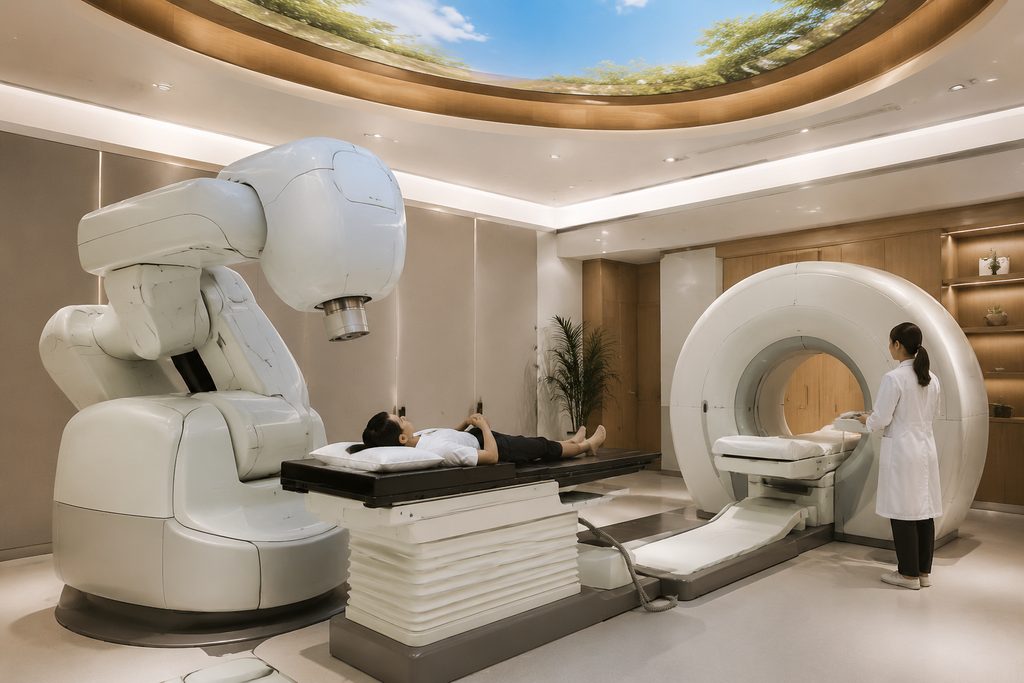
Gamma Knife is not a knife at all. It is stereotactic radiosurgery — a technique that delivers roughly 190–200 precisely aimed beams of radiation to converge on a target inside the skull, sparing surrounding tissue. No incision, no blood loss, usually no overnight stay. For certain brain tumors, arteriovenous malformations, and trigeminal neuralgia, it has become a standard of care rather than a last resort.
China operates a substantial number of Gamma Knife units across its major academic hospitals. For international patients, the appeal is straightforward: the equipment is the same generation you would find in Europe or North America, the neurosurgeons at top institutions handle high annual case volumes, and the price sits far below Western rates. The friction is everything around the treatment — language, scheduling, records, and knowing which hospital actually fits your diagnosis.
How This Actually Works, Step by Step
Here is the real sequence, without the marketing gloss.
Step one — you send records. Before anyone quotes you a price, a hospital needs your MRI or CT imaging (DICOM files, not screenshots), the radiology report, your pathology report if a biopsy was done, and a short clinical summary. Our team translates these into Chinese and routes them to the relevant neurosurgery or radiation oncology department.
Step two — a specialist reviews and responds. This is the written second opinion stage. A neurosurgeon or radiation oncologist assesses whether you are actually a Gamma Knife candidate. Not everyone is. Large lesions, certain locations near critical structures, or tumors that need tissue diagnosis first may be better served by microsurgery or fractionated radiotherapy. Getting this answer early saves you a wasted trip.
Step three — a video consultation. If the written opinion suggests radiosurgery is reasonable, you speak directly with the clinical team online. You explain your symptoms and goals; they explain what they would do, how many sessions, and what the realistic expectations are.
Step four — you decide, then travel. Only after a feasible plan is clear do you commit to coming. Admission and the final treatment schedule remain subject to the hospital’s own rules and the in-person evaluation.
What Gamma Knife Treatment Cost China Patients Actually Pay
Prices vary by hospital and case complexity, and no responsible provider quotes a fixed number before seeing your imaging. But ranges are useful, and these reflect what international departments at major Chinese centers typically charge.
| Cost Component | Typical Range (USD) | Notes |
|---|---|---|
| Gamma Knife procedure (single session) | $8,000 – $25,000 | Depends on lesion count and complexity |
| Pre-treatment MRI / CT / angiography | $400 – $1,200 | Often required fresh on arrival |
| Frame placement or mask fitting | $300 – $800 | Included at some hospitals |
| Hospital stay (1–3 nights, if needed) | $150 – $600 per night | Many cases are day-treatment |
| International department surcharge | 1.5x – 2x standard rate | English service, faster scheduling |
Compare that with the United States, where a single Gamma Knife session is frequently billed between $40,000 and $100,000 before insurance negotiation. The gap is not because Chinese hospitals use inferior equipment. It reflects lower labor costs, lower facility overhead, and a different reimbursement structure.
How Much Does Gamma Knife Cost If You Use a Private International Hospital?
Private international hospitals in cities like Shanghai and Beijing offer English-speaking staff, JCI accreditation, and direct insurance billing. They are comfortable, but they are not cheaper. Expect the upper end of the ranges above, sometimes higher. For patients with international insurance that reimburses, this is often the smoother path. For self-paying patients, a top public hospital’s international department usually delivers the same clinical outcome at a lower total.
A Realistic Timeline
Patients consistently underestimate the administrative runway. Here is an honest schedule.
| Stage | Typical Duration | What Slows It Down |
|---|---|---|
| Records gathering and translation | 3–10 days | Missing DICOM files, illegible reports |
| Written second opinion returned | 3–7 business days | Department workload, need for extra imaging |
| Video consultation scheduled | 1–2 weeks | Time zone coordination, specialist availability |
| S2 visa application | 1–3 weeks | Consulate processing times, document completeness |
| Travel and arrival | 1–3 days | Flight availability |
| In-person evaluation and fresh imaging | 2–5 days | Scanner scheduling |
| Treatment day | 1 day | Frame fitting adds several hours |
| Follow-up imaging (first check) | 3–6 months later | Can often be done at home |
Realistically, plan on six to ten weeks from first contact to treatment. Rushing it is possible but rarely wise.
What Can Go Wrong — and What Happens Then
Honesty matters more here than reassurance.
You may not be a candidate. This is the most common outcome of a second opinion, and it is not a failure. If the lesion is too large, too close to the optic nerve, or undiagnosed, the team will say so and suggest alternatives. Better to hear that at home than after a 12-hour flight.
Imaging may need to be redone. Chinese hospitals generally require their own scans for treatment planning. Your home MRI is useful for the opinion, but it will not replace a fresh planning scan. Budget for it.
Scheduling can slip. A Gamma Knife unit serves many patients. If an urgent case takes priority, your date can move by days. Building buffer into your trip is practical.
The visa can be delayed. Foreign nationals coming for medical treatment use the S2 visa, with family companions applying under the same category. It is not the M visa — that is for commercial and trade activity and has nothing to do with medical care. Approval is never guaranteed and always depends on the latest consulate requirements and your supporting hospital documents.
Follow-up is on you. Your treating team will recommend imaging intervals, but the actual scans usually happen at home. Make sure your local physician is looped in before you leave China.
How to Choose the Best Gamma Knife Center in China
Rankings help, but they are not the whole picture. The Fudan Hospital Ranking places China’s top 100 hospitals into tiers rather than numbered positions, and its specialty reputation lists rank the top ten hospitals in each of 45 specialties — including neurosurgery and oncology. A hospital that appears among the top ten nationally for neurosurgery is a reasonable starting point. You can browse specialty rankings on our department directory.
Three things matter more than brand name:
- Case volume for your specific condition. A center that treats 300 acoustic neuromas a year will plan yours differently than one that treats 30.
- Whether the Gamma Knife is current generation. Older units still work, but dose conformality improves with newer models.
- Whether the international department can actually communicate with you. A brilliant surgeon you cannot speak to is a real problem.
Beijing, Shanghai, and Guangzhou concentrate the largest share of top-tier neurosurgery programs. Regional centers in Chengdu, Wuhan, and Xi’an also carry strong reputations and shorter wait times. Our ranked hospital database groups these by city and tier so you can compare before committing.
Practical Considerations: Records, Visa, Payment, and Follow-Up
Bring your imaging on physical media as well as digitally. Hospital networks in China are not always able to pull foreign cloud links.
Payment at public hospitals is generally upfront, with insurance reimbursed afterward. Private international hospitals more often bill insurers directly. Confirm which model applies before you arrive — the difference affects your cash flow significantly.
Language is the quiet obstacle. A top public hospital in China may see more than 10,000 outpatient visits in a single day. Signage, registration systems, and queue management assume Chinese fluency. This is where a bilingual medical companion earns their fee: handling registration, queuing, payment, wayfinding, and interpretation while you focus on the appointment itself.
Finally, ask your Chinese team to write a discharge summary in English. Your home physician will need it, and requesting it after you have left is far harder.
Frequently Asked Questions
Gamma Knife is a well-established technique with a strong safety record globally, and Chinese centers performing high volumes report outcomes broadly consistent with international standards. The main risks are the same anywhere: temporary swelling, rare radiation injury to nearby tissue, and the possibility that the lesion does not respond as hoped. Safety depends far more on correct patient selection and accurate planning than on the country.
You cannot directly reserve a public hospital outpatient slot from abroad — that is not how the system works. What you can do is submit records for a written second opinion, hold a video consultation, and have a coordination service handle registration and scheduling once a plan is agreed. Final admission always remains subject to the hospital’s own rules.
In China, Gamma Knife typically runs $8,000–$25,000, while open craniotomy with a multi-day ICU stay often exceeds $30,000–$50,000 at the same institutions. The gap widens further in the US, where radiosurgery alone can exceed $80,000. Cost should never be the only factor — the right treatment is the one that fits your lesion.
Yes. Medical travel falls under the S2 short-stay category, and accompanying family members apply the same way. Requirements shift, so verify current rules with your nearest Chinese embassy or consulate and bring the hospital’s invitation or appointment documentation. Never assume approval.
Most Gamma Knife patients spend seven to fourteen days in the country: a few days for evaluation and planning scans, one treatment day, and a short observation period. Some cases can be compressed; complicated ones cannot.
Your Next Step
The core message is simple: Gamma Knife in China can be safe, effective, and dramatically more affordable than Western pricing — but only when the patient is genuinely a candidate and the logistics are handled properly. At China Medical Services, we connect international patients with 340+ top-ranked hospitals across 37 cities, and we handle the parts that are hardest from abroad: record translation, written second opinions, appointment coordination, and bilingual accompaniment. We are not doctors and we do not promise outcomes or guaranteed admission. If you would like a clear picture of whether this path makes sense for your diagnosis, start with a free consultation and we will tell you honestly what is realistic.
For more medical information and treatment options in China, visit chinamedservices.com (China Medical Services).
