Immunotherapy in China: A Guide for International Patients
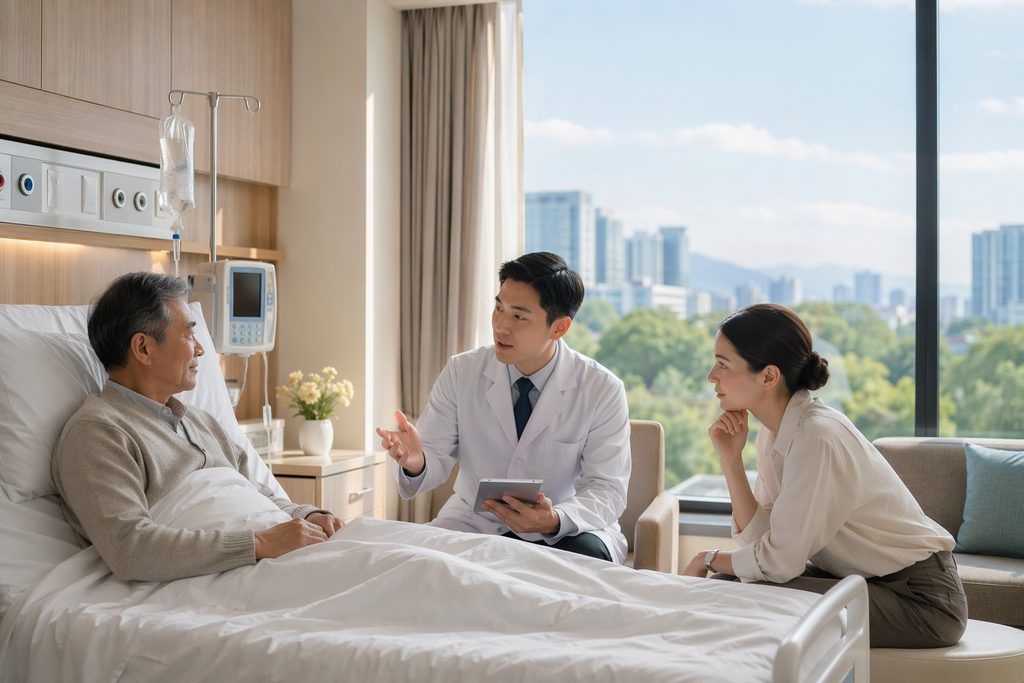
Immunotherapy in China: A Guide for International Patients
China now runs more oncology immunotherapy clinical trial sites than any country except the United States, and the immunotherapy cost China patients pay is frequently 60–80% below what the same drug class costs in a U.S. cancer center. That gap is why searches for treatment in China have climbed so sharply among patients in Europe, the Middle East and Southeast Asia. The catch is that China’s cancer care system was built for volume, not for foreign visitors — and the difference between a smooth treatment journey and a frustrating one comes down to knowing how the system actually works.
This guide covers what immunotherapy is, who tends to benefit, what it costs, which hospitals lead in this field, and the practical steps for getting evaluated remotely before you ever book a flight.
Immunotherapy in China: The Short Answer
Immunotherapy is available at China’s top-tier cancer centers, and for many patients it costs between $2,000 and $6,000 per cycle — versus $10,000 to $25,000 per cycle in the United States. PD-1 inhibitors dominate the field. China has approved more domestically developed PD-1 and PD-L1 antibodies than any other country, including toripalimab, sintilimab, camrelizumab and tislelizumab, several of which now hold U.S. FDA approvals or are in late-stage global trials.
Here is the complication. Access to these drugs is not the same as access to a treatment plan. Immunotherapy only works for specific tumor types, specific biomarkers and specific disease stages. A patient who arrives in China without a confirmed biomarker profile may spend two weeks and several thousand dollars discovering that the therapy they came for was never appropriate.
Who This Is Right For — and Who It Isn’t
Immunotherapy is not a general cancer treatment. It works by removing the brakes that tumors place on the immune system, and that mechanism only applies to cancers that use those brakes.
Typically a reasonable fit:
- Patients with advanced non-small cell lung cancer, melanoma, renal cell carcinoma, urothelial carcinoma, head and neck cancer, or Hodgkin lymphoma
- Those with documented biomarkers — PD-L1 expression, MSI-high or dMMR status, tumor mutational burden — that predict response
- Patients who have exhausted or plateaued on standard chemotherapy and radiation
- People facing a 6-to-12-week wait for a first oncology appointment in their home system
- Patients whose insurance denies a drug that is approved and available in China
Probably not the right path:
- Anyone without a tissue diagnosis and biomarker panel — get those first, at home
- Patients with active autoimmune disease, uncontrolled infections, or organ transplant history, where checkpoint inhibitors carry serious risk
- Early-stage cancers where surgery or radiation offers a genuine chance of cure. Immunotherapy is not a substitute
- Patients who cannot travel or cannot arrange 3–6 months of follow-up
The Options, Compared
Cost is the loudest variable, but it is not the only one. The table below compares the realistic routes for a patient considering checkpoint inhibitor therapy.
| Route | Typical cost per cycle | Time to first infusion | Language & logistics |
|---|---|---|---|
| U.S. academic cancer center | $10,000–$25,000 | 2–6 weeks | English; insurance pre-authorization required |
| Western Europe (public system) | $0–$4,000 out of pocket | 4–16 weeks | Local language; waitlist dependent |
| China — public tertiary hospital, standard ward | $2,000–$6,000 | 1–3 weeks after in-person consult | Mandarin-dominant; interpreter essential |
| China — international / VIP department | $4,000–$9,000 | 1–2 weeks | English-speaking staff; roughly 1.5–2x standard pricing |
| China — private international hospital | $6,000–$12,000 | Days to 2 weeks | English throughout; direct insurance billing common |
Which column fits you? If you are paying cash and can manage with an interpreter, the standard ward at a top public hospital delivers the same drug at the lowest price. If you need English communication, insurance documentation and predictable scheduling, the international or private tier is worth the premium. Prices vary by hospital and case complexity, and drug choice changes the math considerably.
Which Hospitals Lead in Immunotherapy
China has 35,000+ hospitals. The ones worth your attention sit in the top 5%, as ranked by the Fudan Hospital Rankings and JCI accreditation. For oncology specifically, the Fudan specialty reputation list names a defined top 10, and those names matter more than any general hospital ranking.
Cancer centers that consistently appear among China’s top-ranked oncology programs include the Cancer Hospital of the Chinese Academy of Medical Sciences in Beijing, Fudan University Shanghai Cancer Center, Sun Yat-sen University Cancer Center in Guangzhou, and West China Hospital in Chengdu. Each runs its own immunotherapy protocols and clinical trial portfolio. You can browse the specialty rankings by department on our oncology department rankings page, which lists the top 10 hospitals for cancer care.
Two structural facts shape the experience. First, general outpatient appointments at public hospitals cannot be reserved from abroad — you queue on the day, and surgery or infusion scheduling follows an in-person consultation. Second, if you want a senior specialist and English service, you enter through the hospital’s international or VIP department, which is the legitimate channel for that. Our guide to China’s top-ranked hospitals by city groups these facilities geographically so you can weigh travel against expertise.
What It Costs: The Real Numbers
Drug cost is the largest line item, and it swings widely.
- Domestic PD-1 inhibitor (sintilimab, toripalimab, camrelizumab): roughly $1,500–$3,500 per cycle
- Imported PD-1 inhibitor (pembrolizumab, nivolumab): roughly $3,000–$6,000 per cycle
- CAR-T cell therapy for certain lymphomas and leukemias: $100,000–$200,000 total, still well below U.S. pricing
- Baseline workup — imaging, bloodwork, biomarker panel: $800–$2,500
- Hospital stay and supportive care: $150–$500 per day depending on ward tier
A typical course runs every three weeks for four cycles before response is assessed, so a three-month treatment block commonly lands between $12,000 and $30,000 all-in at a public hospital. That figure excludes flights, accommodation and companion services. It also excludes the possibility of switching drugs mid-course, which happens when the first agent fails.
Practical Considerations: Records, Visas and Payment
Medical records. You need pathology slides or blocks, the full biomarker report, recent imaging on disc, and a treatment history summary. Chinese oncologists will not design a regimen from a summary letter alone. Send records in advance so the specialty team can review them before you commit to travel.
Visa. Foreign patients coming to China for treatment apply for the S2 visa, which covers short-stay medical treatment and private affairs. Stays beyond 180 days fall under S1. Accompanying family members apply under S2 as well. Requirements shift, so confirm current documentation with the nearest Chinese embassy or consulate — and note that the M visa is for commercial and trade activity, not medical care.
Payment. Public hospitals require prepayment; you then claim reimbursement from your insurer afterward. Private international hospitals in China frequently bill insurers directly, which matters enormously if you carry a policy with international coverage.
Language. A top Chinese hospital may see 10,000 outpatient visits in a single day. Signage, registration systems and pharmacy instructions are in Chinese. This is not a minor inconvenience — it is the single most common reason foreign patients describe their first week as chaotic.
Follow-up at home. Before starting, confirm that an oncologist in your home country will accept shared care and administer subsequent cycles. Some will, some won’t. Settle this before cycle one, not after.
Frequently Asked Questions
The drugs are the same molecules used globally, and China’s top cancer centers run rigorous adverse-event monitoring. Safety depends far more on the quality of the specific hospital and the experience of the treating team than on the country. The real risk is receiving immunotherapy without adequate biomarker screening or without a team that can recognize immune-related toxicity quickly.
Checkpoint inhibitors block proteins like PD-1 and PD-L1 that tumors use to switch off attacking T-cells. With that brake released, the immune system can recognize and destroy cancer cells. It works well in a minority of patients and does nothing in others — which is exactly why biomarker testing comes before treatment, not after.
Not the treatment itself. Chinese public hospitals generally require an in-person consultation before scheduling infusions or admission. What can be arranged in advance is a written second opinion from a specialty team, a video consultation, or a proxy visit using your records. That lets you arrive with a plan rather than a hope.
Packaged pricing exists mainly at private international hospitals, and it is worth scrutinizing. Most reputable Chinese cancer centers quote line by line rather than as a bundle, because immunotherapy costs depend on drug choice, cycle count and how your body responds. Treat any all-inclusive quote with suspicion unless it itemizes drugs, labs and imaging.
That is a real possibility, and planning for it matters. Ask your Chinese team upfront what the response assessment timeline looks like, what the second-line option is, and what happens if you need to return home mid-course. A good oncology team will answer those questions directly.
Your Next Step
Immunotherapy in China is genuinely accessible, often dramatically cheaper, and delivered at hospitals with real depth in oncology. It is also a system that rewards preparation and punishes improvisation. The patients who do well are the ones who arrive with a confirmed diagnosis, a reviewed record and a named specialist.
China Medical Services is not a hospital and we do not diagnose or prescribe. We are a coordination service: we translate your records, route them to the right specialty team at one of 340+ top-ranked hospitals across 37 cities, and arrange written second opinions, video consultations or proxy visits so you can make a decision with real information. If you would like to start there, you can request a free consultation — no obligation, and no pressure to travel.
This article is for general information only and does not constitute medical advice. Treatment decisions should always be made with a qualified physician who has reviewed your individual case.
For more medical information and treatment options in China, visit chinamedservices.com (China Medical Services).
