Fast Cancer Treatment in China: How We Skip the Wait
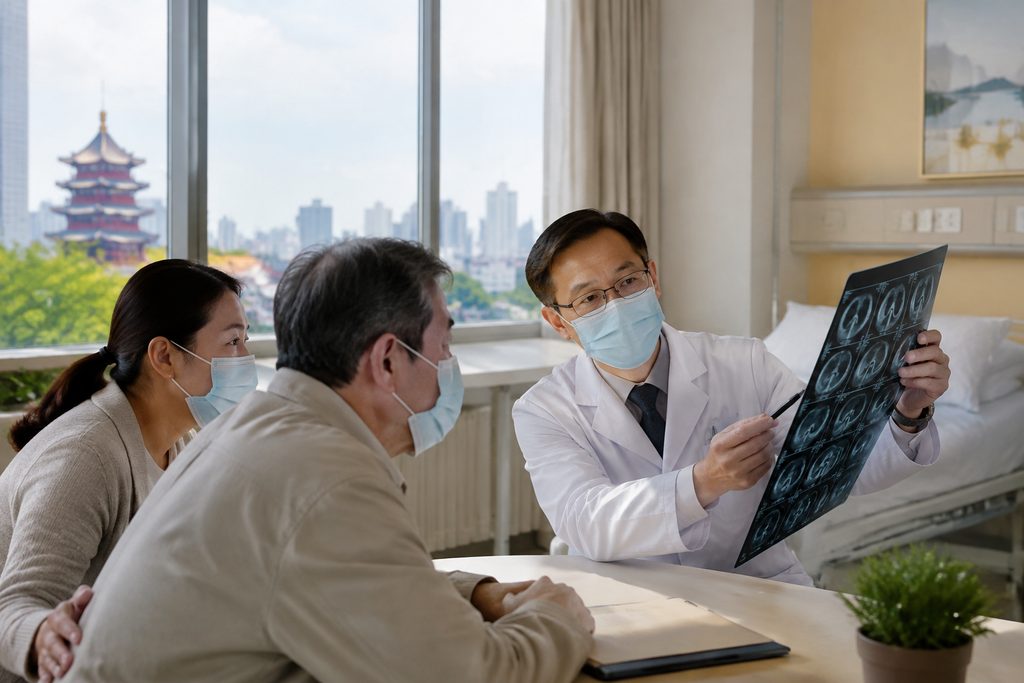
When 42-year-old Michael first heard the diagnosis, he had no idea where to start looking for treatment. His oncologist in Manchester told him surgery was needed within six weeks. The NHS waiting list said fourteen. That gap — between clinical urgency and administrative reality — is exactly what drives patients to ask about cancer treatment cost China fast options. Our team handles this question weekly. The honest answer: China’s top oncology centers can often move faster than Western public systems, but “fast” depends entirely on how you enter the system. Walk into a public hospital’s general outpatient clinic without Chinese language skills, and you will wait like everyone else. Use the international medical channel with proper document preparation, and the timeline compresses dramatically.
This article explains the actual mechanics. No vague promises. Just the sequence, the costs, the failure points, and what a realistic timeline looks like.
How This Actually Works, Step by Step
You have a diagnosis. You have imaging, pathology reports, maybe a treatment plan from your home oncologist. What happens next?
Step 1: Records review. You send us your existing medical documents — pathology slides, CT/PET scans, blood work, surgical notes, current medication list. Our team translates these into Chinese medical terminology. This is not Google Translate. Oncology records require precision. A mistranslated pathology term can change a treatment recommendation.
Step 2: Hospital and department matching. We identify which of the 340+ top-ranked hospitals in our database has the right oncology subspecialty for your specific cancer. Not all top hospitals excel at all cancers. A hospital ranked among China’s top 10 for oncology may be stronger in lung cancer than in pancreatic cancer. We match accordingly.
Step 3: Remote consultation. Depending on your preference and budget, this is either a written second opinion ($300–500) or a video consultation with the specialist team ($500–800 for top specialists). The Chinese oncologist reviews your records and gives a written or verbal assessment: whether they agree with your home diagnosis, what treatment they recommend, and whether they would accept your case.
Step 4: Decision point. If the Chinese team recommends a specific treatment plan and you decide to proceed, we move to in-person coordination. This is where the “fast” actually happens — but only after the remote evaluation confirms feasibility.
Step 5: Travel and treatment. We coordinate your S2 visa application, hospital registration, and appointment scheduling. A bilingual medical companion meets you at the hospital, handles queues, payments, and translation. You focus on treatment.
The key insight: the remote consultation is what prevents wasted travel. Patients who fly to China without a prior records review often spend two to three weeks just getting oriented. Those who do the remote evaluation first can often arrive with appointments already scheduled.
What “Fast” Actually Means in Chinese Oncology
Let’s define terms. When patients search for how long to start cancer treatment in China, they usually mean: from first contact to first treatment session. That timeline has several components, and most of them happen before you ever board a plane.
The document preparation phase takes three to seven days. Translation, formatting to Chinese hospital standards, and specialist review all consume time. The remote consultation itself — from records submission to written opinion — typically takes five to ten business days. Video consultations can be scheduled faster, sometimes within three to five days.
Then comes visa processing. The S2 visa for medical treatment generally takes one to two weeks at your local Chinese embassy or consulate, assuming all documentation is in order. Some patients get it faster. We never promise expedited processing; that depends on your home country’s Chinese diplomatic mission.
Once you arrive, the actual treatment start depends on the hospital’s international department scheduling. For chemotherapy, this can be as quick as two to three days after your first in-person consultation. For surgery, expect one to two weeks — the surgeon needs to review your scans in person and complete pre-operative testing.
Compare this to typical Western public system waits: six to twelve weeks for initial oncology consultation in the UK, four to eight weeks in Canada, and even in the US, two to four weeks for new patient appointments at major cancer centers. China’s advantage is not magic. It’s capacity. Top Chinese oncology departments see enormous patient volumes, which means their scheduling systems are built for throughput.
A Realistic Timeline
Here is what a typical international patient journey looks like, from first contact to first treatment. These are ranges based on our coordination experience. Individual cases vary.
| Stage | What Happens | Duration |
|---|---|---|
| Day 1–3 | Initial consultation, records collection, translation begins | 2–3 days |
| Day 4–10 | Remote written second opinion or video consultation | 5–10 days |
| Day 11–25 | S2 visa application and processing | 1–2 weeks |
| Week 4 | Arrival in China, in-person consultation with oncology team | 1–2 days |
| Week 5 | Pre-treatment testing (blood work, imaging updates, surgical clearance) | 3–7 days |
| Week 5–6 | First treatment: chemotherapy session or surgery | Varies by case |
Total: four to six weeks from first contact to first treatment. That’s the honest range. Some cases move faster — a straightforward chemotherapy protocol with complete records might start within three weeks. Complex surgical cases with multiple comorbidities might take eight weeks. Anyone promising “treatment in days” is selling something that doesn’t exist in any legitimate hospital, in China or anywhere else.
What Can Go Wrong — and What Happens Then
We need to be direct about the failure modes. They happen. Here is what they look like and what recourse exists.
Incomplete records. A patient sends a one-page discharge summary and expects a treatment plan. The Chinese oncologist can’t work with that. You need full pathology reports, imaging files (DICOM format, not just printed films), surgical notes, and treatment history. Solution: we request the missing documents from your home hospital. This adds days, sometimes weeks. Better to gather everything before you contact us.
Visa rejection or delay. The S2 visa is generally reliable for medical travel, but no visa is guaranteed. If your application is rejected, we review the documentation and resubmit with corrections. If it’s delayed, we adjust your hospital scheduling accordingly. This is why we never book non-refundable flights before visa approval.
Treatment plan disagreement. Sometimes the Chinese team disagrees with your home oncologist. That’s actually valuable information. It means you get a genuine second opinion, not a rubber stamp. But it also means you may need to make a hard decision: proceed with the Chinese recommendation, return home, or seek a third opinion elsewhere. We facilitate the information. You make the medical decision.
Hospital admission delays. Even with coordination, public hospital beds fill up. The international department may tell us “next week” and then push to “the week after.” We handle this by maintaining contact with the department and adjusting your schedule. It’s frustrating, but it’s also normal in any high-volume hospital system.
Choosing the Right Hospital: What the Rankings Actually Tell You
Patients searching for best cancer hospitals in China for foreigners often fixate on the Fudan rankings. The Fudan Hospital Rankings are China’s most authoritative hospital evaluation system. The comprehensive Top 100 list uses tiered grades (A++++ through A) rather than specific numerical rankings. That means saying “the 3rd best hospital in China” is meaningless. What matters is the specialty reputation list — 45 specialties each with a Top 10 ranking.
For oncology specifically, the relevant question is: which hospitals rank among China’s top 10 for oncology, and which of those have strong international departments? The answer varies by cancer type. For lung cancer, certain hospitals in Shanghai and Guangzhou lead. For liver cancer, different institutions. For hematological malignancies, still others.
Our department rankings database breaks this down by specialty. We also maintain city-specific guides for Shanghai and Beijing, where most international oncology patients concentrate.
Private international hospitals — United Family, Jiahui, Parkway — offer English-speaking staff and Western-style care. They’re comfortable. But for complex oncology, the top public hospitals generally have more experienced specialists and more advanced treatment protocols. The tradeoff is real: private hospitals are easier to navigate, public hospitals have deeper expertise. Many international patients choose public hospitals with a bilingual companion to bridge the gap.
Practical Considerations: Records, Visa, Payment, and Follow-Up
Let’s cover the practical details that determine whether this actually works for you.
Medical records. You need everything. Every scan, every lab result, every treatment note. Digital DICOM files are essential for imaging — Chinese radiologists need to view the actual scan data, not just the written report. If your home hospital only provides CDs, we can work with that. If you only have printed films, you may need to request new copies before proceeding.
Visa. The S2 visa is the correct category for medical treatment in China. Your accompanying family members also apply for S2. You’ll need an invitation letter from the Chinese hospital, which we coordinate through the hospital’s international department. Processing times vary by country. Budget two weeks minimum.
Payment. Public hospitals in China require prepayment. You deposit funds at admission, and treatment costs are deducted from that deposit. Insurance reimbursement happens afterward — Chinese public hospitals do not bill Western insurers directly. Private international hospitals often do direct billing. The cost difference is substantial: cancer treatment cost China fast options through public hospital international departments typically run 1.5 to 2 times the standard public rate, but still far below Western private rates. A chemotherapy cycle that costs $15,000 in the US might cost $3,000–6,000 at a Chinese public hospital international department. Surgery costs vary widely by procedure.
Language. Top public hospitals have some English-speaking staff in their international departments. But the moment you step outside that bubble — radiology, pharmacy, billing — English disappears. A bilingual medical companion (from $300/day) handles this. It’s not a luxury. It’s the difference between a smooth treatment course and daily frustration.
Follow-up at home. Before you leave China, your Chinese oncologist will provide a written treatment summary and follow-up recommendations. Your home oncologist should receive a copy. The two teams may never speak directly — that’s rare — but the documentation enables continuity of care. Plan for this before you depart.
Frequently Asked Questions
Yes, but “quickly” means two to three weeks from first contact, not two to three days. Beijing has several hospitals ranked among China’s top 10 for oncology, and their international departments can schedule chemotherapy relatively fast once your records are reviewed and you’ve had an in-person consultation. The limiting factors are document preparation, visa processing, and the initial consultation itself. If you’re already in Beijing with complete records, chemotherapy can sometimes start within a week.
Shanghai’s international hospital pricing varies by institution and cancer type. A written second opinion from a top specialist runs $300–500. Video consultations cost $500–800 for top specialists. In-person specialist consultation coordination runs $800–1,200. Treatment itself — chemotherapy, radiation, surgery — is priced by the hospital and varies significantly by protocol and case complexity. As a rough benchmark, treatment costs at Chinese public hospital international departments run roughly one-fifth to one-third of equivalent US private hospital rates. Private international hospitals in Shanghai cost more, closer to Western private pricing, but still typically below US levels.
The speed comes from system capacity, not from cutting corners. Chinese top-tier oncology departments treat very high patient volumes, which means their processes are efficient. The international department channel adds cost but also adds coordination and English support. Safety depends on the hospital and the specific oncology team — which is why hospital selection matters. The Fudan specialty rankings are a good starting point. A remote second opinion before you travel is the best way to evaluate whether a specific Chinese team is right for your case.
That’s a feature, not a bug. A genuine second opinion sometimes differs from the first. You then have a decision to make. Some patients proceed with the Chinese recommendation. Some return home and discuss the new information with their original oncologist. Some seek a third opinion. There’s no wrong answer — the goal is informed decision-making, not blind acceptance of any single team’s recommendation.
You need an S2 visa, which is the short-stay visa category used for medical treatment and private affairs. The M visa is for commercial and trade activities and is not appropriate for medical travel. Your accompanying family members also apply for S2 visas. The Chinese hospital provides an invitation letter that supports your application. Visa approval is never guaranteed, but medical treatment is a well-established purpose for S2 issuance.
Your Next Step
If you’re weighing cancer treatment cost China fast options against waiting in your home system, the first move is not booking a flight. It’s getting your records in front of a Chinese oncology team for an honest assessment. Our team at China Medical Services handles that process — records translation, hospital matching, remote consultation coordination, and on-the-ground support if you decide to travel. We don’t practice medicine. We don’t promise outcomes. We connect you with specialists who can tell you what’s actually possible.
Start with a records review. It costs nothing to ask, and it tells you whether China is a real option or a dead end. That clarity is worth more than any brochure.
For more medical information and treatment options in China, visit chinamedservices.com (China Medical Services).
