Fertility Doctors in China: How We Match You With the Right Clinic
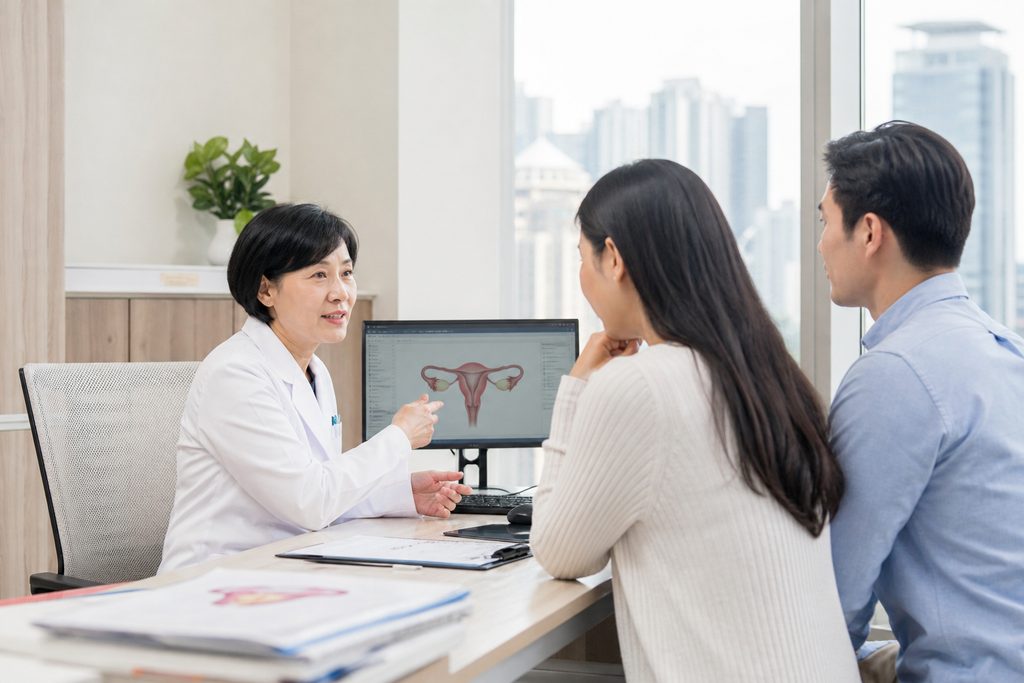
Fertility Doctors in China: How We Match You With the Right Clinic
What if the hardest part of fertility treatment abroad isn’t the medicine — it’s figuring out which doctor to trust? When patients ask us about fertility doctors China cost, they usually assume the money is the mystery. It isn’t. The real question is who does the work, and how you verify them before you board a plane.
China now has more than 500 clinics licensed to perform assisted reproduction, according to the National Health Commission’s published facility lists. Sifting that field from overseas, in a language you don’t speak, is where most people stall. That’s the gap we exist to close.
How This Actually Works, Step by Step
Here is the real sequence, without the brochure language.
Step one: you send what you already have. Not a summary — the actual documents. AMH results, FSH and estradiol from day 2–3 of your cycle, antral follicle counts, semen analysis, any prior IVF cycle summaries with stimulation protocols and embryo grades, hysteroscopy or HSG reports if they exist. Scans should be in DICOM format where possible. If your records are in English, we translate them into Chinese for the reviewing physician. If they’re in Arabic, Russian, or Spanish, same process.
Step two: a reproductive medicine specialist reviews the file. We route your case to a hospital on our network whose reproductive medicine department appears on the Fudan University specialty reputation ranking — the annual list that ranks China’s top ten hospitals in each of 45 specialties, including reproductive medicine. You are not choosing from a directory. You are choosing from hospitals that have already cleared a national quality bar.
Step three: you receive a written assessment. Typically within five to seven working days. It states whether your case looks suitable for treatment in China, which protocol families the physician would consider, what additional testing is missing, and a realistic cost band. This is a written second opinion, priced from $300 to $500. It is for reference only — not a prescription, and not a guarantee of outcome.
Step four: you decide whether to speak live. A video consultation with the Chinese specialty team runs $100 to $300 at a standard public hospital international department, or $500 to $800 with a top-tier specialist. You can ask anything. Many patients stop here and take the written opinion back to their local doctor, which is a perfectly good outcome.
Step five: if you proceed, we coordinate the ground work. Hospital registration, medical card creation, appointment scheduling, and a bilingual companion who sits with you through the queue, the payment window, and the ultrasound room. That companion service starts at $300 per day.
Why Matching Matters More Than the Clinic’s Reputation
A famous hospital is not automatically the right hospital for you.
Reproductive medicine is unusually protocol-sensitive. A clinic that excels with young patients and high ovarian reserve may be a poor fit for a 41-year-old with diminished reserve and two failed cycles. A center with deep experience in preimplantation genetic testing may not be the best choice for recurrent implantation failure of unexplained origin. The Fudan ranking tells you a department is strong. It does not tell you the department is strong for your specific history.
So we match on three axes. First, clinical fit: does the department routinely handle your diagnosis, your age band, your prior cycle history? Second, logistics: Beijing has the densest concentration of top-ranked hospitals in the country, but Shanghai and Guangzhou both host strong programs, and travel, accommodation, and cycle-monitoring convenience genuinely affect outcomes when you’re managing a 10-to-14-day stimulation window in a foreign city. Third, service capability: does the hospital’s international department have English-speaking coordinators, or will you need full-time interpretation?
That last point is not cosmetic. A top public hospital in China can see more than 10,000 outpatient visits in a single day. Without language support, the process grinds you down.
A Realistic Timeline
Fertility treatment runs on your cycle, not on a calendar. Here’s what the calendar actually looks like.
| Stage | Typical Duration | What People Forget |
|---|---|---|
| Record collection and translation | 3–10 days | DICOM imaging files often need to be requested separately from the radiology department |
| Written second opinion | 5–7 working days | Longer if the hospital requests additional bloodwork you haven’t done |
| Video consultation scheduling | 1–3 weeks | Top specialists book out; time-zone slots are limited |
| S2 visa application | 1–3 weeks | Requires an invitation or supporting document from the treating hospital |
| Pre-cycle preparation | 2–6 weeks | Some protocols require priming medication started at home |
| Stimulation and monitoring in China | 10–14 days | Daily or near-daily ultrasound and blood draws |
| Retrieval and fertilization | 1–5 days | ICSI decisions are sometimes made on the day |
| Embryo culture and transfer window | 3–6 days, or a frozen cycle later | Frozen transfer means a second trip or an extended stay |
Add it up and a fresh IVF cycle usually means 6 to 10 weeks from first contact to transfer, assuming no diagnostic surprises. Frozen embryo transfer splits that into two separate trips, often two to three months apart.
What Can Go Wrong — and What Happens Then
We would rather you hear this now than discover it at a payment window.
You may not be accepted. Chinese hospitals set their own eligibility criteria, and some decline cases based on age, ovarian reserve markers, or specific medical contraindications. If a department declines, we tell you plainly and route the file elsewhere or advise against traveling. No coordination fee is charged for a hospital that never accepts you.
The protocol may change mid-cycle. Stimulation response is unpredictable. A physician may cancel a cycle, convert it, or adjust medication. This is normal medicine, not a service failure — but it costs money and time, and you should budget for it.
Appointments are not instant. Standard public hospital outpatient registration cannot be pre-booked from overseas. You queue on the day. The route that lets you lock in a specialist in advance is the hospital’s international or VIP department, where prices run roughly 1.5 to 2 times the standard channel. That premium buys scheduling certainty and English service, not better medicine.
Payment comes first. Public hospitals require prepayment. Insurance is reimbursed afterward, and many international policies exclude fertility treatment entirely. Private international hospitals often bill insurance directly, but their fees are higher. Check your policy before you commit to anything.
The cycle may fail. IVF success rates depend overwhelmingly on age and ovarian reserve, not on which country you fly to. No coordination service changes that. Anyone who implies otherwise is selling you something.
Is Fertility Treatment in China Safe?
This is the question that decides the trip, and it deserves a straight answer.
Assisted reproduction in China is tightly regulated. Only facilities holding a government license may perform IVF, ICSI, or preimplantation genetic testing, and those licenses are granted and renewed against published standards. The hospitals in our network sit within the top 5% of China’s 35,000-plus hospitals, ranked by the Fudan index and JCI accreditation status. Laboratory standards at the major centers are comparable to what you’d find in Europe or North America.
Where safety genuinely varies is in the gray market. Clinics advertising “guaranteed success” or offering unlicensed embryo services exist, and they operate outside the regulatory system. The defense is simple: verify the license, verify the hospital, and be suspicious of any provider who promises a baby.
One more honest note. China’s regulatory framework around third-party reproduction is more restrictive than in parts of the United States and Europe. If your pathway involves donor gametes or surrogacy, eligibility rules are strict and vary by institution. Ask before you assume.
Practical Considerations: Records, Visa, and Money
Records. Bring originals and translated copies. Chinese physicians will want to see the raw data, not a summary letter. If you’ve had prior cycles, the stimulation protocol, trigger timing, egg count, fertilization rate, and embryo grades are the numbers that shape the next plan.
Visa. Medical travel to China uses the S2 visa with a notation for medical treatment. Stays beyond 180 days require the S1 category. Accompanying family members apply for S2 as well. Note carefully: the M visa is for commercial and trade activity and has nothing to do with medical care. Requirements shift, so confirm current documentation with the nearest Chinese embassy or consulate and secure your hospital’s supporting letter early.
Money. For a sense of scale, a standard IVF cycle at a top Chinese public hospital typically runs several thousand dollars, with medication, ICSI, and genetic testing adding on top. Comparable treatment in the United States frequently exceeds $20,000 before medication. Exact figures vary by hospital and case complexity, so treat every number you read — including ours — as a band, not a quote.
Follow-up. Arrange your monitoring plan at home before you leave China. Your local OB or fertility clinic will need your discharge summary, medication list, and beta-hCG schedule. Get these translated before departure, not after.
If you want to see how hospitals are grouped by city and specialty before making any decision, our ranked hospital directory by city and the reproductive medicine specialty rankings are both open to browse without any commitment.
Frequently Asked Questions
At a top public hospital, a standard IVF cycle commonly falls in the range of $4,000 to $9,000 including medication, though this varies widely by hospital and case complexity. The same cycle in the United States often exceeds $20,000 before medication. Genetic testing, ICSI, and frozen transfer are billed separately. Consultation and coordination services are quoted separately and are never bundled into hospital charges.
Yes — but only remotely, through a video consultation or written second opinion. Standard public hospital outpatient registration cannot be reserved from overseas; you queue on the day of your visit. If you need a confirmed appointment with a named specialist before you fly, that runs through the hospital’s international or VIP department, at roughly 1.5 to 2 times standard pricing.
Start with the department, not the individual. Check whether the hospital’s reproductive medicine unit appears on the Fudan specialty reputation ranking, confirm it holds a license for the specific procedure you need, and verify the international department offers English coordination. Then ask for a written assessment of your own file. A physician’s opinion on your actual records tells you far more than a profile page.
Packages that promise a fixed price and a guaranteed outcome should raise your guard. Legitimate coordination covers translation, appointment scheduling, interpretation, and logistics — it does not cover clinical decisions, and it cannot promise results. A staged approach, starting with a written opinion before committing to travel, usually saves both money and disappointment.
It happens, and it is not a dead end. Eligibility criteria differ between institutions, and a case declined by one department may be accepted by another with different age or reserve thresholds. We route the file onward and tell you exactly why the first hospital said no. If no suitable program exists, we say so rather than send you on a flight.
Your Next Step
The core message is simple: match the department to your history, verify the license, and start with a written opinion before you book a flight. That sequence costs a few hundred dollars and can save you thousands.
China Medical Services is a coordination service, not a clinic. We do not diagnose, prescribe, or promise outcomes — we translate your records, route them to licensed hospitals, and stand beside you in the queue once you arrive. If you’d like a specialist to review your existing reports, you can request a free initial consultation and decide from there. No pressure, no obligation.
This article is for general information only and does not constitute medical advice. Fertility treatment decisions should be made with a qualified physician who has reviewed your individual medical history.
For more medical information and treatment options in China, visit chinamedservices.com (China Medical Services).
