Can You Fly After Eye Surgery? Timelines, Risks, and China Options
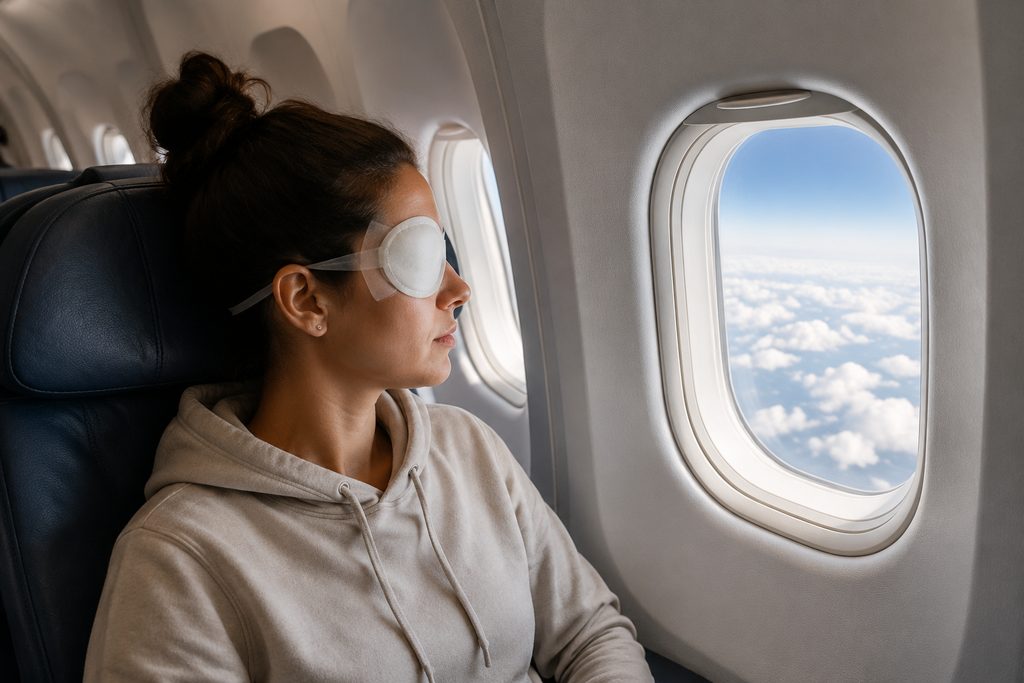
Can You Fly After Eye Surgery? What Every Patient Needs to Know Before Booking a Flight
If you are asking “can you fly after eye surgery,” the short answer is yes — usually. But the timeline matters more than most people expect. For routine LASIK, many surgeons clear patients for air travel within 24 to 48 hours. For cataract surgery, the window is often 1 to 7 days. For retinal procedures involving a gas bubble, flying can be dangerous for weeks. The type of surgery you had, not the airline’s policy, determines when it is safe to board a plane.
This guide walks through the actual recovery timelines, the physiology behind the restrictions, and what international patients planning treatment in China need to know about scheduling flights home. We are not doctors — we are the team at China Medical Services, and we help international patients navigate China’s top hospitals. The clinical guidance below comes from published ophthalmology sources, and we cite them so you can verify everything yourself.
Key Takeaways
- Most LASIK patients can fly within 24–48 hours; cataract patients typically wait 1–7 days; retinal gas-bubble patients may need 2–6 weeks on the ground.
- Cabins are pressurized to roughly 6,000–8,000 feet, which lowers oxygen saturation and dries the eye surface — both matter after ocular surgery.
- Eye surgery cost in China runs substantially below US and Western European rates, which is why many patients combine treatment with travel.
- No surgeon can clear you by email alone. The final call belongs to the operating ophthalmologist who examined your eye.
The Problem: Recovery Advice Is Scattered and Contradictory
Roughly 800,000 LASIK procedures are performed in the United States each year, according to the American Refractive Surgery Council, and cataract surgery exceeds 4 million procedures annually in the US alone. Add retinal, glaucoma, and corneal surgeries, and you have millions of patients worldwide asking the same question within days of their operation: when can I get on a plane?
The answers they find online conflict. One forum says fly the next day. Another says wait two weeks. An airline call center says it depends on a doctor’s note. A relative who had cataract surgery in 2011 says she flew home the same afternoon. None of this is wrong exactly — it is just incomplete. The correct answer depends on which tissue was operated on, whether a gas or silicone bubble was placed inside the eye, and how your individual eye is healing.
Getting this wrong is not trivial. Boarding a flight too early after a retinal gas procedure can cause the bubble to expand, spike intraocular pressure, and in rare cases damage vision permanently. That is a real risk, not a hypothetical one.
Why the Eye Reacts Differently at Altitude
Understanding the “why” makes the timelines easier to remember. Three things change when you climb into a pressurized cabin.
Cabin pressure and gas expansion
Commercial aircraft cabins are pressurized to the equivalent of 6,000–8,000 feet above sea level. According to the FAA, this is a deliberate compromise between passenger comfort and structural limits. For most travelers, it is harmless. For an eye containing a gas bubble — used in certain retinal detachment repairs — it is a physics problem. Gas expands as ambient pressure falls. A bubble that occupies part of the vitreous cavity on the ground will occupy more of it at altitude. That can raise intraocular pressure to unsafe levels.
Reduced oxygen and dry air
Cabin humidity on long-haul flights often drops below 20%, compared with 40–60% in a typical home. Post-surgical eyes are already dry and inflamed. Add low humidity and mildly reduced oxygen saturation, and you get a recipe for irritation, blurring, and slower surface healing. Contact lens wearers know this feeling well — after surgery, it is amplified.
Corneal flap and wound stability
After LASIK, a thin corneal flap must adhere back to the underlying stroma. It is stable within hours, but the eye is still fragile for days. Air travel itself does not threaten the flap. Rubbing your eye in a cramped seat does. That is why most LASIK surgeons clear flying quickly but restrict heavy lifting, swimming, and eye rubbing for a week or more.
Realistic Timelines by Procedure Type
Here is the practical breakdown. These are typical windows reported by ophthalmic societies and surgical centers — your own surgeon may adjust them based on your healing.
| Procedure | Typical fly-safe window | Key restriction |
|---|---|---|
| LASIK / PRK | 24–48 hours | No eye rubbing; use lubricating drops in flight |
| Cataract surgery (standard) | 1–7 days | Surgeon confirms wound seal and pressure are normal |
| Glaucoma surgery | 1–2 weeks | Pressure control verified at follow-up |
| Corneal transplant | 1–2 weeks, sometimes longer | Suture stability and rejection monitoring |
| Retinal surgery WITHOUT gas bubble | 3–7 days | Surgeon review of retinal attachment |
| Retinal surgery WITH gas bubble | 2–6 weeks, until bubble fully absorbs | Flying at altitude is contraindicated while gas remains |
The gas-bubble row is the one that catches people off guard. A sulfur hexafluoride (SF6) bubble can take 2–3 weeks to absorb. A perfluoropropane (C3F8) bubble can take 6–8 weeks. Until it is gone, altitude changes are genuinely risky. Some surgeons also require patients to keep their head in a specific position for days after surgery, which is incompatible with air travel anyway.
How Long After Eye Surgery Can I Fly If I Travel to China?
This is where planning gets interesting — and where most medical travelers under-budget their time.
Eye surgery cost in China is a major draw. A LASIK procedure in Shanghai or Beijing typically runs from roughly $1,000 to $2,500 per eye depending on the technology used and the hospital tier, compared with $2,000–$4,000 per eye in the US. Premium cataract surgery with a multifocal intraocular lens often falls in the $2,500–$5,000 range per eye in China’s top public hospitals, versus $6,000–$12,000 or more in the US. Those figures vary by hospital and case complexity, so treat them as planning ranges, not quotes.
What patients forget is the calendar. If you are searching for lasik surgery price Shanghai options and booking eye surgery in China as a medical tourist, you need to build in:
- Arrival and pre-op assessment: usually 1–2 days, including refraction, corneal topography, and dilated fundus exam
- The procedure itself: often same-day or next-day after assessment for LASIK; cataract surgery may require a short scheduling gap
- First post-op check: typically 1 day after surgery, then again at 1 week
- Fly-safe clearance: 1–7 days for most refractive and cataract cases
Realistically, a LASIK patient flying to China should plan 5–7 days on the ground. A cataract patient should plan 7–10 days. A retinal surgery patient with a gas bubble should plan 3–4 weeks minimum, which changes the entire trip structure.
One more thing worth knowing: standard outpatient departments at Chinese public hospitals generally cannot be booked from overseas in advance. You register on the day. To lock in a surgical date ahead of travel, patients typically go through a hospital’s international department or VIP channel, which offers English-speaking staff and priority scheduling at roughly 1.5–2 times the standard price. Our team can explain how these channels work and help you compare options — see our guide to China’s top-ranked hospitals for a starting point.
Is It Safe to Fly After Cataract Surgery in China? Decision Criteria That Matter
Safety here is not a yes-or-no question. It is a checklist your surgeon runs through before giving clearance. Four criteria carry the most weight.
Wound integrity. The corneal incision from modern phacoemulsification cataract surgery is typically 2–3 mm and self-sealing. Most surgeons confirm it is watertight at the day-one follow-up. If there is any wound leak, you wait.
Intraocular pressure. Normal range is roughly 10–21 mmHg. Post-operative pressure spikes are common in the first 24–48 hours. A surgeon will not clear you for a long-haul flight if pressure is trending upward or if you are on multiple pressure-lowering drops that have not yet stabilized.
Bubble status. If a gas bubble was placed — which happens in combined cataract-retina cases — the same altitude rules apply as for retinal surgery. No flying until it absorbs.
Your ability to self-care in transit. Can you reliably administer your own drops on a 12-hour flight? Do you have someone to help if your eye becomes painful? Practical capacity counts.
Do not board a flight with a gas bubble in your eye because a booking is non-refundable. The cost of a changed ticket is trivial compared with the cost of permanent vision loss. Every surgeon we work with would say the same thing.
Practical Considerations for Medical Travelers
A few logistics that patients consistently underestimate.
Documentation. Carry your operative report, discharge summary, and medication list in English. If you are traveling with eye drops, keep them in your carry-on — checked luggage can freeze or get lost. A signed letter from your surgeon stating your fitness to fly is useful if airline staff ask questions, though most carriers do not require it for routine eye surgery.
Visa category. Foreign patients coming to China for medical treatment generally apply for the S2 visa, which covers short-stay private affairs including medical treatment. Stays beyond 180 days typically fall under S1. Accompanying family members apply for S2 as well. Note that the M visa is for commercial and trade activities — it is not the correct category for medical travel. Requirements change, so always confirm current rules with the nearest Chinese embassy or consulate and bring supporting hospital documents.
Payment. Chinese public hospitals generally require prepayment for surgical services; you then seek reimbursement from your insurer afterward. Private international hospitals often bill insurance directly. If you hold a US or European policy, confirm coverage for treatment abroad before you travel — many plans exclude it or require prior authorization.
Follow-up after you get home. Ask your Chinese surgeon for a written post-op plan covering drop schedules, activity restrictions, and the specific findings to communicate to your home ophthalmologist. Book a local follow-up before you leave China so there is no gap in care. For patients considering a remote first step rather than immediate travel, a written second opinion or video consultation with a Chinese specialty team can clarify whether surgery is even appropriate — and our team can arrange those through our patient consultation service.
Frequently Asked Questions
Many surgeons permit it, and some patients do fly within 24 hours. But most advise a one-day post-op check first so the surgeon can confirm the flap is well-positioned and pressure is normal. If you must fly immediately, arrange a local eye exam at your destination within 48 hours.
Change it. There is no workaround. A gas bubble at altitude can expand and cause acute pressure rise. Ask your surgeon for an estimated absorption date and book your return flight after that date, with a buffer of a few days.
Feeling fine is a good sign but not proof. The relevant checks are wound seal and intraocular pressure, which only an examination can confirm. Attend your scheduled follow-up and get explicit clearance before booking a long-haul flight.
As a general planning range, LASIK in China runs from about $1,000 to $2,500 per eye, and premium cataract surgery from roughly $2,500 to $5,000 per eye. US prices are typically two to four times higher. These figures vary by hospital and case complexity, and final pricing requires an in-person assessment.
Often yes, but through the hospital’s international or VIP department rather than the standard outpatient queue. Standard public hospital registration happens on the day of visit. If a fixed surgical date matters to your travel plans, ask specifically about international department scheduling.
Your Next Step
The rule of thumb is simple: LASIK patients can usually fly in a day or two, cataract patients in about a week, and anyone with a gas bubble in the eye waits weeks — not days. Confirm your personal timeline with the surgeon who operated on you, and build your travel dates around that clearance, not the other way around.
China Medical Services connects international patients with more than 340 top-ranked hospitals across 37 cities, ranked by Fudan and JCI standards. We are not a hospital and we do not provide diagnoses or medical advice — we handle hospital matching, appointment coordination, bilingual accompaniment, and visa guidance so your focus stays on your eyes. If you would like to understand your options before committing to travel, start with a free consultation through our patient services page.
This article is for general information only and does not constitute medical advice. Always consult a qualified ophthalmologist about your individual recovery and fitness to fly.
For more medical information and treatment options in China, visit chinamedservices.com (China Medical Services).
