Sleep Apnea Treatment in China: Costs, Top Hospitals & How to Start
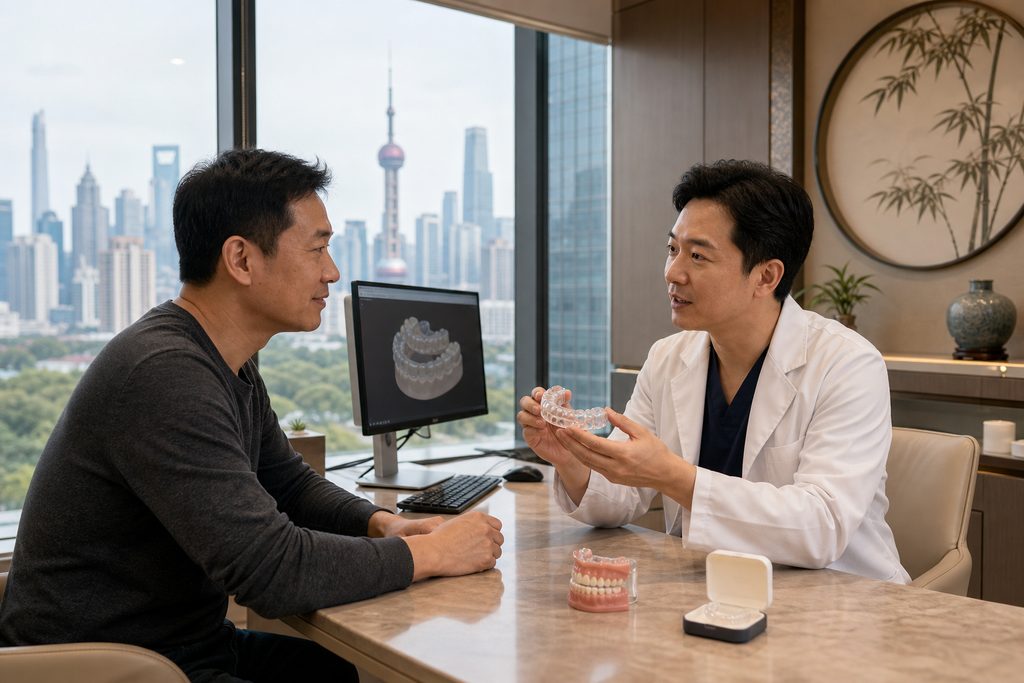
How This Actually Works, Step by Step
When 44-year-old David from Portland was diagnosed with severe obstructive sleep apnea, his sleep physician handed him a CPAP machine and a follow-up appointment six months out. He lasted three weeks on the mask. His wife moved to the guest room. His employer noticed the fog. Somewhere in a 2 a.m. Google spiral, he typed “sleep apnea surgery cost China” — half hoping, half skeptical.
That search is where most international patients begin. Here is the honest sequence that follows.
Step 1: Send your records. You gather what you already have — a polysomnogram (sleep study) report, your AHI number, BMI history, any drug-induced sleep endoscopy (DISE) findings, medication list, and imaging if done. A written second opinion through a Chinese hospital’s international department starts at $300–500 and takes roughly three to seven business days once translated records arrive. Records must be in English or Chinese; certified medical translation typically runs $40–80 per document.
Step 2: A specialist reviews and responds in writing. An ENT or sleep surgery team evaluates whether you are even a surgical candidate. This matters more than most patients expect. Surgery is not first-line therapy for most OSA. If your AHI is mild, if your anatomy doesn’t fit a surgical target, or if weight management hasn’t been addressed, a reputable team will tell you so.
Step 3: Video consultation. If surgery looks plausible, you speak directly with the team — $100–300 for a standard international department, $500–800 for a top-specialist consultation. You hear their recommendation, ask about the specific procedure, and get a realistic recovery picture.
Step 4: In-person consultation and surgery scheduling. Here is the rule that surprises Western patients: in Chinese public hospitals, surgery cannot be scheduled from overseas. You must be seen in person first. The workaround is the hospital’s international or VIP channel, which allows pre-arranged specialist appointments — typically priced at 1.5 to 2 times the standard channel.
Step 5: Arrival, treatment, follow-up. Visa, hospital registration, pre-op testing, surgery, a short inpatient stay, and a discharge plan you can hand to your physician at home.
What Sleep Apnea Surgery Actually Costs in China
Cost is the reason most people find this page. The comparison is genuinely dramatic, but the numbers need context.
| Procedure | Typical China Range (USD) | Typical US Range (USD) |
|---|---|---|
| UPPP (uvulopalatopharyngoplasty) | $4,000–9,000 | $20,000–50,000 |
| Drug-induced sleep endoscopy (DISE) | $800–2,000 | $3,000–7,000 |
| Hypoglossal nerve stimulation (if available) | $18,000–30,000 | $40,000–100,000+ |
| Maxillomandibular advancement (MMA) | $12,000–22,000 | $60,000–150,000 |
| Septoplasty / turbinate reduction | $3,000–7,000 | $8,000–20,000 |
Two caveats. First, these are ranges — final pricing varies by hospital and case complexity, and a hospital will only quote firmly after reviewing your records. Second, the UPPP question specifically: how much does UPPP surgery cost in Shanghai? Expect the upper end of that $4,000–9,000 band at a top-tier public hospital’s international department, with private international hospitals in the city running higher. Beijing pricing sits in a similar range.
What’s not in the table: flights ($800–1,500 round trip from the US), accommodation (roughly $80–200 per night for a serviced apartment near a major hospital), a bilingual medical companion from $300 per day, and airport transfer at $200 round trip.
A Realistic Timeline
Optimistic timelines online say two weeks. Here’s what actually happens.
| Stage | Realistic Duration | What Slows It Down |
|---|---|---|
| Records collection at home | 1–3 weeks | Waiting on your sleep clinic to release the full study |
| Certified translation | 3–7 days | Poor-quality scans; missing pages |
| Written second opinion | 3–7 business days | Specialist caseload; incomplete imaging |
| Video consultation scheduling | 1–2 weeks | Time zone coordination; interpreter availability |
| S2 visa application | 1–3 weeks | Consulate appointment backlog; invitation letter timing |
| Flights and lodging | 1–2 weeks | Peak season pricing |
| Arrival, pre-op testing, surgery | 7–14 days | Additional tests the hospital requires on site |
| Inpatient recovery | 2–5 days | Procedure type; individual healing |
| Post-op check before flying home | 7–14 days after surgery | Surgeon’s clearance to fly |
Add it up honestly: six to ten weeks from first email to surgery date. Anyone promising faster is skipping a step you’d rather not skip.
What Can Go Wrong — and What Happens Then
Surgery for sleep apnea is real surgery. The failure modes are specific.
You’re not a good candidate, and nobody told you. UPPP success rates vary widely depending on where the obstruction actually sits — the velum, the tongue base, the epiglottis, or a combination. A 2019 systematic review in the journal Sleep and Breathing found that surgical success depends heavily on careful patient selection, and that DISE-guided selection improves outcomes versus non-guided approaches. If a provider quotes you a price without asking for a DISE or a detailed airway evaluation, that’s a red flag.
Complications happen. Bleeding, velopharyngeal insufficiency (food or liquid coming through the nose), voice changes, and persistent pain are documented risks of UPPP. Chinese tertiary hospitals have the volume and infrastructure to manage these, but you need to know the local follow-up plan before you fly home — not after.
The visa doesn’t arrive in time. S2 visa processing depends on consulate workload and your documentation. If your surgery date is fixed and the visa slips, you reschedule. Build in a buffer.
Communication breaks down. A top Chinese hospital may see more than 10,000 outpatient visits in a single day. Without Chinese, navigating registration, payment, pharmacy, and scheduling is genuinely difficult. This is the single most common practical failure point — and the reason bilingual accompaniment exists as a service.
Choosing a Hospital: What the Rankings Actually Tell You
China has more than 35,000 hospitals. The Fudan Hospital Ranking, published annually, evaluates the top tier — and its structure matters when you’re reading it.
The comprehensive Top 100 list assigns grades (A++++ down to A) rather than individual rankings. Nobody can honestly tell you a hospital is “number 3 in China.” What you can rely on is the specialty reputation ranking, which lists a Top 10 for each of 45 specialties — including Otolaryngology (ENT). That’s where sleep apnea surgical expertise lives.
For the best sleep apnea treatment hospital in Beijing, you’re looking at institutions with strong ENT departments and international departments equipped for foreign patients. Peking Union Medical College Hospital carries broad reputational weight across specialties. For the full picture of which hospitals rank highest in ENT and related fields, our specialty rankings by department page breaks down the Top 10 lists. You can also browse Fudan-ranked hospitals grouped by city to compare options in Beijing, Shanghai, and Guangzhou side by side.
Three questions to ask any hospital before committing:
- Does the surgical team perform DISE routinely, and will they share selection criteria?
- What is the follow-up protocol, and can it be handed to a physician in my home country?
- Who handles communication if I have a problem at 11 p.m. on day three post-op?
Is sleep apnea surgery safe in China? At a top-tier hospital with an experienced team, the surgical safety profile is comparable to Western tertiary centers — the technology, anesthesia standards, and monitoring are all there. The variable that changes is continuity: pre-op evaluation, informed consent in your language, and post-discharge follow-up. Those are logistics, and logistics can be managed.
Practical Considerations: Records, Visa, Payment, Follow-Up
Pricing is broadly similar across both cities at comparable hospitals, generally falling within a $4,000–9,000 range for UPPP at a top public hospital’s international department. Private international hospitals run higher. Final quotes depend on hospital tier, procedure complexity, and length of stay — no responsible provider quotes firmly before reviewing your records.
At an accredited tertiary hospital with a high-volume ENT surgical team, the safety standards — anesthesia, monitoring, sterile protocol, ICU backup — are comparable to Western centers. The genuine risk isn’t the operating room. It’s communication and follow-up continuity. Mitigate both by confirming language support and a written post-discharge plan before you commit.
Rarely as direct billing outside private international hospitals. Most patients pay upfront and submit for reimbursement, and coverage for elective sleep surgery abroad varies widely by plan. Call your insurer before you book anything and ask specifically about overseas elective surgical benefits.
That’s a legitimate and common outcome. Many patients with mild to moderate OSA are better served by CPAP optimization, oral appliances, positional therapy, or weight management. A good second opinion will tell you this rather than sell you a procedure — and that honesty is exactly what you should be testing for.
Your Next Step
Sleep apnea surgery in China can be a genuinely reasonable path — meaningful cost savings, high surgical volume, and access to experienced ENT teams — but only when it’s the right treatment for your specific anatomy and severity. The work starts with a proper evaluation, not a booking.
China Medical Services connects international patients with 340+ top-ranked hospitals across 37 cities, and we handle the parts that are hardest from abroad: written second opinions, video consultations with the right specialty team, appointment coordination through official international departments, and bilingual medical accompaniment on the ground. We are not a hospital and we do not provide medical advice — we coordinate, translate, and walk beside you. If you’d like to understand your options before making any commitment, start with a free consultation and we’ll help you figure out whether this path makes sense for you.
This article is for general informational purposes only and does not constitute medical advice, diagnosis, or treatment recommendations. Always consult a qualified physician about your individual condition before pursuing any surgical or non-surgical treatment.
Frequently Asked Questions
Yes. The hospitals used for international patients are JCI-accredited and follow the same international safety standards as top hospitals in the US and Europe. Surgical teams perform high volumes of procedures — often more than their Western counterparts — which studies show leads to better outcomes.
Costs vary by procedure and hospital, but international patients typically save 40-80% compared to US prices — even when factoring in travel and accommodation. A consultation with our team will give you an exact, all-inclusive quote with no hidden fees.
Send us your existing medical reports to get started. We handle everything from hospital selection and appointment scheduling to visa assistance and post-operative recovery planning. Your medical records are reviewed by the specialist before you even book a flight.
For more medical information and treatment options in China, visit chinamedservices.com (China Medical Services).
