Sleep Apnea Surgery Recovery in China: A Complete Safety and Healing Guide
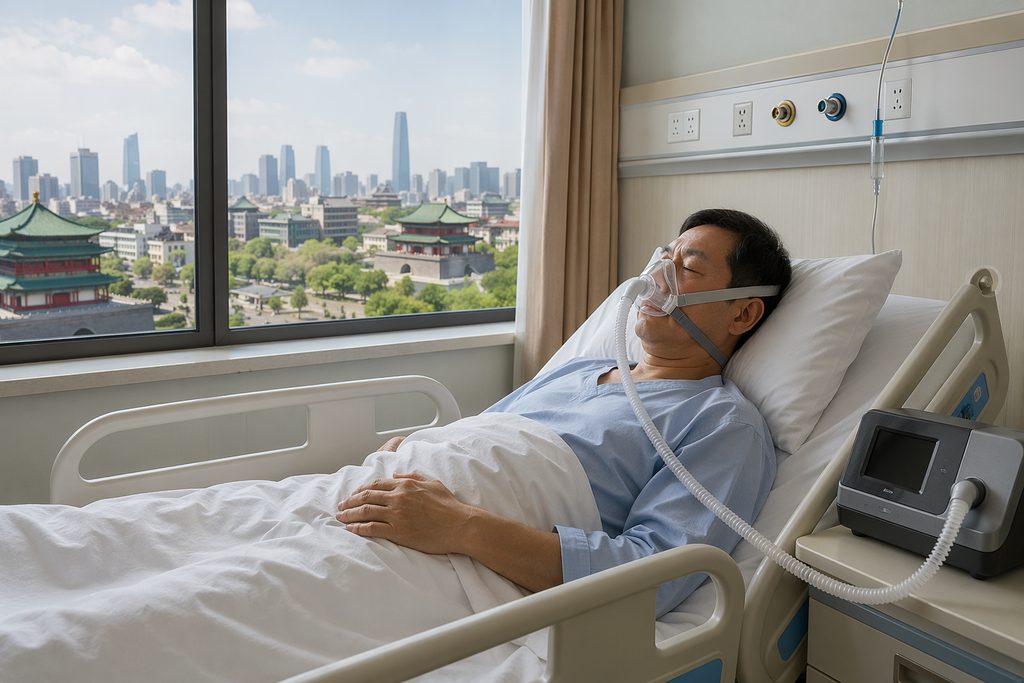
In the United States, a patient with obstructive sleep apnea might wait 4 to 6 months for a surgical consultation, then navigate insurance hurdles that delay the procedure another quarter. Meanwhile, a department like the Otolaryngology center at Shanghai Sixth People’s Hospital manages a surgical volume that refines techniques through sheer repetition. The sleep apnea surgery cost China sits at roughly 20% of what a U.S. hospital bills, and that number reshapes decisions for the uninsured and the underinsured. But cost means nothing without safety. Recovery is where the real test lives.
How This Actually Works, Step by Step
You are not booking a hotel room. You are entering a foreign medical system, and the sequence matters more than the destination. Here is the path our team watches over every day.
You send us your sleep study results, your CPAP compliance logs if you have them, and any imaging — CT scans, cephalometric X-rays, drug-induced sleep endoscopy videos. We translate these documents. A specialist at a hospital like Shanghai‘s Eye & ENT Hospital reviews them. You get back a written second opinion: is surgery indicated? Which procedure? What does the surgeon see that your local team might have missed?
That opinion costs $300 to $500. If it points toward surgery, we move to a video consultation. You speak directly with the surgeon. You ask the hard questions. The surgeon explains the approach — UPPP, expansion sphincter pharyngoplasty, maxillomandibular advancement, or perhaps a hypoglossal nerve stimulator implant. This call runs $500 to $800. After that, if you decide to proceed, we coordinate the dates, the S2 visa invitation letter from the hospital, and your arrival.
You land. You meet your bilingual medical companion at the airport. The next morning, you have your pre-operative workup. Surgery follows. You wake up in a recovery bay with a nurse who has seen your specific procedure hundreds of times. Your companion stays with you through discharge, through the first soft meals, through the follow-up scope that checks your suture lines. Then you fly home. Your local ENT takes over long-term monitoring. We stay available.
What “Safe” Actually Means in a Chinese Surgical Context
Late post-operative hemorrhage — beyond three weeks — is rare. When it happens, it is a local emergency. Your local ENT manages it. The Chinese surgeon provides your local team with the operative details they need to understand the vascular anatomy and the surgical site. That transfer of information is critical. We prioritize it.
Some international plans and a growing number of self-funded employer plans cover sleep apnea treatment medical tourism China. Most standard U.S. PPO plans do not — they reimburse out-of-network at a lower rate, and you must pay upfront. Check your policy’s out-of-network and international care provisions. We provide the documentation you need to maximize your claim.
The initial post-operative period often makes sleep worse. Swelling, pain, and nasal obstruction can persist for two to four weeks. Most patients notice a meaningful improvement by week six to eight, once the swelling fully resolves. The definitive assessment comes with a repeat sleep study at three to six months post-op. Do not judge the result at week three. You will be discouraged. Wait.
Your Next Step
You have the timeline, the costs, the risks, and the decision criteria. The question now is whether a Chinese surgical team is the right fit for your specific anatomy, your budget, and your tolerance for traveling during recovery. Our role is to give you the information and the access you need to decide. We do not push. We do not rush. We connect you with surgeons who will tell you honestly if surgery is indicated — or if you should stick with your CPAP.
If you want to explore this further, start with a written second opinion. Send us your sleep study and imaging. We will translate them, get them in front of the right specialist, and give you a clear, actionable report. That report costs $300 to $500, and if you later choose to come to China for treatment, we credit that full amount toward your on-the-ground coordination. Request a free initial consultation to discuss your case. No commitment. Just clarity.
Frequently Asked Questions
Yes. The hospitals used for international patients are JCI-accredited and follow the same international safety standards as top hospitals in the US and Europe. Surgical teams perform high volumes of procedures — often more than their Western counterparts — which studies show leads to better outcomes.
Costs vary by procedure and hospital, but international patients typically save 40-80% compared to US prices — even when factoring in travel and accommodation. A consultation with our team will give you an exact, all-inclusive quote with no hidden fees.
Send us your existing medical reports to get started. We handle everything from hospital selection and appointment scheduling to visa assistance and post-operative recovery planning. Your medical records are reviewed by the specialist before you even book a flight.
For more medical information and treatment options in China, visit chinamedservices.com (China Medical Services).
