Deep Cleaning Teeth in China: Costs, Safety, and How to Book
Deep Cleaning Teeth in China: The Short Answer
Yes, you can get a deep dental cleaning in China — and the deep cleaning teeth cost China clinics charge typically runs between $80 and $350, depending on severity and whether you choose a public hospital, private international clinic, or specialist periodontal center. That’s a fraction of the $800 to $2,000 commonly billed in the United States for the same procedure. But the real question isn’t whether it’s possible. It’s whether you need it, where to get it done properly, and how to avoid paying for aggressive treatment you don’t actually require.
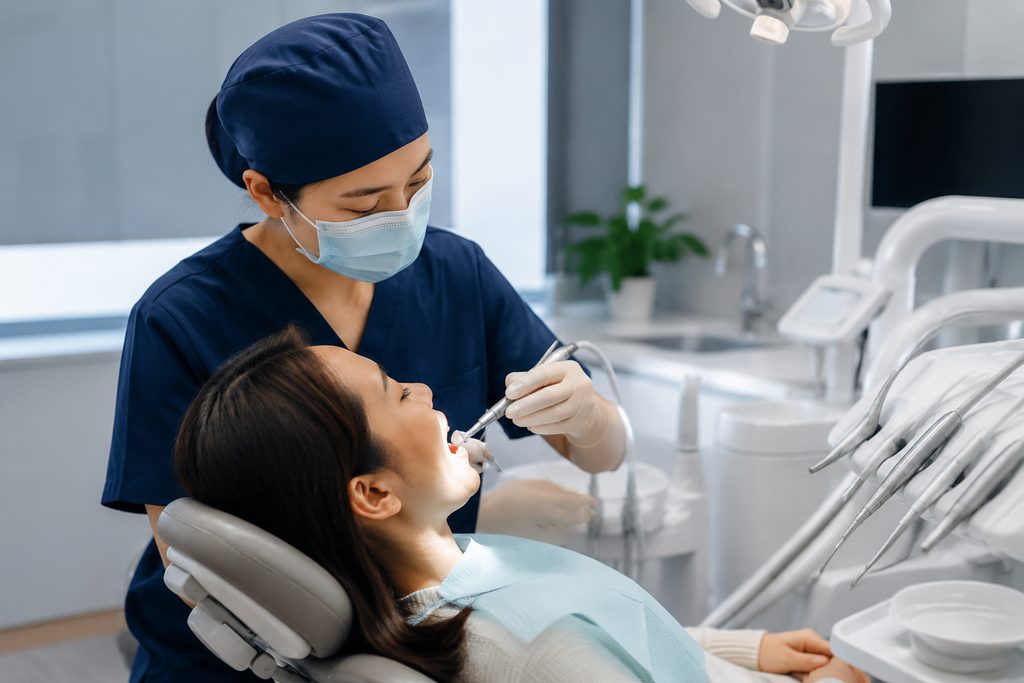
Deep cleaning — clinically called scaling and root planing — is not a routine hygiene visit. It’s a therapeutic procedure for gum disease. A hygienist or periodontist numbs your gums, then removes hardened plaque and tartar from below the gumline and smooths the tooth roots so gums can reattach. If you’ve been told you have bleeding gums, receding gums, or pockets deeper than 4 millimeters, this is likely what’s being recommended. If you just want a standard cleaning, that’s different — and cheaper.
Who This Is Right For — and Who It Isn’t
Deep cleaning addresses periodontitis, not everyday plaque buildup. You’re typically a good candidate if a dentist has measured periodontal pockets of 4mm or more, or if you have visible tartar below the gumline, chronic bad breath, loose teeth, or gums that bleed persistently during brushing and flossing. Patients with diabetes, smokers, and those who haven’t had professional cleaning in several years often fall into this category.
Who should not pursue this in China? If you have uncontrolled bleeding disorders, a recent heart valve replacement, or active oral infections requiring antibiotics first, you need medical clearance before any invasive dental work. Pregnant women in the first trimester are usually advised to postpone non-emergency periodontal procedures. And if a clinic recommends deep cleaning after a 30-second look with no probing measurements, walk away. That’s a red flag for overtreatment.
The Options, Compared
China’s dental landscape splits into three broad tiers. The table below compares what each means for a deep cleaning procedure specifically.
| Clinic Type | Typical Cost (Full Mouth) | Language Support | Wait Time | Best For |
|---|---|---|---|---|
| Public hospital (stomatology dept) | $80–$180 | Limited — bring a companion | Same-day queue or 1–2 weeks | Budget-conscious patients with straightforward cases |
| Private international clinic (JCI or Western-style) | $200–$350 | English-speaking staff standard | 1–3 days | Expats and travelers who want direct billing and English records |
| Specialist periodontal center (university-affiliated) | $150–$300 | Variable — some have English coordinators | 3–14 days | Moderate-to-severe periodontitis requiring advanced expertise |
The public hospital route saves money but demands patience. Registration happens in person, often early morning, and you’ll navigate a high-volume environment where English is scarce. Private international clinics like those found in Shanghai’s expat-oriented medical districts charge more but handle everything from appointment booking to post-procedure instructions in English. The specialist centers sit in between — excellent clinical depth, but communication can still be a hurdle without help.
What “Deep” Actually Means in a Chinese Dental Context
Here’s a nuance most international patients miss. In China, the term “deep cleaning” gets used loosely by marketing teams and reception staff. What you’re quoted for might be a standard ultrasonic scaling, a full-mouth debridement, or true quadrant-by-quadrant scaling and root planing. These are clinically different procedures with different prices and recovery experiences.
Standard scaling removes tartar above and slightly below the gumline. It’s quick, often done in one visit, and costs $40 to $80 at public hospitals. Scaling and root planing goes deeper, usually requires local anesthesia, and is done in two to four quadrants across separate appointments. If a clinic quotes you $100 for “deep cleaning” without mentioning anesthesia or multiple visits, you’re probably being offered standard scaling with a premium label. Ask directly: “Is this scaling and root planing with anesthesia, and how many quadrants will you treat?” The answer tells you whether the quote is honest.
What It Costs — and What Drives the Variance
The deep cleaning teeth cost China patients actually pay depends on five factors: city tier, clinic type, severity of periodontitis, number of quadrants treated, and whether you need adjunctive therapy like antibiotic gels or laser debridement. Beijing and Shanghai run 20–40% higher than Chengdu, Xi’an, or Wuhan. A full-mouth case with 6mm+ pockets at a top private clinic in Shanghai might reach $400. The same case at a public hospital in Wuhan could be $120.
What’s included? The procedure fee, local anesthesia, and basic post-op instructions. What’s typically not included: initial consultation and X-rays ($20–$60), periodontal charting ($30–$80), medicated mouth rinses, and follow-up maintenance visits. Some international clinics bundle these into a package. Always ask for an itemized quote before committing.
For comparison, the American Dental Association’s national fee survey places full-mouth scaling and root planing at $800–$1,800 without insurance. In the UK, private periodontal treatment runs £600–£1,200. Even at China’s higher end, you’re paying 60–80% less for clinically equivalent care. That gap is why affordable periodontal treatment abroad China has become a genuine search term among patients facing four-figure quotes at home.
Practical Considerations: Records, Visas, and Follow-Up
Bring recent X-rays and periodontal charting if you have them. If not, expect to pay for a panoramic X-ray and probing exam on-site — that’s standard and shouldn’t be skipped. The dentist needs pocket-depth measurements to justify deep cleaning and to plan which quadrants need treatment first.
For the visa question: medical treatment in China falls under the S2 visa, not the M visa. The S2 is the short-stay category used for private affairs including medical treatment, and you’ll need supporting documents from the hospital or clinic confirming your appointment. A routine dental procedure doesn’t require a special medical visa if you’re already traveling on a tourist (L) visa — but check current consulate guidance, as rules shift. Our team regularly helps patients sort out which documents their chosen clinic needs to issue.
Payment is straightforward: public hospitals require prepayment at a cashier window, usually via cash, WeChat Pay, or UnionPay. Foreign credit cards often don’t work there. Private international clinics accept Visa and Mastercard and many bill insurers directly. If you’re using travel or expat health insurance, confirm whether periodontal treatment is covered — many policies exclude “pre-existing” gum disease.
After the procedure, expect gum soreness for 2–5 days. You’ll need a follow-up visit 4–6 weeks later to check pocket depth reduction. If you’re flying home before then, get a written treatment summary and X-ray copies. Any competent dentist in your home country can handle the follow-up — but they’ll want to know exactly what was done.
Frequently Asked Questions
Yes, at reputable hospitals and clinics. The key is choosing a facility with proper sterilization protocols and trained periodontists. Public university-affiliated stomatology departments follow national infection control standards, and JCI-accredited private clinics meet international benchmarks. What you should watch for: clinics that skip probing, don’t use anesthesia for deep scaling, or push full-mouth treatment in one visit when your case clearly requires staged quadrants.
In Beijing, expect $120–$250 at public hospital stomatology departments and $250–$400 at private international clinics for full-mouth scaling and root planing. The variance comes down to whether you need two quadrants or four, and whether the clinic bundles in X-rays and periodontal charting. Beijing’s top dental centers are concentrated in Chaoyang and Haidian districts, near major expat residential areas.
Partially. Private international clinics accept advance bookings by phone, email, or WeChat — sometimes with a deposit. Public hospitals generally do not allow overseas patients to pre-book routine outpatient procedures; you register in person on the day. If you want a confirmed appointment before flying, target a private clinic or use a coordination service that can hold the slot for you. A book dental deep cleaning China package search will surface clinics offering bundled consultation, cleaning, and follow-up — but read what’s actually included before paying.
Listen carefully — but get a second opinion if the recommendation is expensive. Periodontitis sometimes requires surgical intervention like flap surgery or bone grafting, which costs $500–$2,000 in China. That’s still far below Western prices, but it’s a real procedure with real recovery time. Ask for probing measurements and X-rays to support the recommendation. A legitimate periodontist will show you the numbers. One who won’t is selling treatment, not diagnosing it.
Almost always, yes — provided you bring proper documentation. Request a written treatment summary, periodontal charting, and digital X-rays on a USB drive or via email. Most Western dentists care about what was done and when, not where it happened. The one caveat: some dentists prefer to redo charting themselves at your first follow-up, which is normal and not a sign they distrust the Chinese records.
Your Next Step
Deep cleaning in China is safe, affordable, and accessible — if you know which tier of clinic fits your case and your comfort level. The procedure itself is routine for Chinese periodontists, who see high volumes of periodontal disease and perform scaling and root planing daily. What’s not routine for most international patients is the logistics: finding a clinic that speaks your language, getting an honest quote, and navigating registration without wasting a day.
That’s what we handle at China Medical Services. We’re not a hospital and we don’t diagnose or treat anything. We connect you with appropriate dental departments and clinics, help you understand what’s being recommended, and coordinate bilingual support if you want it. When you’re ready to explore options, start with a free consultation — tell us your situation and we’ll point you toward clinics that match your needs and budget. No pressure, no obligation.
For more medical information and treatment options in China, visit chinamedservices.com (China Medical Services).
