Anzhen Cardiovascular Hospital: A Guide for International Patients
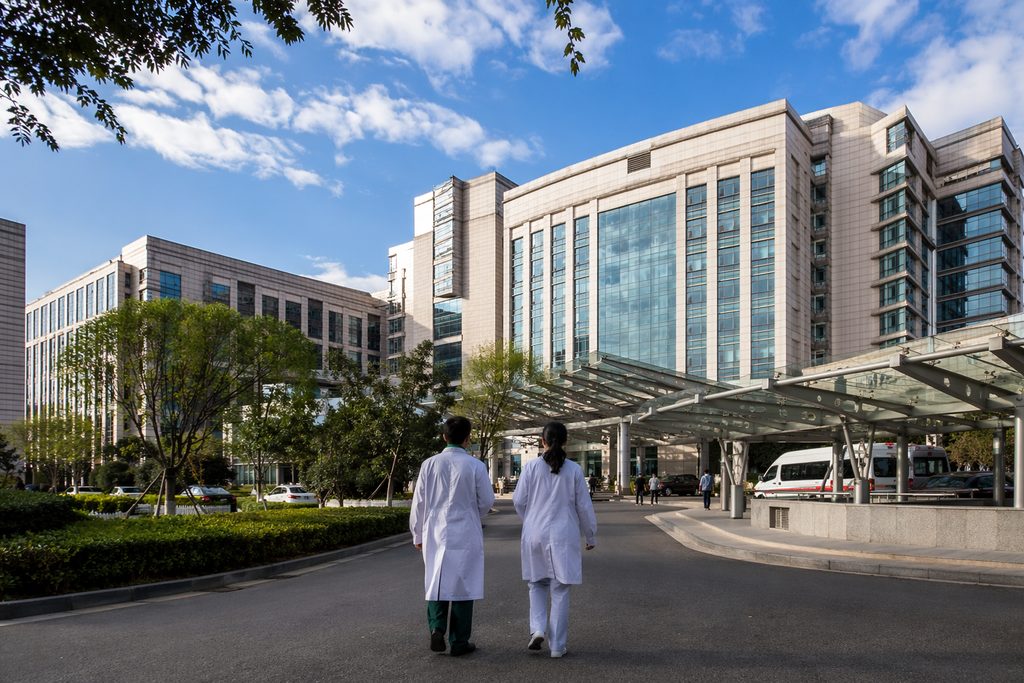
Anzhen Cardiovascular Hospital: A Guide for International Patients
You have probably heard that going abroad for heart surgery means gambling with your life. The reality at Beijing Anzhen Hospital runs the other way. This is one of the largest cardiovascular centers on the planet, performing thousands of cardiac operations every year, and the Anzhen Hospital heart surgery cost often lands at a fraction of what a U.S. hospital bills for the same procedure. That gap is not a discount on quality. It reflects a different healthcare economy, not a lesser surgeon.
What follows is a practical guide. Not a sales pitch. We coordinate medical travel to China for international patients, and Anzhen comes up constantly in cardiac conversations. So here is what the hospital actually is, what it costs, how booking really works, and where the process gets difficult.
What Anzhen Hospital Actually Is
Beijing Anzhen Hospital is a tertiary-level public hospital affiliated with Capital Medical University. Its reputation rests on cardiovascular medicine and cardiac surgery, and it sits inside China’s top tier for both. The hospital is also a national referral center, which means patients arrive from every province, not just Beijing.
That scale matters for you. High-volume cardiac centers tend to produce better outcomes, because surgical teams repeat the same complex operations hundreds of times a year. Anzhen’s cardiac surgery volume is among the highest in the country.
The hospital sits in the Chaoyang District of Beijing, close to the airport expressway and within reach of international hotels. That location is convenient. The internal navigation is not. Anzhen is enormous, outpatient volume is heavy, and signage outside the international areas is mostly in Chinese.
Key takeaway: Anzhen’s strength is cardiac surgery volume and specialization. Its weakness, for foreigners, is logistics — appointments, registration, and language all require navigation.
How This Actually Works, Step by Step
Here is the real sequence, without the brochure language.
Step one — you send records. You gather your existing diagnostics: echocardiogram, coronary angiography or CT angiography, ECG, blood work, medication list, and any prior operative notes. These get translated into Chinese by a medical translator. Machine translation is not acceptable for clinical documents.
Step two — a cardiac specialist reviews the file. This happens remotely, through the hospital’s international department or a top-specialist video consultation. You get a written opinion: whether surgery is indicated, what type, and roughly what it would involve. This step exists to prevent a wasted trip. Roughly speaking, a meaningful share of inquiries turn out not to need surgery at all, or need it later than the patient assumed.
Step three — you decide whether to travel. If the remote review supports an operation, the next question is scheduling. This is where expectations need calibrating. Public hospital outpatient clinics in China generally cannot be pre-booked from overseas. You register on the day, in person. Surgery follows an in-person consultation, not a video call.
To lock in a specialist and a date in advance, patients typically go through the hospital’s international or VIP channel. That channel offers senior specialists and English-speaking support, and it costs roughly 1.5 to 2 times the standard pathway.
Step four — arrival, consultation, admission. You land, attend the in-person consultation, complete pre-operative testing, and are admitted. Public hospitals require prepayment; insurance reimbursement happens afterward, at home.
Step five — surgery and recovery. Post-operative stay for coronary bypass typically runs seven to fourteen days, depending on complications and the patient’s baseline health. Then follow-up, then home.
Anzhen Hospital Heart Surgery Cost: What the Numbers Look Like
Cost is the question everyone asks first, so let’s answer it directly. The figures below are ranges. They vary by hospital, by surgical approach, and by case complexity. They are not quotes.
| Procedure | Typical Range in China (Top Public Hospital) | Typical U.S. Range |
|---|---|---|
| Coronary artery bypass grafting (CABG) | $12,000 – $20,000 | $120,000+ |
| Valve replacement (single valve) | $15,000 – $25,000 | $150,000+ |
| Coronary stent placement (per stent) | $3,000 – $8,000 | $25,000 – $50,000 |
| Diagnostic angiography | $800 – $2,000 | $5,000 – $10,000 |
These are hospital charges. They do not include flights, accommodation, visa costs, or companion services. Budget another $3,000 to $8,000 for a two-to-three-week stay in Beijing depending on hotel standard.
The comparison is not a claim that Chinese cardiac surgery is ten times better. It is a claim that the price structure is different. U.S. hospital bills embed malpractice premiums, administrative overhead, and negotiated insurer rates that have no equivalent here. You can see how this plays out across specialties on our department-by-department rankings page.
Practical tip: Always ask for a written cost estimate before travel. Estimates should separate surgeon fees, anesthesia, ICU days, ward days, implants, and medications. If a provider will not itemize, that is a warning sign.
A Realistic Timeline
Patients routinely underestimate this. Cardiac surgery is not a two-week round trip.
| Stage | Realistic Duration | What Slows It Down |
|---|---|---|
| Record collection and translation | 3 – 10 days | Missing films, illegible reports, hospital release delays |
| Remote specialist review | 3 – 7 days | Requests for additional imaging |
| Visa application (S2) | 1 – 3 weeks | Embassy processing times, invitation documents |
| Travel and arrival | 1 – 3 days | Flight availability, jet lag before consultation |
| In-person consultation and pre-op testing | 2 – 5 days | Test scheduling, additional diagnostics |
| Surgery and hospital stay | 10 – 21 days | ICU time, complications, wound healing |
| Local recovery before flying | 7 – 14 days | Surgeon clearance for air travel |
Add it up and you are looking at six to ten weeks from first contact to flying home. Anyone promising faster is either skipping steps or describing a different hospital system.
What Can Go Wrong — and What Happens Then
Honest failure modes, because you deserve them.
The remote review says surgery is not appropriate. This happens, and it is not a failure — it saves you a trip and a bill. You receive the written opinion and can seek a second review elsewhere.
The in-person consultation changes the plan. Imaging reviewed on-site can reveal something the remote file missed. The surgical plan may expand, shrink, or convert to a catheter-based procedure. This is normal medicine, not a bait-and-switch.
The specialist you wanted is unavailable. Senior surgeons have packed operating schedules. The hospital may offer an equally qualified colleague. No coordination service can guarantee a specific named surgeon on a specific date, and any provider who promises that is overpromising.
Complications occur. Infection, bleeding, arrhythmia, stroke — these risks exist in every cardiac program on earth, including the best ones. Anzhen has the infrastructure to manage them. What you need before travel is a clear understanding of who pays for extended ICU time.
Language breaks down at a bad moment. This is the most common practical failure. A post-operative instruction misunderstood, a medication schedule confused. It is exactly why bilingual medical companion support exists, and why we treat it as essential rather than optional for cardiac cases.
Is Anzhen Hospital Good for International Patients?
Direct answer: yes, with conditions.
The international department handles foreign patients, provides English-speaking staff, and can arrange the VIP pathway. Anzhen is a genuine destination for complex cardiac cases, and it appears on most shortlists of the best cardiovascular hospitals in China for foreigners.
But Anzhen is a Chinese public hospital first. It is not a Western-style private facility. If you want an experience closer to a U.S. or European private hospital — private rooms as standard, English signage throughout, direct insurance billing — you may prefer a JCI-accredited private international hospital. Those exist in Beijing and Shanghai, and they cost more. For straightforward cardiac surgery, many patients find the public international channel strikes the better balance.
One more consideration. Anzhen is not the only strong cardiac center in China. Fuwai Hospital in Beijing performs more cardiac surgeries annually than any other single center worldwide. Shanghai has its own excellent programs. For a broader view of how Chinese hospitals are ranked, our China Medical Services database covers 340+ top-ranked hospitals across 37 cities.
How to Book Heart Surgery at Anzhen Hospital Beijing
Booking is the part that trips people up, so let’s be precise.
You cannot simply email the hospital and reserve a surgical slot. The pathway runs through the international department, and it requires a reviewed medical file first. The hospital needs to know what it is agreeing to before it commits an operating room.
What you can do ahead of time:
- Submit a complete translated record set
- Obtain a written second opinion from a Chinese cardiac specialist
- Complete a video consultation with the surgical team
- Secure your S2 visa with the hospital’s supporting documents
- Arrange accommodation within reasonable distance of Chaoyang District
What happens on the ground:
- Registration and medical card creation at the hospital
- In-person consultation with the assigned specialist
- Pre-operative testing over two to five days
- Admission and surgical scheduling
An “Anzhen Hospital medical tourism package” as such does not exist in the consumer sense. What exists is a coordination service: someone handles registration, queuing, payment, translation, and hospital navigation while you focus on the medical decision. That is a service model, not a product bundle.
Practical Considerations: Records, Visas, Payment, Language
Records. Bring originals and translated copies. Digital files on a tablet are useful but not a substitute for printed reports. Cardiac imaging should be on disc in DICOM format where possible.
Visa. Medical travel to China uses the S2 visa, annotated for medical treatment purposes. Family accompanying you also apply for S2. Stays exceeding 180 days use S1. The M visa is a commercial and trade visa and has nothing to do with medical treatment — if anyone tells you otherwise, they are wrong. Requirements shift, so confirm current rules with the nearest Chinese embassy or consulate.
Payment. Public hospitals require prepayment. International cards are accepted in the international department, but bring a backup and confirm limits with your bank before travel. Insurance reimbursement happens after you return home; keep every receipt and discharge document.
Language. Assume nothing will be in English outside the international areas. A bilingual companion for registration, consultations, and discharge instructions is not a luxury for cardiac patients.
Follow-up at home. Arrange a cardiologist in your home country before you leave. Ask the Anzhen team for a discharge summary in English, operative notes, and imaging. Your local cardiologist will need all of it.
Frequently Asked Questions
Coronary artery bypass grafting at a top Chinese public hospital typically falls between $12,000 and $20,000 in hospital charges. The final figure depends on case complexity, ICU days, and implant choice. This excludes travel, accommodation, and companion services, and it is a range rather than a fixed quote.
Not directly. Public hospital outpatient registration happens in person on the day, and surgery follows an in-person consultation. To secure a specialist and date in advance, patients use the hospital’s international or VIP channel, which costs roughly 1.5 to 2 times the standard pathway. No service can guarantee a specific surgeon or date.
For complex cardiac surgery, Anzhen’s specialization and surgical volume are hard to match. Private international hospitals offer English-speaking staff, JCI accreditation, and direct insurance billing, but generally handle less complex cardiac surgical volume. The right choice depends on your diagnosis and how much you value a Western-style service environment.
The S2 visa, annotated for medical treatment, is the applicable short-stay category. Accompanying family members also apply for S2. The M visa is for commercial and trade activities and is not a medical visa. Always verify current requirements with the Chinese embassy or consulate in your country.
That is a good outcome, not a wasted process. The remote specialist review exists precisely to filter cases before travel. You receive a written opinion you can share with your local cardiologist, and you avoid the cost and risk of an unnecessary trip.
Your Next Step
Anzhen is a serious cardiac center, and for the right patient it is a strong option. The obstacles are logistical, not clinical — records, visas, scheduling, and language. Those are solvable problems, but they need solving before you book a flight.
We are China Medical Services. We do not practice medicine and we do not promise surgical outcomes. We translate records, coordinate appointments through official hospital channels, arrange bilingual companions, and help with visa documentation. If you want a written second opinion first, that is the lowest-risk starting point, and any consultation fee is credited in full toward on-the-ground coordination if you travel within 90 days.
Start with a conversation, not a commitment. Tell us about your case and we will tell you honestly whether Anzhen is the right fit.
This article is for general information only and does not constitute medical advice. Treatment decisions should be made with qualified physicians who have reviewed your individual case. Costs and visa rules change; confirm current details before making travel plans.
For more medical information and treatment options in China, visit chinamedservices.com (China Medical Services).
