Nanfang Hospital Urology for International Patients: Costs, Quality, and How to Book
Nanfang Hospital Urology for International Patients: The Short Answer
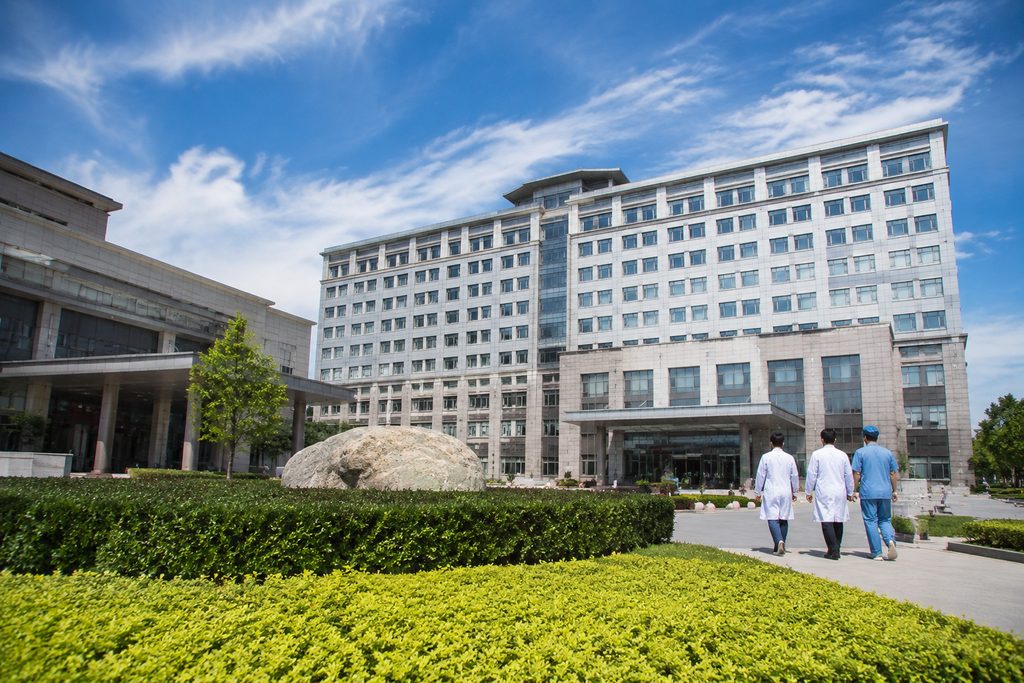
Nanfang Hospital (Southern Hospital) in Guangzhou runs one of southern China’s highest-volume urology departments, with a national specialty reputation that draws patients from across Southeast Asia and the Middle East. For international patients, the Nanfang Hospital urology price for common procedures typically runs 60–80% below US private-pay rates — a ureteroscopy for kidney stones often lands between $3,000 and $5,500, while a radical prostatectomy generally ranges from $9,000 to $16,000 depending on whether robotic or laparoscopic technique is used. Those figures include hospital stay, surgeon fees, and standard operating room costs at the international department rate.
The caveat: Nanfang is a public hospital first. That means ordinary outpatient clinics do not accept advance bookings from overseas, and you cannot lock in a surgery date before an in-person consultation. International patients who want certainty use the hospital’s international medical center or a coordination service that books through the official VIP channel. Same doctors, same operating rooms — different administrative path, roughly 1.5 to 2 times the standard public price.
Who This Is Right For — and Who It Isn’t
Nanfang’s urology department suits a specific profile of international patient. The hospital performs enormous surgical volume — over 4,000 urological procedures annually across stone disease, oncology, and reconstructive work — which translates into teams that have seen rare presentations repeatedly. If you need complex stone management, minimally invasive prostate surgery, or a second opinion on a urological oncology case, this is a legitimate destination.
Good candidates typically include:
- Patients with large or complex kidney stones who want flexible ureteroscopy or percutaneous nephrolithotomy at a fraction of Western private costs
- Men with localized prostate cancer considering robotic-assisted radical prostatectomy
- Patients seeking a written second opinion from a high-volume Chinese urology team before committing to surgery at home
- Expats already living in Guangzhou or the Pearl River Delta who want access to a top-tier public hospital without flying elsewhere
Who should probably not pursue this:
- Patients with unstable cardiac or pulmonary conditions that make long-haul travel risky
- Anyone needing emergency urological care — this pathway is for planned treatment, not acute presentations
- Patients who require ongoing, complex multidisciplinary oncology care that their home team coordinates well — continuity matters more than a single procedure
- Those unwilling to spend 3–7 days in Guangzhou for consultation and pre-operative workup before any surgery date is confirmed
Being honest about who should stay home is what makes the rest of this guide useful. China is not a shortcut for every case.
The Options, Compared
You have three realistic routes into Nanfang’s urology department as a foreigner. They differ in cost, speed, and how much you manage yourself.
| Pathway | Typical Cost for Ureteroscopy | Booking Lead Time | Language Support | Who It Suits |
|---|---|---|---|---|
| Public outpatient (self-managed) | $2,000–$3,500 | Queue on arrival; surgery scheduled after face-to-face consult | Mandarin only; bring your own interpreter | Mandarin speakers or patients with local family |
| Hospital international medical center | $3,500–$5,500 | 1–2 weeks for consult; surgery typically within 2–4 weeks after | English-speaking coordinators | Patients wanting official hospital channel with language support |
| Third-party coordination service | $3,500–$5,500 plus coordination fee from $300 | Similar to international center; documents pre-reviewed remotely | Bilingual companion throughout | First-time visitors to China who want logistics handled |
The public outpatient route is cheapest but genuinely difficult without Mandarin — registration kiosks, payment windows, and pre-op instructions are all Chinese-only. The international medical center adds English support and a smoother administrative flow. A coordination service adds a bilingual companion who handles registration, queues, payment, and translation; the medical care itself is identical. If you speak zero Chinese and have never navigated a Chinese hospital, the third column saves you a day of confusion.
Is Nanfang Hospital Good for Kidney Stone Surgery?
Yes — and the numbers back that up. Nanfang’s urology department is consistently ranked among China’s top 10 for urology in the Fudan University specialty reputation rankings, the country’s most authoritative hospital evaluation. The stone surgery program runs high annual volumes of flexible ureteroscopy (fURS) and percutaneous nephrolithotomy (PCNL), the two procedures that cover most complex stone cases. High volume matters in urology: complication rates for PCNL drop measurably in centers performing more than 100 cases per year, and Nanfang far exceeds that threshold.
What does this mean for a foreign patient? A 2-centimeter kidney stone that might require two staged procedures at a lower-volume Western center can often be cleared in a single PCNL session here. Stone-free rates for PCNL at major Chinese centers typically run 85–92% for stones under 3 centimeters, comparable to top US academic hospitals. The difference is price, not outcome.
One honest limitation: post-operative follow-up after you fly home. You will need a local urologist to remove stents, order follow-up imaging, and manage any late complications. Nanfang’s team provides discharge summaries in English through the international center, but they cannot manage your care remotely. Plan for that handoff before you book the flight.
How Much Does Prostate Surgery Cost in Guangzhou?
Prostate surgery costs at Nanfang vary widely by technique. A standard transurethral resection of the prostate (TURP) for benign enlargement typically runs $4,000–$7,000 for international patients. Radical prostatectomy for cancer costs more because it is a bigger operation with a longer hospital stay.
Here is the range, based on current international department pricing:
- Laparoscopic radical prostatectomy: $8,000–$12,000
- Robotic-assisted radical prostatectomy (da Vinci): $12,000–$18,000
- Holmium laser enucleation (HoLEP) for BPH: $5,000–$8,000
Compare that to the United States, where a robotic prostatectomy routinely bills $35,000–$60,000 before insurance negotiation. Even at Nanfang’s international department rate, you are paying roughly a quarter to a third of US private-pay prices. The variance depends on tumor stage, whether lymph node dissection is needed, length of stay, and whether the robotic system is available on your surgery date. Prices always vary by hospital and case complexity.
What is included: surgeon fees, anesthesiology, operating room time, standard hospital room for the typical 5–10 day stay, routine pathology on removed tissue, and basic post-op medications. What is not included: airfare, visa fees, accommodation for family, extended ICU care if complications arise, and any additional imaging or lab work beyond the standard pre-op panel.
Practical Considerations: Records, Visa, Payment, and Language
You cannot fly to Guangzhou and walk into surgery. The process has fixed steps, and skipping one causes delays.
Medical records. Nanfang’s urology team will not schedule surgery without reviewing your existing imaging and reports. Send CT scans (kidney stones), MRI and biopsy pathology (prostate cancer), blood work, and any prior surgical notes. Documents in English are acceptable; other languages need certified translation. A written second opinion from the department costs $300–$500 and is the lowest-commitment way to find out if they will take your case.
Visa. Medical treatment in China falls under the S2 visa category, which covers short stays for private affairs including medical treatment. Your accompanying family members also apply for S2 visas. The hospital or coordination service provides an invitation letter and treatment confirmation, which you submit with your application. The M visa is for commercial and trade activities and is not appropriate for medical travel. Visa processing typically takes 1–3 weeks depending on your home country’s Chinese embassy or consulate.
Payment. Public hospitals in China do not bill your insurance directly. You pay upfront — typically a deposit at admission, then settlement at discharge — and file for reimbursement with your insurer afterward. International private hospitals in China offer direct billing, but Nanfang is a public institution. Bring a credit card with a high limit or arrange a wire transfer. The international center accepts major foreign cards; the standard public payment windows often do not.
Language. Even at the international medical center, not every nurse, technician, or ward clerk speaks English. The doctors generally do, especially senior urologists who publish internationally. But the person drawing your blood at 6 a.m. probably does not. A bilingual companion for the first 2–3 days removes most friction. From $300 per day, you get someone who handles registration, queues, payment, and translation during consultations and ward rounds.
Do not book flights before your consultation is confirmed. Surgery dates are set only after the face-to-face consult and pre-op workup. Arriving without a confirmed pathway means waiting in public queues with no guarantee of an English-speaking doctor.
Frequently Asked Questions
You can book the consultation, not the surgery. Nanfang’s international medical center accepts advance bookings for outpatient consultations with urology specialists, and a coordination service can arrange a proxy consultation using your medical records if you cannot travel first. The actual surgery date is confirmed only after the doctor sees you in person and reviews your pre-op workup. That is the rule at every public hospital in China, including the top-ranked ones.
China urology department reviews from expats tend to praise surgical skill and speed while criticizing administrative friction and language barriers. The pattern is consistent: patients who used the international center or a bilingual companion report smooth experiences; those who attempted the standard public route describe hours lost to queues and confusion. The medical outcome is rarely the complaint. The logistics are.
It is among the best in southern China, but “best” depends on your specific condition. For stone surgery and urological oncology, Nanfang is a top-10 national department. Beijing and Shanghai have comparably ranked urology programs — Peking University First Hospital and Shanghai Changhai Hospital both hold top-10 Fudan rankings. Nanfang’s advantage for international patients is Guangzhou’s lower cost of living, direct flights from Southeast Asia and the Middle East, and a well-established international medical center. If your case is complex, a written second opinion from one or two of these departments is a reasonable way to compare recommendations before choosing.
This is the hardest question, and the honest answer is that cross-border follow-up is the weakest part of medical travel anywhere, not just China. Nanfang’s urology team provides discharge documentation and will respond to your home urologist’s questions by email, but they cannot prescribe across borders or manage complications remotely. You need a local urologist who agrees to take over your care before you leave. Ask about this explicitly during the consultation. If your home doctor is unwilling, reconsider whether traveling for surgery is wise.
Ask for a written quotation that itemizes surgeon fees, operating room time, anesthesia, hospital stay, and anticipated consumables. The international medical center provides this; a coordination service should too. Prices quoted verbally over the phone mean nothing. Also ask what happens if the surgery runs long or you need an extra day in the ICU — those are the two most common sources of surprise bills. A legitimate quote includes the base case and the stated policy for overruns.
Your Next Step
Nanfang Hospital’s urology department is a serious option for international patients who need stone surgery, prostate surgery, or a high-volume second opinion — at prices that undercut Western private rates by 60–80%. But the gap between “good hospital” and “good experience” is filled by preparation: the right records, the right visa, the right pathway into the system.
We are China Medical Services, a coordination team that helps international patients navigate top-tier Chinese hospitals like Nanfang. We are not a hospital, we do not diagnose or treat, and we never promise outcomes. What we do is handle the logistics — document translation, appointment booking through official channels, bilingual companions on the ground, and visa guidance. If you are considering urology treatment in Guangzhou, a free consultation is the lowest-pressure way to find out whether this path makes sense for your case. You can also review our ranked hospital database or explore urology department rankings to compare options before you decide.
Get the facts first. The decision after that is yours.
For more medical information and treatment options in China, visit chinamedservices.com (China Medical Services).
